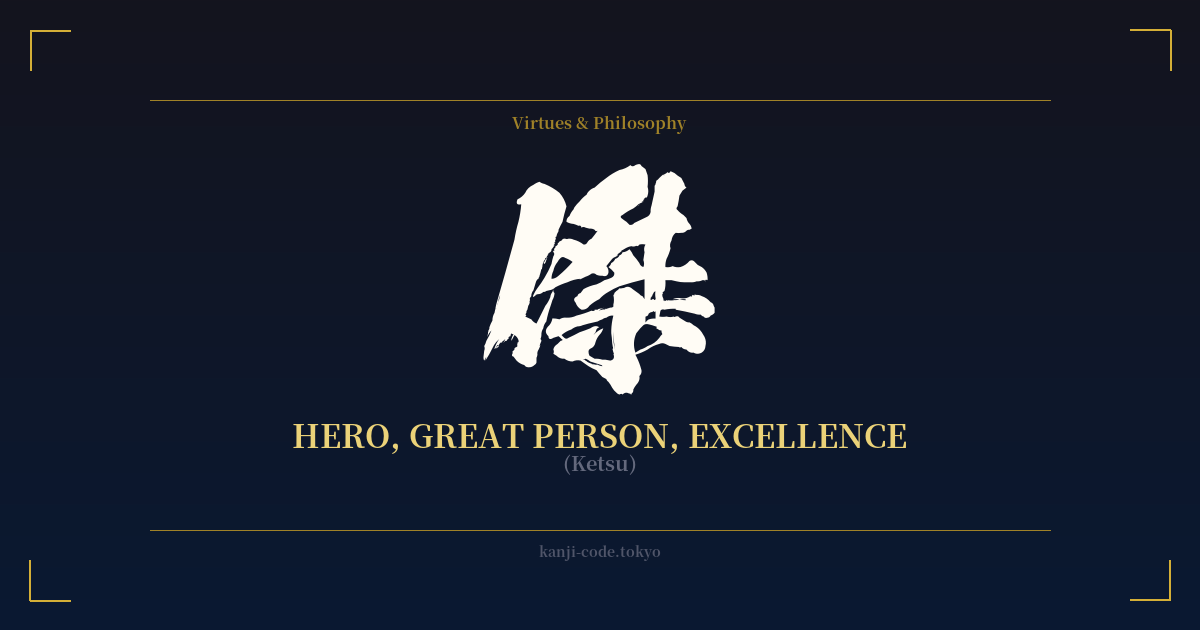
✍️ 傑 (Ketsu) — Cultural Context
The kanji 傑 (ketsu) is a powerful character that embodies the concepts of excellence, outstanding talent, and heroism. It signifies a person who stands head and shoulders above the rest, a figure of extraordinary ability or virtue. This isn't just about being good; it's about being exceptional.
Visually, the character is a combination of two elements. On top is the radical for 'person' (人), clearly grounding the meaning in humanity. The bottom component, 桀, was originally a pictograph of a person standing on a tree, or a chicken on its roost, implying a position of prominence and elevation. This combination beautifully illustrates the idea of an 'outstanding person'—someone who rises above the ordinary.
The meaning of 傑 goes beyond the modern, comic-book idea of a 'hero.' It carries a deeper sense of mastery and distinction. In Japanese, it forms the core of several important words. For example, 傑作 (kessaku) means 'masterpiece,' referring to a work of art or literature of the highest caliber. 豪傑 (gōketsu) describes a great hero or a person of exceptional courage and strength, often used for historical warriors or larger-than-life figures. Similarly, 英傑 (eiketsu) refers to a great leader or historical figure whose influence shapes an era.
Using 傑 to describe someone is a mark of profound respect. It suggests they are not just skilled but are a paragon in their field, whether that be art, martial arts, scholarship, or leadership. It's a recognition of innate talent combined with dedicated effort that results in true greatness. This concept is deeply rooted in a culture that values mastery and the pursuit of perfection, from the swordsmith to the calligrapher.
In a modern context, 傑 still retains this weight. It can be used to describe a brilliant entrepreneur, a groundbreaking scientist, or an athlete who shatters records. The character doesn't just celebrate an achievement; it celebrates the exceptional individual behind it. It speaks to an aspiration to be more than average, to reach the pinnacle of one's potential and leave a lasting mark.
🖌️ Font Styles for 傑
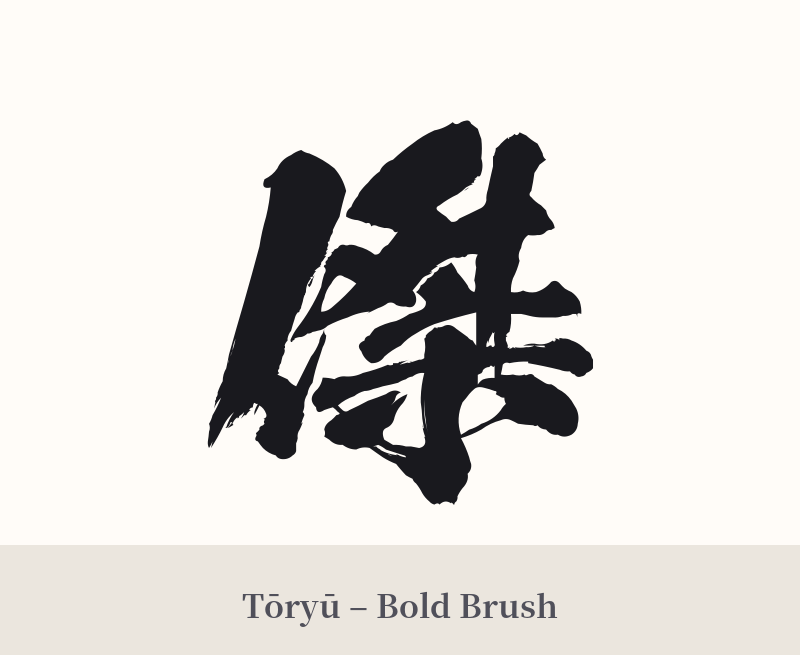
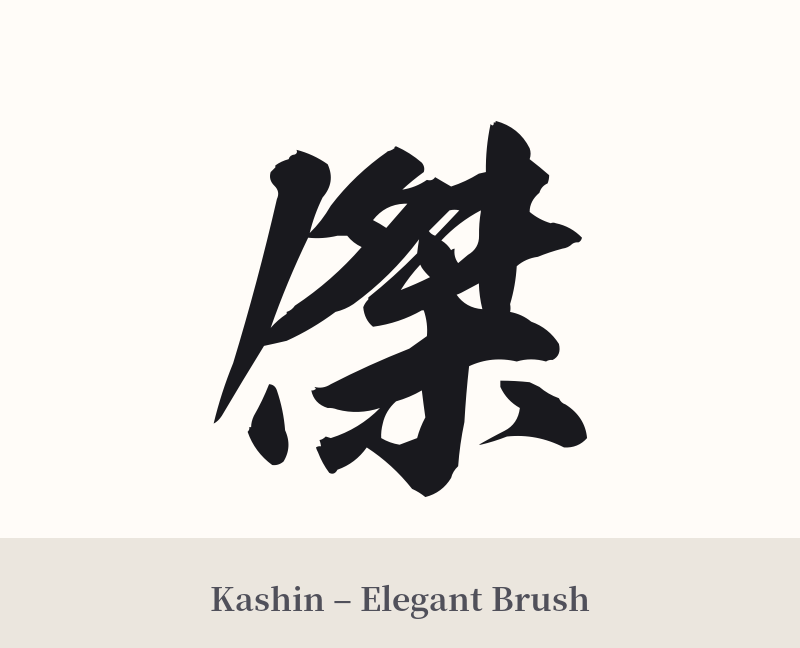
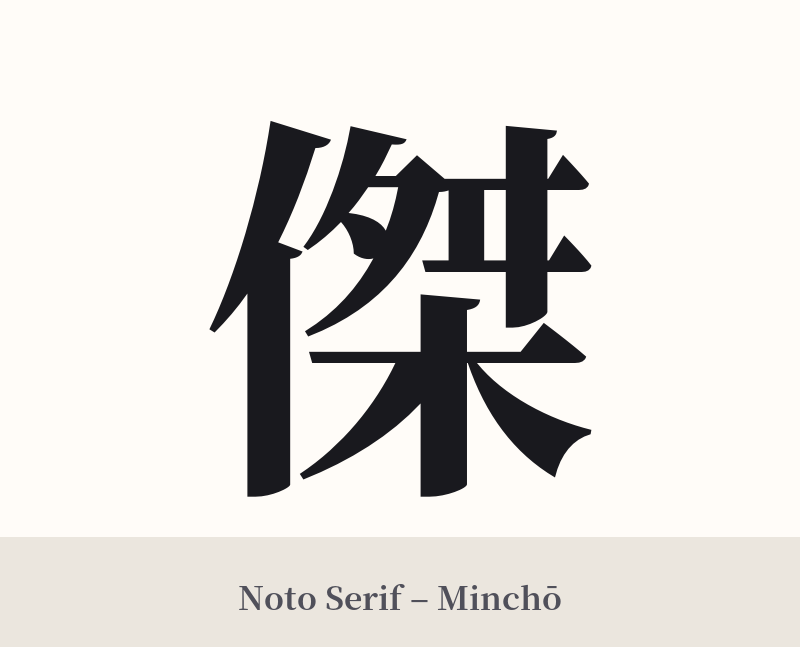
The same kanji can look dramatically different depending on the calligraphy style. Choose a font that matches the mood you want for your tattoo or design.
🎨 Tattoo Suitability
📐 Tattoo Design Guide
The kanji 傑 is a strong candidate for a tattoo, conveying a sense of power and distinction. Its balanced structure allows for versatility in design.
– Placement: This character works well as a standalone piece. Consider placing it on the forearm, calf, or the back of the shoulder where its vertical form can be appreciated. For a more central and impactful statement, the center of the back or chest are excellent choices.
– Font Style: To emphasize its meaning of 'hero' and 'excellence,' a bold and dynamic font is recommended. A strong Kaisho (block) script will give it a solid, authoritative feel. Alternatively, a semi-cursive Gyosho or Sosho style can add a sense of fluid mastery and artistic flair, reflecting the 'masterpiece' nuance of the character.
– Visual Tips: 傑 is powerful enough to stand on its own without additional elements. Overcrowding it can detract from its inherent strength. If you wish to add a complementary element, a simple enso (Zen circle) behind it can represent the universe or the pursuit of perfection, while a subtle splash of red ink can add energy and passion. However, the purest expression is often the character itself, rendered with confidence and skill.
Comments