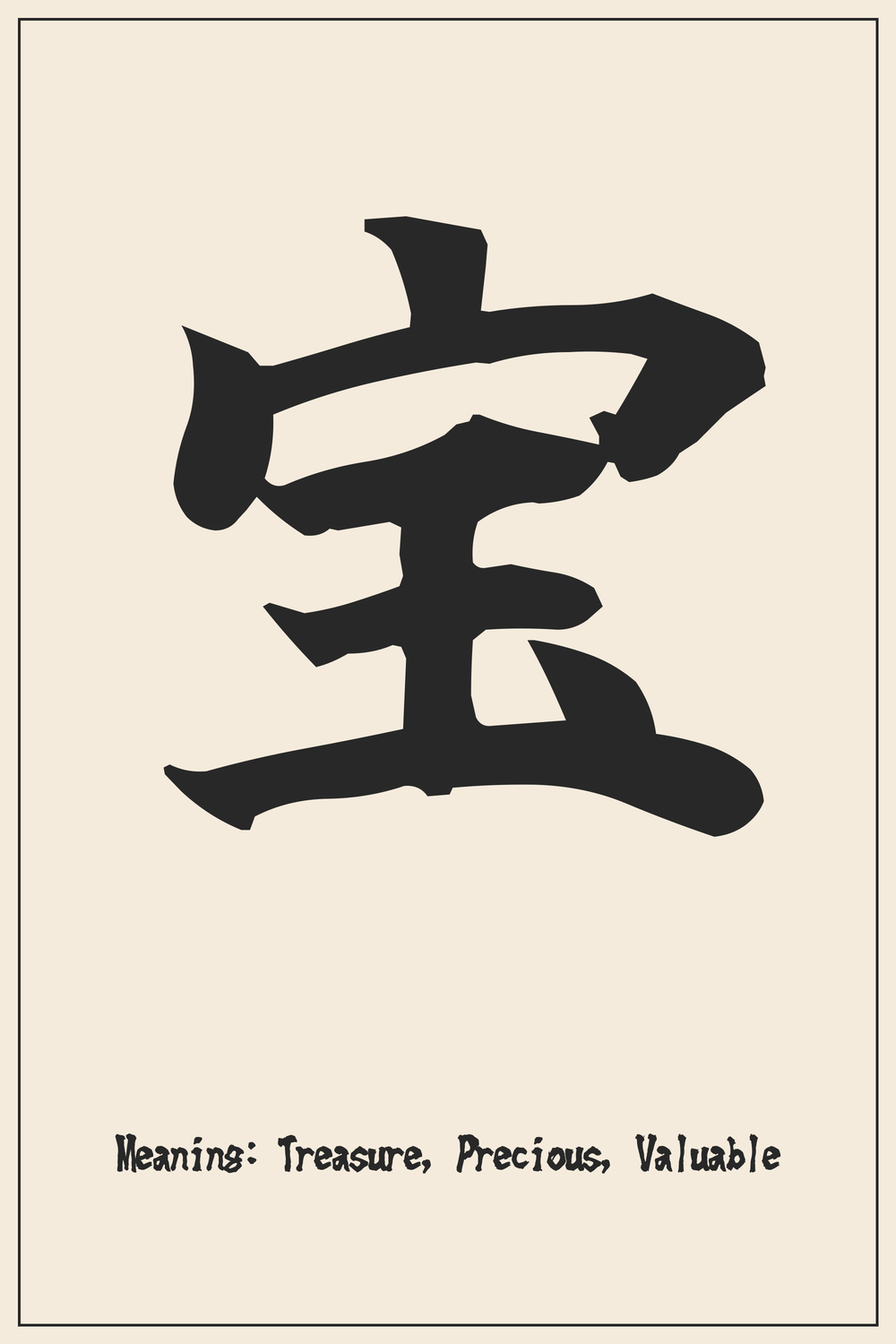
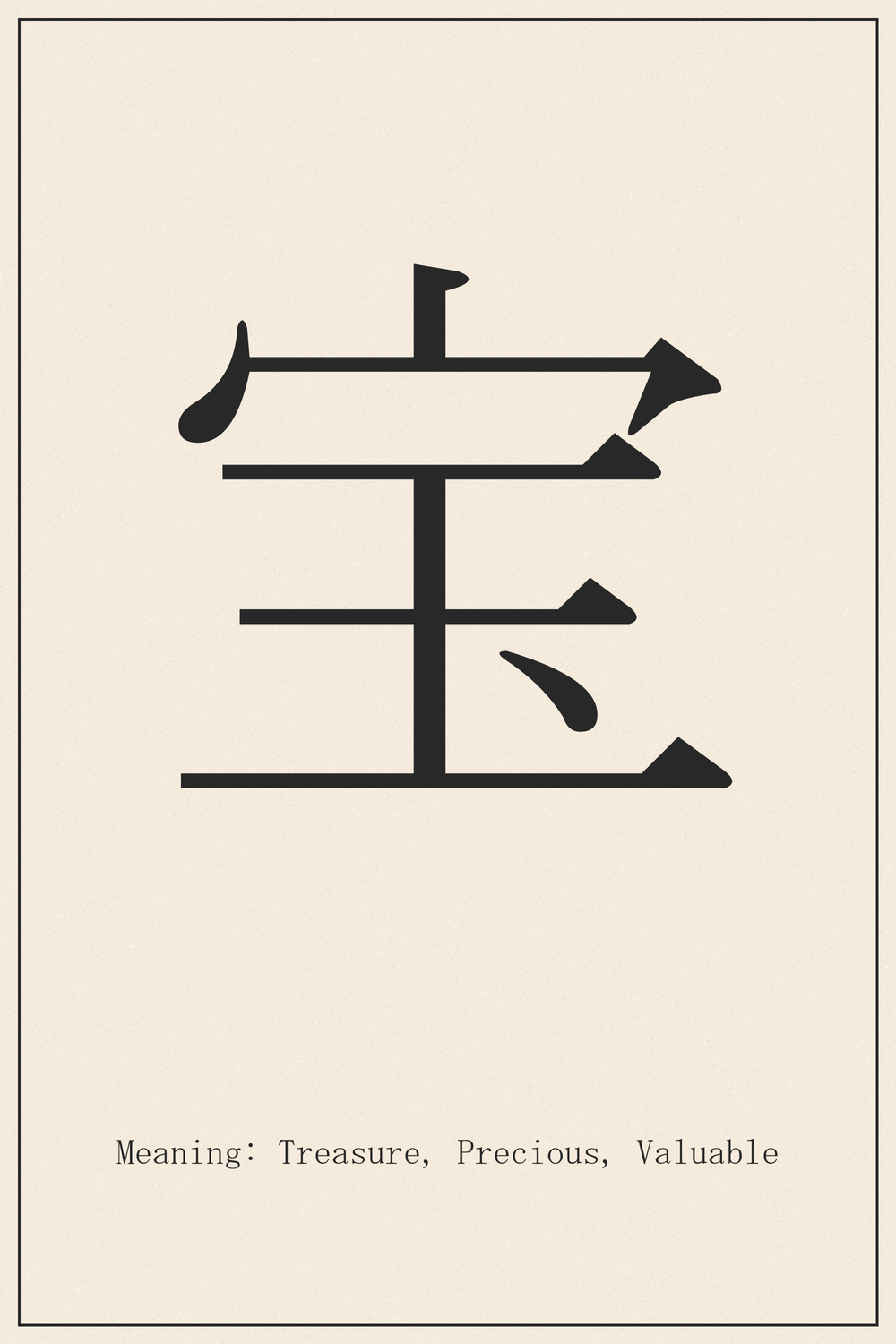
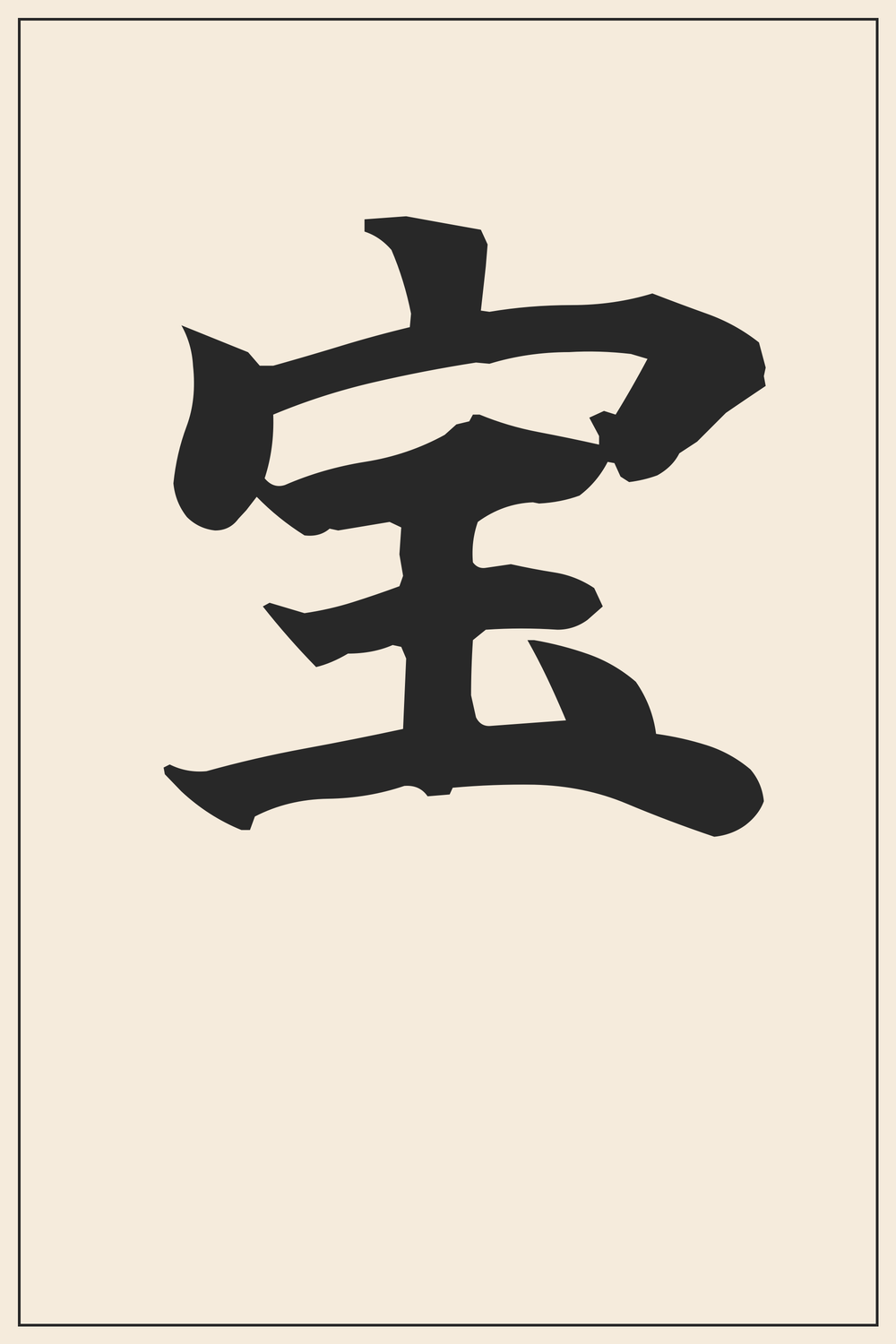
The Kanji 宝, meaning ‘treasure,’ embodies the profound value and preciousness we hold in life. It’s a symbol deeply rooted in ancient imagery, representing both material wealth and invaluable spiritual riches.
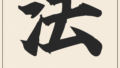
The atmosphere of a Kanji character changes dramatically depending on the font style. A character that looks elegant in a brush style might look bold and modern in a different font.
Recommendation:
Since a tattoo is permanent, we strongly recommend comparing various font styles beyond what is shown here. Use our designs as a trusted reference for the correct structure, but feel free to explore different artistic variations to find the perfect match for your vision.
The Deep Meaning Behind 宝
The character 宝 (hō/takara) historically depicts a precious jewel or jade (王) enclosed within a pot or jar (缶), all situated under a roof (宀). This imagery strongly conveys the idea of something valuable being carefully preserved within a home or vault, representing wealth and security.
In Japanese culture, 宝 is often associated with good fortune, abundance, and cherished possessions, both tangible and intangible. It frequently appears in terms like 宝物 (takaramono, treasure/prized possession) and 宝くじ (takarakuji, lottery), underscoring its connection to luck and valuable assets. Its deep roots in family and prosperity make it a potent symbol.
Kanji Breakdown
The Kanji 宝 is a fascinating pictograph, combining elements that visually tell its story of preserved value.
Meaning: Roof, House, Shelter
Meaning: King, Jewel, Jade
Meaning: Jar, Pot, Container
Conclusion
The Kanji 宝 is more than just a word for ‘treasure’; it’s a profound emblem of what we deem precious—be it material wealth, cherished memories, or invaluable relationships. It encapsulates the essence of prosperity, security, and deep personal value.
For those seeking a tattoo that reflects their most valued aspects of life or hopes for abundance, 宝 offers a beautiful and meaningful choice. Its classic aesthetic and rich history make it a timeless symbol to carry with you.
Comments