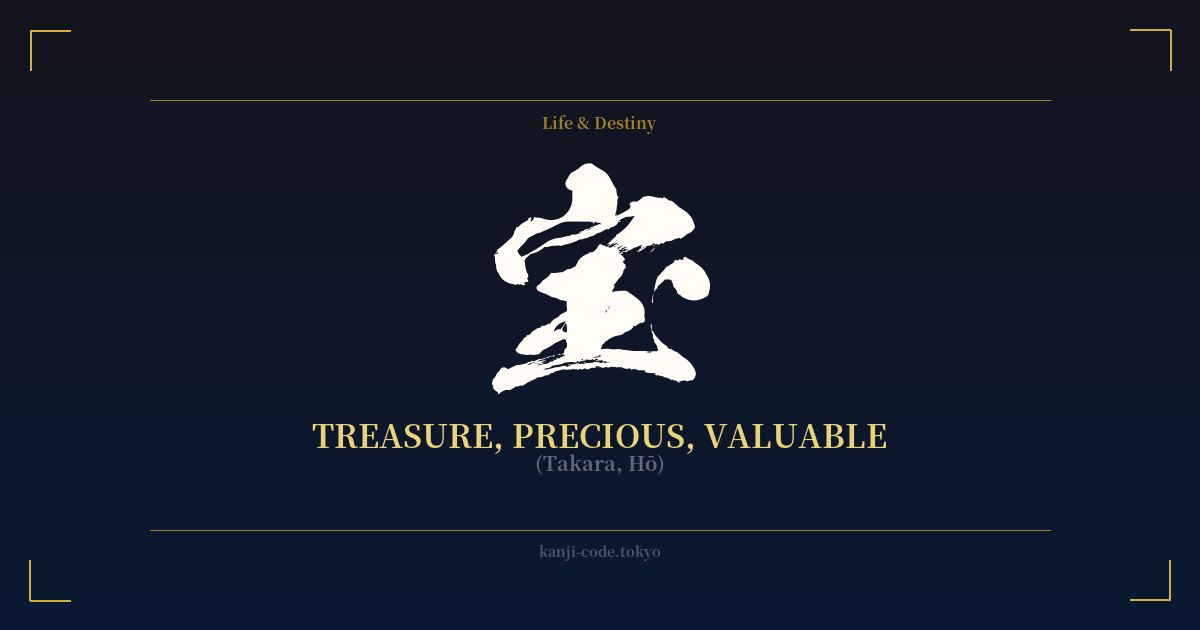
✍️ 宝 (Takara, Hō) — Contexto cultural
El kanji 宝 (takara) es uno de los caracteres más evocadores y apreciados del idioma japonés, pues encarna conceptos de tesoro, valor y preciosidad. Su significado trasciende la riqueza material, abarcando aquello intangible que da sentido a la vida.
Visualmente, el kanji cuenta una historia. Es una combinación del radical 宀 (ukanmuri), que representa un techo o una casa, y 玉 (tama), que significa 'joya' o 'jade'. Juntos, representan una joya guardada a buen recaudo bajo un techo, un ideograma perfecto para algo precioso y protegido. Este origen resalta una antigua concepción del tesoro no solo como algo valioso, sino como algo que debe ser custodiado y apreciado en el hogar o en el corazón.
En la cultura japonesa, el símbolo 宝 está profundamente arraigado en el folclore y la tradición. El ejemplo más famoso es el Takarabune (宝船), el mítico barco del tesoro de los Siete Dioses de la Fortuna (七福神, Shichifukujin). Se dice que este barco está cargado de tesoros y buena fortuna, y sus imágenes son talismanes populares, especialmente durante el Año Nuevo, para atraer un año próspero.
El carácter también es un componente común en palabras y conceptos relacionados con el valor. Un 'tesoro nacional' es un 国宝 (kokuhō), un bien cultural invaluable. Una 'piedra preciosa' es un 宝石 (hōseki). Quizás lo más significativo sea el término 子宝 (kodakara), que se traduce literalmente como 'tesoro infantil', y que se usa para referirse a la bendición de tener hijos, considerándolos el regalo más preciado.
Esta profundidad filosófica es lo que hace que 宝 sea tan poderoso. Si bien puede referirse al oro, las joyas y las riquezas, su uso más profundo apunta a lo que una persona valora más. Esto podría ser la familia, el amor, la amistad, la salud, una habilidad adquirida con esfuerzo o un recuerdo entrañable. Representa una definición personal de riqueza, un recordatorio de que los mayores tesoros a menudo no son cosas que se pueden sostener en la mano, sino cosas que se guardan en el corazón.
🖌️ Estilos de fuente para 宝
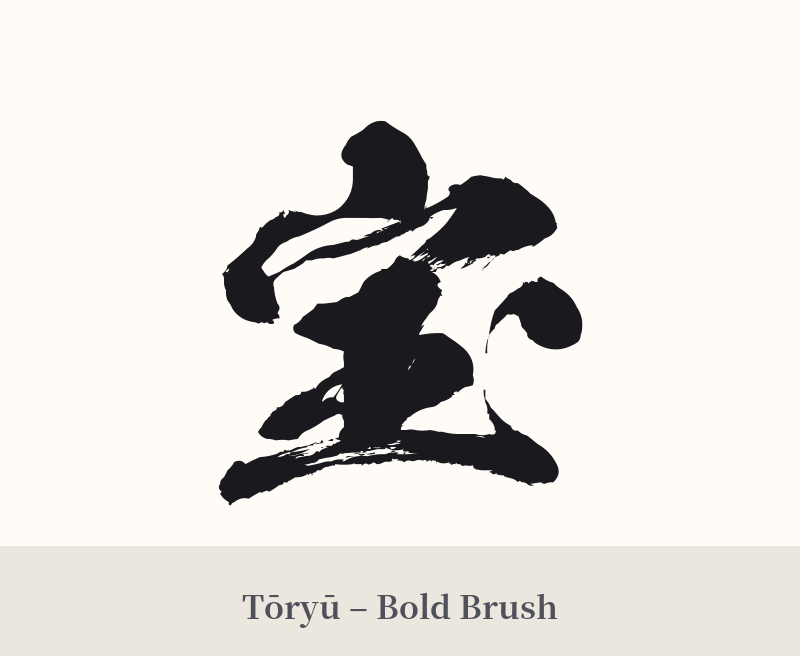
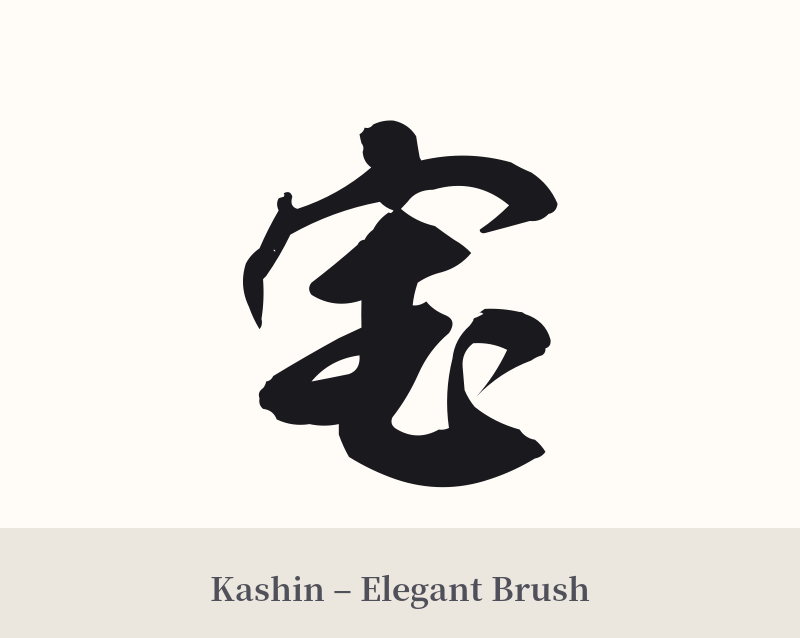
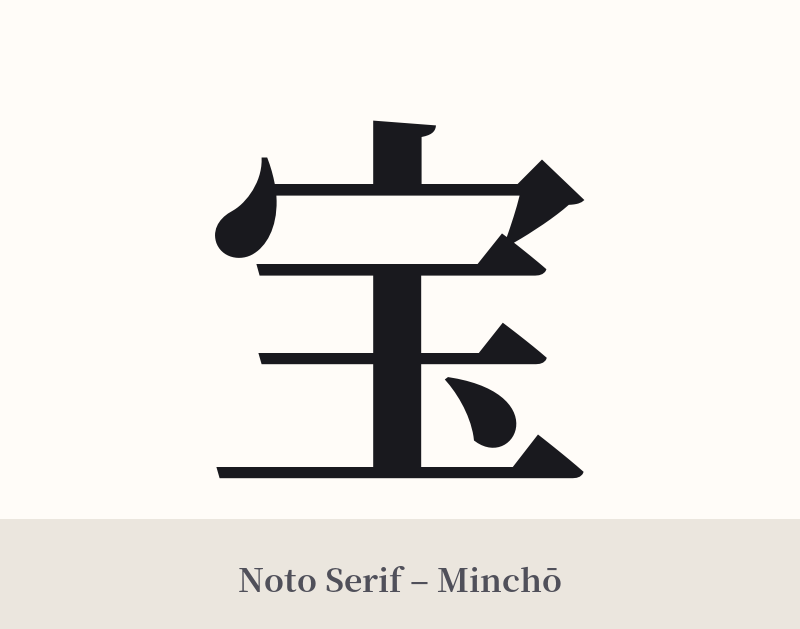
Los mismos caracteres kanji pueden verse muy diferentes según el estilo de caligrafía. Elige una fuente que se ajuste al ambiente que deseas para tu tatuaje o diseño.
🎨 Idoneidad para tatuajes
📐 Guía de diseño de tatuajes
El kanji 宝 es versátil y transmite una energía cálida y positiva, lo que lo hace adecuado para diversos diseños y ubicaciones de tatuajes.
– Ubicación: Para un significado personal e íntimo, considere colocarlo en la parte interna de la muñeca, sobre el corazón o en las costillas. Para una declaración más pública de sus valores, el antebrazo o la pantorrilla son buenas opciones.
Estilo: Un estilo caligráfico tradicional y audaz (shodō) puede resaltar la importancia histórica del carácter. Una escritura Mincho más fina y elegante le confiere un aire de gracia y distinción. Para un toque profundamente personal, un estilo Gyosho o Sosho (semicursivo o cursivo) fluido puede capturar la energía única de su 'tesoro' personal.
Consejos visuales: Dado que el kanji simboliza una joya protegida, luce espléndido como pieza independiente. También puedes incorporarlo a un diseño más grande, quizás con una imagen sutil que represente lo que significa para ti: una flor para un ser querido, una ola para un lugar especial o un simple círculo (ensō) para representar el universo de las cosas que aprecias.
Comentarios