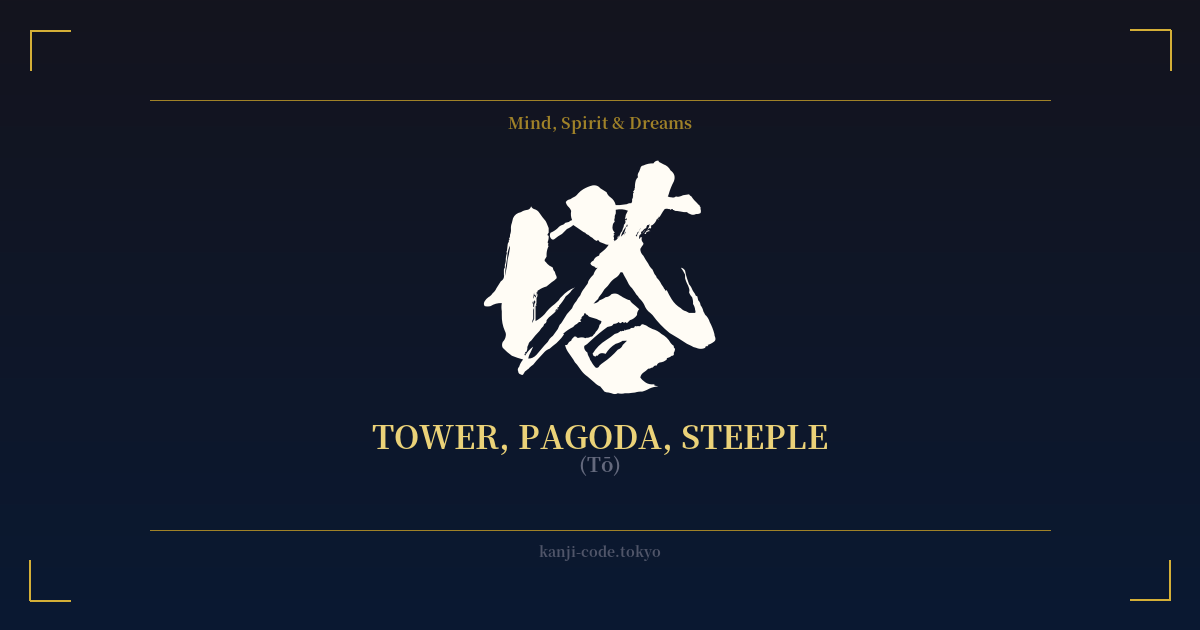
✍️ 塔 (Tō) — Cultural Context
The kanji 塔 (Tō) is a character that stands tall in the Japanese landscape, both literally and figuratively. Its form, a combination of radicals representing earth (土), plants (艹), and joining (合), hints at a structure built from the ground up, reaching towards the sky. While it translates simply as 'tower' or 'pagoda,' its cultural resonance is far deeper, bridging the ancient spiritual world with the hyper-modern metropolis.
Historically, the image most associated with 塔 is the Buddhist pagoda. When Buddhism arrived in Japan from mainland Asia, it brought with it a new style of architecture designed to house sacred relics. The multi-tiered pagoda, particularly the five-storied Gojū-no-tō (五重塔), became an iconic feature of temple complexes across the country. These structures are marvels of spiritual symbolism and engineering. The five levels represent the five elements of Buddhist cosmology: earth, water, fire, wind, and the void.
At the heart of many traditional pagodas is a central pillar called a shinbashira (心柱), which translates to 'heart pillar.' This massive timber, often suspended from the top story, acts as a pendulum that helps the structure sway and absorb the seismic shocks of earthquakes, a testament to ancient Japanese ingenuity. Thus, the 塔 symbolizes not just a connection to the heavens, but also profound resilience and a strong, centered core.
In contemporary Japan, 塔 has taken on new meanings. The post-war era saw the construction of modern towers that became symbols of national recovery and technological ambition. The Tokyo Tower (東京タワー), with its distinctive red and white lattice, was a beacon of Japan's re-emergence on the world stage. More recently, the Tokyo Skytree (東京スカイツリー) has become the nation's tallest structure, a symbol of 21st-century innovation.
Beyond physical structures, 塔 is used metaphorically. The term 金字塔 (kinjitō), literally 'golden character tower,' is the Japanese word for 'pyramid' and is used to describe a monumental achievement or a masterpiece in a particular field. To build a 'tower' can imply creating something of lasting significance, a legacy that stands the test of time. Whether representing spiritual enlightenment, architectural resilience, or personal ambition, the kanji 塔 is a powerful symbol of reaching upward and standing strong.
🖌️ Font Styles for 塔
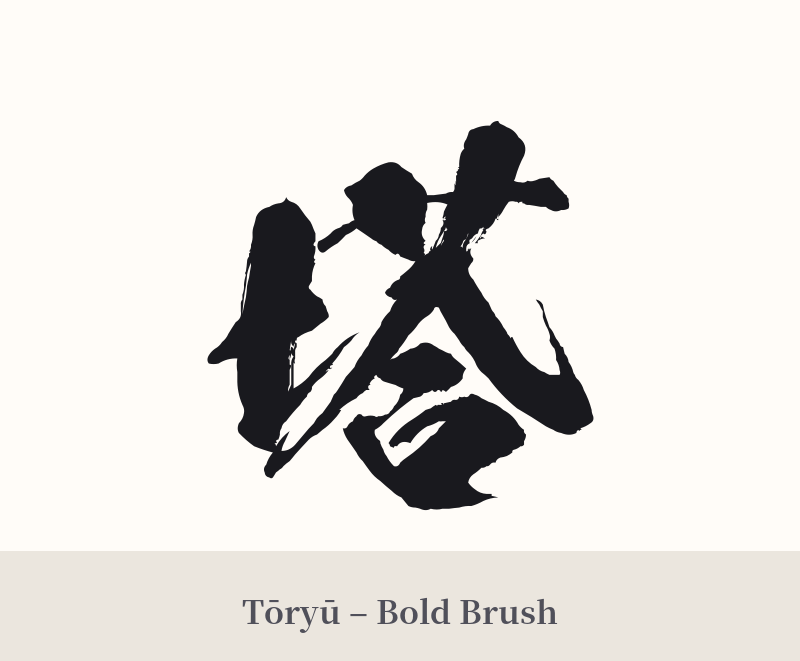
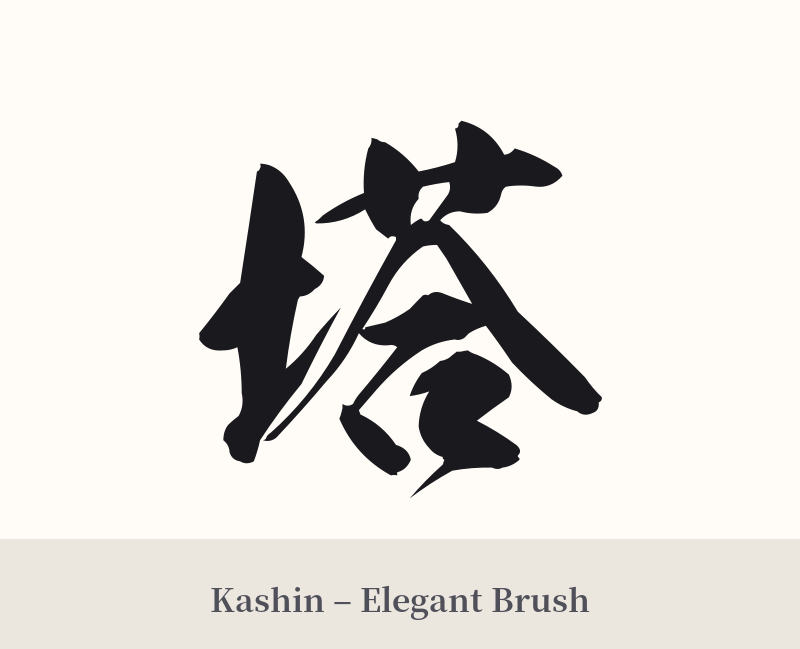
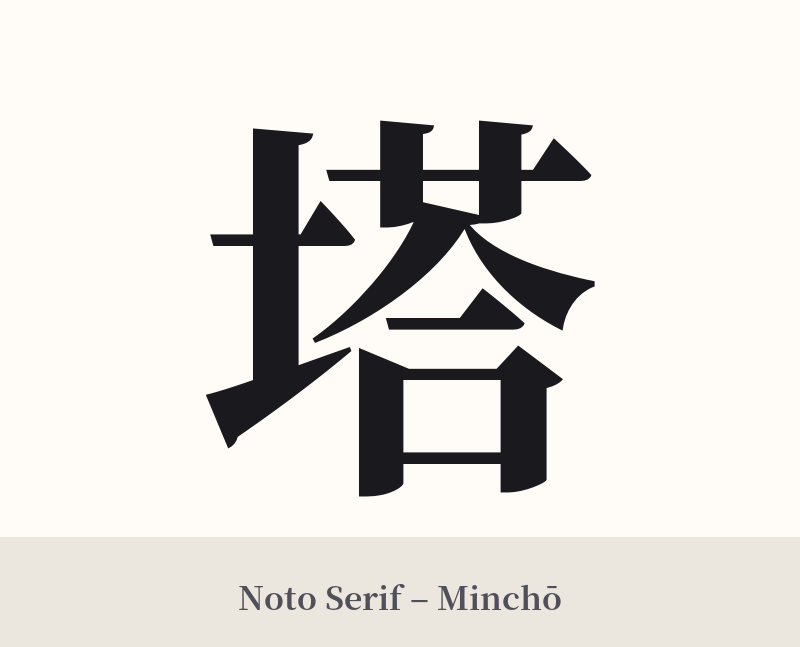
The same kanji can look dramatically different depending on the calligraphy style. Choose a font that matches the mood you want for your tattoo or design.
🎨 Tattoo Suitability
📐 Tattoo Design Guide
The vertical nature of 塔 makes it well-suited for certain placements that accentuate its height. Consider the forearm, the calf, or running along the spine to echo the form of a tower or pagoda.
– Font Style: For a classic, solid feel, a bold Kaisho (block script) is an excellent choice, emphasizing its architectural strength. For a more spiritual or ancient aesthetic, a flowing Gyōsho (semi-cursive) can evoke the image of a pagoda in the mist. A modern, geometric font might be used if your inspiration is a contemporary structure like the Tokyo Skytree.
– Visual Tips: This kanji pairs beautifully with other elements. You could have a dragon coiling around it, clouds parting at its peak, or a simple Enso circle behind it to represent the void. Using a pop of red ink, reminiscent of the vermilion paint on temple pagodas, can add a striking and authentic touch.
Comments