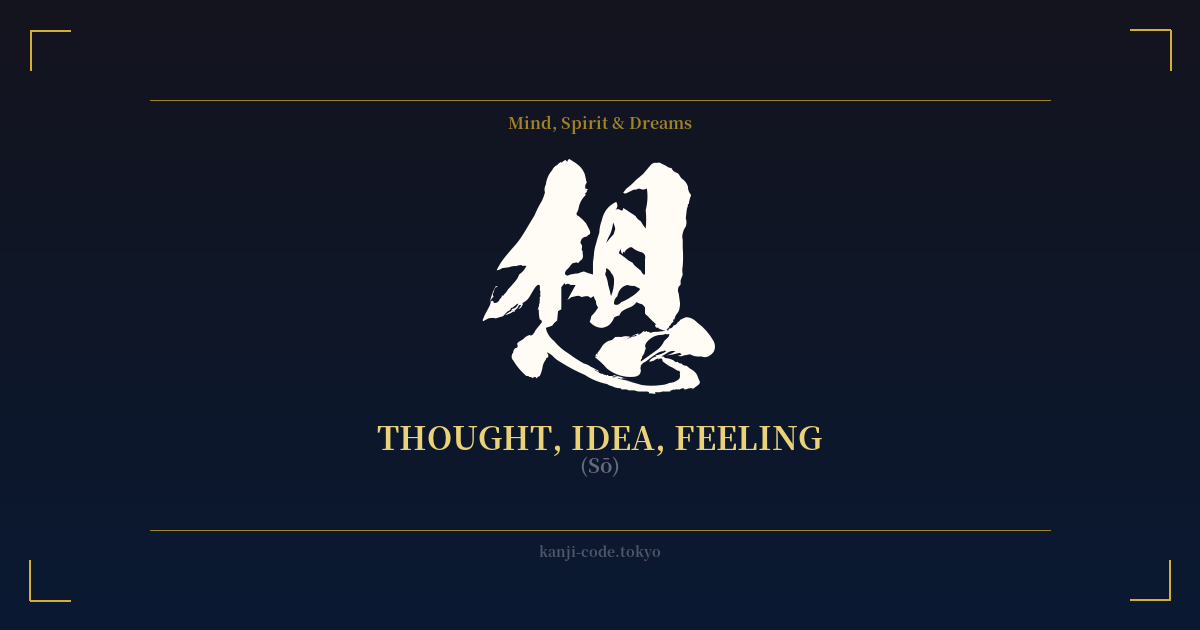
✍️ 想 (Sō) — Cultural Context
The kanji 想 (sō) is a beautiful and profound character that encapsulates the inner world of the human mind. It represents not just a fleeting thought, but the deeper acts of conceptualization, feeling, imagination, and recollection. Its meaning is a cornerstone of how consciousness and emotion are expressed in the Japanese language.
Etymologically, 想 is a fascinating combination of two distinct radicals. The top part, 相 (sō), means 'mutual,' 'aspect,' or 'phase' and often relates to appearance or form. The bottom part is 心 (kokoro), the all-important radical for 'heart' or 'mind.' Together, they create a powerful visual metaphor: a thought or feeling is the 'aspect of the heart' or an image forming within the mind. This structure beautifully distinguishes it from 思 (omou), another character for 'think,' by adding a layer of visualization and emotional depth.
In Japanese culture, the concept of 想 goes beyond simple intellectual exercise. It is deeply tied to empathy and consideration for others. The verb form, 想う (omou), can mean to think of someone, to miss them, or to care for them. It’s the faculty that allows for omoiyari (思いやり), the cherished social value of anticipating others' needs and feelings without them being explicitly stated. It is a quiet, internal action with powerful external implications.
This character is a building block for many essential Japanese words that explore the landscape of the mind. For instance, 想像 (sōzō) means 'imagination,' combining 'concept' with 'to create.' 理想 (risō) means 'ideal,' a 'logical concept' or perfect thought. 感想 (kansō) are one's 'impressions' or 'thoughts' on an experience, linking 'feeling' with 'concept.' This demonstrates how 想 is the vessel for our most abstract and personal mental creations.
In art and literature, 想 evokes a sense of introspection, contemplation, and even gentle melancholy. It is the character of quiet moments—remembering a past love, pondering a philosophical question, or simply letting the mind wander. It speaks to a universal human experience, making it a timeless and resonant symbol.
🖌️ Font Styles for 想
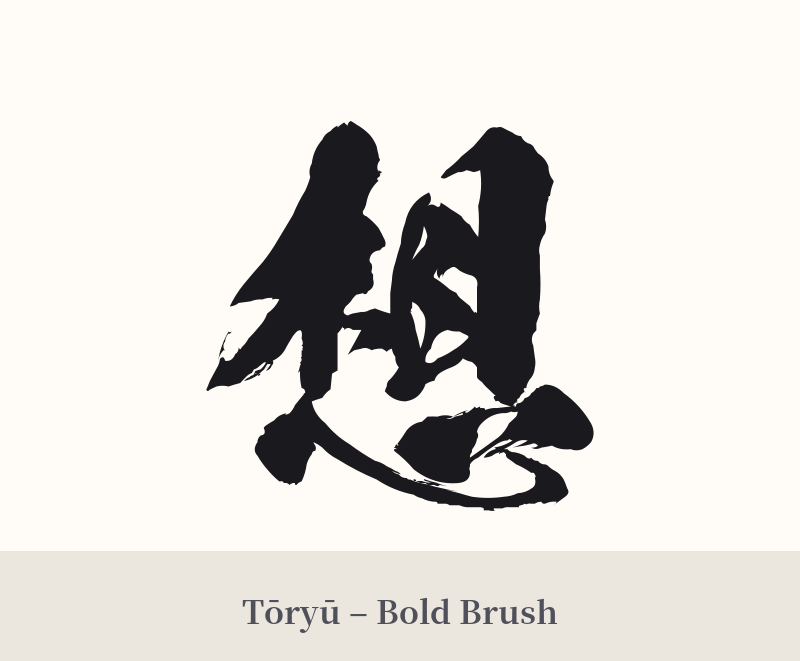
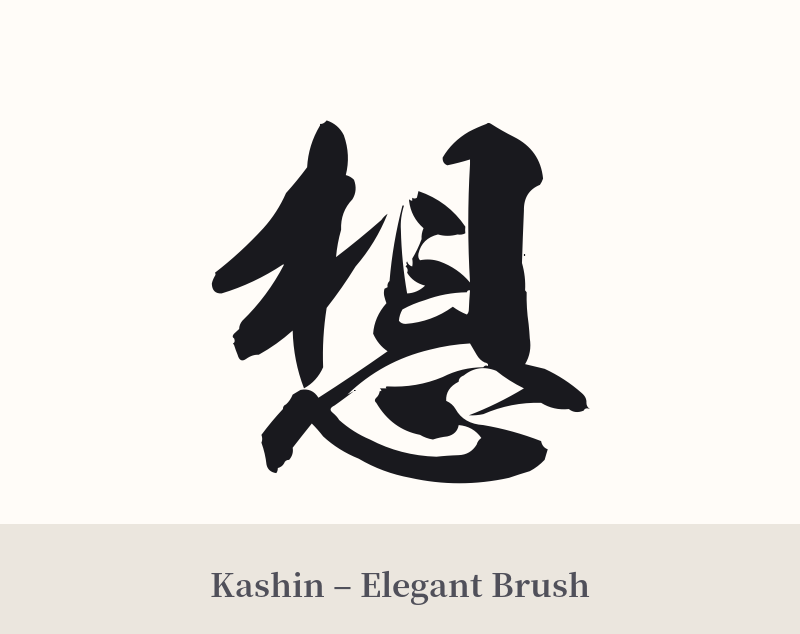
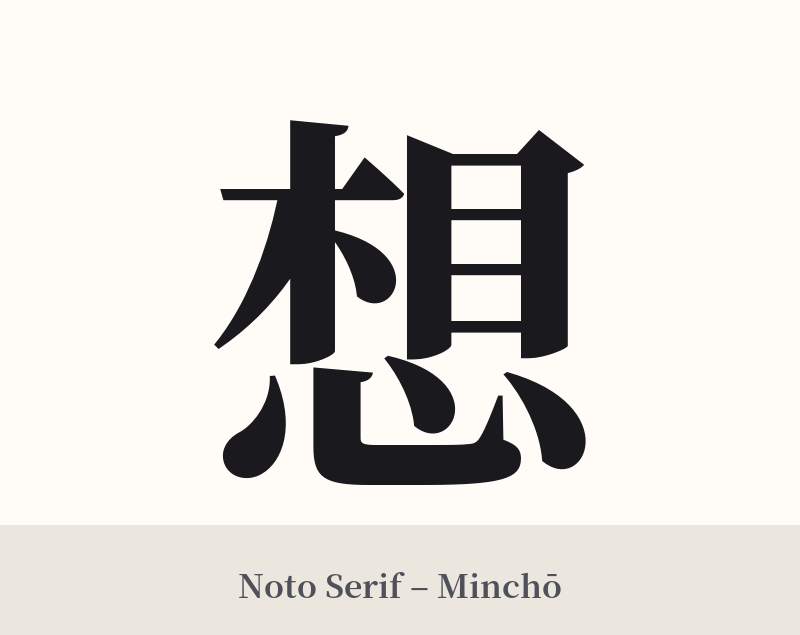
The same kanji can look dramatically different depending on the calligraphy style. Choose a font that matches the mood you want for your tattoo or design.
🎨 Tattoo Suitability
📐 Tattoo Design Guide
The kanji 想 is wonderfully versatile for tattoo design due to its elegant balance and profound meaning. Here are some recommendations to make it your own:
– Placement: This character suits personal, contemplative spots. Consider the inner forearm, where you can see it and reflect on its meaning. Other strong placements include the chest over the heart (connecting to the 心 radical), the ribs, or the back of the neck as a private reminder.
– Font Style: The style can dramatically alter the feel. A graceful, flowing gyōsho (semi-cursive) or sōsho (cursive) script can emphasize the fluid nature of thought. For a more formal and grounded look, a clean kaisho (block script) with strong brushstroke details (like tome, hané, harai) works beautifully.
– Visual Tips: While 想 is powerful on its own, it can be combined with other elements. Consider having it dissolve into a wisp of smoke or a watercolor splash to represent the ephemeral nature of a thought. Alternatively, placing it within a circle (ensō) can tie it to concepts of enlightenment and the universe. For a minimalist approach, a simple, clean design with no additions allows the character's inherent beauty to shine.
Comments