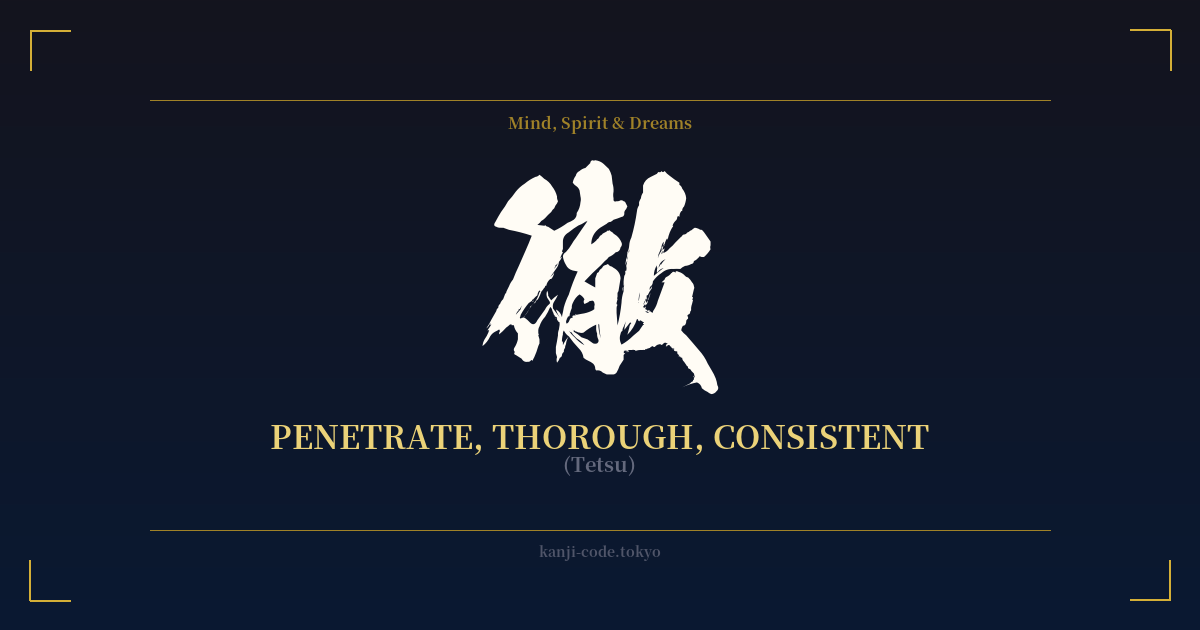
✍️ 徹 (Tetsu) — Cultural Context
The kanji 徹 (tetsu) embodies a concept far deeper than its simple English translations of 'penetrate' or 'thorough'. It represents the spirit of seeing something through to its absolute completion, of unwavering focus that permeates every obstacle until an objective is fully realized. It is a character of profound dedication and mental fortitude.
Historically, the character's structure tells this story. It is composed of the radical 彳 (gyōninben), which signifies 'to go' or 'a step', and a phonetic component on the right that originally included elements suggesting stripping away or breaking through. Together, they paint a picture of moving forward relentlessly until you have passed completely through a challenge, leaving no part of the task unfinished.
This idea is central to many aspects of Japanese culture. In the context of Bushido, the way of the samurai, 徹 reflects the warrior's commitment to a single path or duty, without deviation. It's the mindset required to master a skill, not just to a proficient level, but to a state of intuitive understanding. This spirit lives on in the modern concept of the shokunin (職人), or master artisan, who dedicates a lifetime to perfecting their craft, whether it be sword-making, pottery, or preparing sushi. Their work is 'tettei' (徹底), a compound that uses 徹 and means 'thorough' or 'complete' — literally, to 'penetrate to the bottom.'
A common and illustrative use of 徹 is in the word 'tetsuya' (徹夜), which means to stay up all night. This isn't just about being awake; it's about going through the entire night, from dusk until dawn, usually to accomplish a specific goal like studying for an exam or meeting a work deadline. It perfectly captures the kanji's essence of carrying an action through a defined period or boundary.
Philosophically, 徹 speaks to a state of clarity and consistency. When one's will or belief is 'tetsu', it is consistent from beginning to end (首尾一貫, shubi-ikkan). It implies a mind that is not easily swayed, one that has penetrated the superficial layers of a problem to grasp its core truth. It is the quiet, unshakeable resolve to finish what you started, making it a powerful symbol of personal integrity and determination.
🖌️ Font Styles for 徹
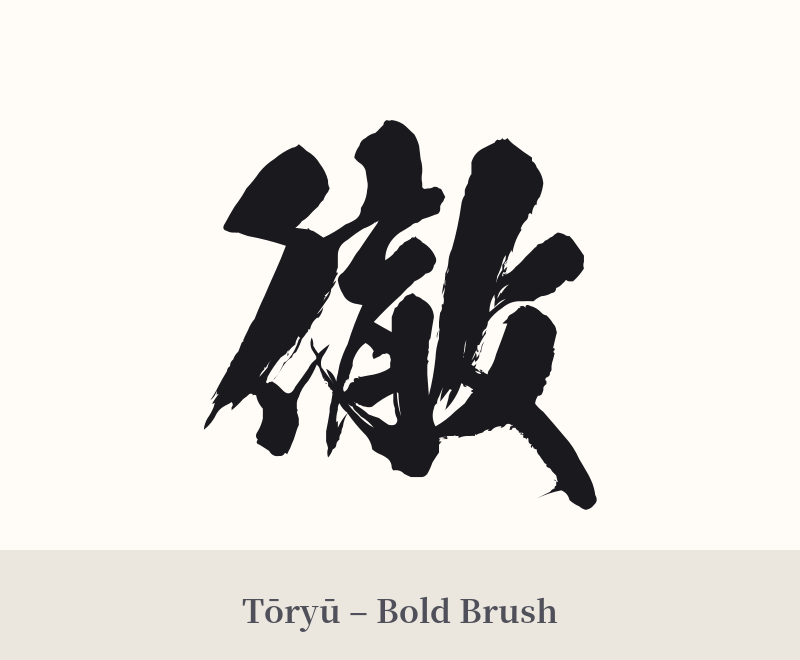
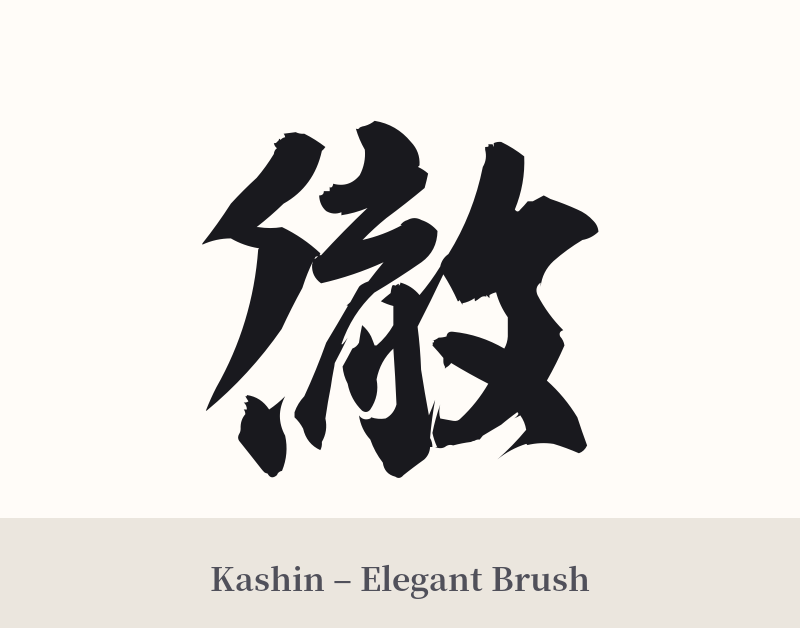
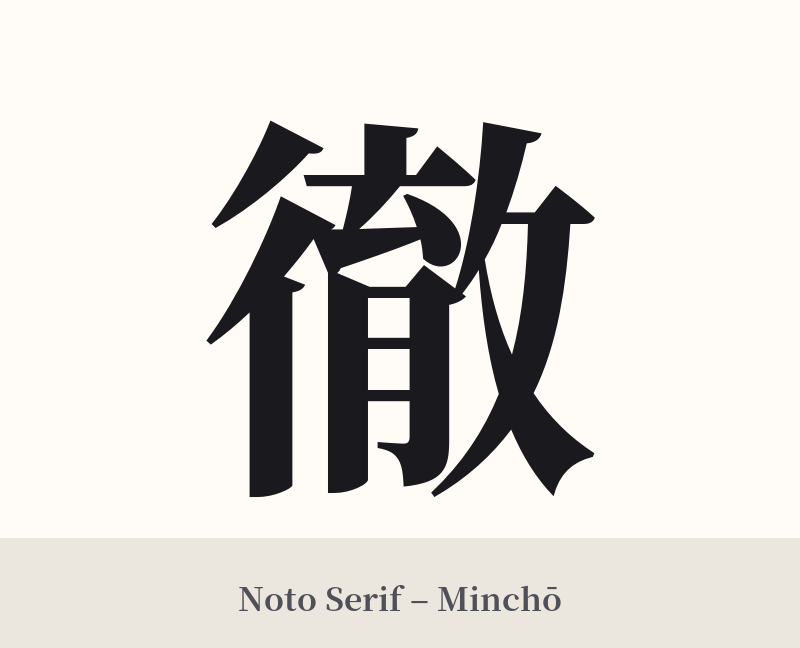
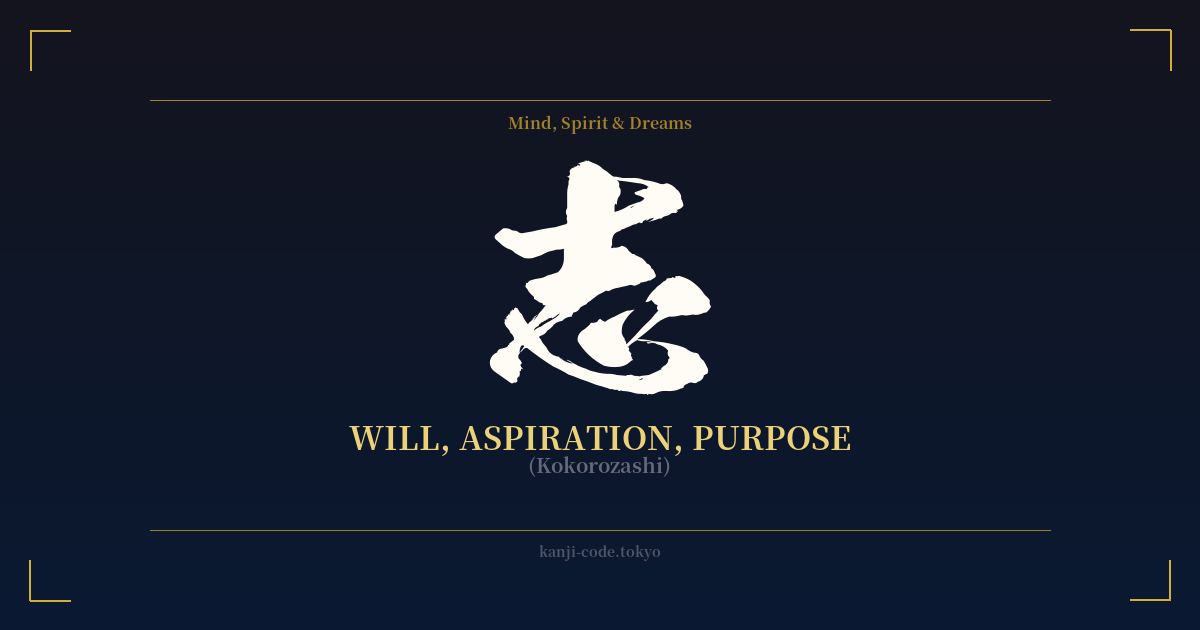
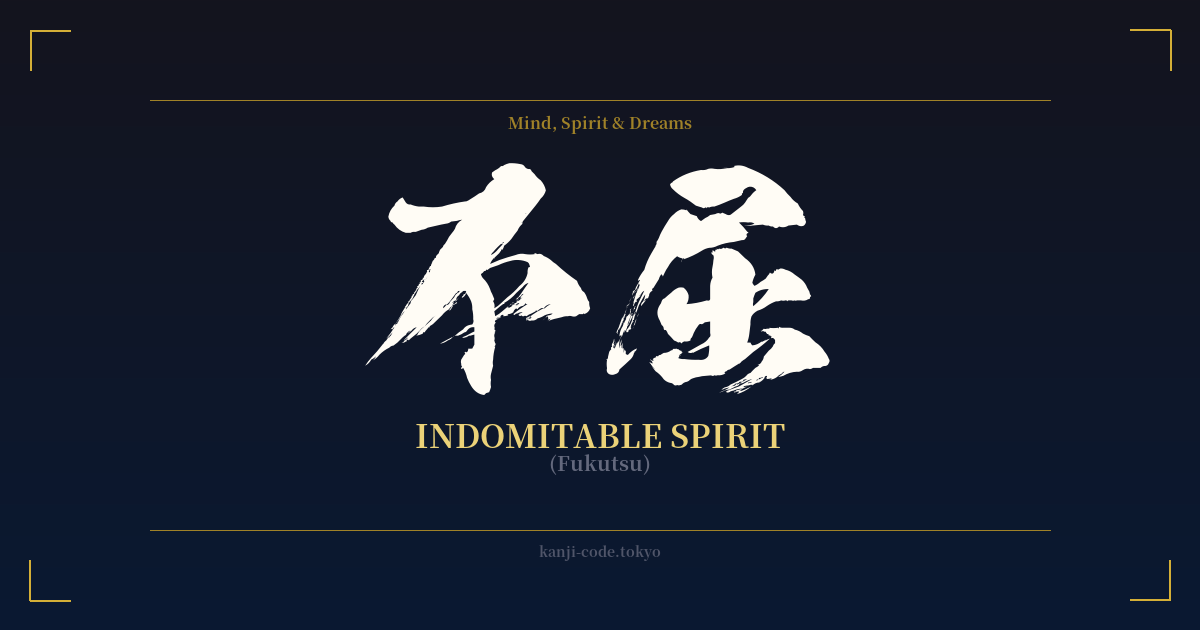
The same kanji can look dramatically different depending on the calligraphy style. Choose a font that matches the mood you want for your tattoo or design.
🎨 Tattoo Suitability
📐 Tattoo Design Guide
The kanji 徹 offers a balanced and detailed design that works well as a standalone piece. Its meaning of unwavering focus makes it a powerful personal statement.
– Placement Suggestions: The forearm, inner bicep, calf, or the back of the shoulder are excellent choices. These areas provide a flat, vertical canvas that allows the character's 15 strokes to be rendered clearly without distortion.
– Recommended Styles: For a feeling of strength and motion, a semi-cursive style like gyōsho (行書) can emphasize the 'follow-through' aspect of the kanji. For a more disciplined and clear statement, a crisp kaisho (楷書) or block script is timeless and impactful.
– Visual Tips: Avoid making this tattoo too small, as the intricate strokes on the right side can merge and lose definition over time. Consider a design where the character is the clear focal point, without too many distracting background elements. A simple 'ensō' (Zen circle) behind it could complement its meaning of completeness.
Comments