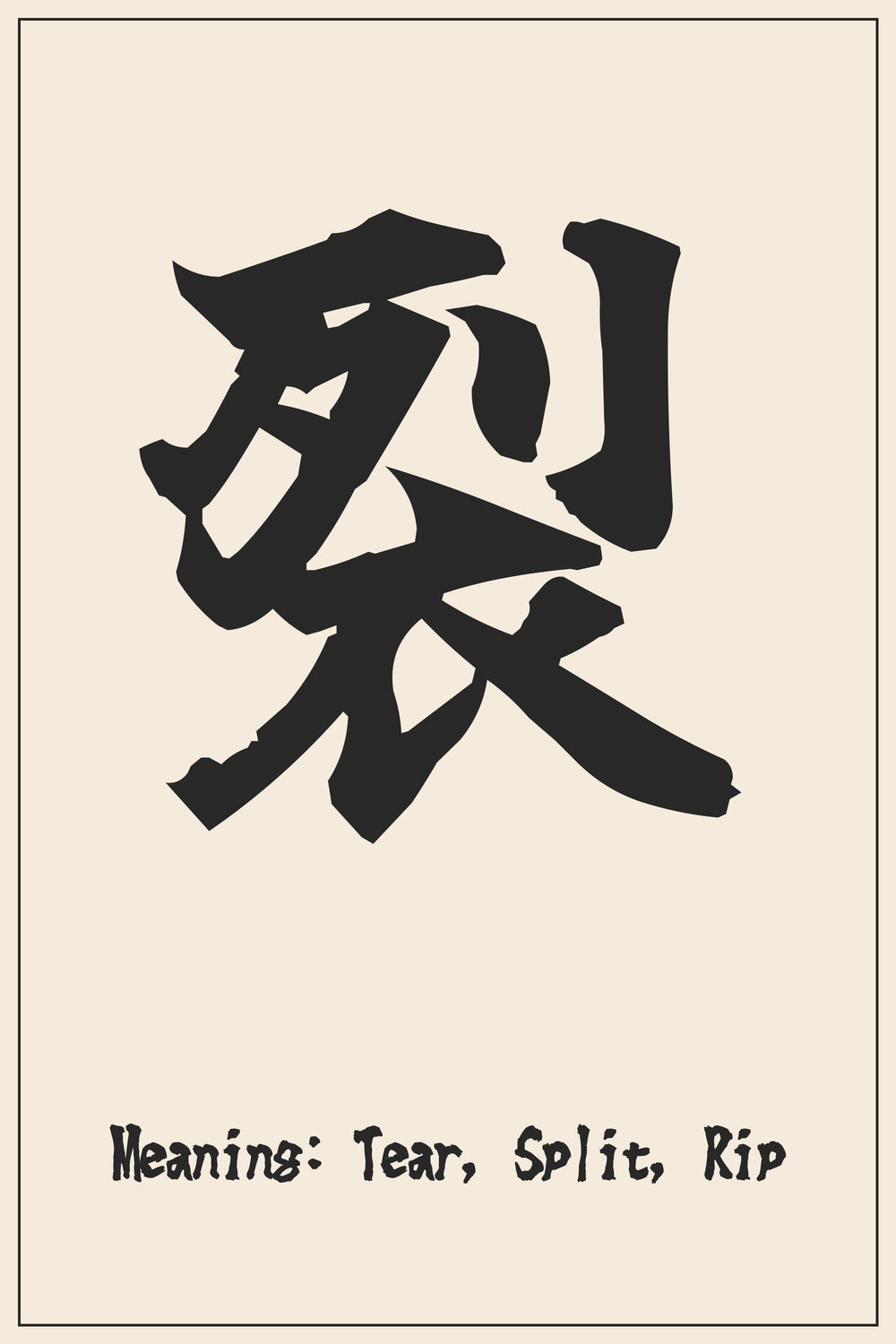
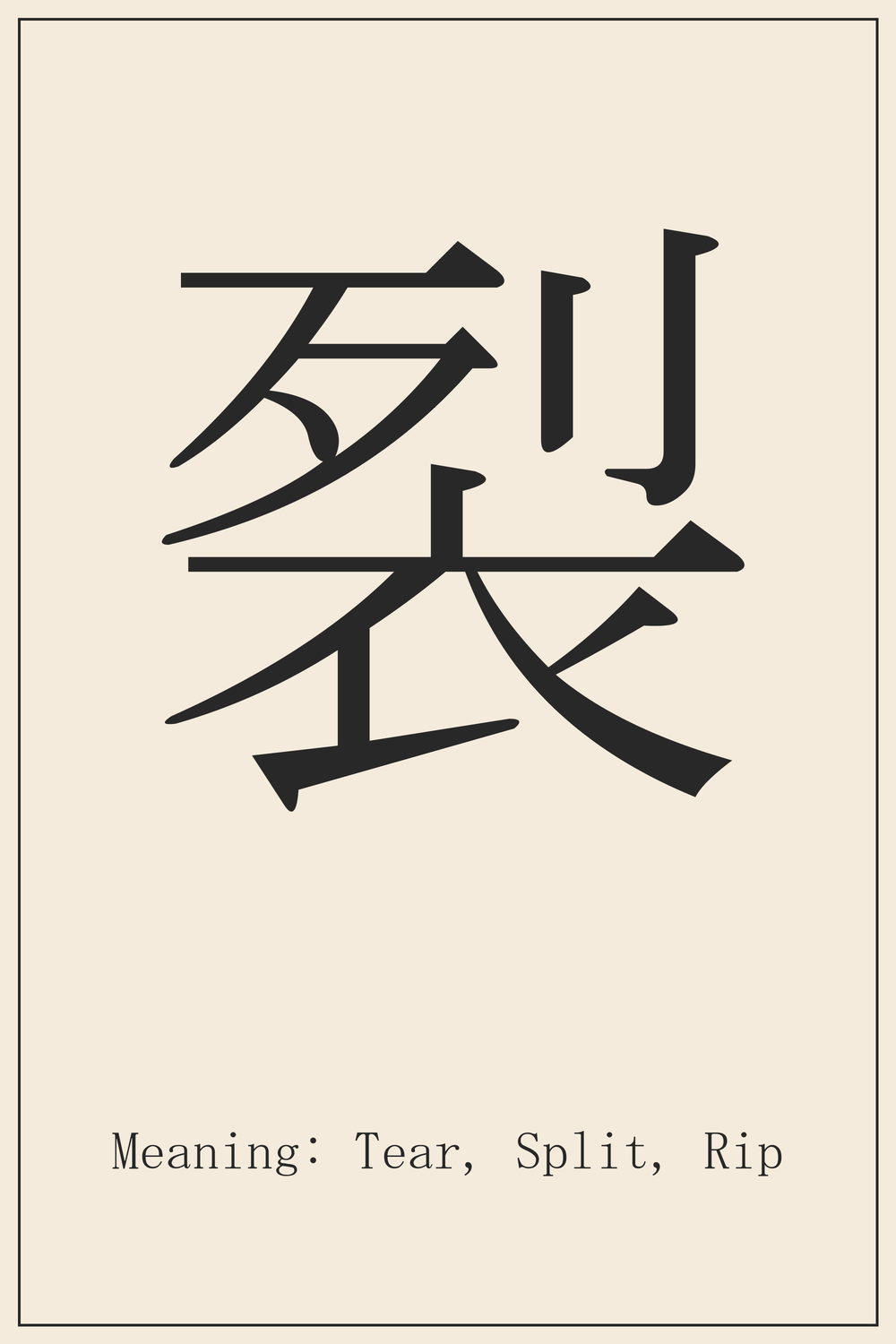
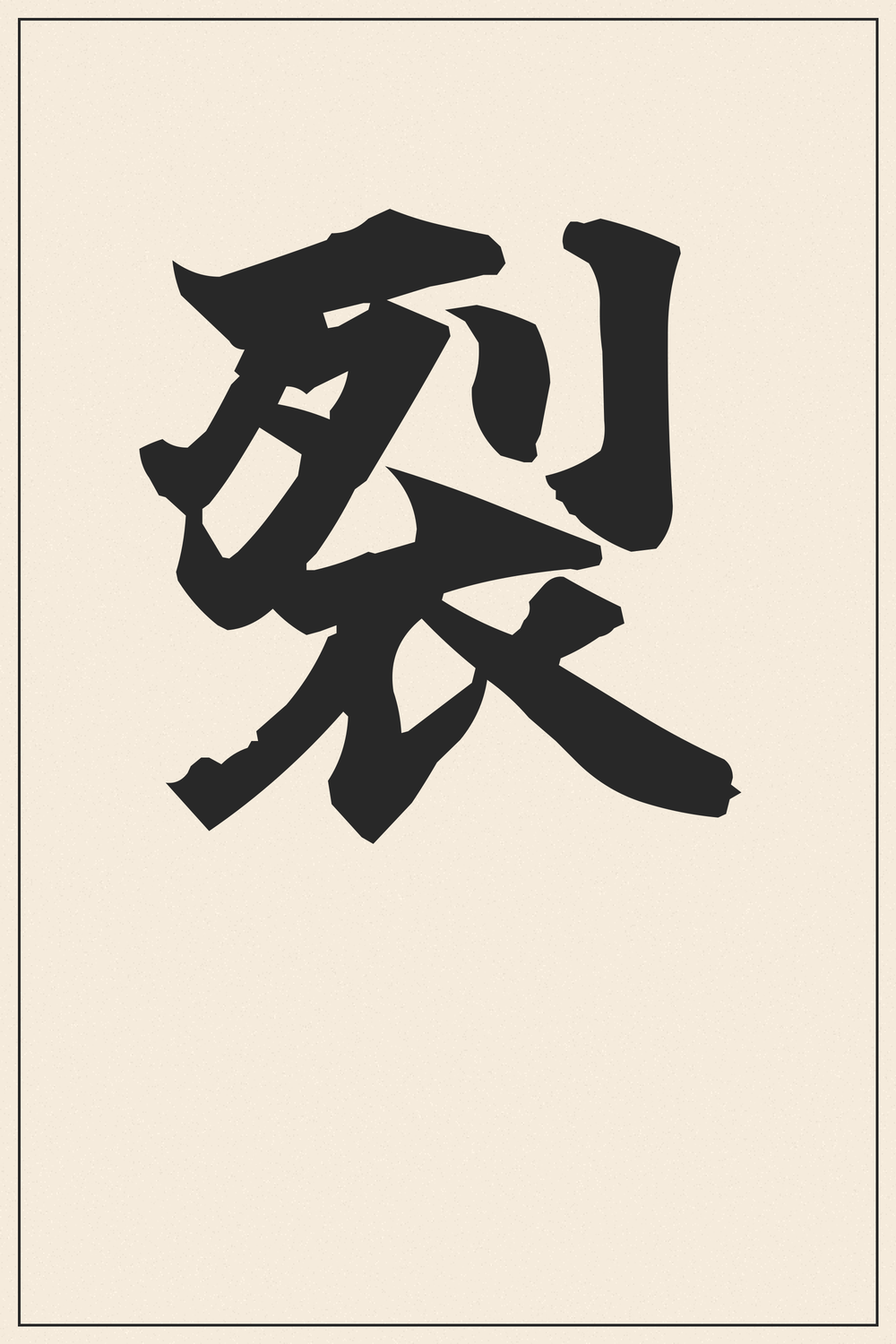
The Kanji 裂 (Retsu, Saku) embodies the raw power of division and transformation. It signifies the act of tearing or splitting, reflecting moments of breaking apart or creating new pathways through forceful separation.
The atmosphere of a Kanji character changes dramatically depending on the font style. A character that looks elegant in a brush style might look bold and modern in a different font.
Recommendation:
Since a tattoo is permanent, we strongly recommend comparing various font styles beyond what is shown here. Use our designs as a trusted reference for the correct structure, but feel free to explore different artistic variations to find the perfect match for your vision.
The Deep Meaning Behind 裂
The Kanji 裂 (Retsu) signifies ‘to split,’ ‘to tear,’ ‘to rend,’ or ‘fissure.’ It specifically refers to the act of tearing something apart, often cloth or material.
In Japanese culture, this character is used to describe forceful separation, such as a “fissure” in the ground or a “breakdown” (Ketsuretsu) in negotiations. It captures the decisive moment when a unified whole is ripped into pieces.
Kanji Breakdown
The character 裂 is composed of two distinct parts that describe the act of tearing fabric.
Meaning: Row, Line. The top component is 列 (Retsu), which acts phonetically. It also carries the nuance of separation or arranging things in order.
Meaning: Garment, Clothing. The bottom radical is 衣 (Koromo). It specifies the object being acted upon—originally depicting the tearing of cloth or garments. This categorizes the character as an action related to materials or clothing.
Conclusion
The Kanji 裂 is a potent symbol for the act of tearing, splitting, or rupturing. It conveys a sense of decisive action, whether it’s physically breaking something or metaphorically creating a significant division or change.
Choosing 裂 for a tattoo signifies an appreciation for the impactful moments of separation and the inherent strength found in transforming what exists. It’s a powerful statement for those who embrace breaking barriers or forging new paths.
Comments