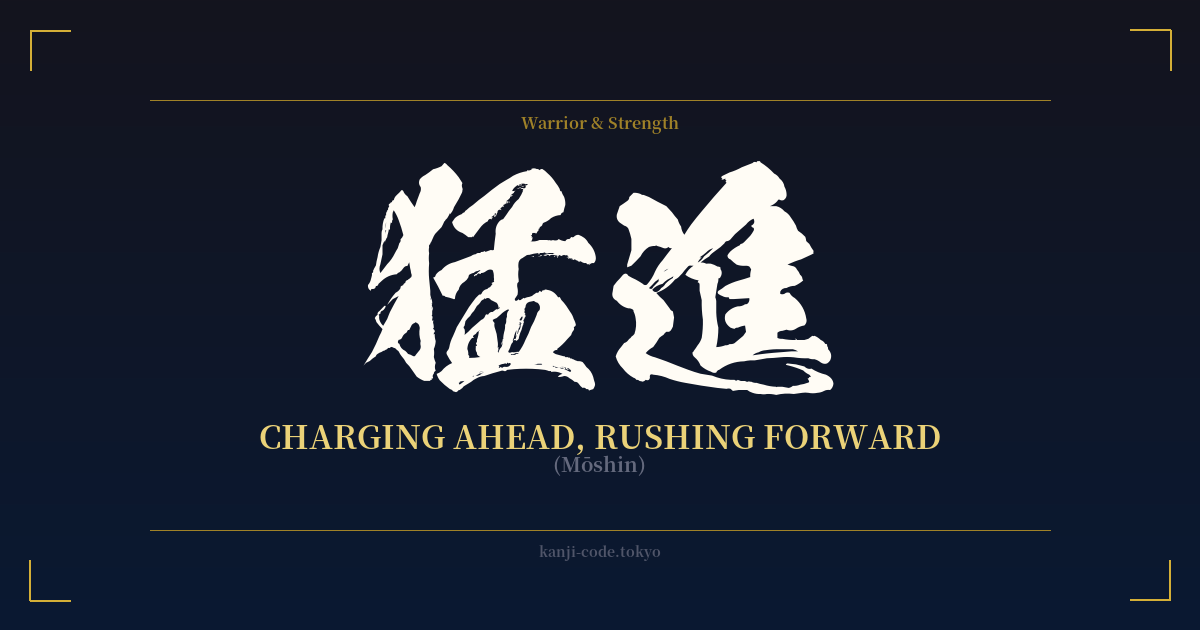
✍️ 猛進 (Mōshin) — Cultural Context
The Japanese word 猛進 (Mōshin) translates to 'charging ahead' or 'rushing forward,' but its essence is far more visceral and powerful than a simple forward movement. It captures the spirit of an unstoppable, ferocious charge, driven by pure will and untamed energy. This is not a gentle stroll; it is a full-throttle assault on a goal or obstacle.
The key to understanding Mōshin lies in its first character, 猛, which means 'fierce' or 'wild.' This kanji is often associated with powerful, untamed animals. This imagery is so central that it forms the basis of a popular four-character idiom: 猪突猛進 (chototsu mōshin), which literally means 'wild boar reckless charge.' In Japanese culture, the wild boar is a symbol of single-minded determination and reckless courage, charging forward without a hint of hesitation. Mōshin embodies this exact spirit—a headlong rush fueled by raw power.
Historically, this concept resonates deeply with the warrior ethos of the samurai. The image of a warrior breaking through enemy lines, driven by a fighting spirit that overwhelms all opposition, is a perfect illustration of Mōshin. It is the physical manifestation of sheer willpower, where momentum and ferocity overcome strategy and defense. It represents a commitment to a path so absolute that nothing can stand in the way.
In modern Japan, Mōshin is still used to describe this kind of intense, head-on approach, though the battlefield has changed. It can describe an entrepreneur relentlessly pushing a startup to success, an athlete giving their all in the final moments of a competition, or an artist single-mindedly pursuing their creative vision against all odds. It's a word reserved for a level of dedication that borders on obsession, where progress is measured by the sheer force exerted.
To choose Mōshin is to embrace an identity of fierce ambition. It stands in stark contrast to words like 前進 (zenshin), which simply means 'to advance,' or 漸進 (zenshin), 'to progress gradually.' Mōshin is loud, unapologetic, and powerful. It is the declaration of an unbreakable will and a commitment to move forward, no matter what lies ahead.
🖌️ Font Styles for 猛進
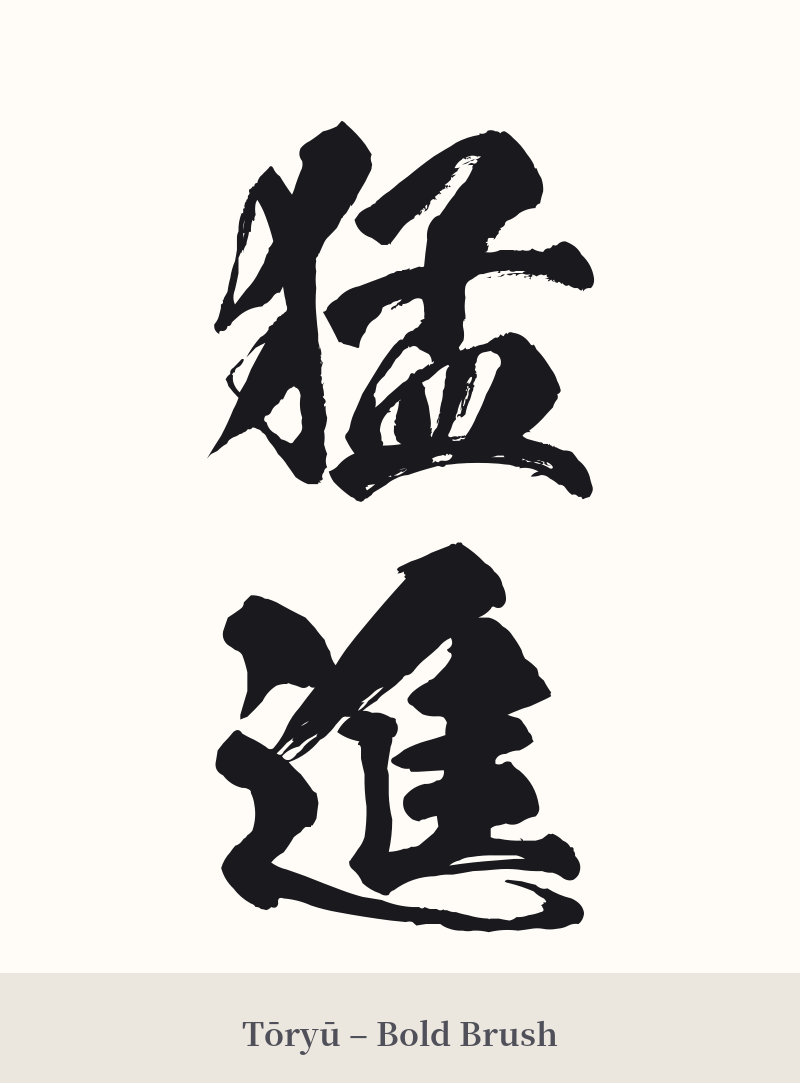
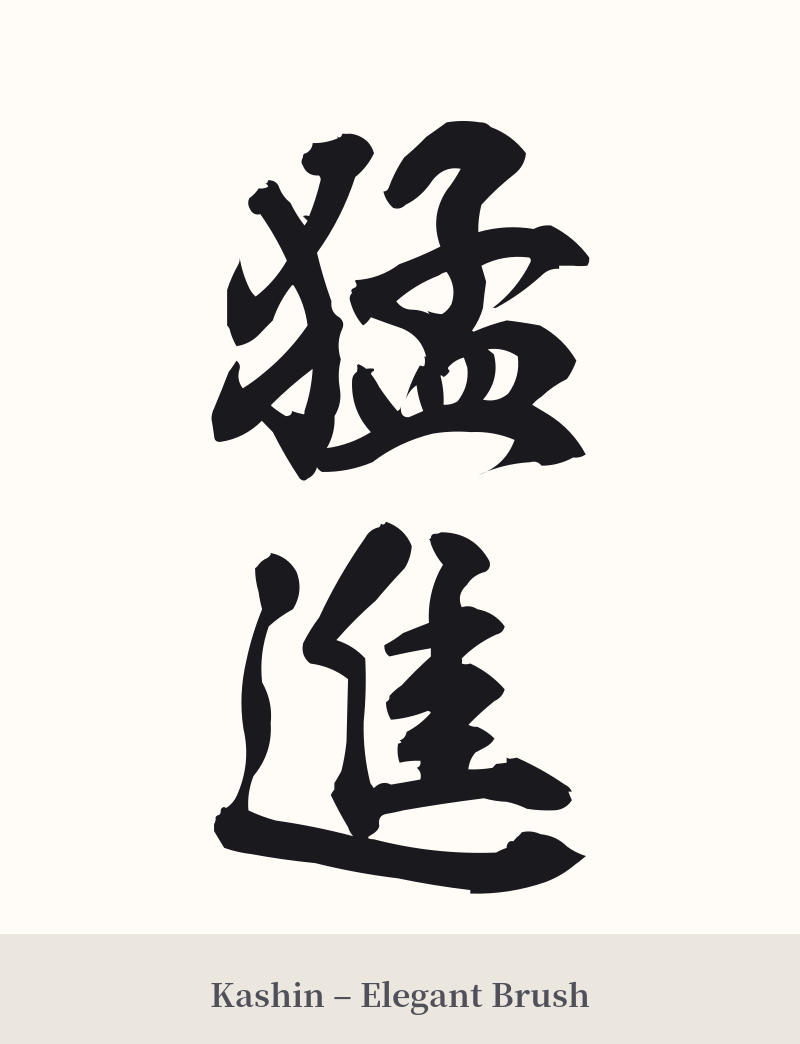
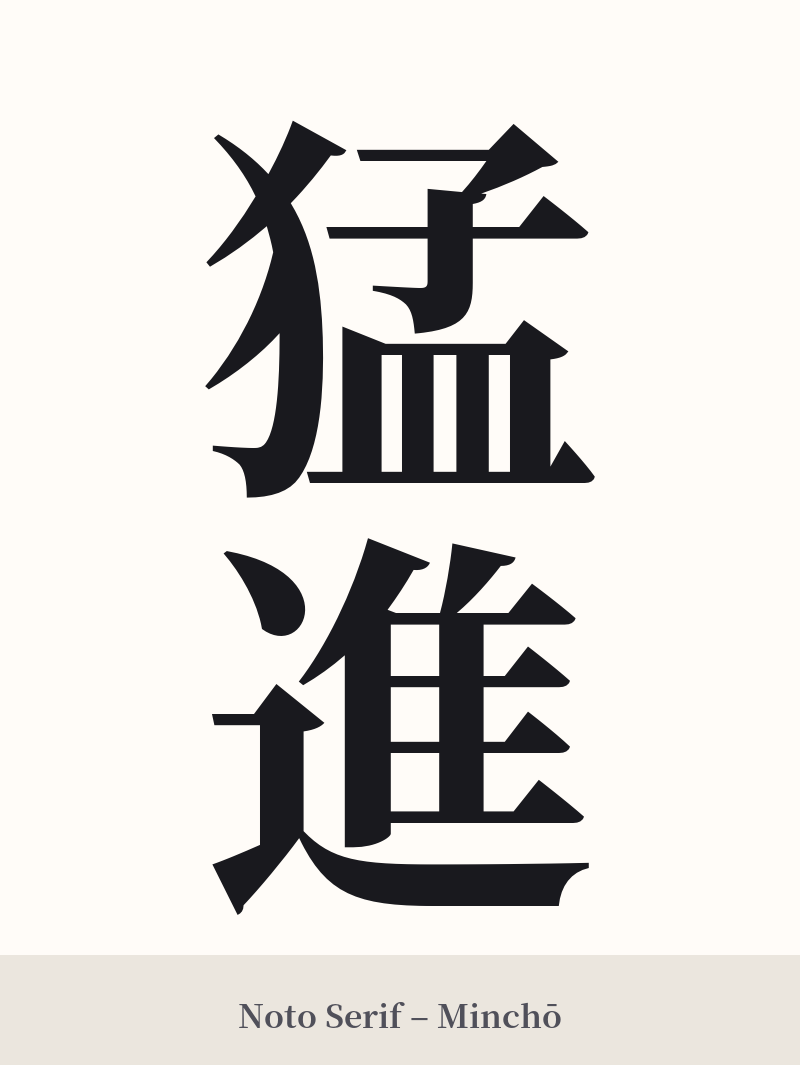
The same kanji can look dramatically different depending on the calligraphy style. Choose a font that matches the mood you want for your tattoo or design.
🎨 Tattoo Suitability
📐 Tattoo Design Guide
For a 猛進 tattoo, the design should reflect its inherent energy and power. A vertical orientation works exceptionally well, creating a sense of downward or upward force. Good placements include the forearm, the calf, or along the spine or ribs to accentuate the body's lines.
– Font Style: Bold, dynamic calligraphy styles are highly recommended. A vigorous gyōsho (semi-cursive) or sōsho (cursive) script can capture the feeling of rapid movement. Alternatively, a thick, stable kaisho (block script) with heavy strokes can emphasize the 'unstoppable force' aspect.
– Visual Elements: Consider pairing the kanji with imagery that reinforces its meaning. A charging wild boar (inoshishi) is the most classic association. Other powerful motifs include crashing waves, streaks of lightning, or abstract ink splashes that convey explosive energy.
– Balance: Ensure both characters, 猛 and 進, are given equal visual weight. Their similar stroke counts (11 strokes each) create a natural balance, which should be maintained by the calligrapher for a harmonious and impactful design.
Comments