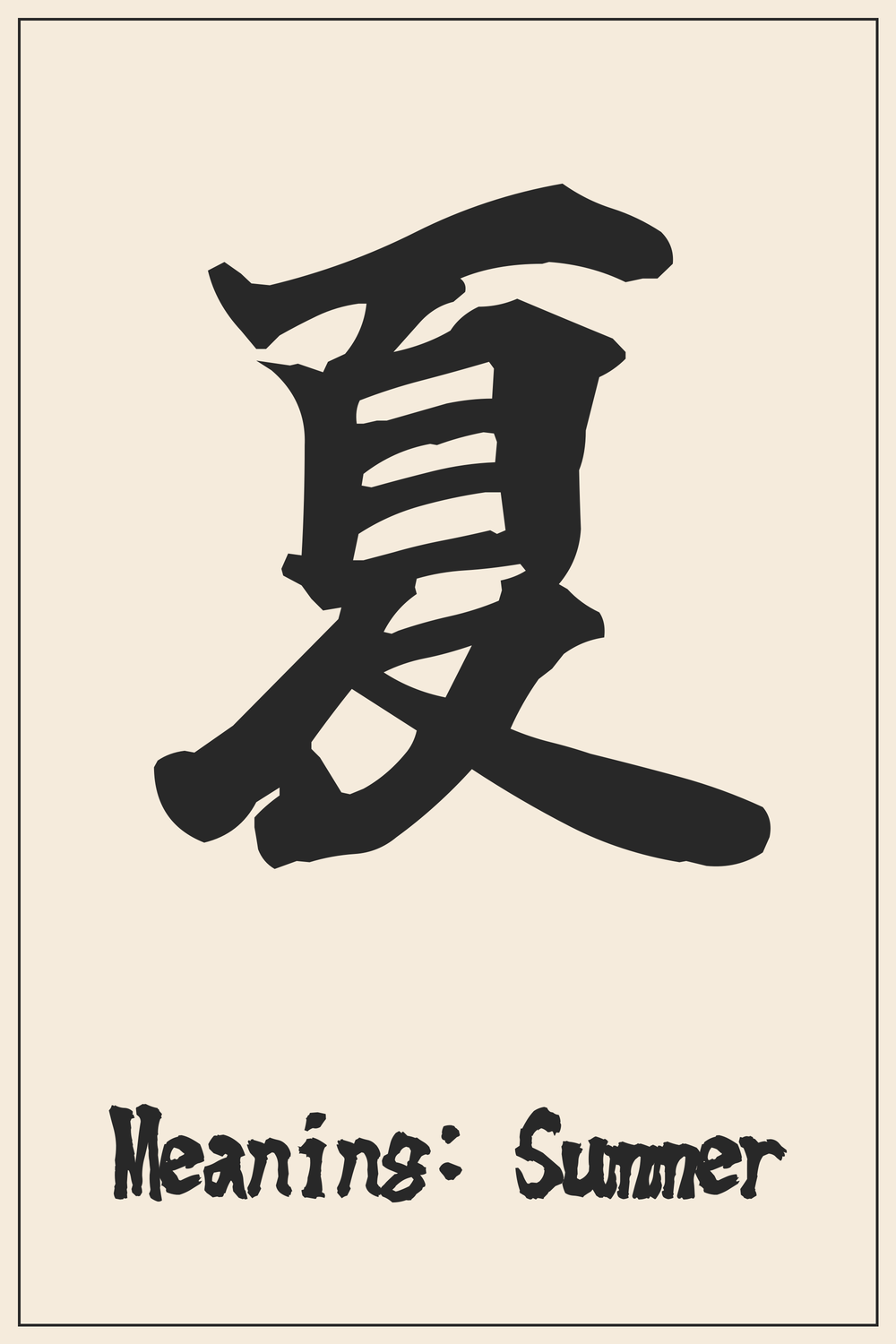
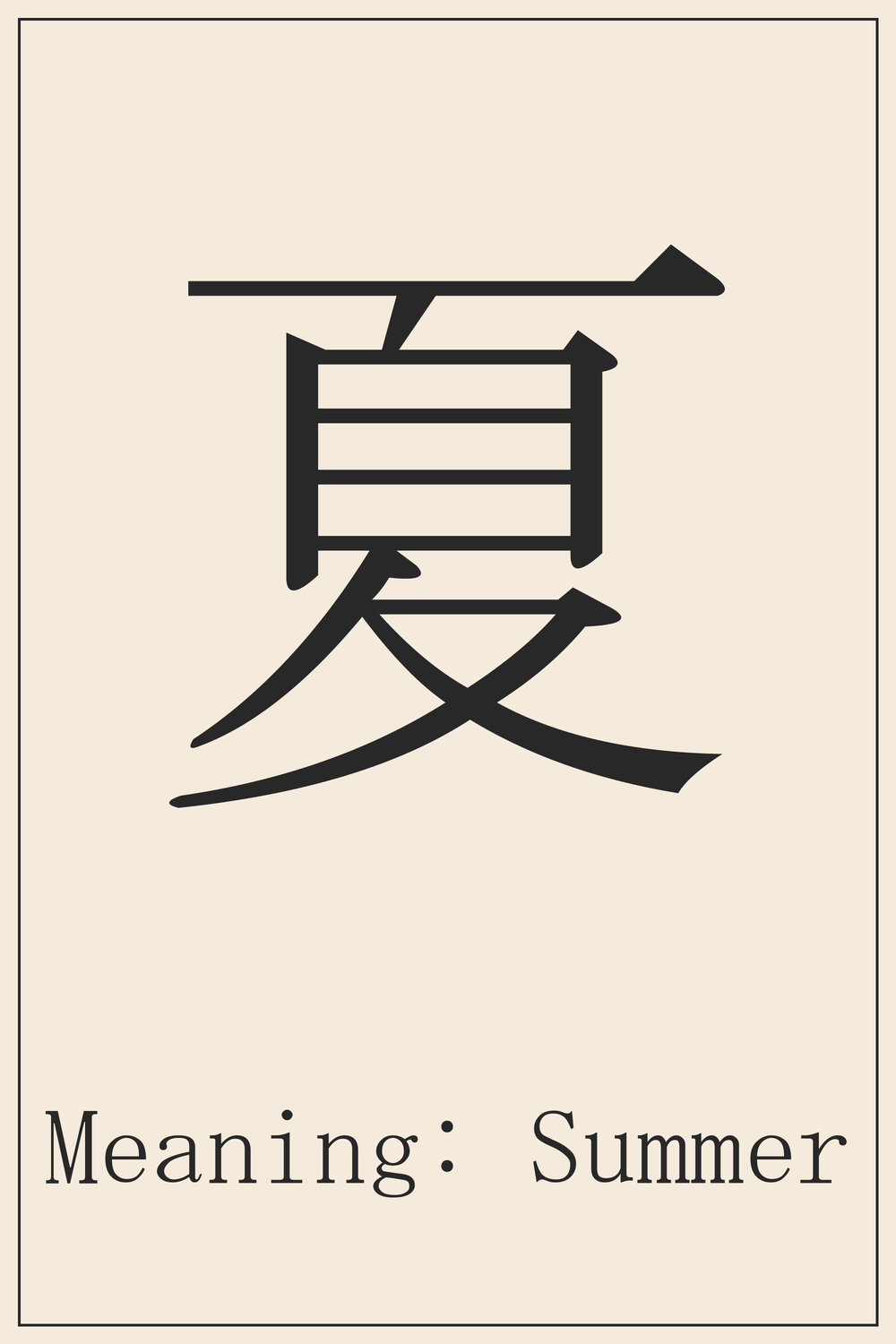
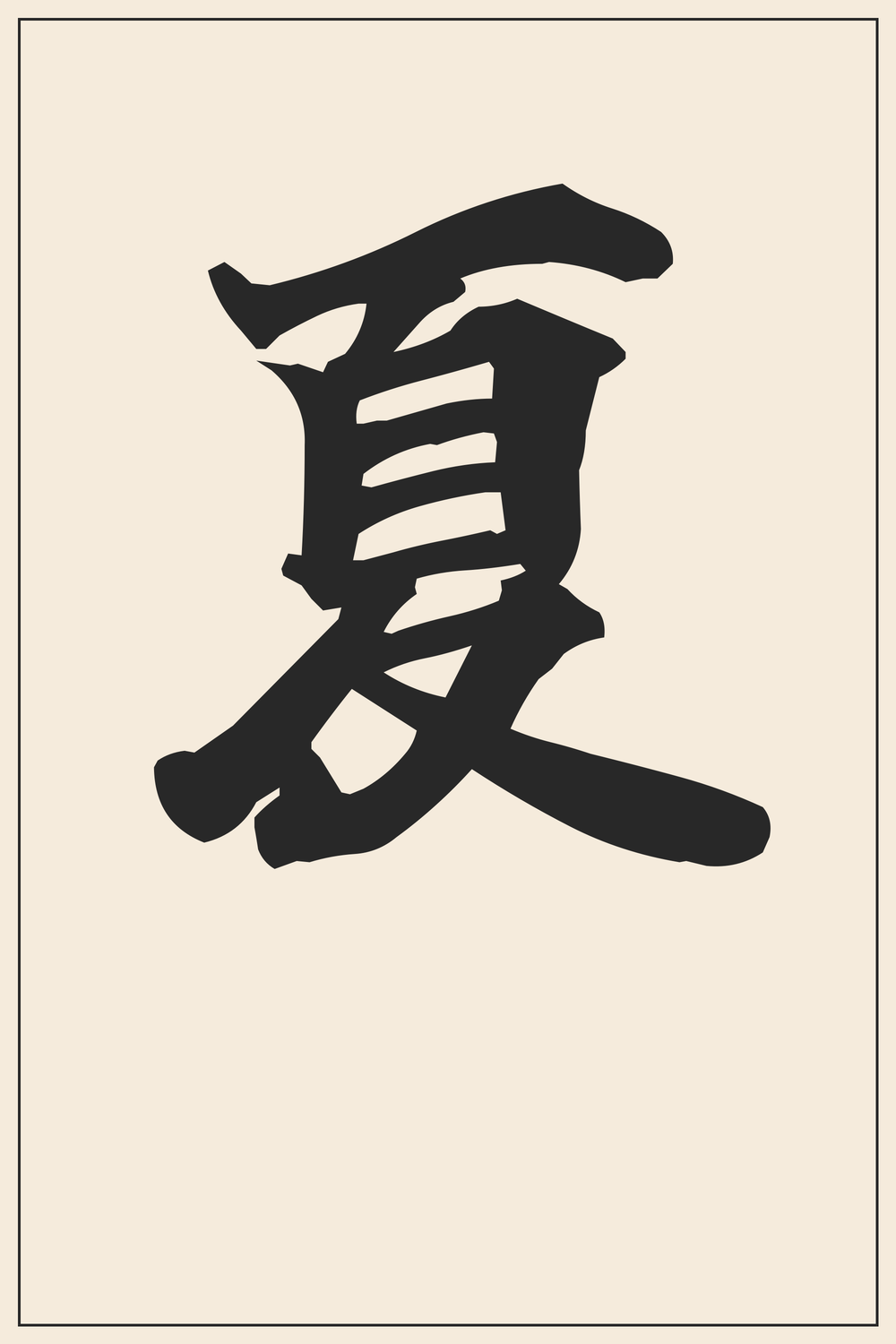
The Kanji 夏 (Natsu) embodies the vibrant energy and warmth of summer. It is a powerful symbol of growth, light, and the season of abundant life.
The atmosphere of a Kanji character changes dramatically depending on the font style. A character that looks elegant in a brush style might look bold and modern in a different font.
Recommendation:
Since a tattoo is permanent, we strongly recommend comparing various font styles beyond what is shown here. Use our designs as a trusted reference for the correct structure, but feel free to explore different artistic variations to find the perfect match for your vision.
The Deep Meaning Behind 夏
The ancient form of 夏 (natsu) is believed to have depicted a person adorned with a large headdress or mask, possibly representing a ceremonial dancer or a cicada. This imagery symbolized the bustling activity, vibrant life, and energetic spirit characteristic of the summer season.
In Japanese culture, summer is a time of lively festivals (matsuri), fireworks, and the energetic buzz of cicadas. It represents a peak of growth and warmth, a period of vivid experiences and shared joy, deeply woven into the nation’s seasonal rhythm.
Kanji Breakdown
The Kanji 夏 is a single character whose profound meaning is rooted in its ancient pictographic origins.
Etymology: The character 夏 (natsu) originated from a pictographic representation, likely depicting a person in a ceremonial posture with a prominent headdress, or possibly a cicada. This ancient form encapsulates the vibrant activity and lively essence of the summer season.
Conclusion
The Kanji 夏 powerfully evokes the essence of summer—a season of warmth, growth, and joyful celebration. It represents a period of peak energy and vibrant life, cherished in Japanese culture for its festivals and natural beauty.
Choosing 夏 for a tattoo is a profound way to symbolize your connection to this dynamic season. It serves as a personal reminder of vitality, warmth, and the joyous moments that define the heart of summer, making for a truly radiant and meaningful design.
Comments