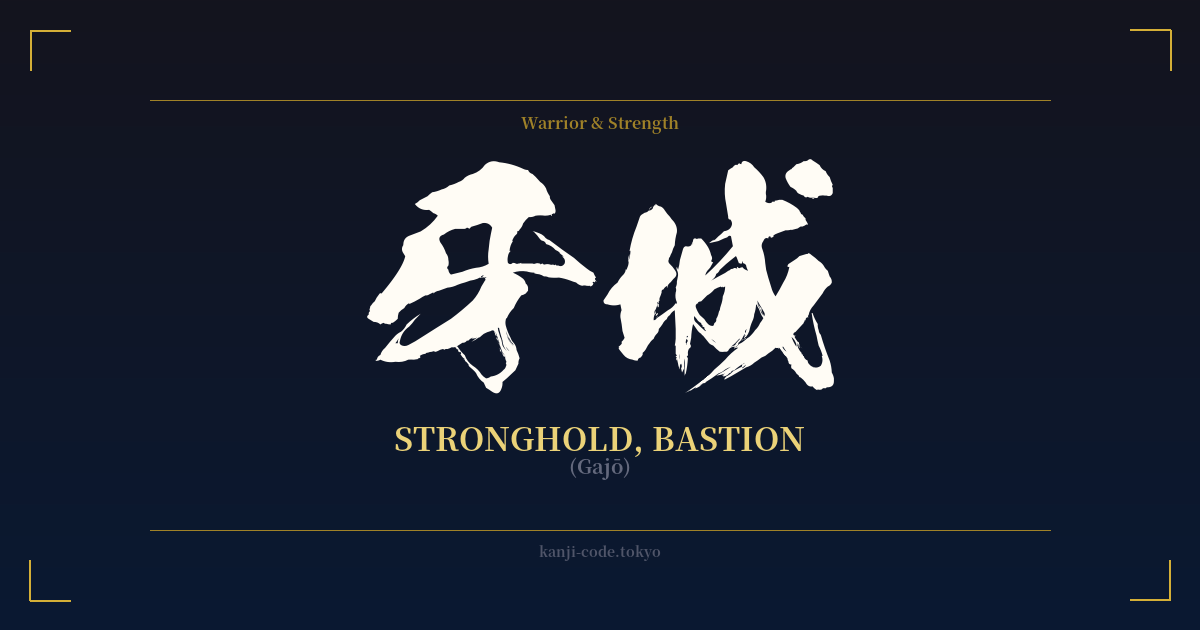
✍️ 牙城 (Gajō) — Cultural Context
The term 牙城 (Gajō) translates to 'stronghold' or 'bastion,' but its origins paint a much more vivid picture than a simple stone fortress. The word dates back to ancient China, where military generals would fly a flag adorned with elephant or ivory tusks at their central command post. The first character, 牙 (ga), means 'fang' or 'tusk,' and the second, 城 (jō), means 'castle.' Thus, 牙城 literally means 'Tusk Castle,' the place from which the leader directed the entire army.
This powerful imagery was adopted into Japanese, where it became synonymous with the heart of a clan's power. In the context of a Japanese castle complex, the Gajō would be the 'honmaru' (本丸), the innermost, most heavily defended bailey where the lord resided. It was the last line of defense and the symbolic center of their domain. To lose the Gajō was to lose the battle entirely.
Over time, the meaning of Gajō expanded beyond the physical battlefield. It came to represent the core stronghold of any group or idea. You might hear of a political party's 牙城, referring to a district where they have unshakable support. A company that dominates a market is said to have built a Gajō in that industry. It's the center of power, the source of influence, and the last bastion that must be protected at all costs.
Metaphorically, Gajō can also be applied on a personal level. It can symbolize one's core principles, an unshakeable belief system, or the inner reserve of strength that one protects fiercely. It represents a foundation that cannot be broken, a personal fortress of will and conviction. Choosing this word is to declare that your own center is well-defended and that you are the commander of your own fate.
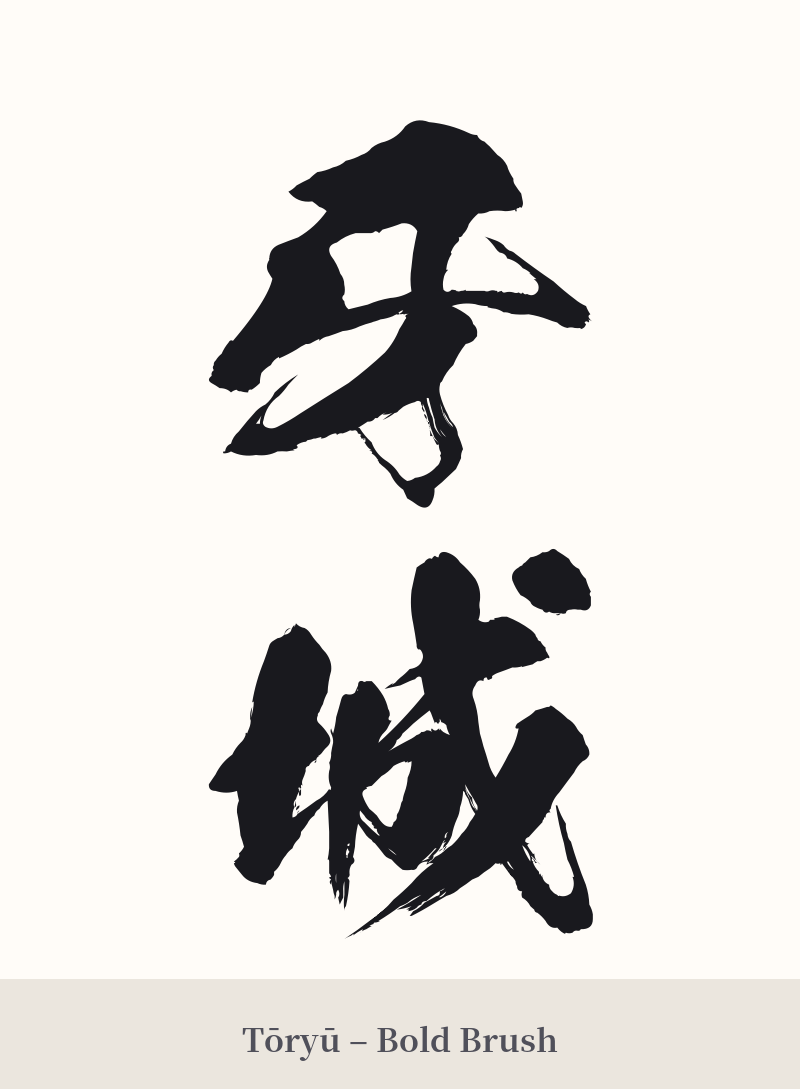
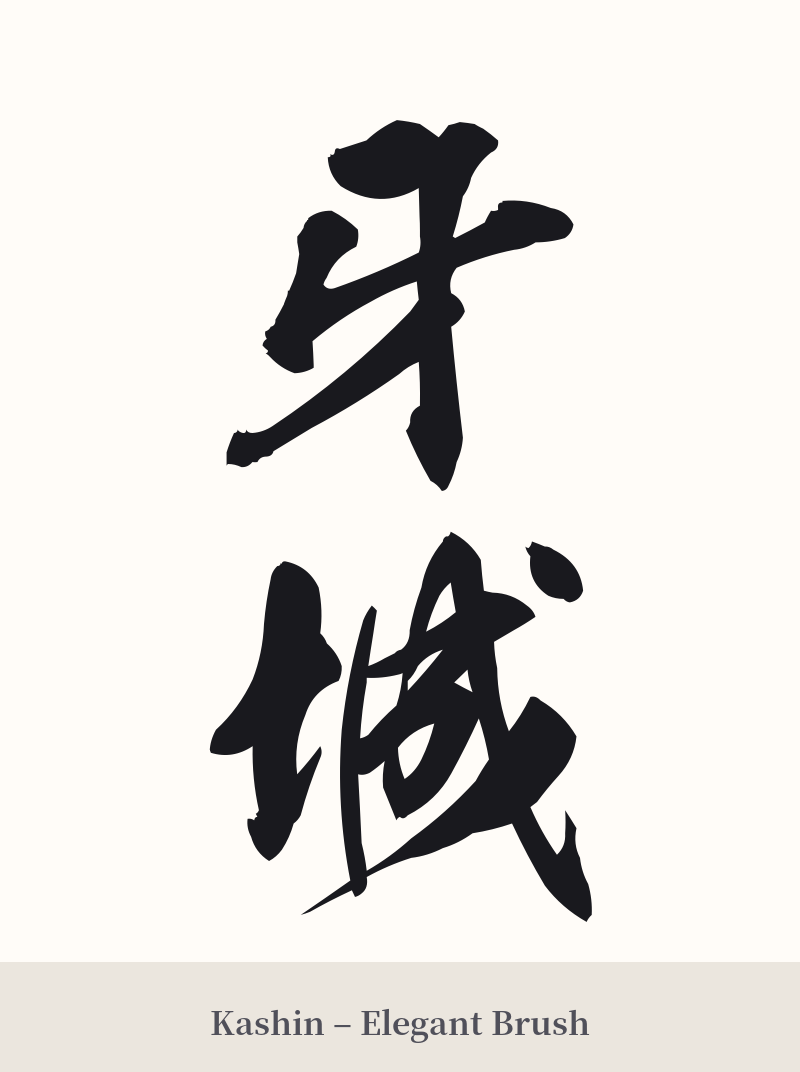
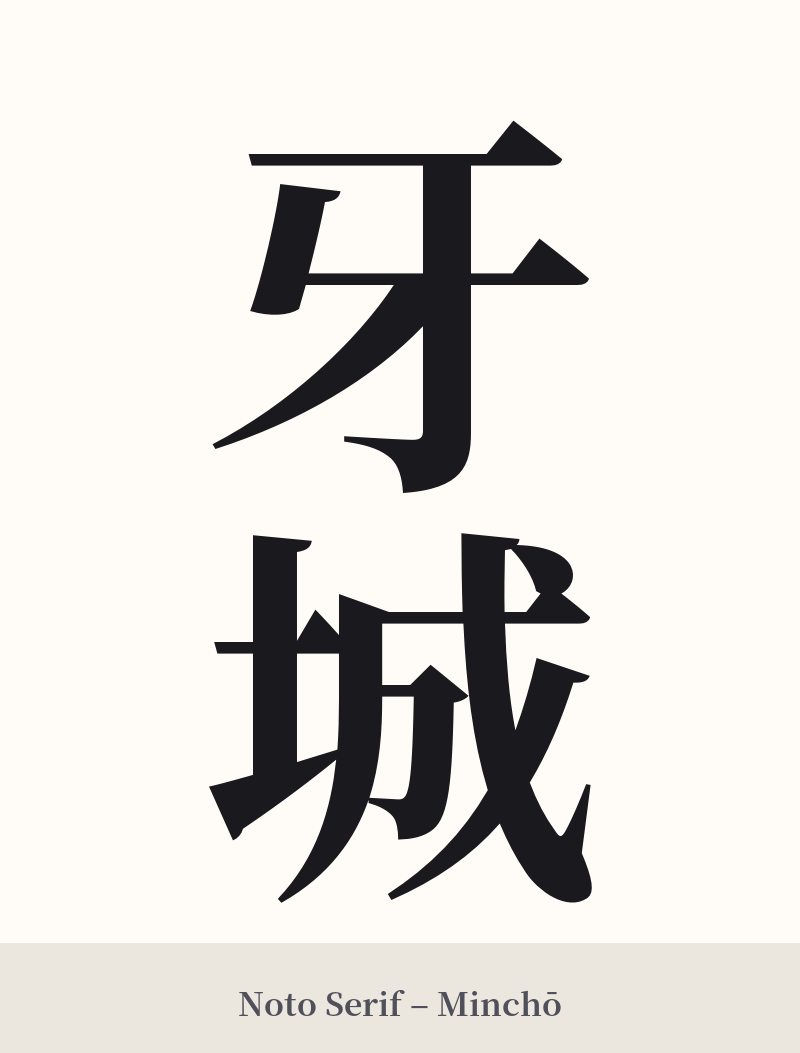
🖌️ Font Styles for 牙城
The same kanji can look dramatically different depending on the calligraphy style. Choose a font that matches the mood you want for your tattoo or design.
🎨 Tattoo Suitability
📐 Tattoo Design Guide
牙城 (Gajō) is a visually strong and balanced compound that works well in various tattoo designs. Its meaning of an impenetrable core lends itself to bold and confident aesthetics.
– Placement: Vertical placement is highly recommended to mimic the structure of a banner or a tower. The forearm, calf, or along the spine are excellent choices. For a horizontal design, the chest or upper back provides a solid canvas.
– Font Style: A thick, stable block script (Kaisho) can emphasize the 'castle' aspect, conveying stability and permanence. Alternatively, a powerful semi-cursive script (Gyosho) with sharp, deliberate strokes can highlight the 'fang' character, adding a sense of dynamic strength and aggression.
– Visual Elements: Consider pairing the kanji with related imagery. A subtle silhouette of a Japanese castle (tenshu) in the background can provide context. It could also be framed by dragon scales or flanked by a dragon, as the creature's fangs (牙) connect directly to the first character.
Comments