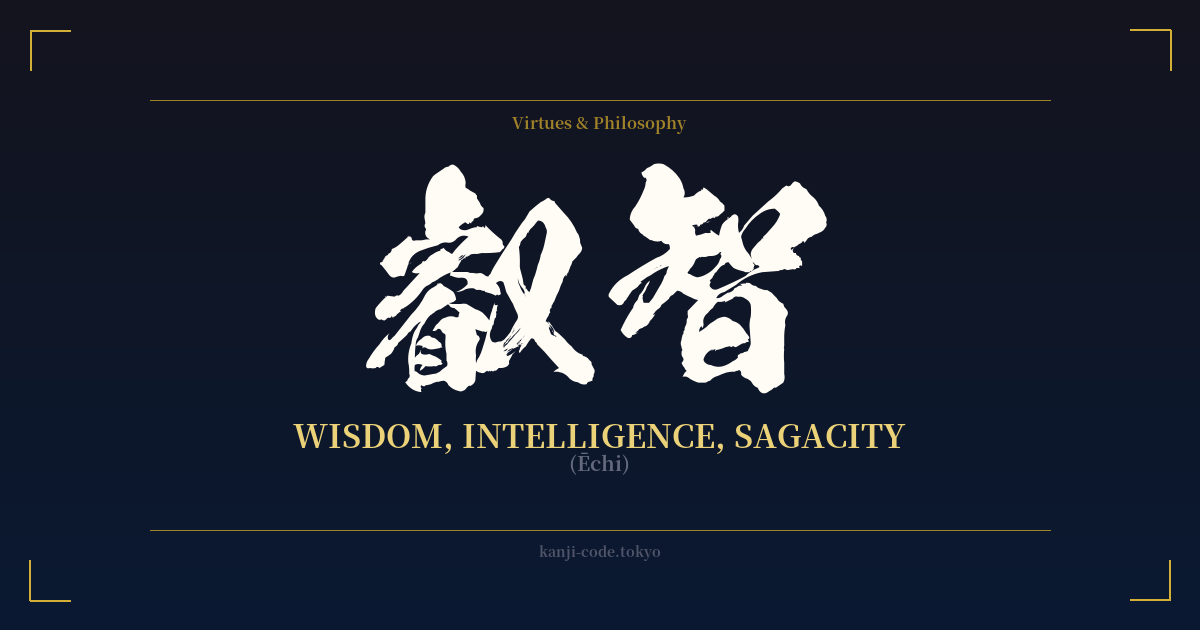
✍️ 叡智 (Ēchi) — Cultural Context
In the vast lexicon of Japanese words for intelligence, 叡智 (Ēchi) occupies a special, almost sacred space. It is not the everyday cleverness of 知恵 (chie) or the book-smarts of 知識 (chishiki). Instead, Ēchi represents a higher form of wisdom—a profound, all-encompassing intelligence that grasps the fundamental truths of the universe.
The word carries a distinct philosophical and spiritual weight. It is the wisdom that transcends mere data and logic, touching upon intuition, insight, and a deep understanding of the human condition and the cosmos. This is why it is frequently used in Buddhist texts to describe the supreme wisdom of the Buddha or other enlightened beings. This is the intelligence that allows one to see past illusion (maya) and perceive reality as it truly is.
The first character, 叡 (Ei), is particularly revealing. It is a complex kanji historically associated with imperial or even divine intelligence. Its structure hints at a profound perception, combining elements that suggest deep, penetrating sight and hearing. It implies a clarity that is sharp, keen, and almost clairvoyant. This character elevates the entire word, distinguishing it from more mundane forms of intellect.
The second character, 智 (Chi), is more straightforward, meaning wisdom or intellect. It is a core component in many words related to thinking and reason. However, when paired with 叡, it is transformed. The combination 叡智 suggests not just having wisdom, but a state of being wise in a profound, enlightened way.
In modern Japan, Ēchi is not a word used in casual conversation. It is reserved for formal, philosophical, or literary contexts. You might hear it used to describe the genius of a revolutionary scientist, the sagacity of a great philosopher, or even the advanced, god-like intelligence of an AI in science fiction. Its use immediately signals a level of seriousness and depth, making it a powerful and respected concept.
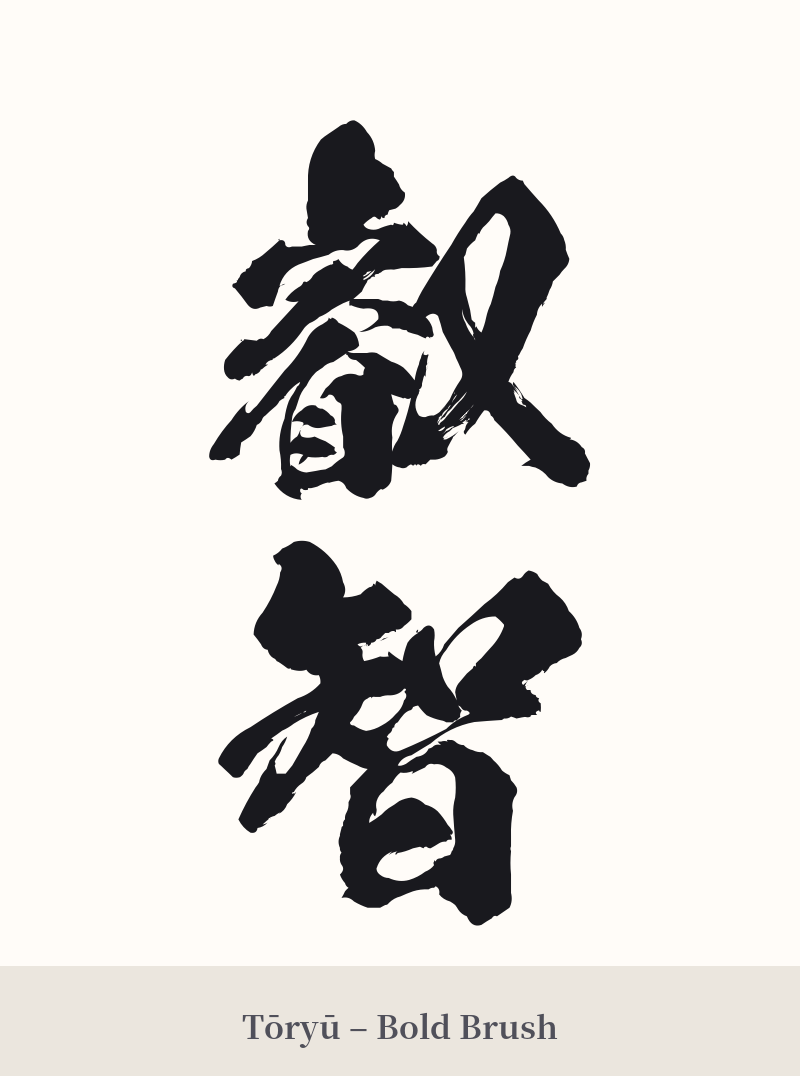
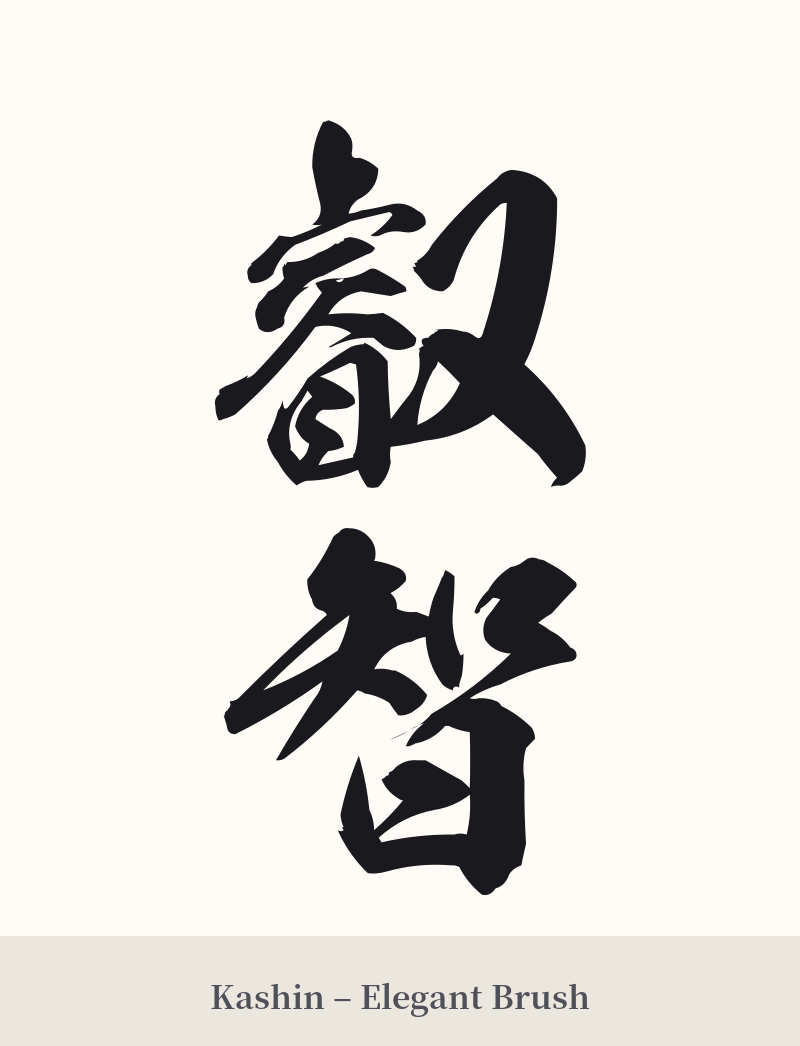
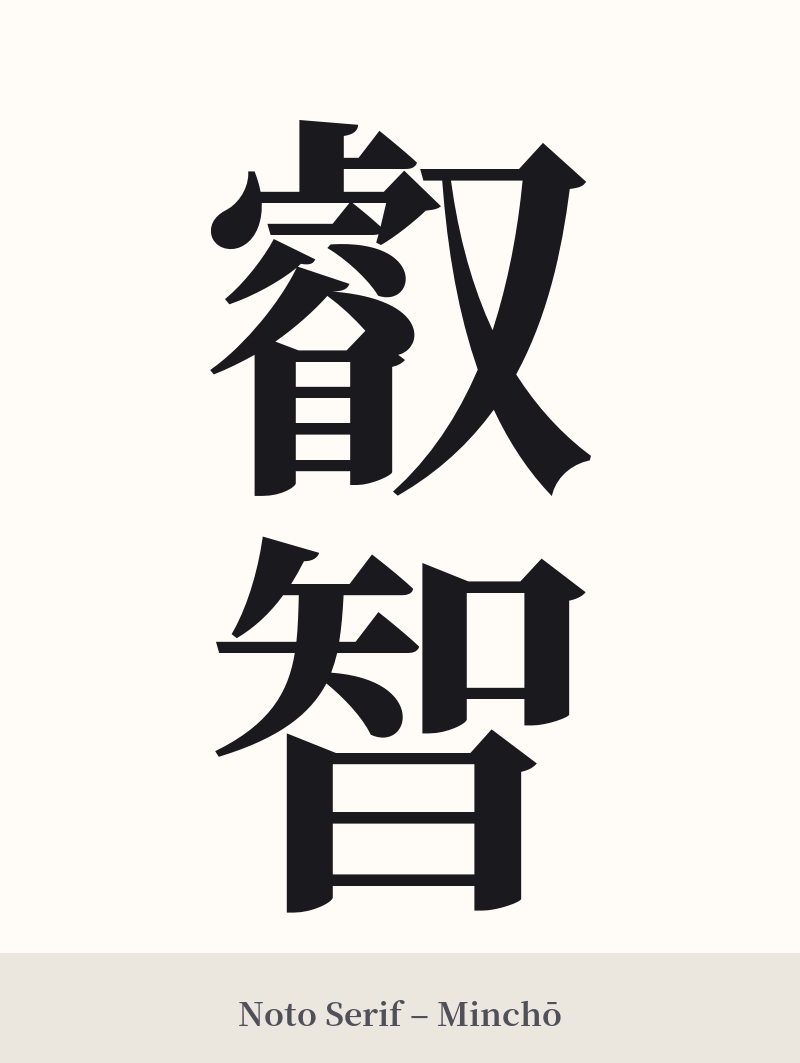
🖌️ Font Styles for 叡智
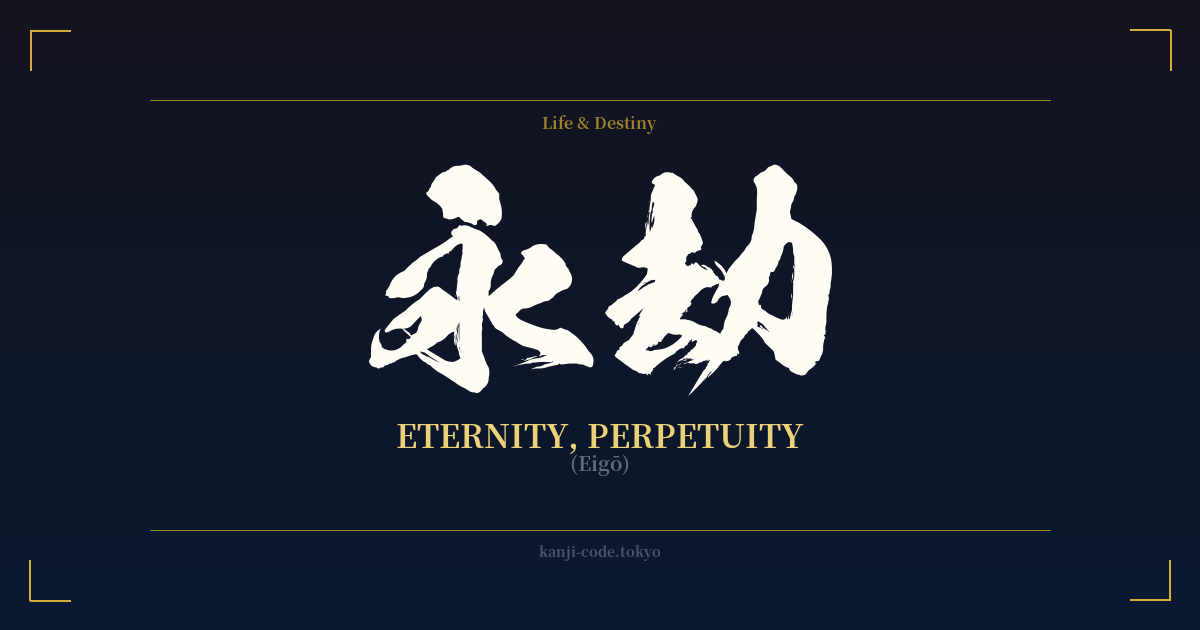
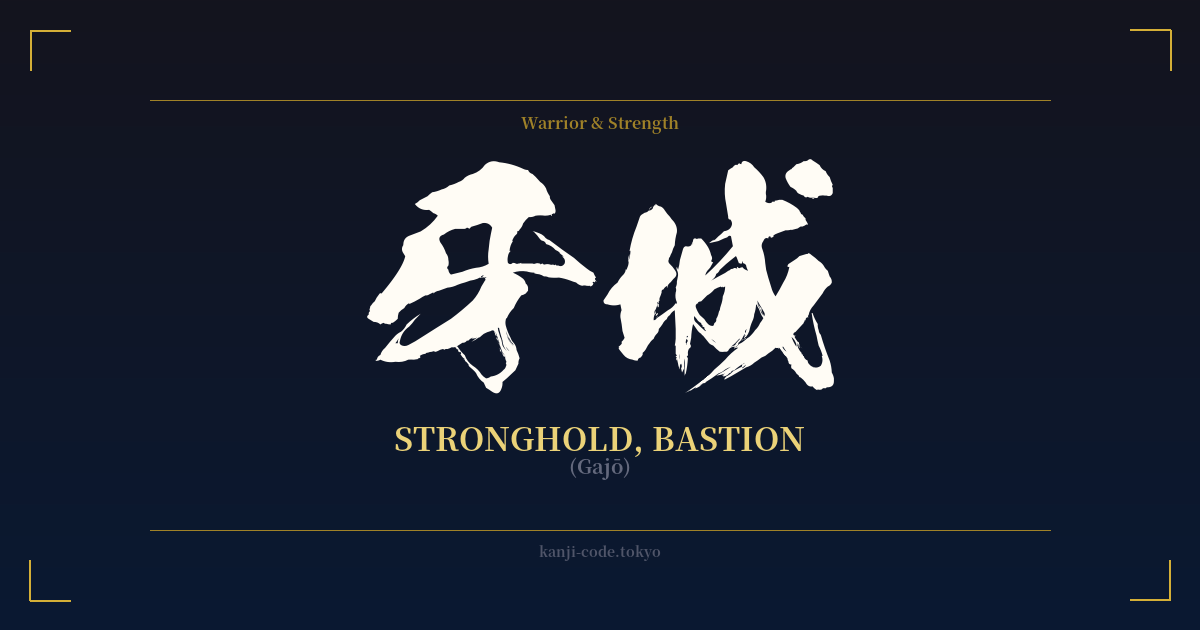
The same kanji can look dramatically different depending on the calligraphy style. Choose a font that matches the mood you want for your tattoo or design.
🎨 Tattoo Suitability
📐 Tattoo Design Guide
For a tattoo of 叡智, the primary consideration is clarity. The characters are detailed and a design must honor their complexity.
– Placement: Choose a flat, spacious area of the body. The forearm, calf, upper back, or chest are excellent choices. These locations provide a stable canvas and enough room to prevent the design from feeling cramped.
– Size: Go larger than you might initially think. The intricate strokes, especially in the 16-stroke 叡, need space to breathe. A larger size ensures the tattoo will age well and remain legible for years to come.
– Style: A traditional calligraphy style, such as Kaisho (block style) or Gyosho (semi-cursive), beautifully complements the classical feel of the word. These styles emphasize the brush strokes and balance. For a more modern look, a clean and sharp Mincho font can also be very effective.
– Orientation: A vertical alignment is the most traditional and aesthetically pleasing orientation for multi-character kanji compounds. It allows the characters to flow downwards naturally.
Comments