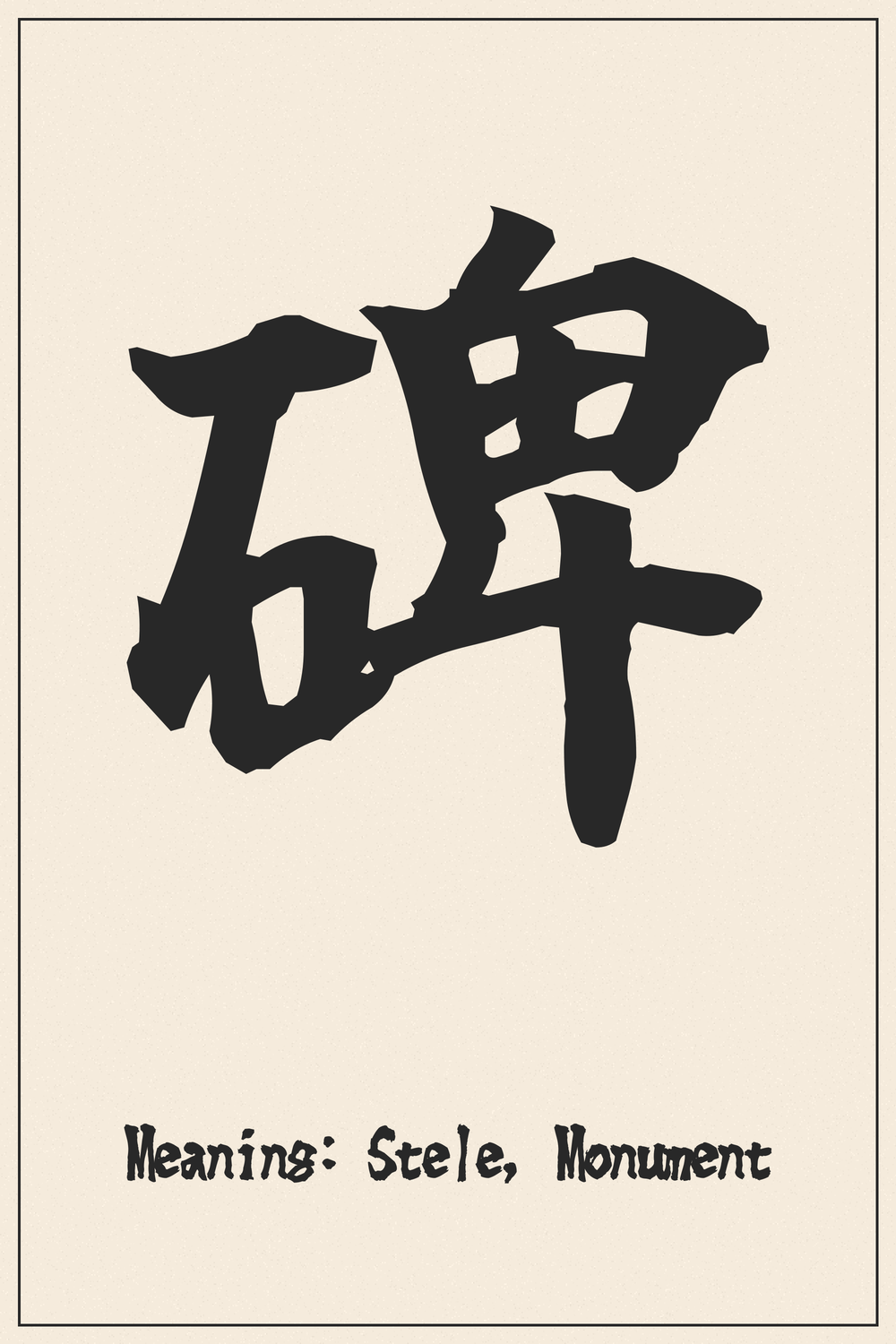
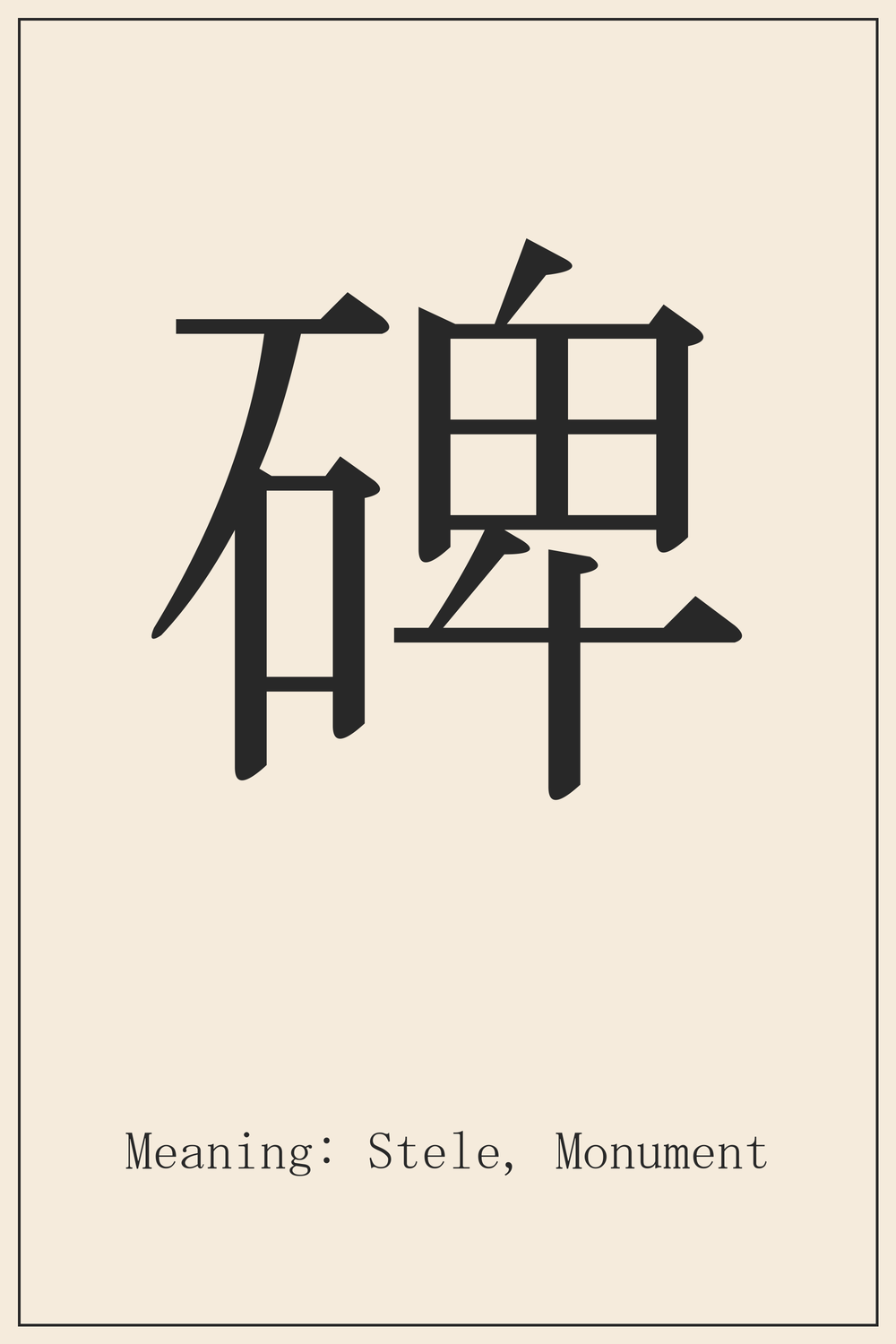
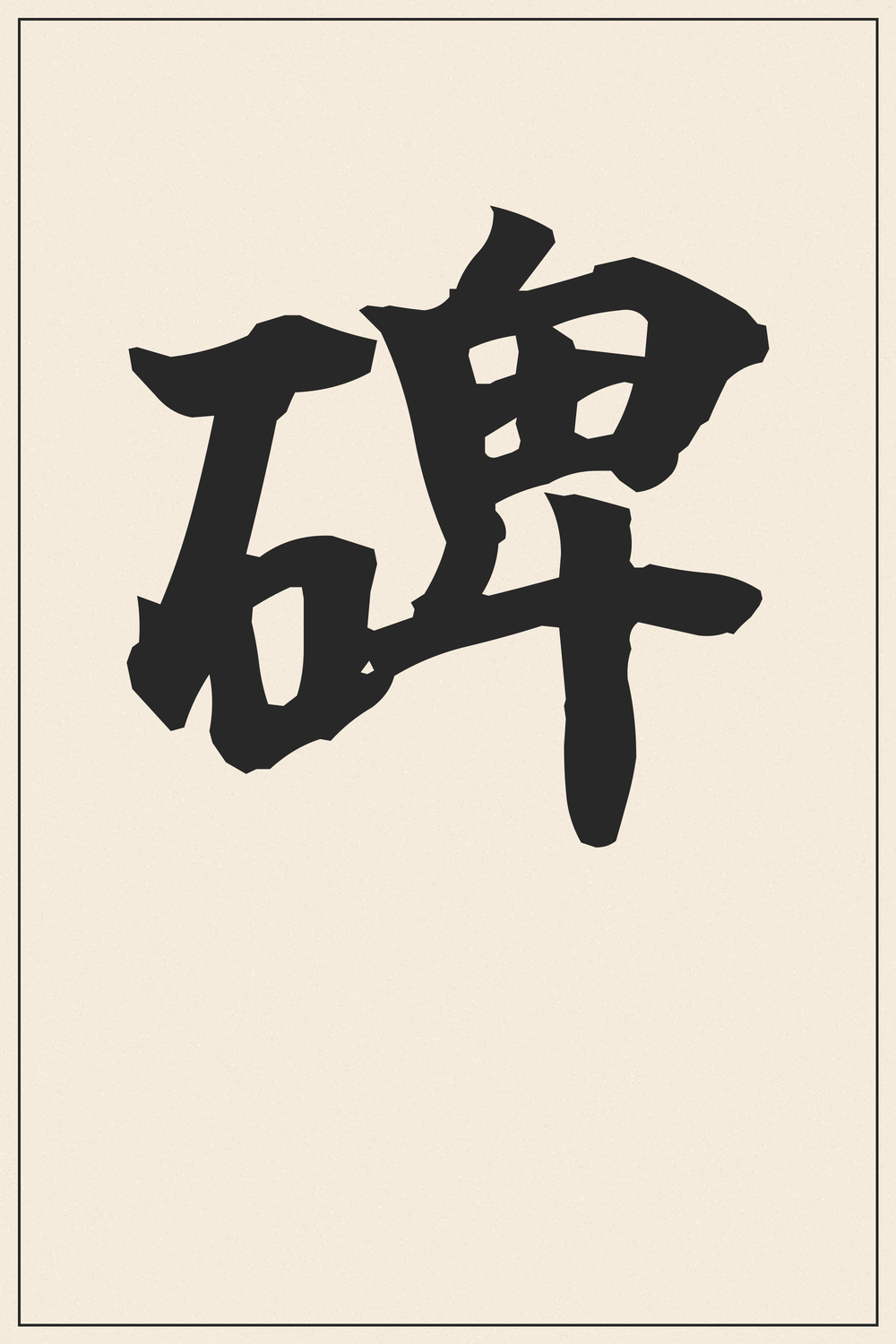
The Kanji 碑 embodies a profound connection to history and remembrance, serving as a silent sentinel to time’s passage. It represents the lasting legacy of individuals and events, etched forever in stone.
The atmosphere of a Kanji character changes dramatically depending on the font style. A character that looks elegant in a brush style might look bold and modern in a different font.
Recommendation:
Since a tattoo is permanent, we strongly recommend comparing various font styles beyond what is shown here. Use our designs as a trusted reference for the correct structure, but feel free to explore different artistic variations to find the perfect match for your vision.
The Deep Meaning Behind 碑
The character 碑 (hi) historically refers to a stone tablet or pillar erected to commemorate significant events or individuals. Its structure, combining elements that denote ‘stone’ and ‘lowly’ or ‘placed,’ points directly to its function as a steadfast marker.
In Japanese culture, 碑 is central to memorialization, found at historical sites, temples, and grave markers. These monuments serve not just as physical markers but as storytellers, preserving narratives and honoring legacies for generations to come.
Kanji Breakdown
The Kanji 碑 is elegantly constructed, combining two distinct elements that together convey its profound meaning.
Meaning: Stone. This radical directly signifies the material from which monuments are typically made, grounding the character in its physical reality and permanence.
Meaning: Low, humble; phonetic component. While meaning ‘low’ or ‘humble’ on its own, here 卑 primarily functions as a phonetic component providing the ‘hi’ reading. It also subtly implies something placed firmly, often at ground level, serving as a foundation or marker.
Conclusion
The Kanji 碑 beautifully encapsulates the essence of remembrance, history, and enduring legacy. It stands as a powerful symbol of permanence and the human desire to honor the past, making it a profound choice.
Choosing 碑 for a tattoo signifies a deep appreciation for history and a commitment to preserving memories. It’s a timeless symbol for those who wish to carry a personal story or a universal message of remembrance with dignity and strength.

Comments