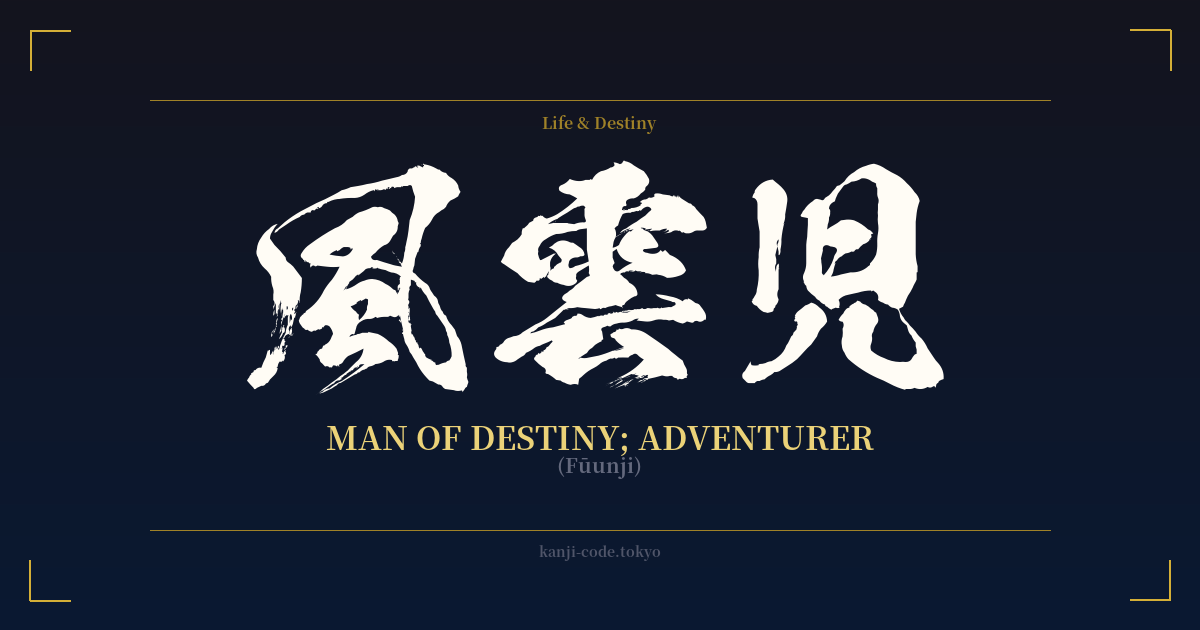
✍️ 風雲児 (Fūunji) — Cultural Context
風雲児 (Fūunji) is a word steeped in the drama of history, literature, and human ambition. Literally translated as 'child of wind and cloud,' it paints a vivid picture of a person born from, or destined to thrive in, turbulent times. The first two characters, 風雲 (fūun), form a separate, powerful concept in themselves. 'Wind and cloud' is a classic East Asian metaphor for a period of great social upheaval, turmoil, and change—a chaotic situation ripe with opportunity.
From this storm emerges the 児 (ji), the 'child' or person. A Fūunji is therefore an individual who seizes the volatile energy of their era to rise to prominence. They are not a passive bystander; they are an active participant, an adventurer, and an opportunist who can navigate the gales of change and bend them to their will. This figure is often a charismatic leader, a revolutionary, or a daring adventurer who carves their own path against all odds.
The most classic examples of Fūunji come from Japan's Sengoku period (Warring States period). Warlords like Oda Nobunaga, Toyotomi Hideyoshi, and Tokugawa Ieyasu, who battled for supremacy and unified a fractured nation, are the archetypal 'men of destiny.' They rose from varying backgrounds to become titans of history, forever changing the landscape of Japan. The term perfectly captures their blend of ambition, strategic genius, and ruthlessness.
In the modern context, Fūunji has shed its exclusive association with warfare. It can be used to describe an ambitious entrepreneur who disrupts an entire industry, a visionary artist who starts a new movement, or a political figure who emerges during a crisis. The core essence remains the same: a person of extraordinary drive and vision who appears on the scene when the world is in flux, destined to make a significant impact. It carries a romantic, heroic, and slightly dangerous connotation—the mark of someone who doesn't just experience history, but makes it.
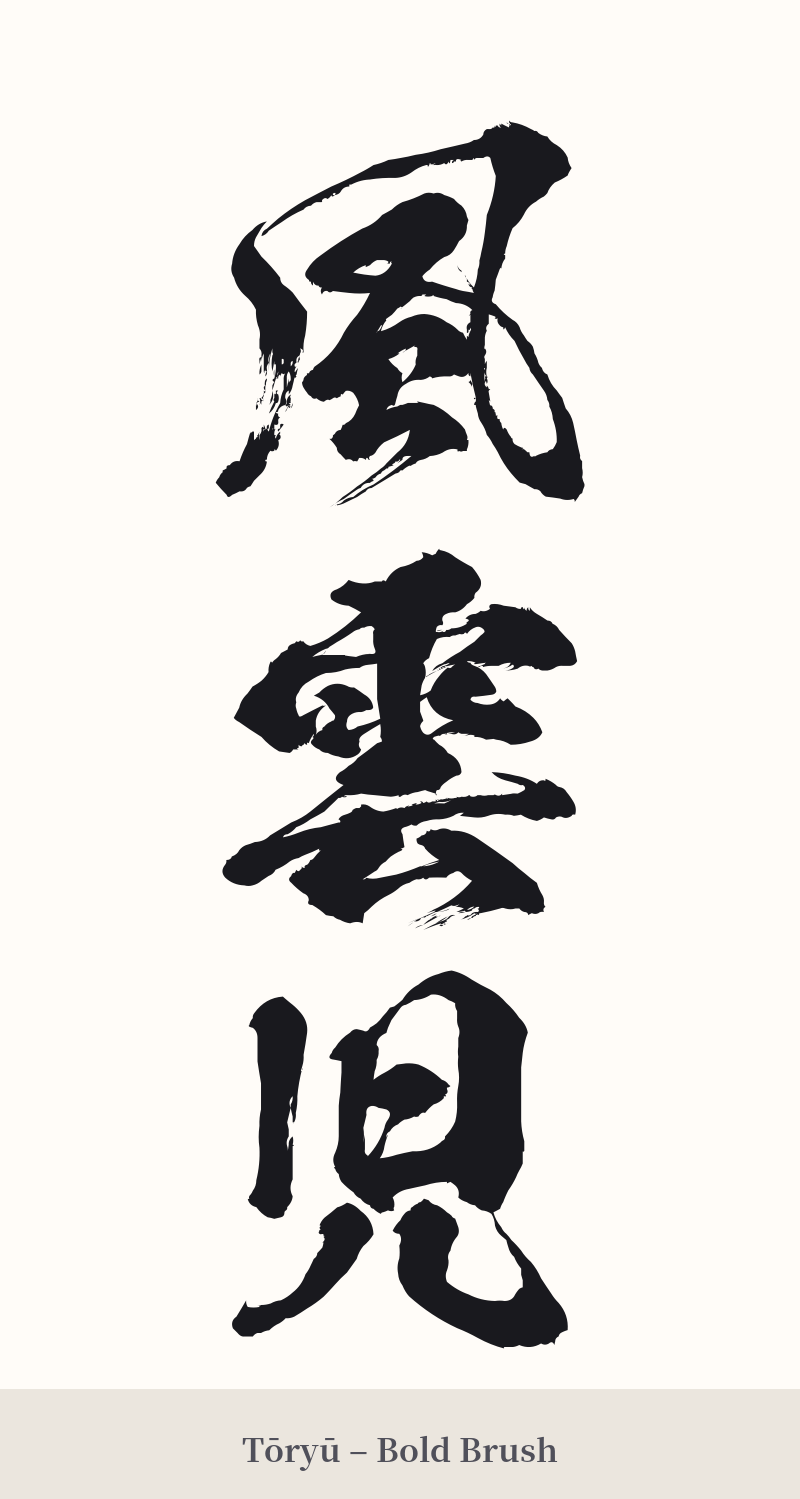
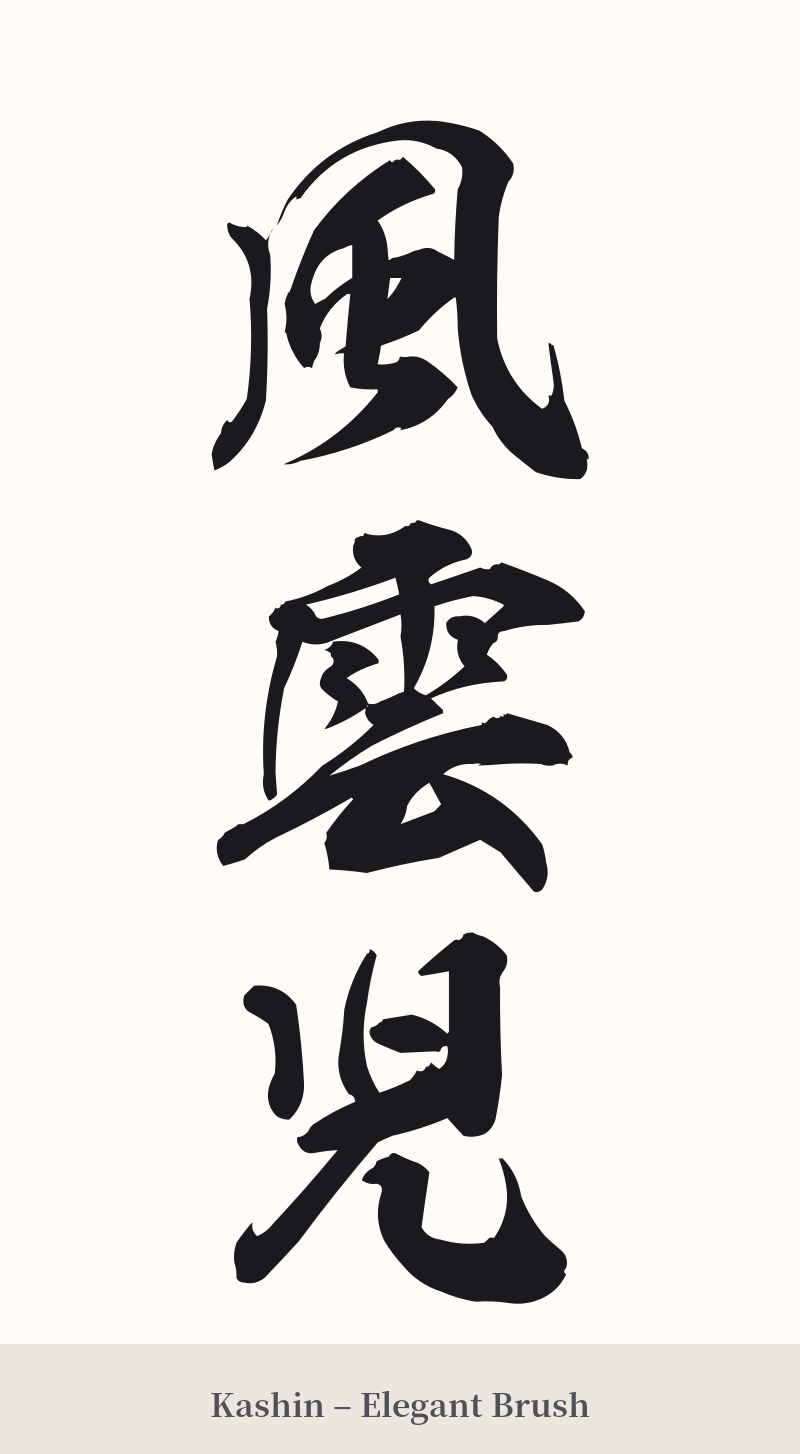
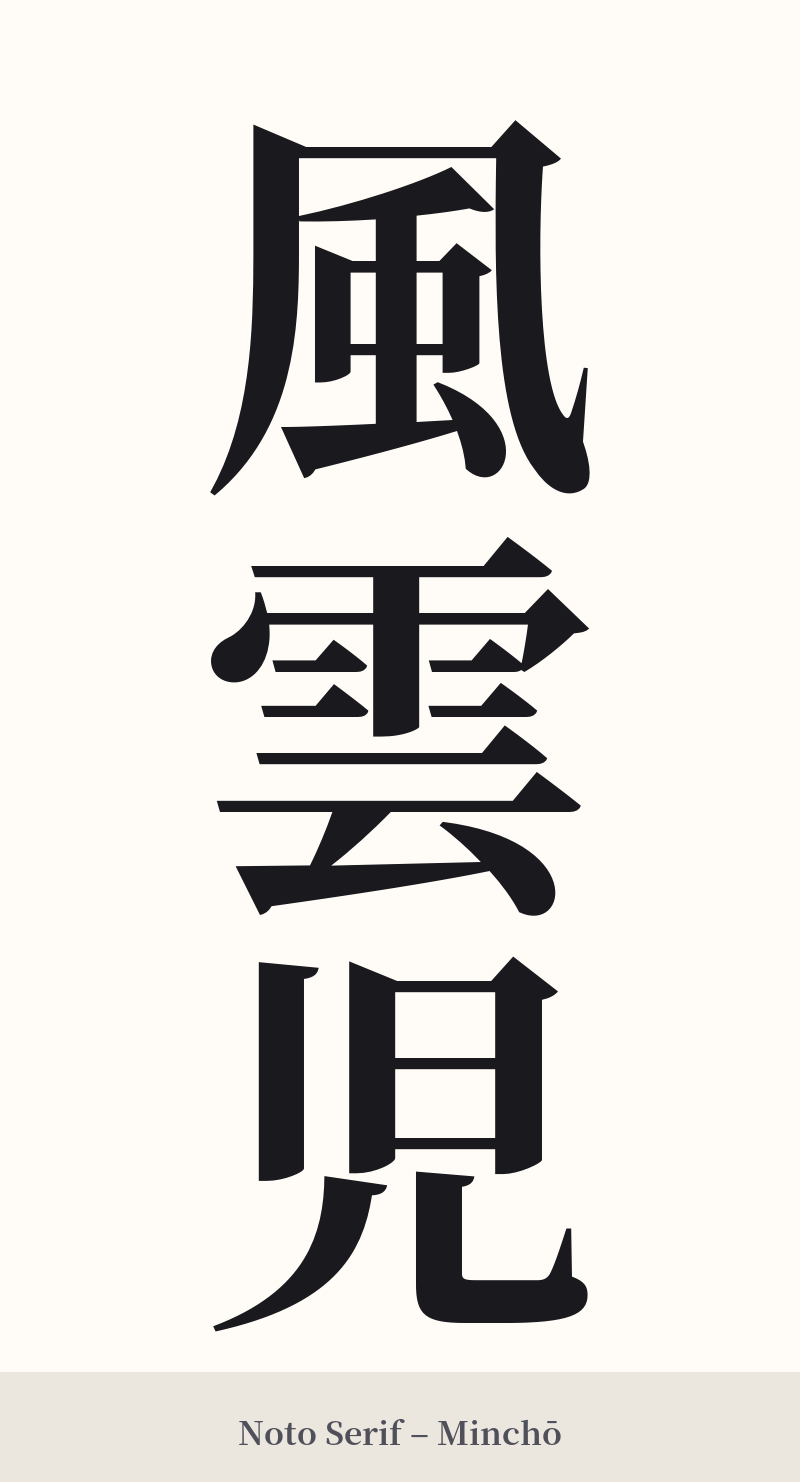
🖌️ Font Styles for 風雲児
The same kanji can look dramatically different depending on the calligraphy style. Choose a font that matches the mood you want for your tattoo or design.
🎨 Tattoo Suitability
📐 Tattoo Design Guide
The dynamic and historical nature of 風雲児 lends itself to powerful tattoo designs. Given its three-character structure, a vertical orientation is highly recommended. This classic arrangement looks excellent along the spine, forearm, or running down the calf, echoing the style of traditional Japanese scrolls.
For font styles, consider the following: – Gyōsho (semi-cursive script): This style, with its fluid and connected strokes, beautifully mirrors the 'wind and cloud' theme, suggesting movement and energy. – Sōsho (cursive script): For a more abstract and artistic interpretation, a wild and expressive cursive script can capture the chaotic and untamable spirit of a Fūunji. – Kaisho (block script): A bold, well-defined block script can emphasize the 'destiny' and 'impact' aspects of the word, giving it a feeling of permanence and strength.
Visually, you could enhance the design by incorporating subtle background elements like swirling wind bars or stylized clouds weaving through the characters. However, the kanji themselves are so evocative that they can stand alone with immense power.
Comments