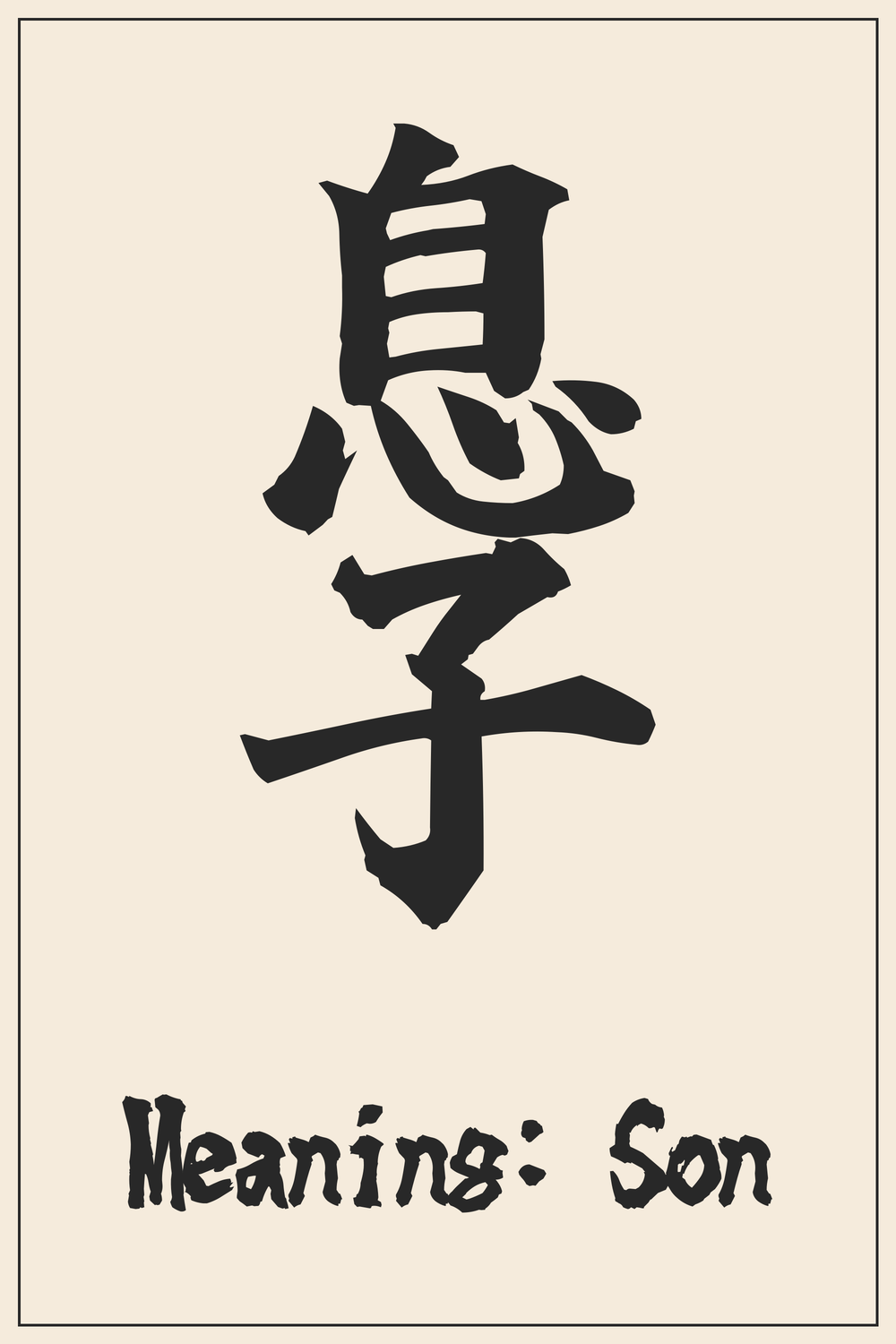
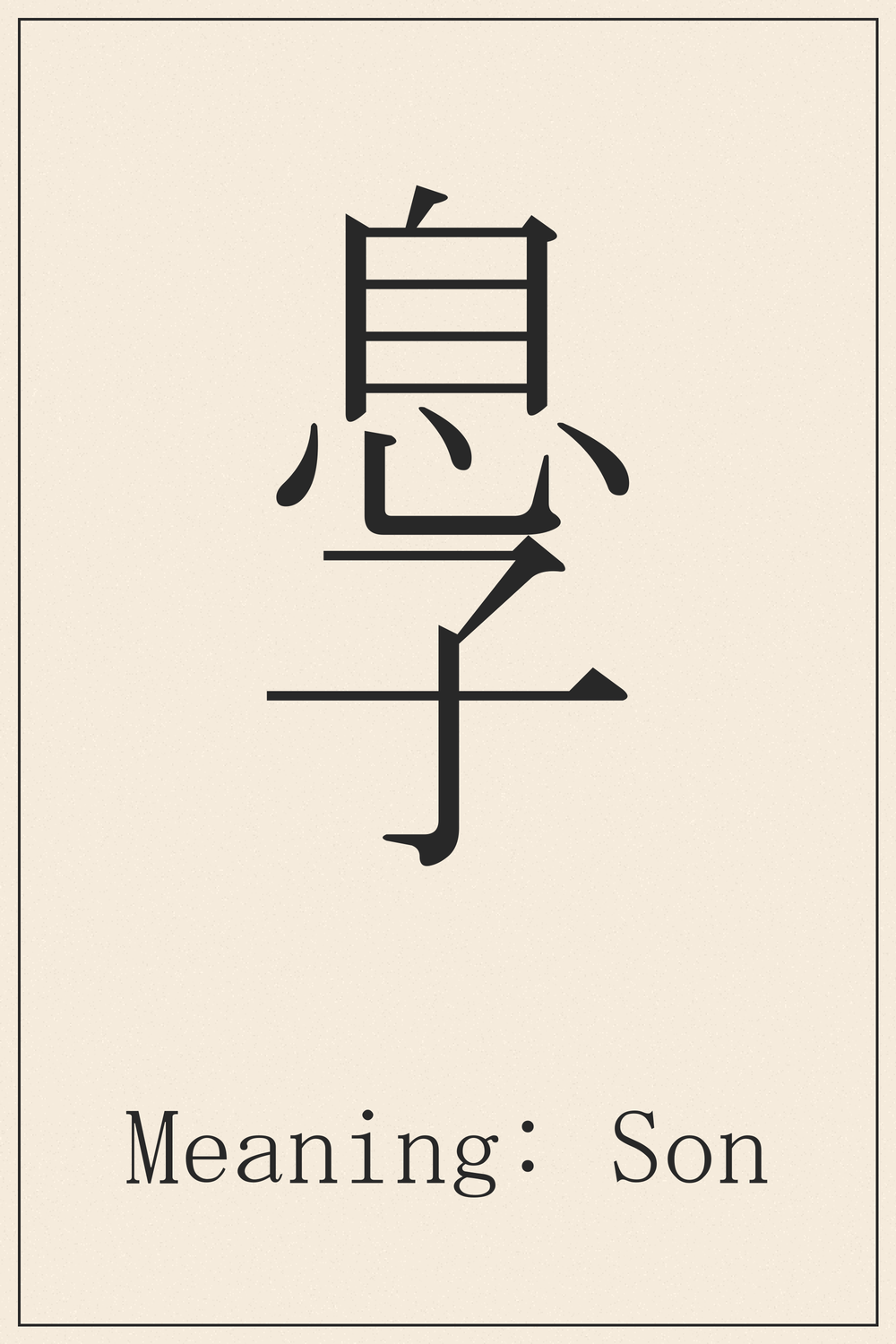
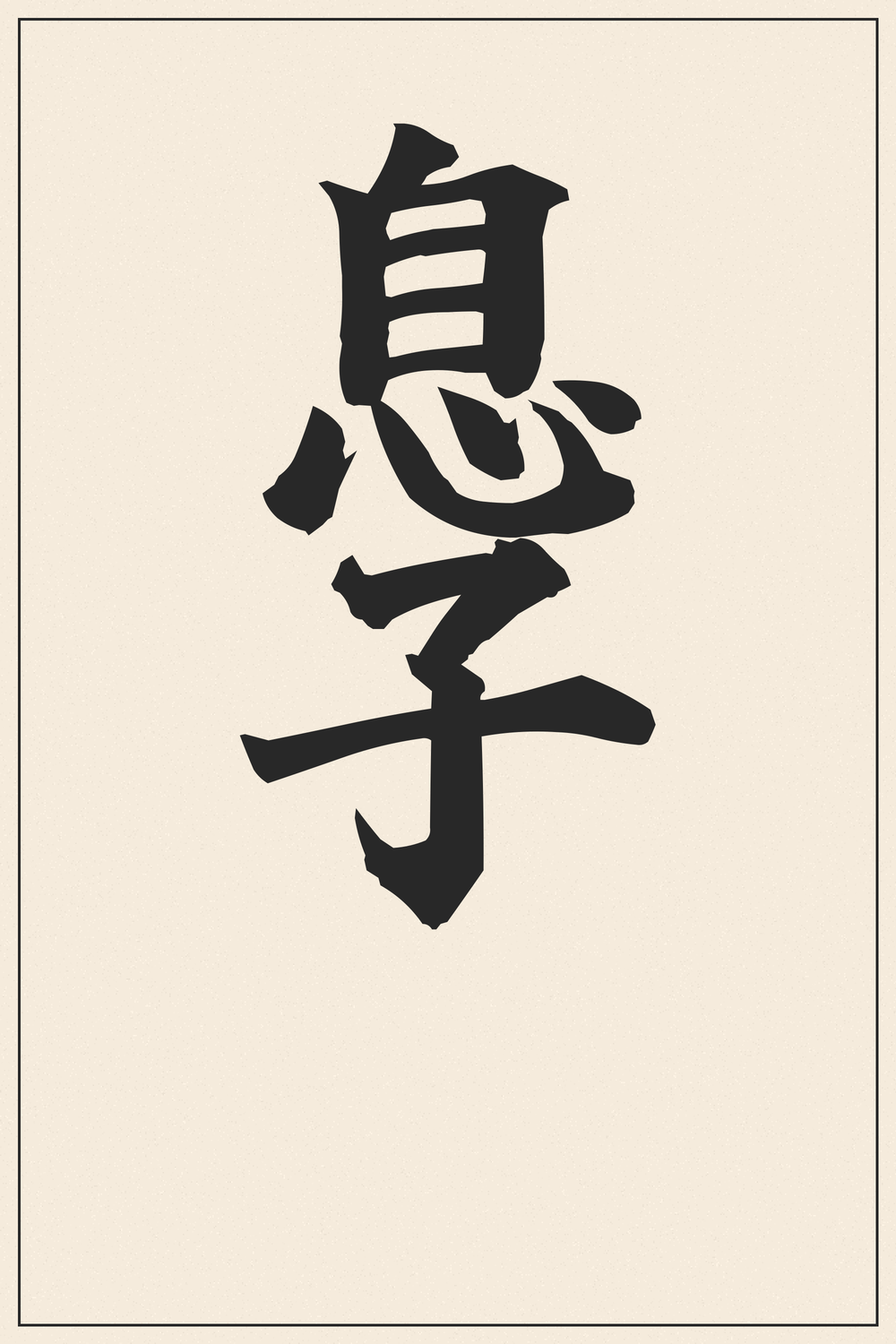
The Kanji 息子 (Musuko) deeply embodies the concept of ‘son’, symbolizing not just a male child but also the continuation of a family lineage. It carries a profound sense of connection, responsibility, and the future generation.
The atmosphere of a Kanji character changes dramatically depending on the font style. A character that looks elegant in a brush style might look bold and modern in a different font.
Recommendation:
Since a tattoo is permanent, we strongly recommend comparing various font styles beyond what is shown here. Use our designs as a trusted reference for the correct structure, but feel free to explore different artistic variations to find the perfect match for your vision.
The Deep Meaning Behind 息子
The Kanji compound 息子 (Musuko) precisely denotes ‘son’. The first character, 息 (iki), originally depicted a nose and a heart, symbolizing ‘breath’ or ‘self’. Over time, it developed an archaic meaning of ‘little boy’ or ‘child’, especially when combined with 子.
The combination with 子 (ko), meaning ‘child’ or ‘offspring’, solidifies its meaning to specifically refer to a male child. In Japanese culture, a son traditionally holds significance in continuing the family name, inheriting property, and preserving ancestral traditions, embodying the link between generations and the future of the lineage.
Kanji Breakdown
The compound 息子 is composed of two individual Kanji, each contributing to its overall meaning and nuance.
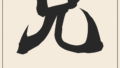
Meaning: Breath, stop, son (archaic, specific to compounds). This character is formed from 自 (self/nose) and 心 (heart), originally conveying ‘breath’ or ‘life force’. In the context of 息子, it functions both phonetically and with an archaic semantic link to a male child.
Meaning: Child, offspring, son. This is a pictograph of a baby with outstretched arms, representing youth and progeny. It is a fundamental character used to denote a child, and in this compound, it specifies the male gender.
Conclusion
The Kanji 息子 (Musuko) beautifully encapsulates the profound bond and generational continuity associated with having a son. It represents love, responsibility, and the hopes parents place in the next generation, making it a deeply personal and meaningful symbol.
For those wishing to honor their child or their role as a son, a tattoo of 息子 can serve as a powerful and elegant tribute. Ensure your chosen tattoo artist possesses a strong understanding of Japanese calligraphy to capture the character’s nuances, guaranteeing a lasting and beautiful piece of art.
Comments