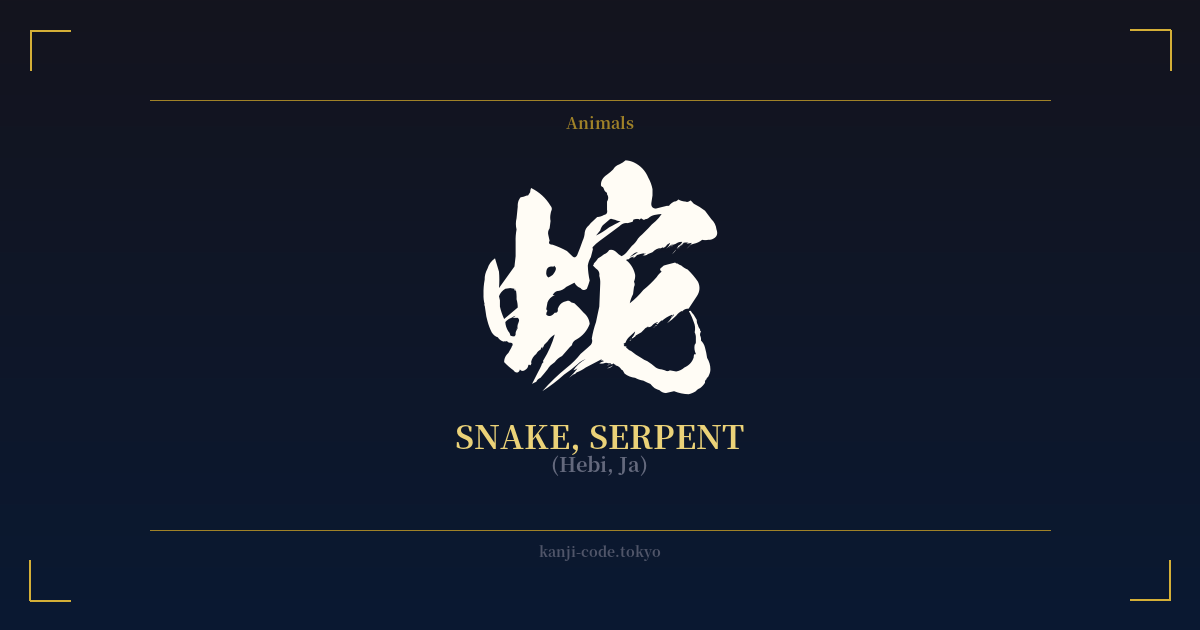
✍️ 蛇 (Hebi, Ja) — Contexto cultural
El kanji 蛇 (hebi) es más que un simple carácter para reptil; es un vehículo de simbolismo complejo y a menudo contradictorio, profundamente arraigado en la cultura japonesa. Su forma incluye el radical 虫, que históricamente se refería a una amplia gama de criaturas, incluyendo insectos, reptiles y anfibios, lo que sitúa al carácter en el mundo de los seres vivos que se arrastran.
En Japón, la serpiente posee una poderosa doble identidad. Por un lado, es venerada como mensajera divina (kami no tsukai), asociada particularmente con los dioses de la cosecha y las montañas. La serpiente blanca, o 白蛇 (shirohebi), es especialmente auspiciosa, considerada sirvienta directa de Benzaiten, la diosa de la riqueza, la música y la elocuencia. Encontrar una serpiente blanca se considera un presagio de inmensa buena fortuna, y los santuarios dedicados a ella, como el de Iwakuni, atraen a fieles que buscan prosperidad.
Esta conexión con la fortuna y la divinidad se extiende al ciclo vital de la serpiente. El desprendimiento de su piel es un poderoso símbolo de renacimiento, renovación y vida eterna. Este poder regenerador también vincula a la serpiente con la medicina y la curación, un concepto compartido por muchas culturas. Por esta razón, la serpiente puede representar la superación de la enfermedad, la transformación personal y la naturaleza cíclica de la vida y la muerte.
Sin embargo, la serpiente también tiene un lado oscuro en el folclore japonés. Puede encarnar celos intensos, obsesión y sed de venganza, a menudo representada como un ser transformado y monstruoso. Cuentos famosos, como la historia de Kiyohime en la leyenda de Anchin y Kiyohime, muestran a una mujer consumida por un amor no correspondido que se transforma en una serpiente gigante para perseguir a su objetivo. En el teatro Noh y Kabuki, las máscaras con rasgos de serpiente representan espíritus femeninos vengativos. La frase 「蛇のような」 (hebi no you na), que significa "como una serpiente", puede describir a una persona persistente de manera fría o vengativa.
Es importante distinguir entre 蛇 (hebi) y 巳 (mi). Si bien ambos se refieren a la serpiente, 巳 es el carácter específico que se usa para la serpiente en el ciclo zodiacal de Asia Oriental. 蛇 se refiere al animal en sí en un contexto general. Esta dualidad de protector y destructor, de fortuna y celos, convierte a la serpiente en uno de los símbolos más fascinantes y dinámicos de la iconografía japonesa.
🖌️ Estilos de fuente para 蛇
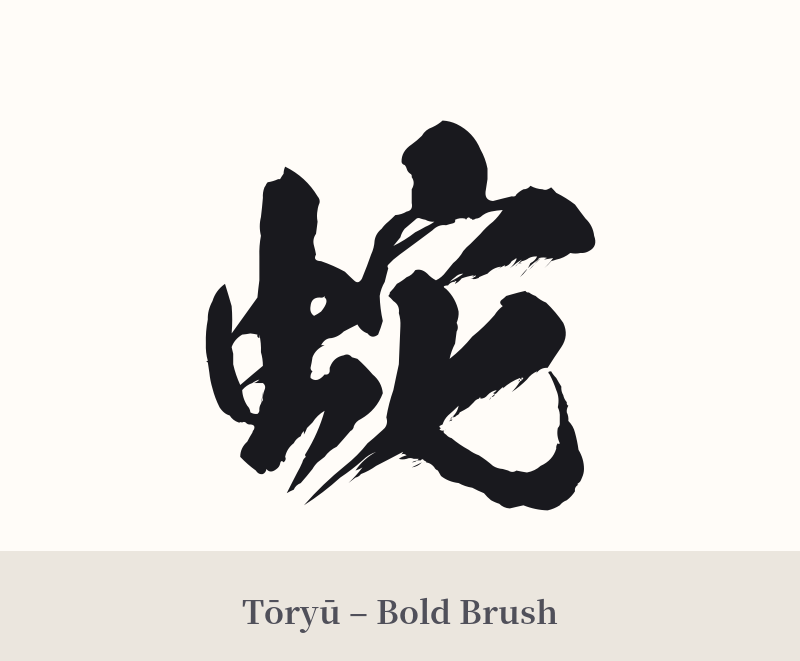
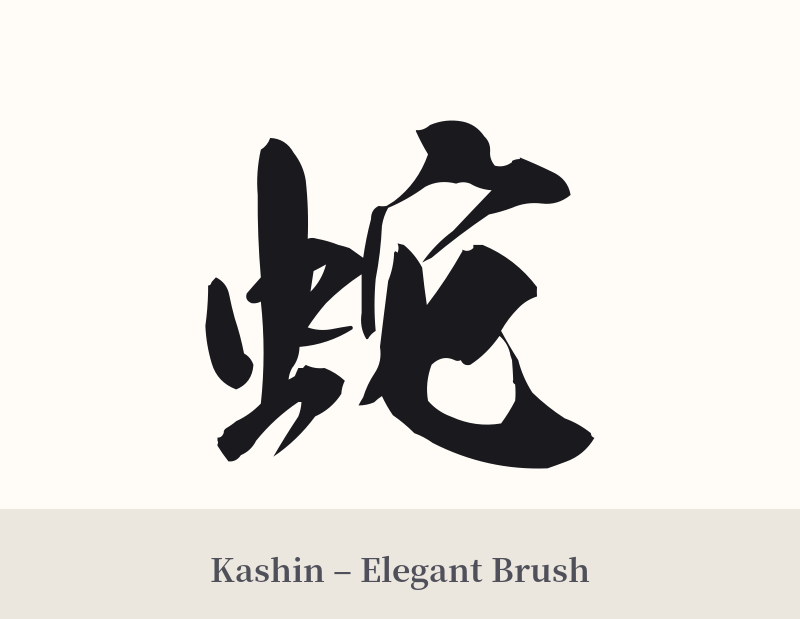
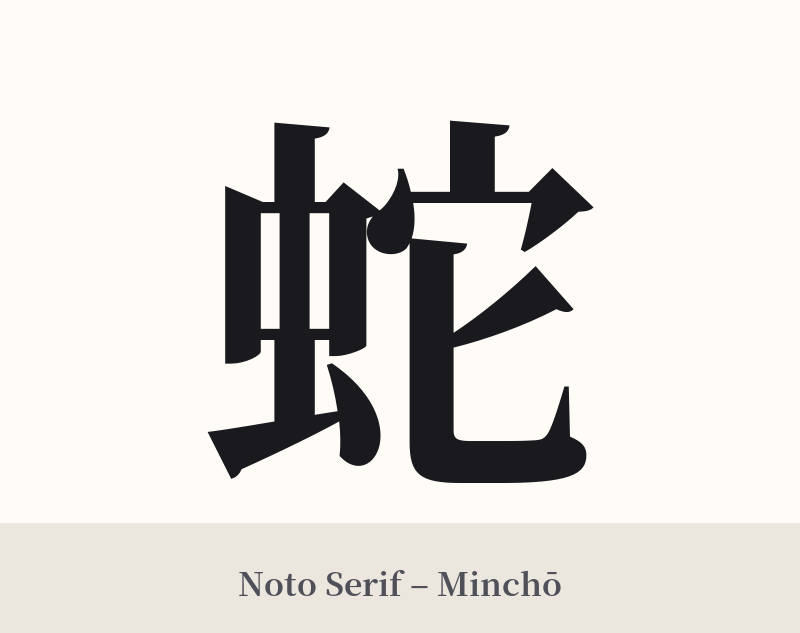
Los mismos caracteres kanji pueden verse muy diferentes según el estilo de caligrafía. Elige una fuente que se ajuste al ambiente que deseas para tu tatuaje o diseño.
🎨 Idoneidad para tatuajes
📐 Guía de diseño de tatuajes
El kanji 蛇 ofrece un lienzo fantástico para un tatuaje, ya que encarna una sensación de movimiento fluido y misterio ancestral.
– Ubicación: Este diseño funciona bien en extremidades donde su forma complementa las curvas naturales del cuerpo, como el antebrazo, la pantorrilla o rodeando el bíceps. Para una pieza más grande e impactante, la espalda o las costillas ofrecen un amplio espacio.
– Estilo: Una caligrafía dinámica o estilo shodō es una opción clásica, que utiliza pinceladas expresivas para imitar el movimiento sinuoso de la serpiente. Como alternativa, una tipografía nítida y angular al estilo Mincho puede darle un aire más moderno y sobrio.
– Consejos visuales: Considere integrar el kanji con la ilustración de una serpiente. La serpiente podría estar enroscada alrededor del carácter, o el kanji mismo podría formarse a partir del cuerpo de una serpiente. Esto crea una poderosa interacción entre el símbolo abstracto y su representación literal.
Comentarios