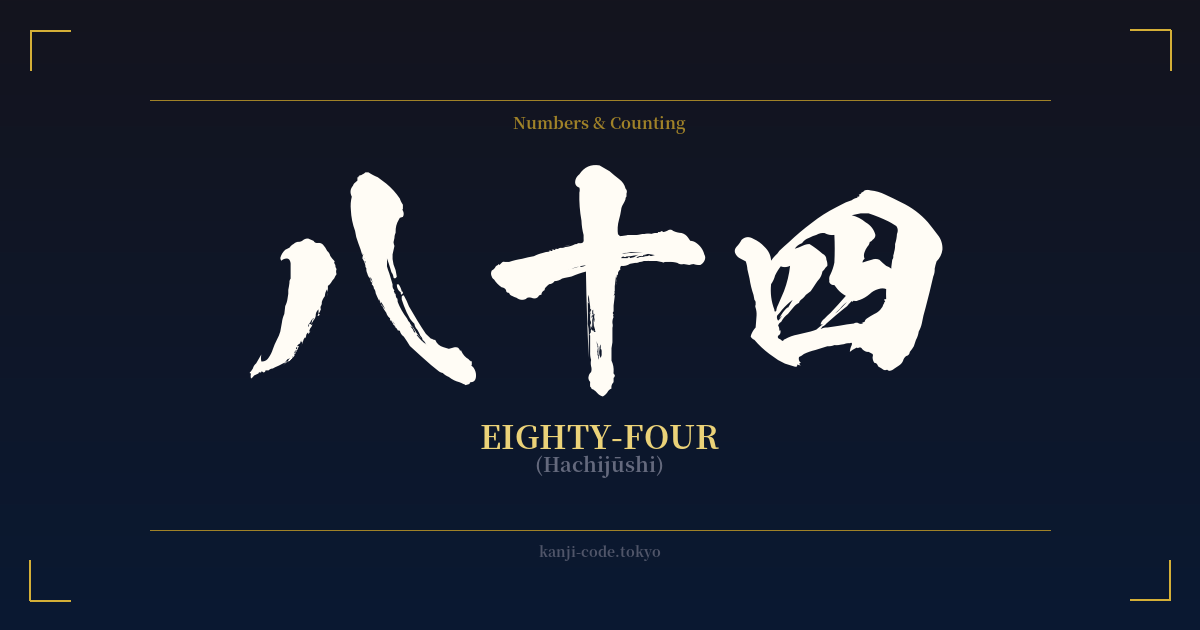
✍️ 八十四 (Hachijūshi) — Cultural Context
The kanji 八十四 (Hachijūshi) is the Japanese representation of the number eighty-four. Its construction is a straightforward example of how numbers are formed in Japanese: 八 (hachi – eight), 十 (jū – ten), and 四 (shi – four). It literally translates to 'eight tens four,' demonstrating the logical, multiplicative system used for larger numbers.
While the number eighty-four itself doesn't hold a specific, widely recognized symbolic meaning in Japanese culture, the individual characters that compose it are steeped in cultural significance, creating a fascinating and somewhat contradictory combination.
The first character, 八 (hachi), is considered a very lucky number. Its shape, widening at the bottom, is called 末広がり (suehirogari), which means 'widening toward the end.' This shape symbolizes prosperity, growth, and a bright future. Eight is a celebrated number, appearing in concepts like 八百万 (yaoyorozu), the 'eight million' gods of Shinto, signifying an infinite, uncountable number.
In stark contrast, the final character, 四 (shi), is the most unlucky number in Japan. Its primary reading, 'shi,' is a direct homophone for the word for death (死). This phenomenon, known as tetraphobia, is deeply ingrained in the culture. You will often find buildings, especially hospitals and hotels, that skip the fourth floor. Prices are rarely set at 4, 40, or 400 yen, and gifts are not given in sets of four.
Therefore, the number 八十四 presents a curious mix of fortune and misfortune. It starts with the auspicious 'eight,' representing prosperity, but ends with the ominous 'four,' associated with death. This internal tension makes it an unusual choice. It's not a number that would typically be used for celebratory purposes. Its meaning is almost entirely neutral or personal, deriving its power from whatever event or memory the individual associates with it, such as a birth year (1984) or a significant address.
🖌️ Font Styles for 八十四
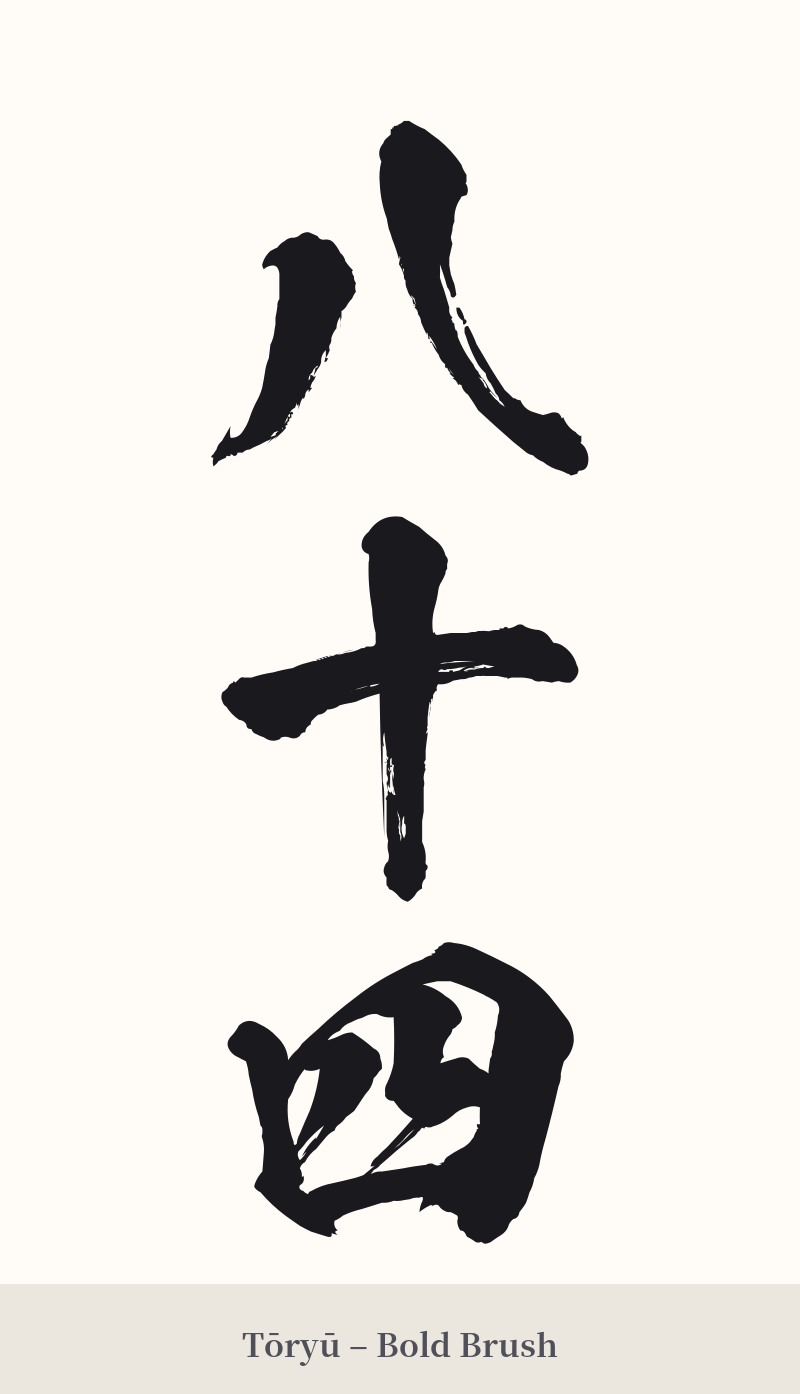
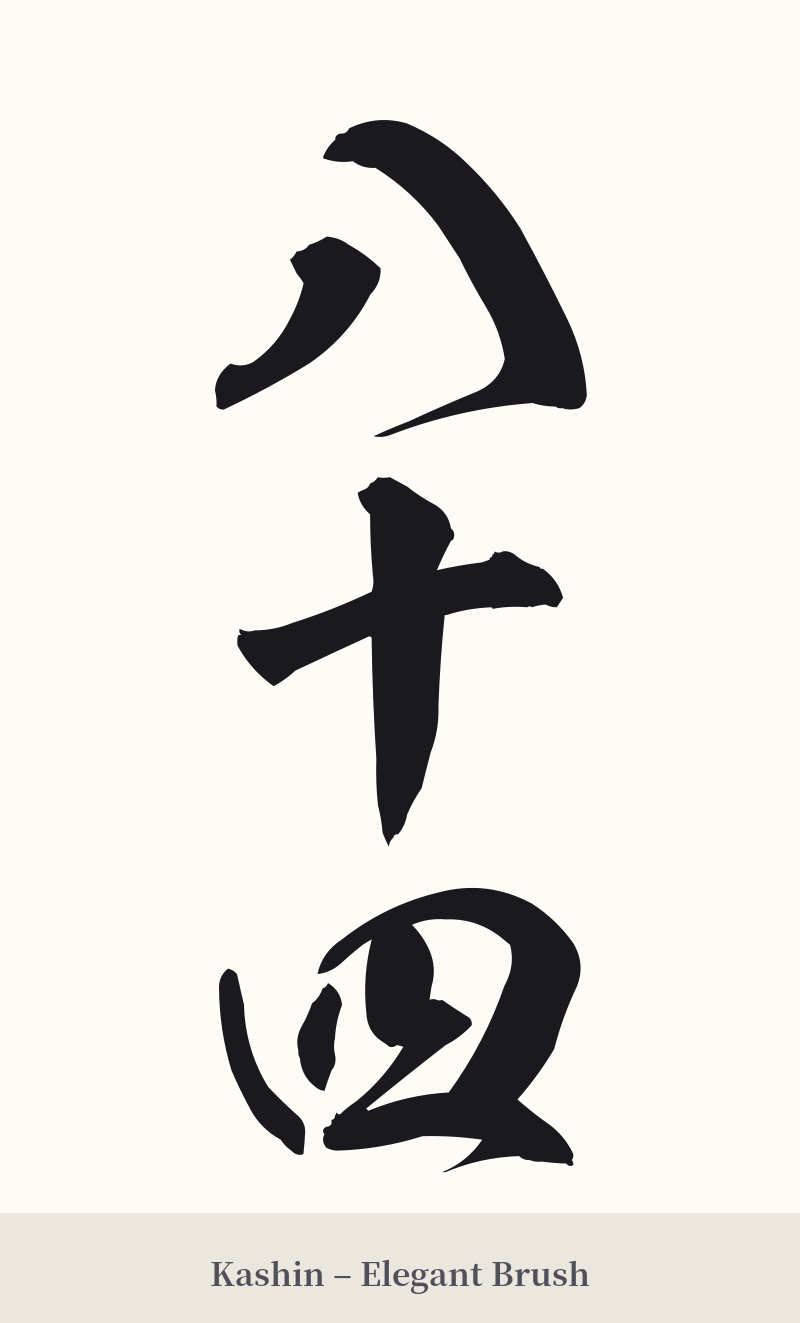
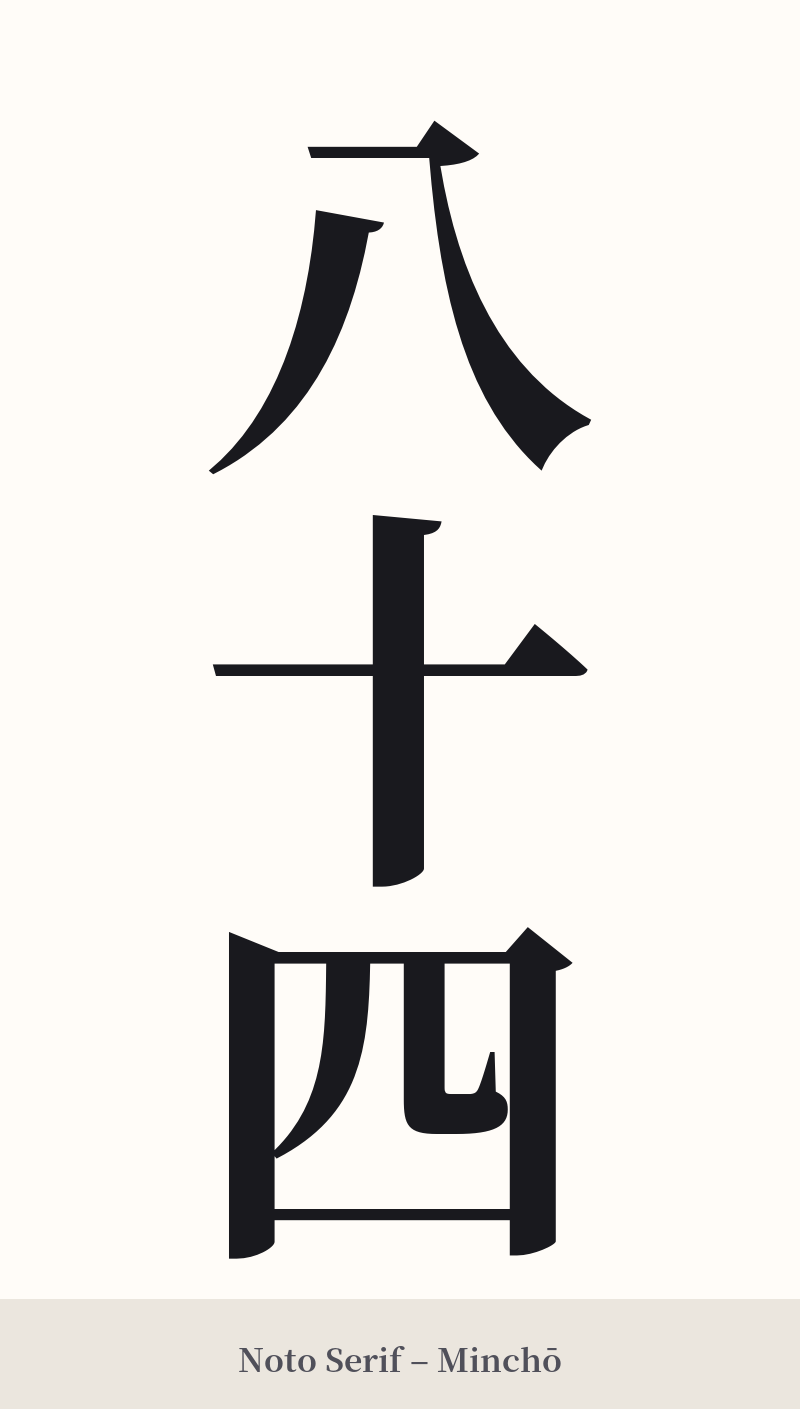
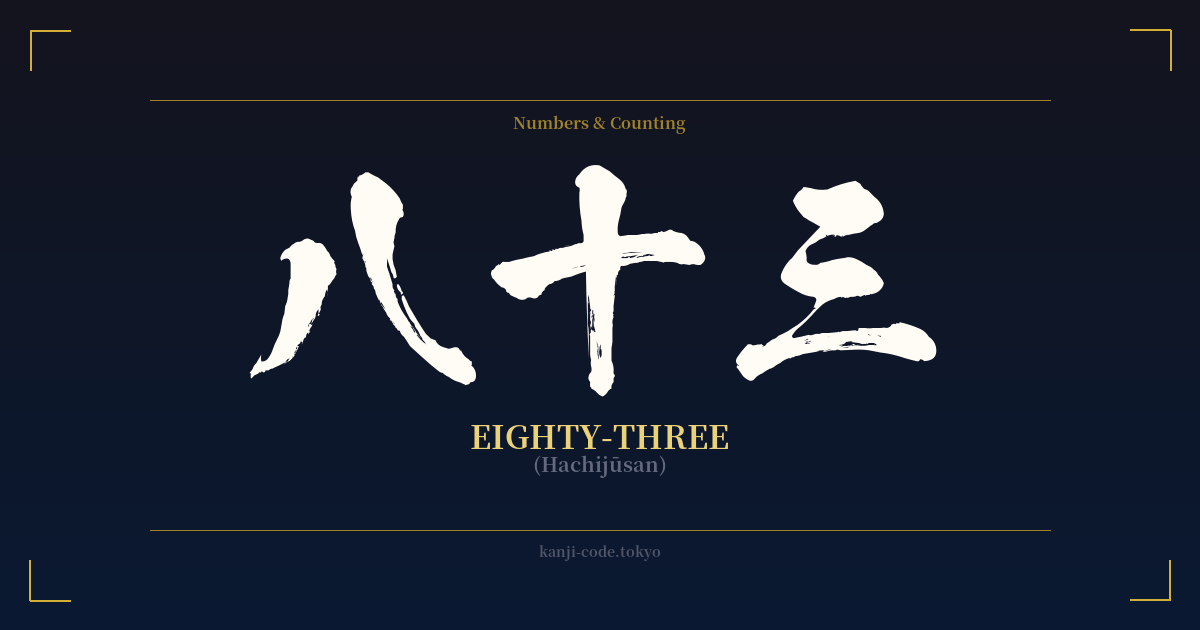
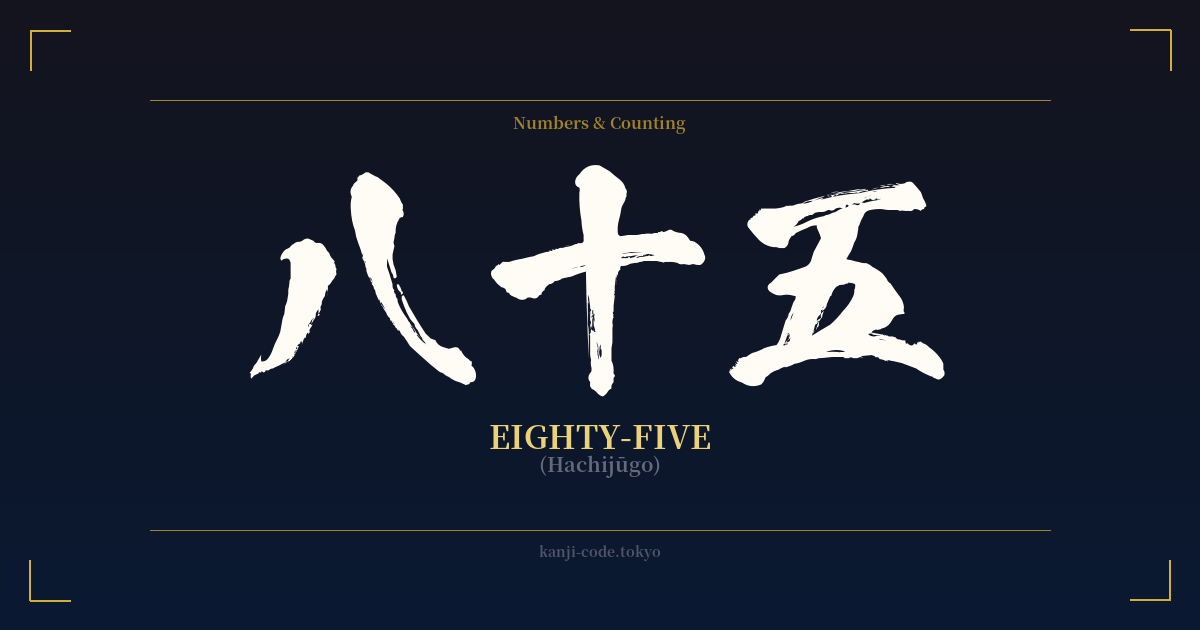
The same kanji can look dramatically different depending on the calligraphy style. Choose a font that matches the mood you want for your tattoo or design.
🎨 Tattoo Suitability
📐 Tattoo Design Guide
For a tattoo of 八十四, the simplicity of the characters allows for versatility, but the arrangement is key. A traditional vertical layout is highly recommended as it honors the standard direction of Japanese writing and creates an elegant flow.
– Placement: A vertical design works beautifully along the spine, the forearm, or the calf. For a horizontal layout, the space above the elbow or across the collarbone could be effective.
– Font Style: A classic Kaisho (楷書) or block script will emphasize the clean, simple lines of each character, ensuring clarity. For a more artistic and connected feel, a Gyōsho (行書) or semi-cursive style can link the characters together fluidly, creating a single, unified piece.
– Visual Tips: Because the meaning is not immediately symbolic, consider incorporating it into a larger design that provides context. For example, the characters could be carved into a bamboo stalk, written on a scroll, or integrated into a piece that represents the personal significance of the number 84.
Comments