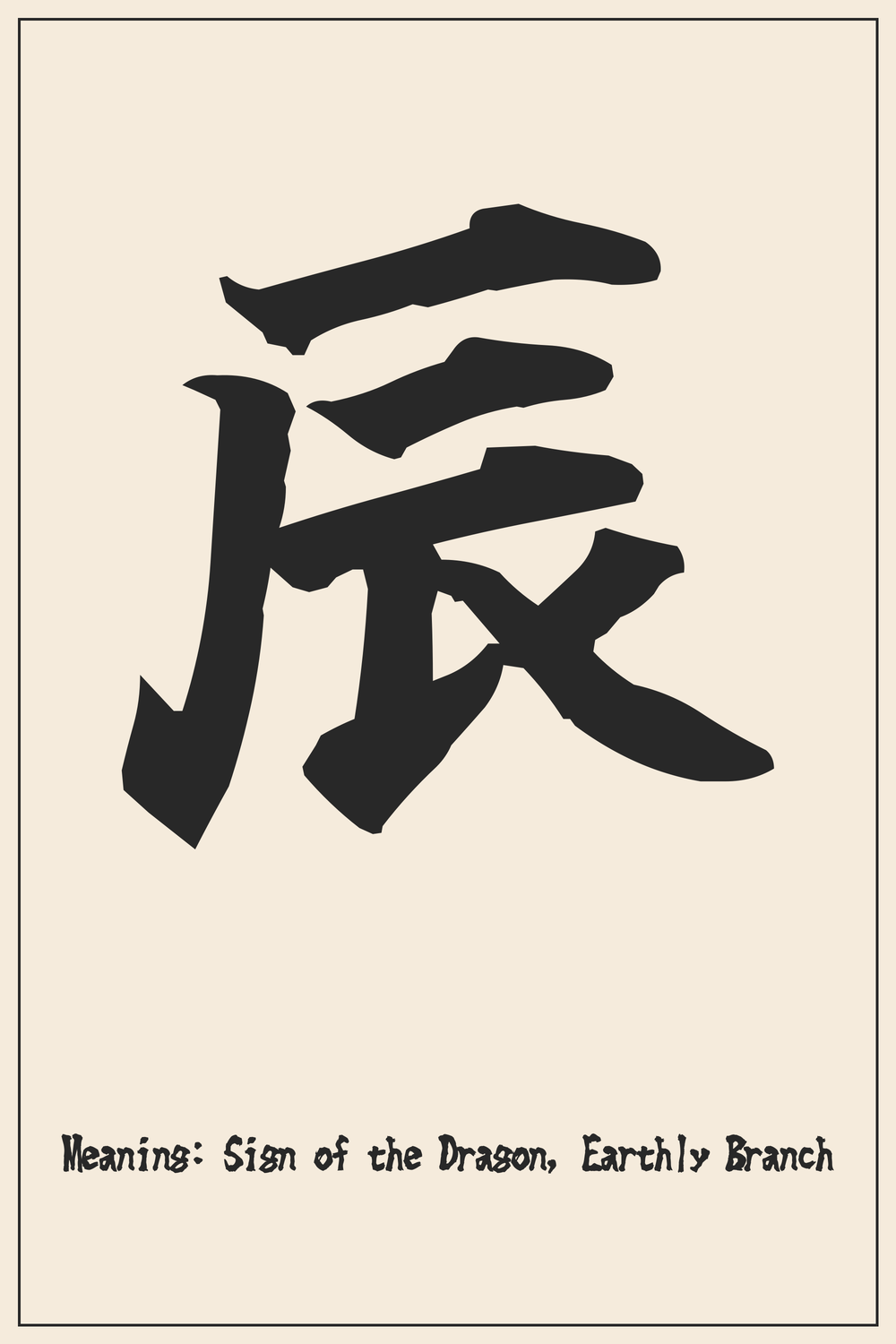
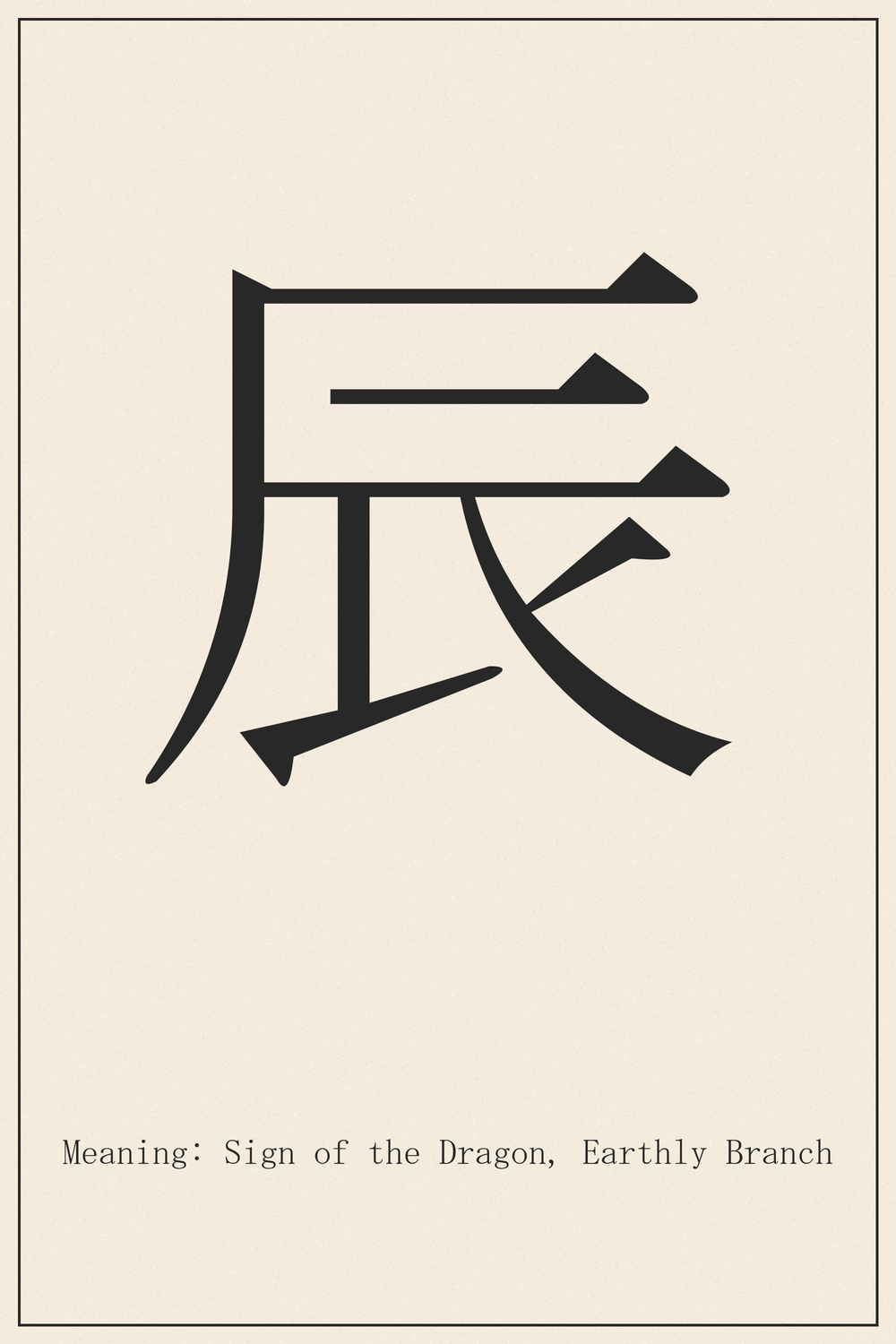
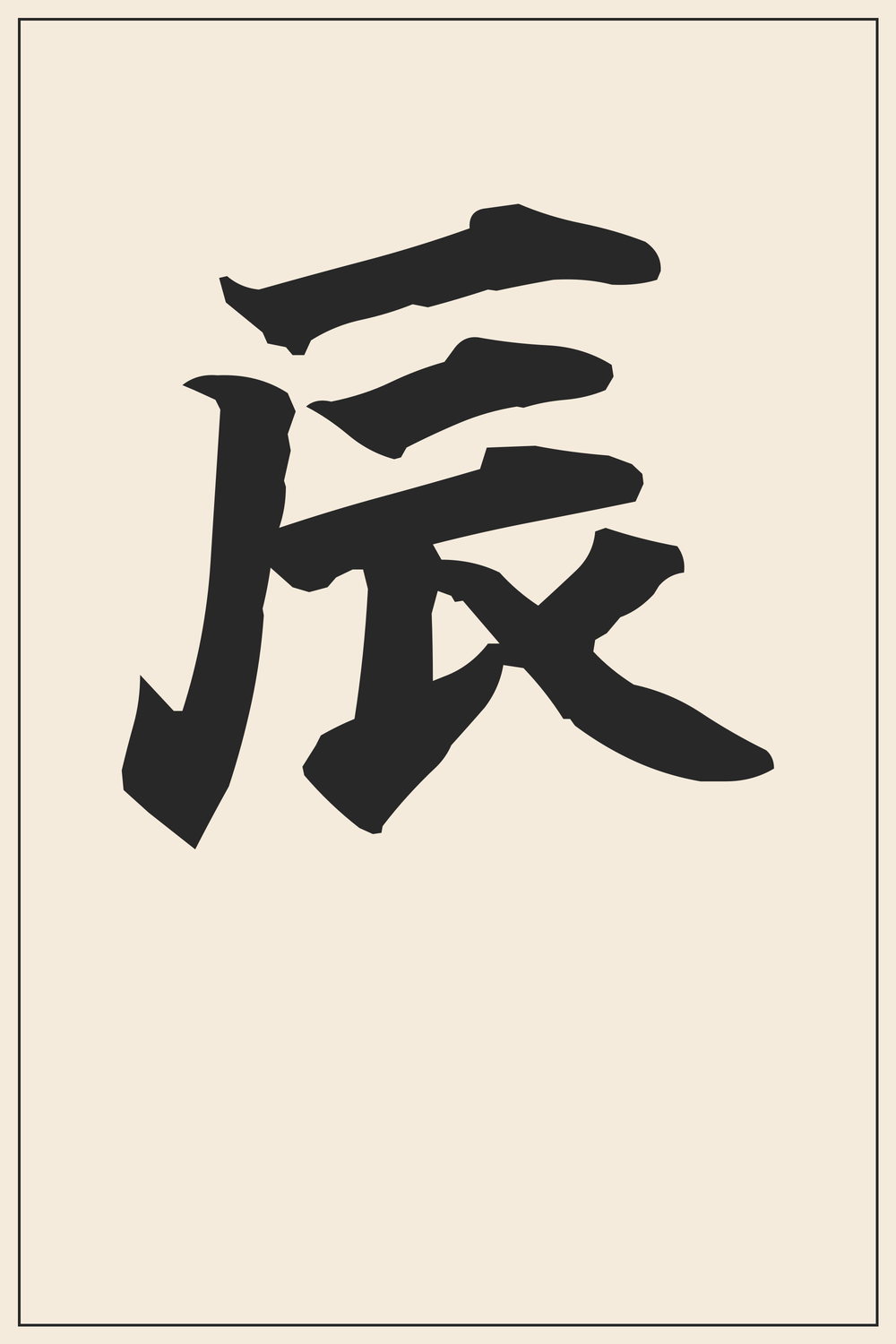
The Kanji 辰 (Tatsu) is far more than a simple character; it embodies the powerful mythical Dragon within the Japanese and Chinese zodiac, holding deep cultural and temporal significance. It is a symbol of auspiciousness, strength, and cosmic rhythm, representing a specific period and direction infused with legendary power.
The atmosphere of a Kanji character changes dramatically depending on the font style. A character that looks elegant in a brush style might look bold and modern in a different font.
Recommendation:
Since a tattoo is permanent, we strongly recommend comparing various font styles beyond what is shown here. Use our designs as a trusted reference for the correct structure, but feel free to explore different artistic variations to find the perfect match for your vision.
The Deep Meaning Behind 辰
The character 辰 originates from an ancient pictograph, possibly depicting an agricultural tool such as a clam shell hoe, or even a clam opening its shell. This early imagery suggested concepts of cultivating, moving, or awakening. Over centuries, its meaning evolved and it was phonetically borrowed to represent one of the twelve Earthly Branches.
In its most significant cultural context, 辰 became the symbol for the Dragon (龍) in the Chinese and Japanese zodiac. This association imbues 辰 with the powerful attributes of the dragon: strength, wisdom, good fortune, and leadership. It also designates the hours between 7 AM and 9 AM, and the direction South-Southeast, further connecting it to specific moments and cosmic orientations.
Kanji Breakdown
The Kanji 辰 is a single, integral character whose structure reflects its ancient origins and semantic evolution. Its components are deeply intertwined, forming a cohesive whole.
The Character Itself: As an ideogram, 辰’s form has been interpreted as a depiction of an ancient tool or a clam. Its primary function became a phonetic loan to represent the fifth earthly branch, which is symbolically linked to the magnificent Dragon in the zodiac cycle, signifying its powerful and auspicious nature.
Conclusion
The Kanji 辰 encapsulates a rich tapestry of meaning, from its ancient agricultural roots to its modern association with the revered Dragon of the zodiac. It represents not just a creature, but a powerful symbol of time, direction, and destiny, imbued with auspicious energy and mythical strength.
Choosing 辰 for a tattoo is to embrace a symbol of profound cultural significance, connecting the wearer to an ancient lineage of strength, good fortune, and cosmic timing. It is a powerful and elegant statement, resonating with a timeless essence that transcends simple interpretation.

Comments