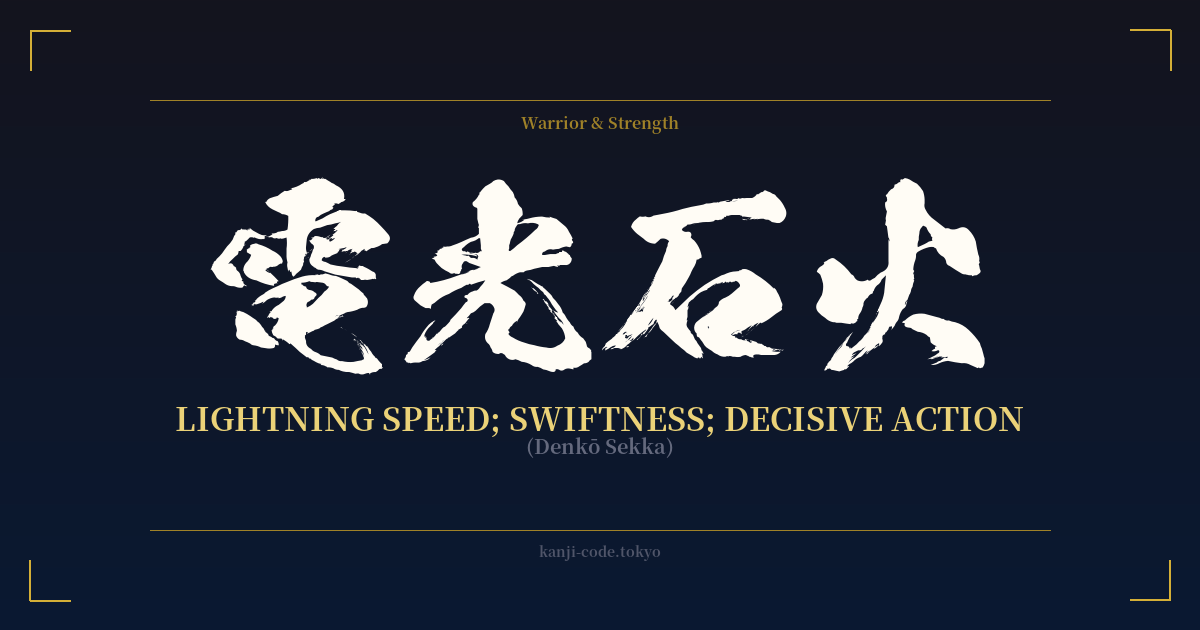
✍️ 電光石火 (Denkō Sekka) — Cultural Context
電光石火 (Denkō Sekka) is a quintessential Japanese four-character idiom, or yojijukugo, that paints a vivid picture of incredible speed and instantaneous action. It’s a phrase that resonates deeply within Japanese culture, evoking images of samurai warriors, elite athletes, and pivotal moments where timing is everything.
The idiom is a compound of two distinct, yet related, concepts. The first part, 電光 (Denkō), means 'a flash of lightning.' The second part, 石火 (Sekka), translates to 'the spark from a stone,' referring to the fire created when striking flint. Both of these events are virtually instantaneous. By combining them, the phrase creates a powerful metaphor for something that happens in the blink of an eye, so fast it's almost impossible to perceive.
This concept has strong ties to the warrior ethos of Bushido. For a samurai, hesitation could be fatal. The ability to draw a sword and strike with decisive, lightning speed—Denkō Sekka—was not just a skill but a state of mind. It represents the perfect union of thought and action, where the body moves without conscious delay. This ideal of immediate and flawless execution is a recurring theme in martial arts and Japanese historical dramas.
In modern Japan, the phrase has broadened its application but retained its core meaning. It's frequently used in sports commentary to describe a sprinter bursting from the starting blocks, a baseball player stealing a base, or a martial artist delivering a swift kick. You'll also hear it in the business world to describe a quick, decisive decision that seizes an opportunity.
Beyond its practical use, Denkō Sekka is a staple in pop culture, especially in anime, manga, and video games. It's often the name of a character's signature special move—a rapid, unstoppable attack. This has given the phrase a modern coolness and made it recognizable to a global audience of Japanophiles. Ultimately, Denkō Sekka is more than just 'fast'; it's about the beauty of perfect, unhesitating action and the power of a single, decisive moment.
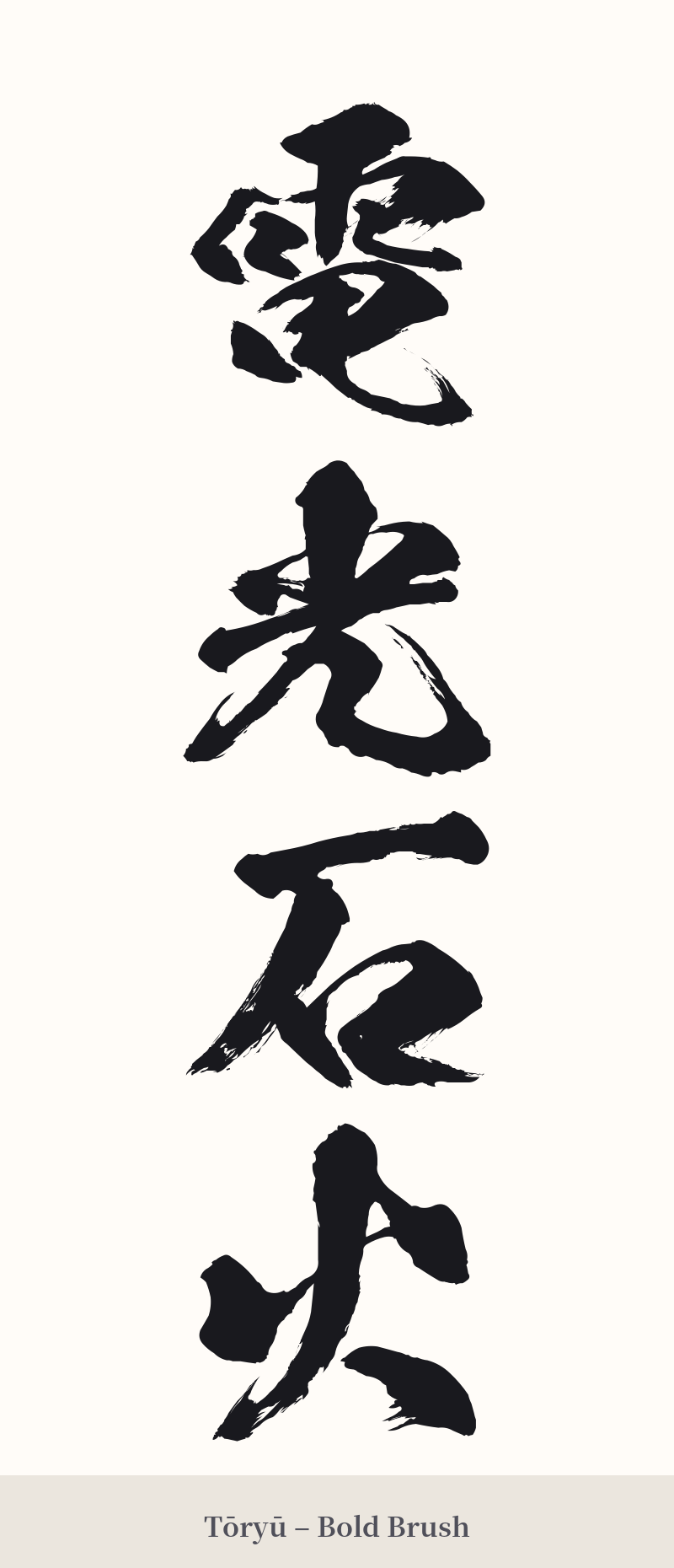
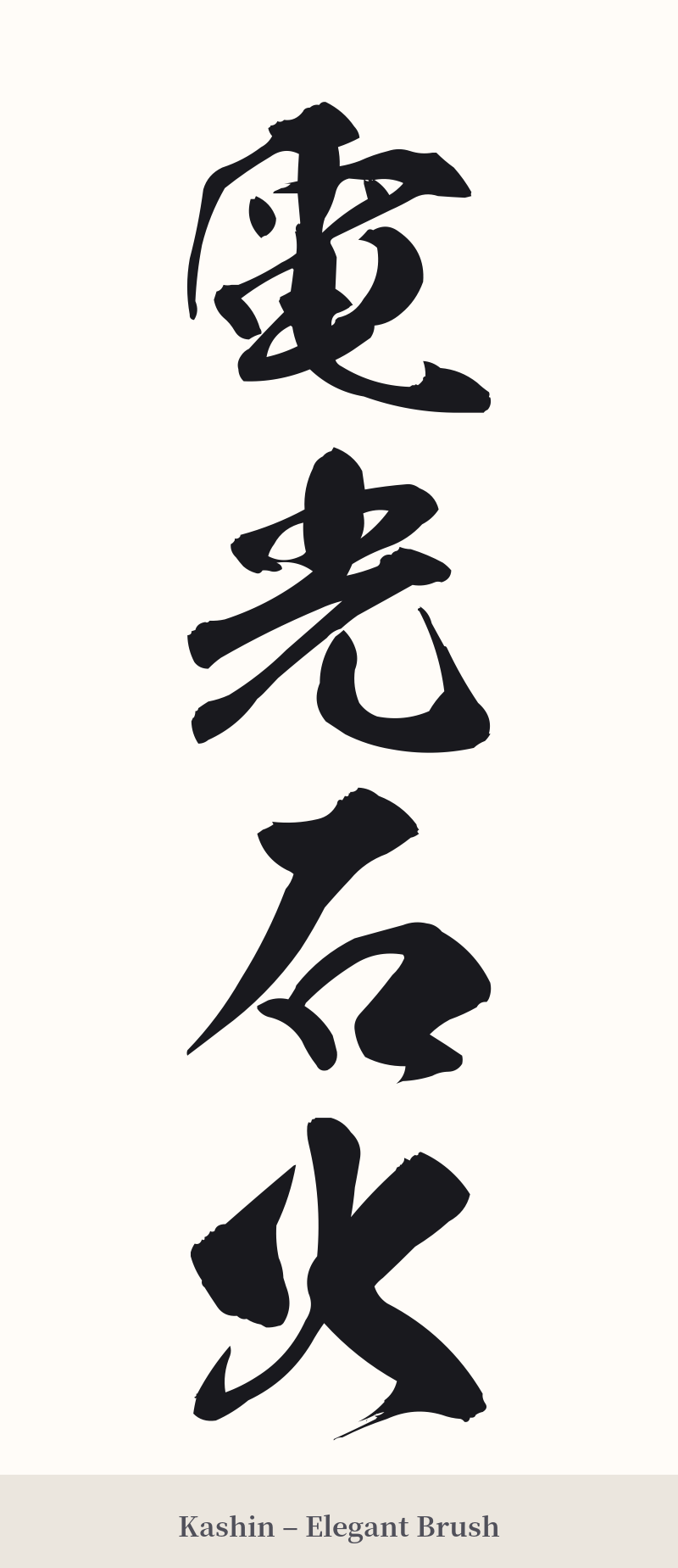
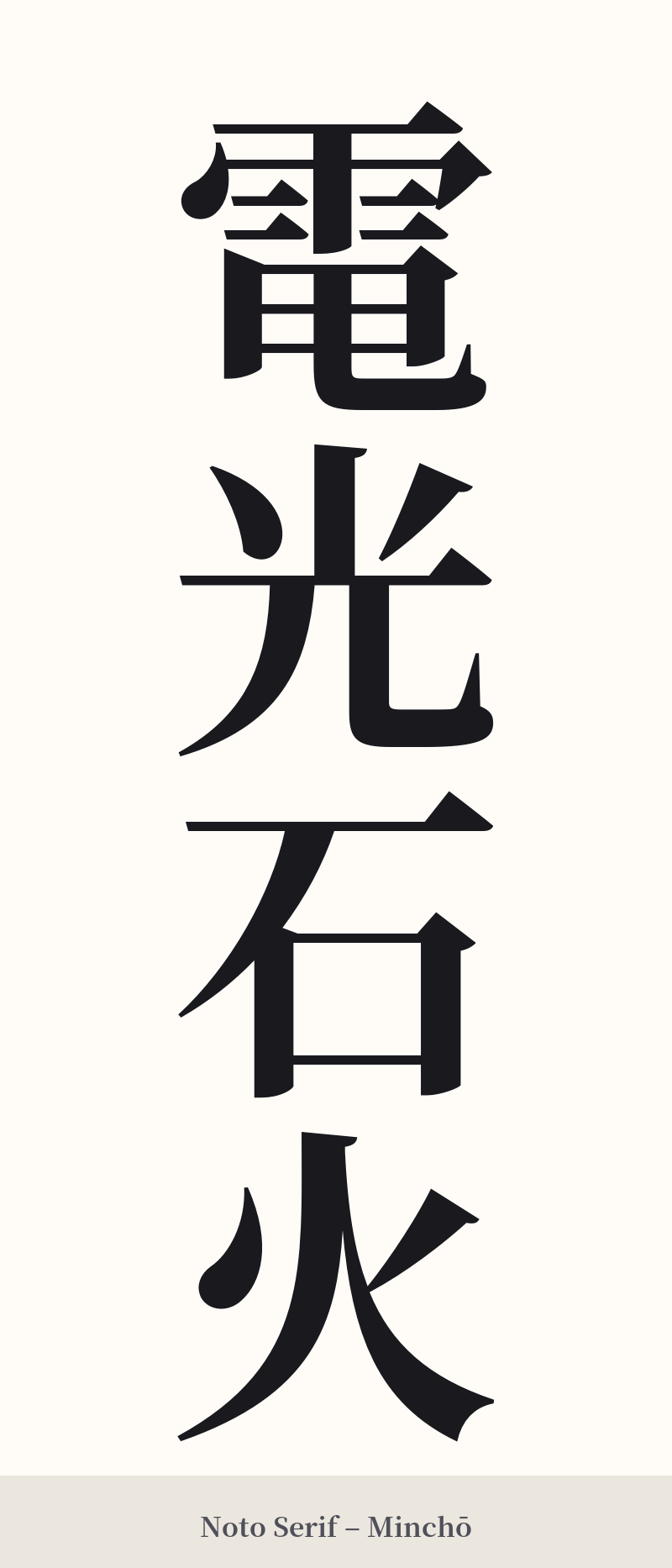
🖌️ Font Styles for 電光石火
The same kanji can look dramatically different depending on the calligraphy style. Choose a font that matches the mood you want for your tattoo or design.
🎨 Tattoo Suitability
📐 Tattoo Design Guide
A 電光石火 tattoo is a statement of speed, decisiveness, and power. To do it justice, the design must be both clear and dynamic.
– Placement: Vertical alignment is strongly recommended. This is the traditional way to write Japanese and it allows the four characters to flow naturally. The forearm, calf, or along the spine are excellent choices, providing the necessary length for a balanced composition.
– Font Style: The choice of script can dramatically alter the tattoo's feel. A cursive or 'grass script' (草書, sōsho) will emphasize the 'speed' and 'flow' of the idiom, with fluid, connected strokes. Conversely, a crisp, angular 'block script' (楷書, kaisho) will highlight the 'decisive' and 'powerful' aspects, giving the design a strong, stable presence.
– Visual Tips: While the kanji are powerful on their own, some choose to add subtle background elements. A faint lightning bolt behind the characters or a few sparks near 石火 could work, but be careful not to overcrowd the design. The primary focus should always be the calligraphy itself. Ensure your artist leaves enough space between characters so they are distinct, yet read as a single, cohesive phrase.
Comments