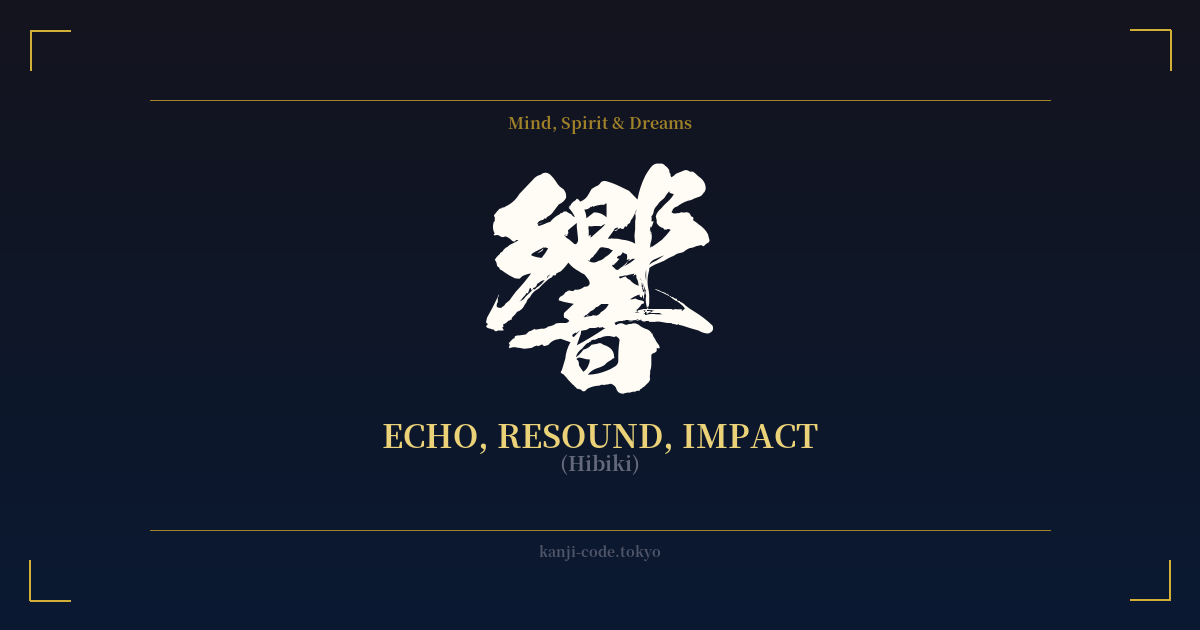
✍️ 響 (Hibiki) — Cultural Context
The kanji 響 (hibiki) is a character rich with poetic and philosophical weight, extending far beyond its literal translation of 'echo' or 'sound'. Its true essence lies in the concept of resonance, vibration, and the lasting impact that a sound, an action, or an idea can have. It’s not just the sound itself, but what the sound does after it’s created—how it travels, reverberates, and affects its surroundings.
Visually, the character tells a story. It is composed of 郷 (kyō, meaning 'hometown' or 'village') above 音 (on, meaning 'sound'). This composition beautifully illustrates the idea of a sound carrying across a wide-open space, like a village bell ringing out and echoing through the valleys. It paints a picture of a sound that isn't contained but rather expands to touch everything around it.
In Japanese culture, this concept of resonance is deeply ingrained. The term 'kokoro ni hibiku' (心に響く) means 'to resonate with the heart' or 'to strike a chord'. It describes a piece of music, a line of poetry, or a kind word that deeply moves you. This is the emotional core of 響—the ability to connect on a profound, non-verbal level. This idea is central to Japanese aesthetics, particularly in the concept of 'yoin' (余韻), which refers to the lingering reverberation or aftertaste. Whether it's the silence after a taiko drumbeat, the fading scent of incense, or the feeling left after a poignant film, 'yoin' is the 'hibiki' of an experience.
This kanji also carries the meaning of 'influence' or 'effect', often seen in the word 'eikyō' (影響). An action has an 'eikyō', its ripples spreading out and causing effects beyond the initial event. It implies a chain reaction, where one thing leads to another, much like an echo bouncing off multiple surfaces.
Furthermore, 'Hibiki' is a popular unisex name in Japan, chosen for its beautiful sound and meaning, suggesting a person who is harmonious and influential. The world-renowned Suntory blended whisky, 'Hibiki', was named to embody the harmony of its numerous malt and grain whiskies, a symphony of flavors resonating together. The name itself means 'harmony' or 'resonance', reflecting the brand's philosophy. From temple bells to heartfelt words, 響 captures the powerful idea that some things, once sent out into the world, continue to live on.
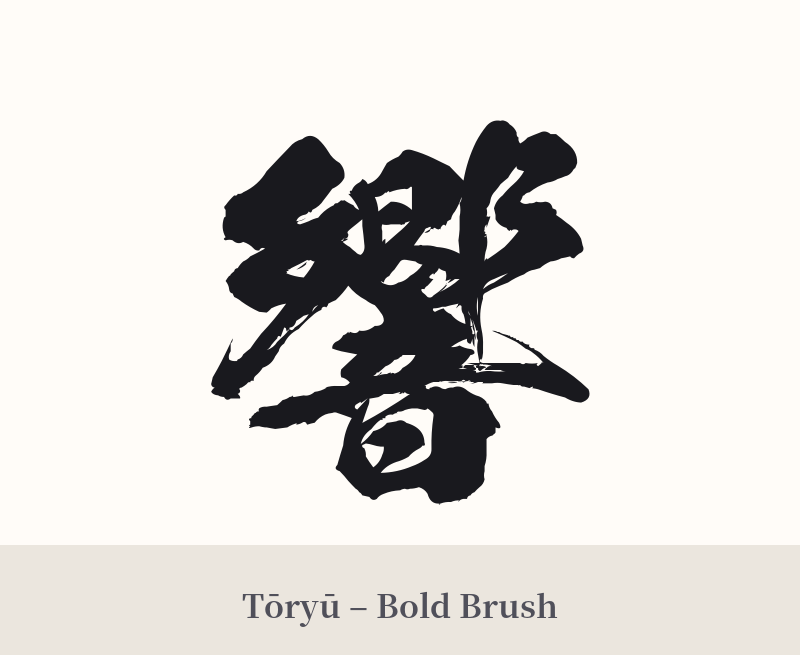
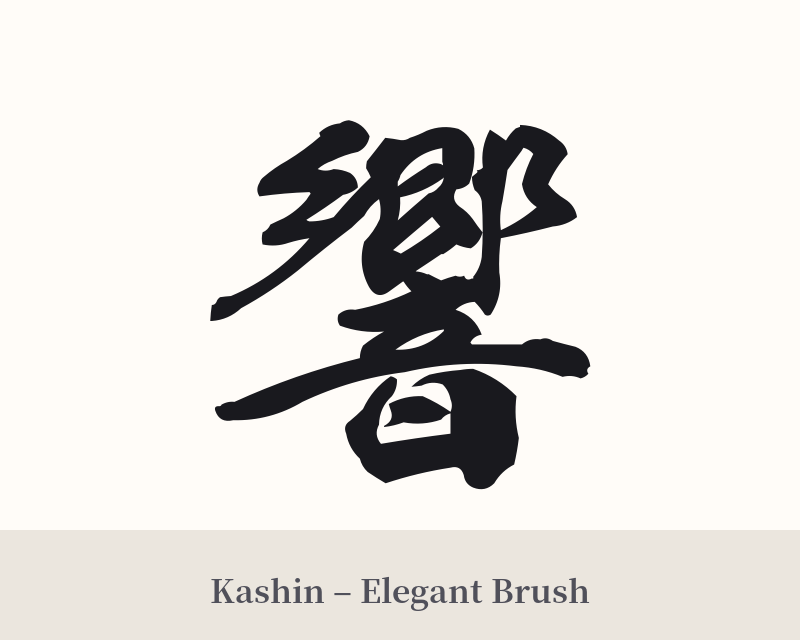
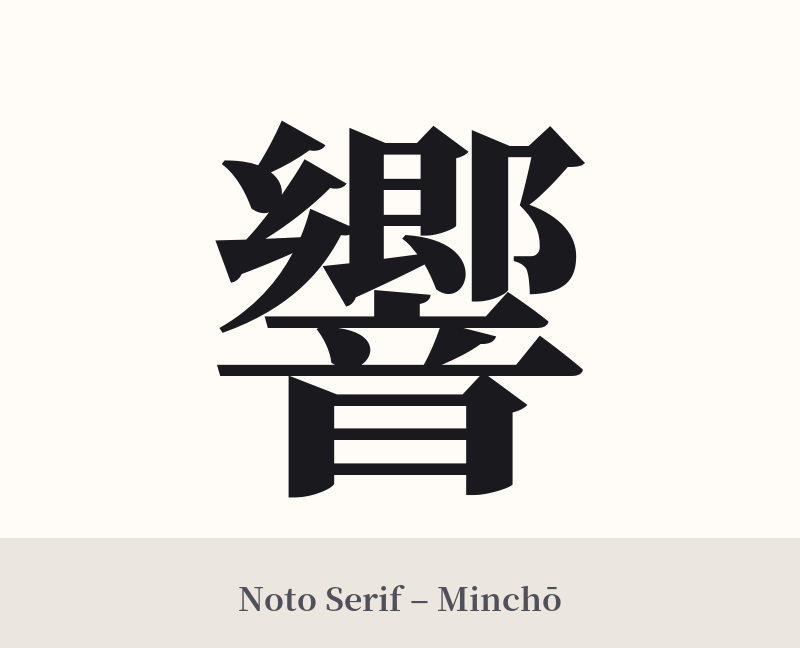
🖌️ Font Styles for 響
The same kanji can look dramatically different depending on the calligraphy style. Choose a font that matches the mood you want for your tattoo or design.
🎨 Tattoo Suitability
📐 Tattoo Design Guide
The kanji 響 is visually complex and elegant, offering great potential for a striking tattoo. Its meaning lends itself to fluid and impactful designs.
– Placement: This character needs space to breathe. Consider flatter, larger areas like the forearm, the calf, the shoulder blade, or the center of the back. This ensures the 20 strokes remain distinct and legible over the years. Avoid small, cramped areas.
– Style Suggestions: A semi-cursive script (gyōsho) can beautifully capture the flowing, echoing quality of the kanji. For a bolder statement emphasizing 'impact', a strong, clean block script (kaisho) works well. A highly stylized, almost abstract cursive (sōsho) can look like a wave of sound itself.
– Complementary Imagery: While the kanji is powerful alone, you could pair it with visual elements that enhance its meaning. Consider designs incorporating ripples in water, stylized sound waves, a Japanese temple bell (bonshō), or delicate wind chimes (fūrin) to visually represent the concept of resonance.
Comments