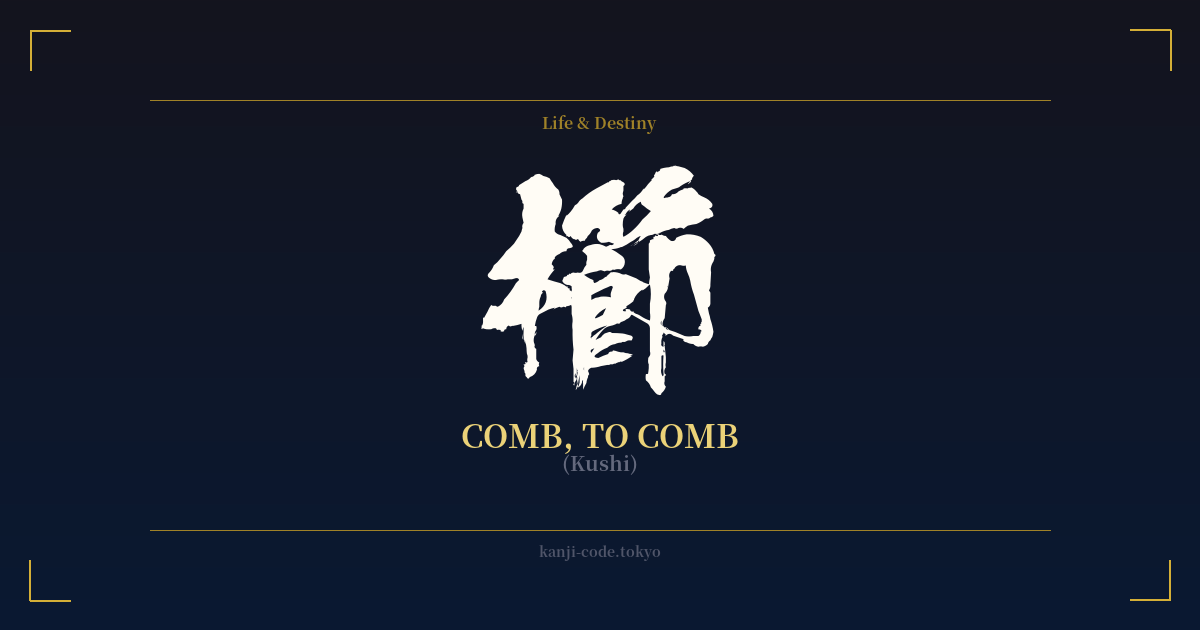
✍️ 櫛 (Kushi) — Cultural Context
At first glance, the kanji 櫛 (kushi) simply means 'comb.' It’s a tool for grooming, an everyday object. Yet, in Japanese culture, few items are laden with such a dramatic and dualistic symbolism, representing beauty, protection, life, and the terrifying specter of death all at once.
The comb’s story begins in myth, most famously in the Kojiki, Japan's oldest chronicle. The creator god Izanagi, pursuing his deceased wife Izanami into the underworld (Yomi), is horrified to find her a rotting, maggot-infested corpse. To see her form, he breaks off a tooth from his ornate comb (yutsu-tsuma-gushi) and lights it like a torch. The light reveals the horrifying truth, and as he flees from the enraged goddess and her demonic legions, he throws the comb behind him. It magically transforms into a thicket of bamboo shoots, momentarily halting his pursuers. Here, the comb is a tool of revelation, a source of light in darkness, and a talisman of protection.
This protective quality made combs powerful amulets. They were believed to ward off evil spirits, and in some traditions, were thought to house a part of the owner's spirit, especially since they were so intimately connected with the hair, which was itself considered a vessel for life force. Women would place combs in their elaborate hairstyles not just for decoration, but as a form of spiritual shielding.
However, the kushi carries a significant and unavoidable darkness. Its pronunciation, 'kushi,' is a perfect homophone for 苦死, a word combining the characters for 'suffering' (苦) and 'death' (死). This grim wordplay is not an obscure academic point; it's a widely known cultural superstition. It’s the primary reason why giving a comb as a gift is a major social taboo, especially to the elderly or ill, as it can be interpreted as wishing them a painful demise. This is compounded by the fact that the number nine, 'ku,' also sounds like suffering, and four, 'shi,' sounds like death.
Thus, the 櫛 exists in a state of profound contradiction. It is an object of beauty, craftsmanship (often made from fine tsuge or boxwood), and feminine grace. It is a mythological artifact that can light the way and save a god from the clutches of the underworld. Simultaneously, its very name speaks of suffering and death. This duality makes it a fascinating symbol of the Japanese aesthetic of mono no aware—the gentle sadness of things—where beauty and mortality are inextricably linked.
🖌️ Font Styles for 櫛
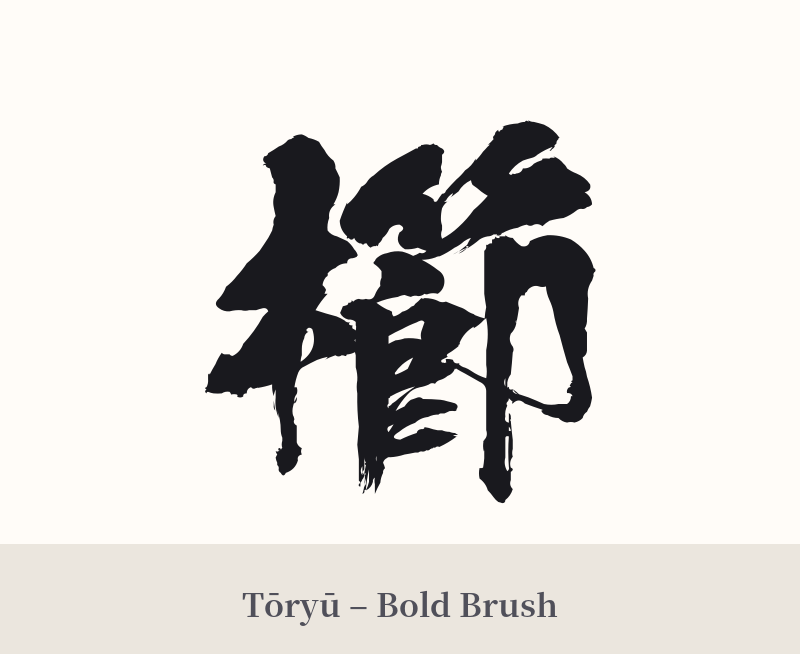
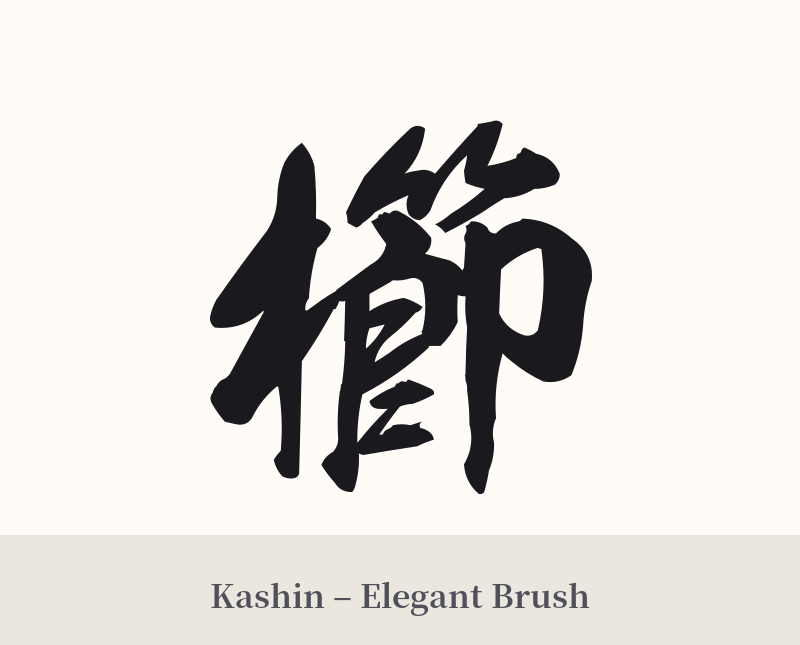
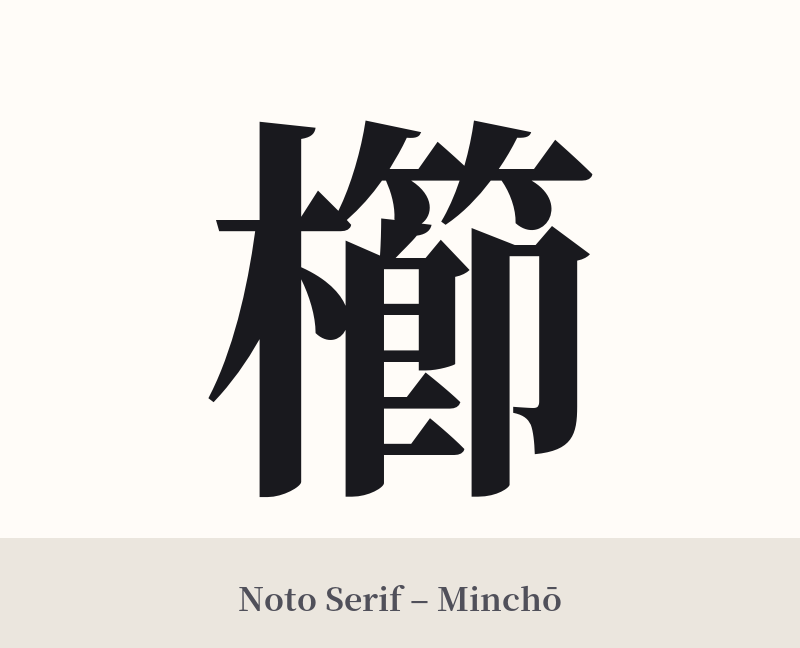
The same kanji can look dramatically different depending on the calligraphy style. Choose a font that matches the mood you want for your tattoo or design.
🎨 Tattoo Suitability
📐 Tattoo Design Guide
Due to its high stroke count and cultural baggage, a tattoo of 櫛 (kushi) requires careful planning.
– Placement: This kanji needs space to be legible. Consider larger, flatter areas like the back, thigh, or the inner forearm. Avoid small or highly curved areas like the wrist, ankle, or fingers, where the intricate lines would blur together.
– Font Style: Legibility is paramount. A clean, crisp Kaisho (block) or Mincho (serif) font is highly recommended. A skilled artist might manage a Gyōsho (semi-cursive) style, but a fully cursive Sōsho script would almost certainly render the character an indecipherable smudge.
– Visual Tips: To add context and steer the meaning away from the negative pun, consider incorporating other elements. A design showing the comb with one tooth broken and glowing could directly reference the Izanagi myth of protection and revelation. Pairing it with flowers like cherry blossoms (Sakura) can create a powerful statement about beautiful, transient life, playing into the kanji's inherent duality.
Comments