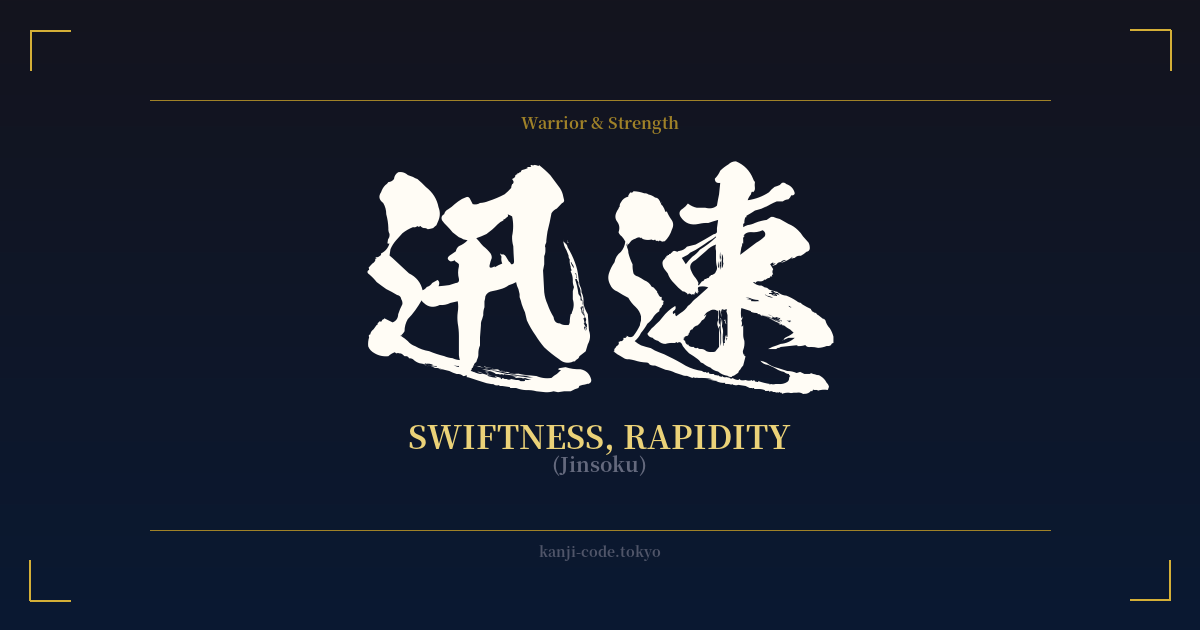
✍️ 迅速 (Jinsoku) — Cultural Context
迅速 (Jinsoku) is a Japanese word that translates to swiftness or rapidity, but its meaning runs much deeper than simple speed. It doesn’t just mean fast; it means fast and effective. It describes an action performed with a combination of speed, precision, and purpose, suggesting a high level of skill and preparedness.
In the context of Japanese warrior culture, 迅速 was a paramount virtue. For a samurai or a ninja, the ability to react and strike with decisive speed was the difference between life and death. This wasn't about frantic, uncontrolled movement, but rather a calm, focused quickness born from countless hours of training. It's the speed of a master swordsman drawing his blade in a single, fluid motion, or a strategist making a critical decision without hesitation. The concept is closely tied to principles like sente (先手), the act of seizing the initiative in combat or strategy, which requires a 迅速 mindset.
Beyond the battlefield, the value of 迅速 is deeply embedded in modern Japanese society. In the business world, a 「迅速な対応」 (jinsoku na taiō), or a 'swift response,' is the gold standard for customer service. It signifies competence, reliability, and respect for the other person's time. You'll also see this word used to praise the efficiency of emergency services, logistics companies, and skilled professionals in any field.
Unlike the more common word 速い (hayai), which can describe anything from a fast car to a quick lunch, 迅速 carries a formal, respectful tone. It elevates the idea of speed from a mere physical attribute to a demonstration of expertise and control. It implies that the quickness is not an accident but the result of a deliberate, well-executed process. This makes it a word of praise, acknowledging not just the action but the competence of the person performing it.
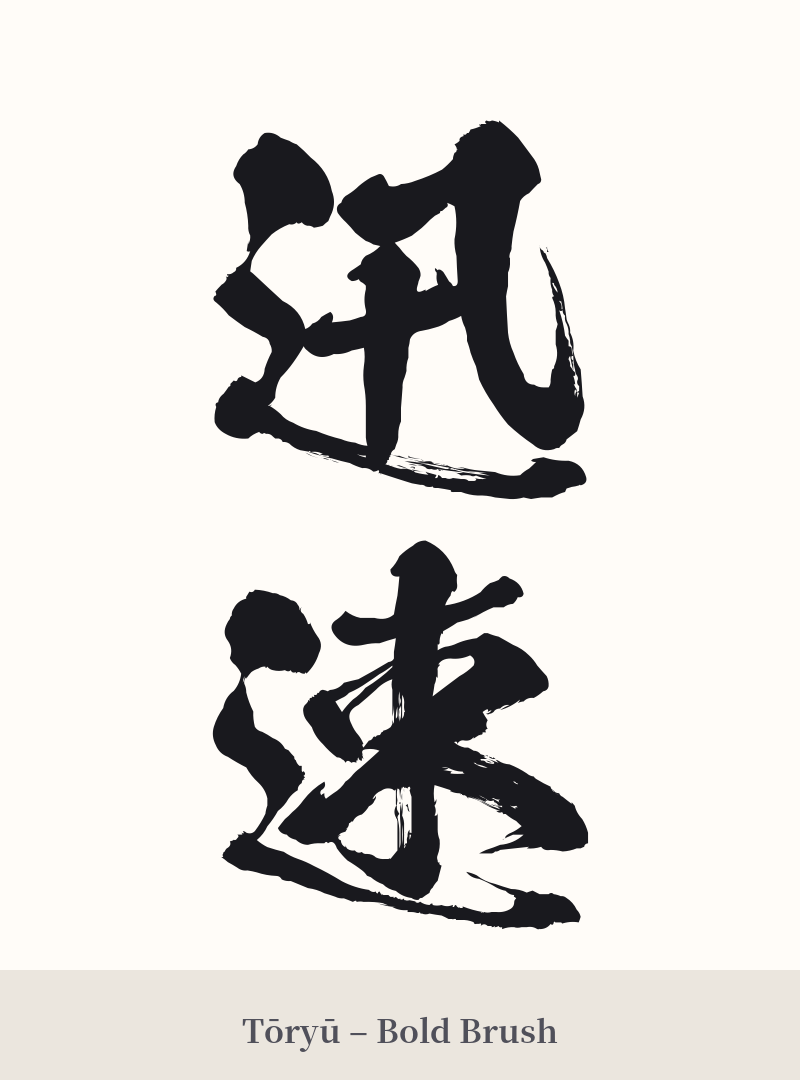
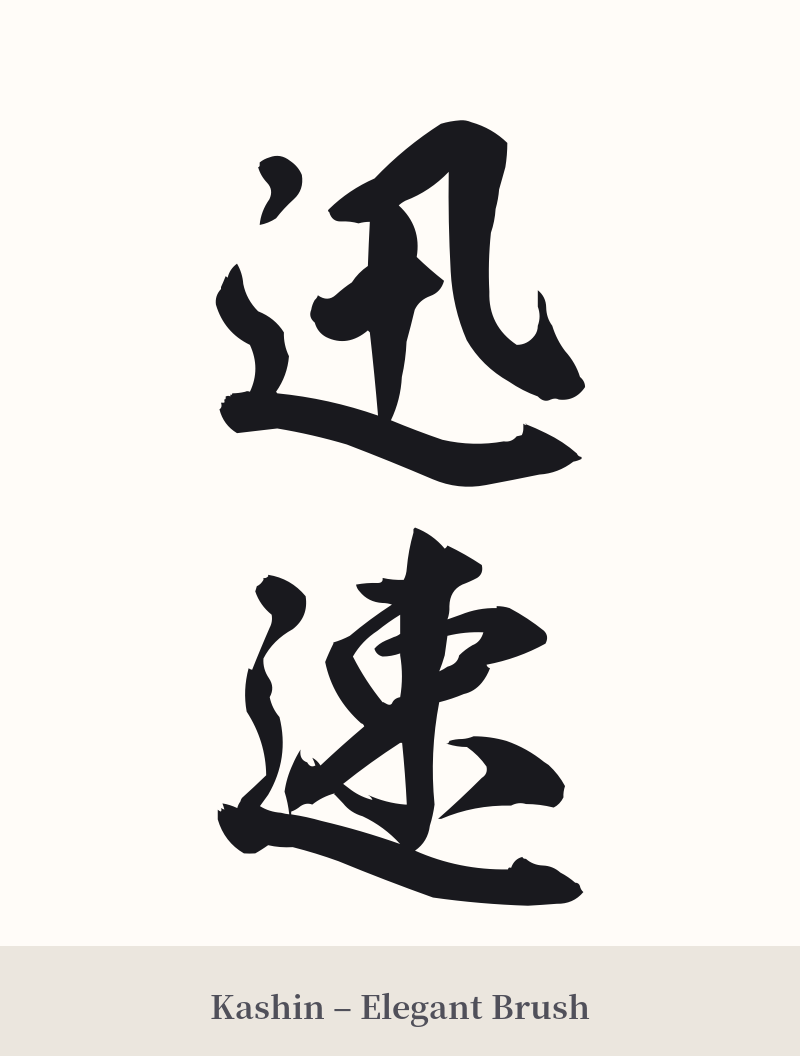
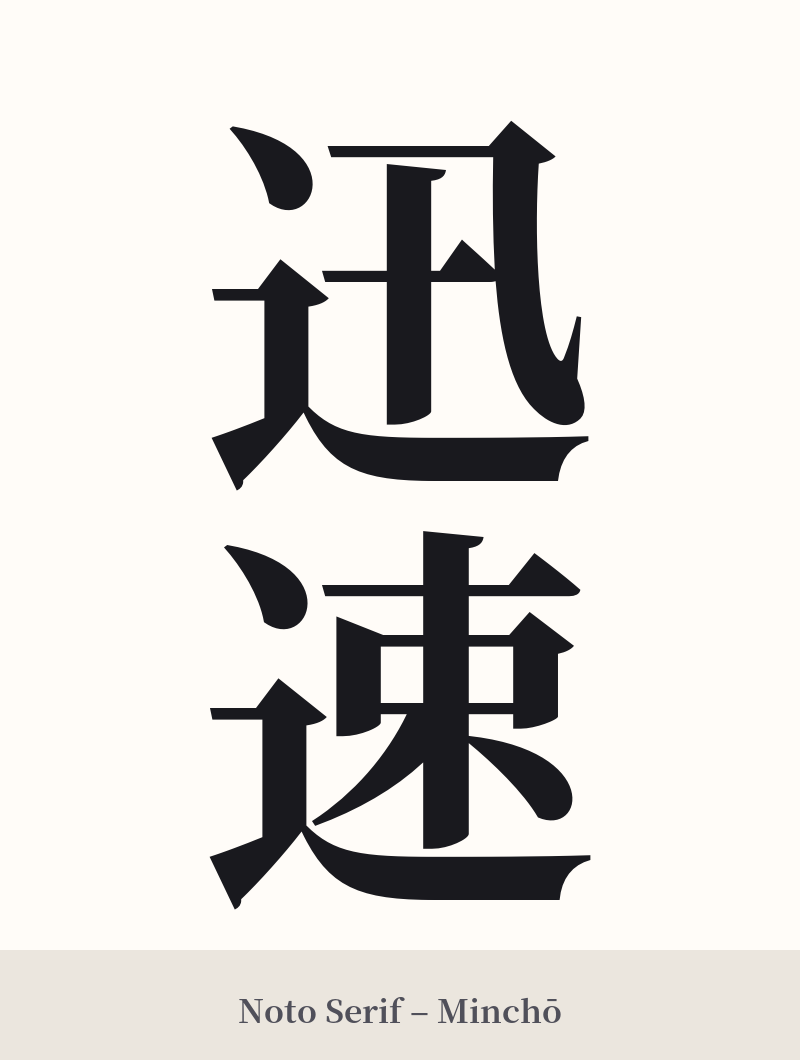
🖌️ Font Styles for 迅速
The same kanji can look dramatically different depending on the calligraphy style. Choose a font that matches the mood you want for your tattoo or design.
🎨 Tattoo Suitability
📐 Tattoo Design Guide
For a 迅速 (Jinsoku) tattoo, a vertical alignment is highly recommended. This traditional orientation looks powerful placed along the forearm, bicep, calf, or even down the spine, accentuating the body's length and suggesting downward, decisive motion.
– Font Style: To capture the essence of fluid movement, consider a semi-cursive (gyōsho) or cursive (sōsho) calligraphy style. These styles use flowing, connected strokes that visually represent speed. For a more modern or disciplined feel, a crisp, angular block script (kaisho) can emphasize the precision and control inherent in the word.
– Placement: Forearms and calves are excellent choices, as the tattoo will be visible during movement, reinforcing its meaning. The back, either between the shoulder blades or along the spine, offers a larger canvas for a more dramatic, large-scale piece.
– Visual Elements: Consider pairing the kanji with subtle elements that suggest speed, such as a few swift brushstrokes that look like wind, the blur of a striking animal like a falcon or snake, or even an enso circle drawn with a quick, energetic hand. Avoid overly complex backgrounds that could detract from the clarity of the characters.
Comments