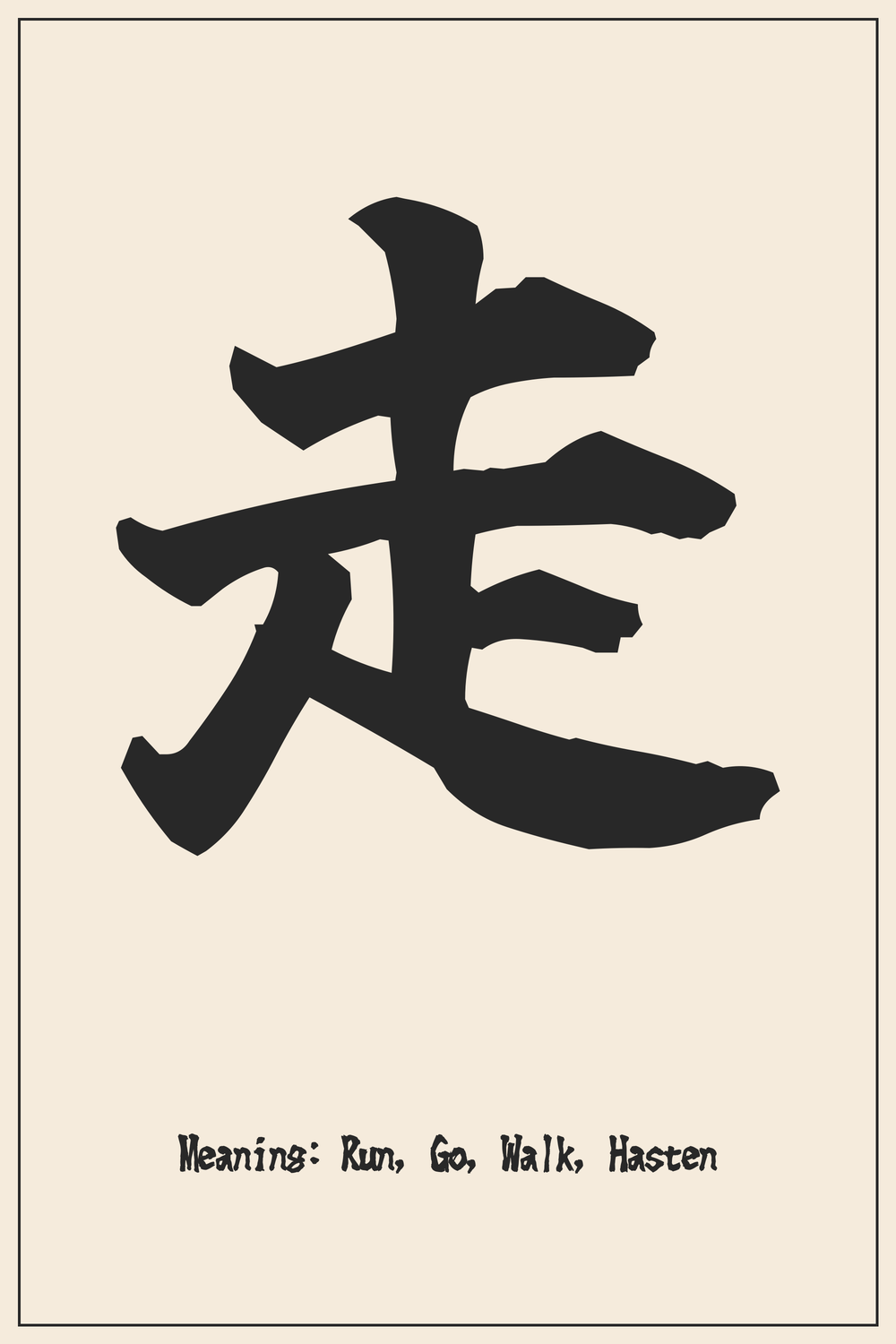
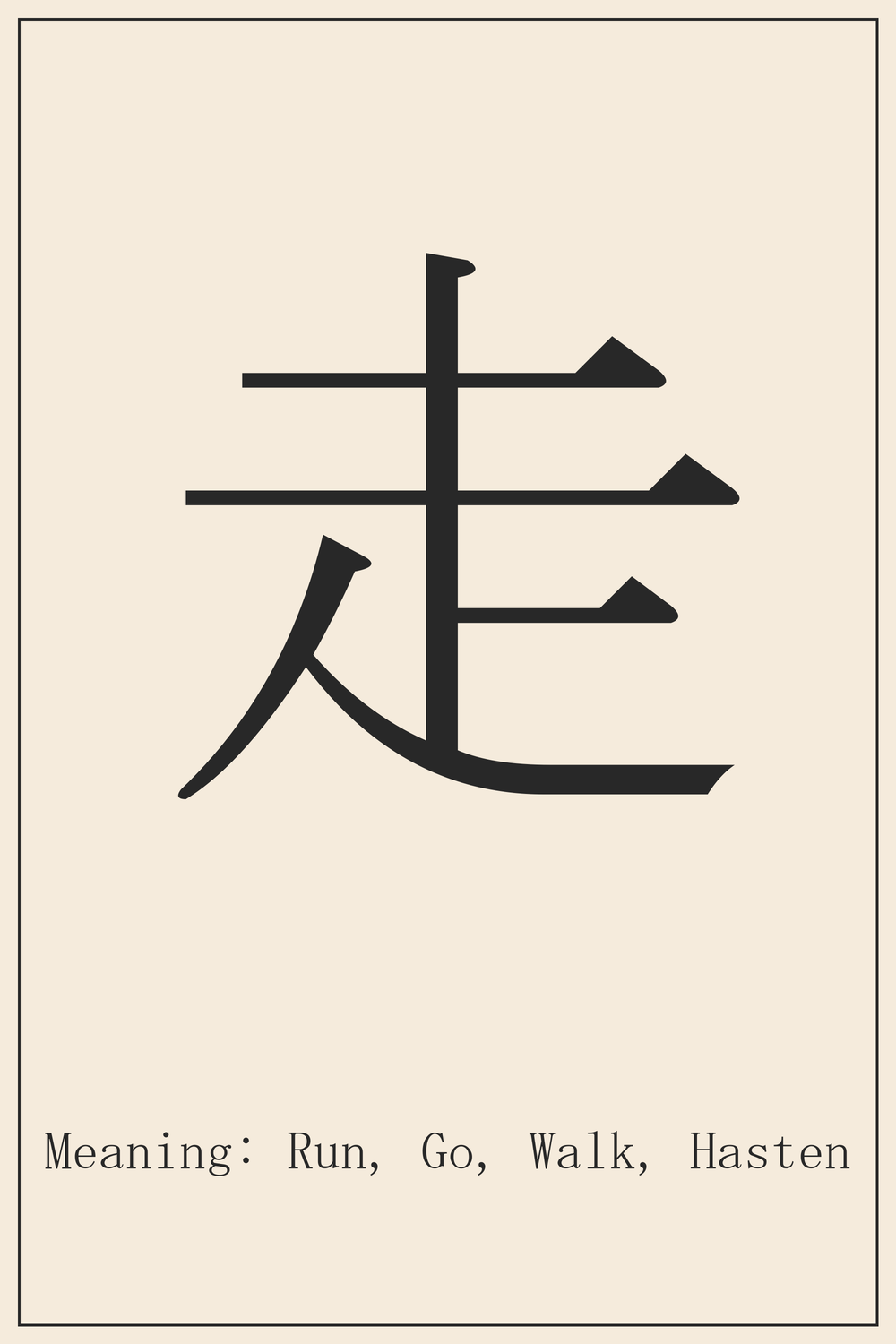
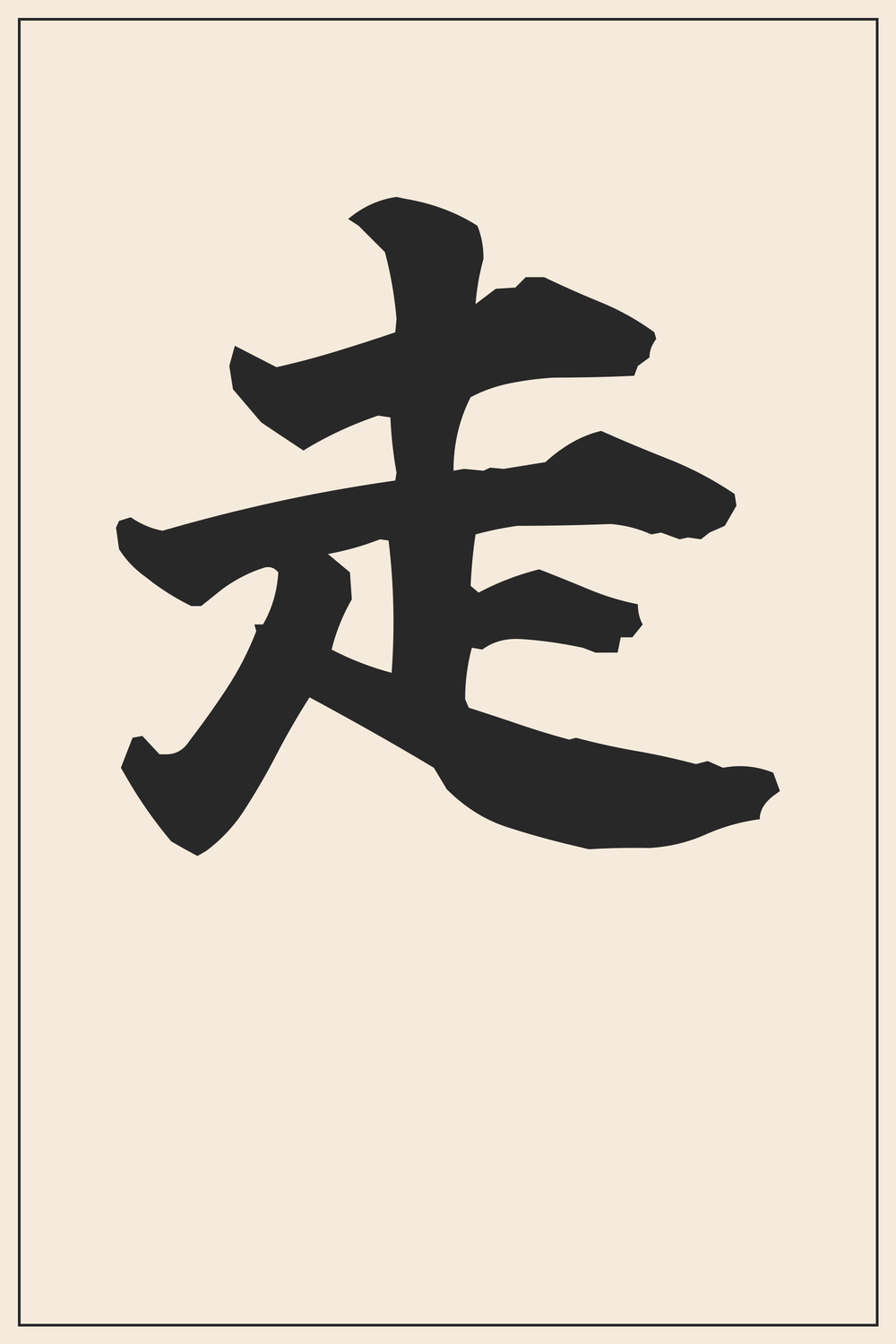
The Kanji 走 captures the essence of dynamic motion and relentless progress. It embodies the spirit of forward movement, whether in physical stride or life’s journey.
The atmosphere of a Kanji character changes dramatically depending on the font style. A character that looks elegant in a brush style might look bold and modern in a different font.
Recommendation:
Since a tattoo is permanent, we strongly recommend comparing various font styles beyond what is shown here. Use our designs as a trusted reference for the correct structure, but feel free to explore different artistic variations to find the perfect match for your vision.
The Deep Meaning Behind 走
The Kanji 走 (hashiru) is a pictographic character depicting a person running. Its ancient form clearly illustrates a figure with legs in motion, emphasizing the act of swift movement. This visual origin directly conveys its primary meaning of “to run” or “to go rapidly.”
Beyond physical movement, 走 often carries connotations of progress, advancement, and initiative in Japanese culture. It can symbolize the drive to achieve goals, the freedom of movement, or the journey of life itself. Its simple yet powerful form makes it a versatile symbol.
Kanji Breakdown
The Kanji 走 is a single character whose form inherently conveys its meaning, illustrating the dynamism of movement.
Pictograph of a Running Person: This Kanji is fundamentally a pictograph (象形文字, shōkei moji). Its top element (⼟) vaguely resembles a head or upper body, while the lower part represents legs in motion. It vividly captures the image of a person running, making its meaning immediately apparent from its structure.
Conclusion
The Kanji 走 powerfully encapsulates the concepts of forward motion, energy, and progress. It is a symbol for those who embrace an active life, pursue their aspirations with determination, and value the freedom to move and evolve.
For a tattoo, 走 serves as a constant reminder to keep moving forward, to embrace journeys, and to never cease striving. Its minimalist yet dynamic form offers a compelling and universally understood message of momentum and perseverance.
Comments