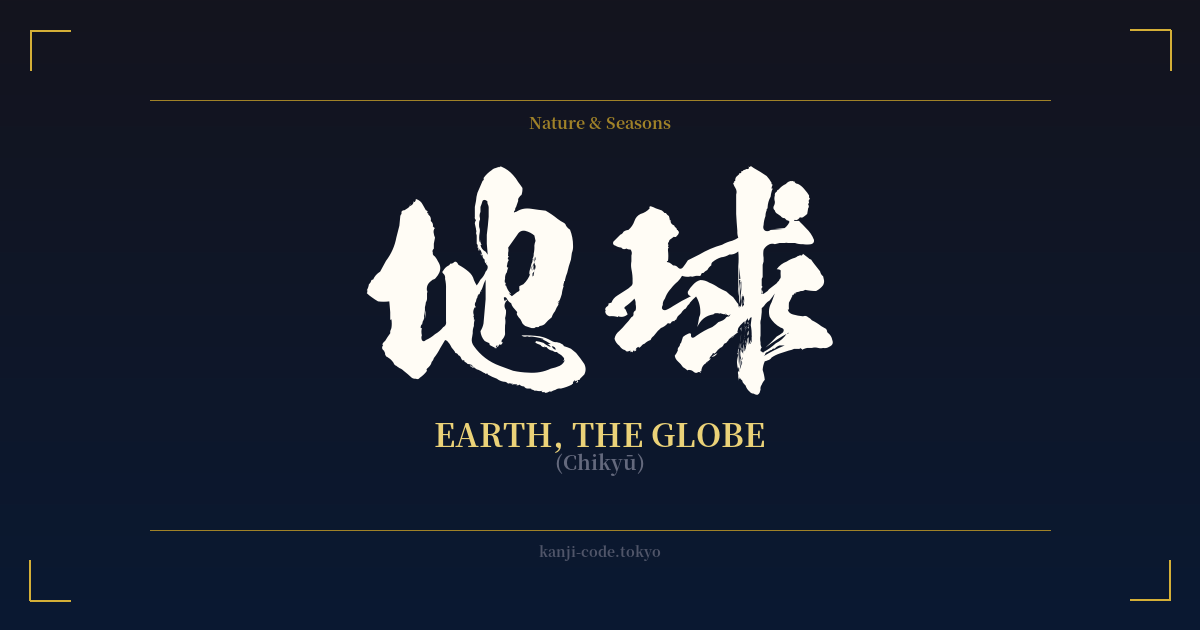
✍️ 地球 (Chikyū) — Cultural Context
The Japanese word for Earth, 地球 (Chikyū), is a beautifully direct and modern term. Composed of the characters for 'ground' (地) and 'sphere' (球), it literally translates to 'ground-sphere'—a perfect description of our planet as understood through the lens of science.
Unlike many kanji words with roots deep in ancient Chinese philosophy or Japanese mythology, 地球 is a relatively modern invention. It gained prominence during the Meiji Restoration in the late 19th century, as Japan rapidly absorbed Western science and concepts. Before this, the world was often described with more poetic or philosophical terms. This scientific origin gives 地球 a feeling of precision, objectivity, and global consciousness.
It's crucial to distinguish 地球 from similar-sounding words. For instance, 世界 (sekai) also translates to 'the world,' but it refers more to the world of human society, culture, and experience. You would use 世界 to talk about 'world history' or 'traveling the world.' In contrast, 地球 refers to the physical planet itself—the blue and green sphere floating in space. Another related term is 大地 (daichi), meaning 'great earth' or 'the land,' which evokes a more grounded, poetic image of the soil and continents beneath our feet.
In contemporary Japan, 地球 is ubiquitous. It’s the standard term used in education, science, and news. It's also central to environmental discussions, as seen in phrases like 地球温暖化 (chikyū ondanka), or 'global warming.' This connection has imbued the word with a sense of shared responsibility and environmental awareness.
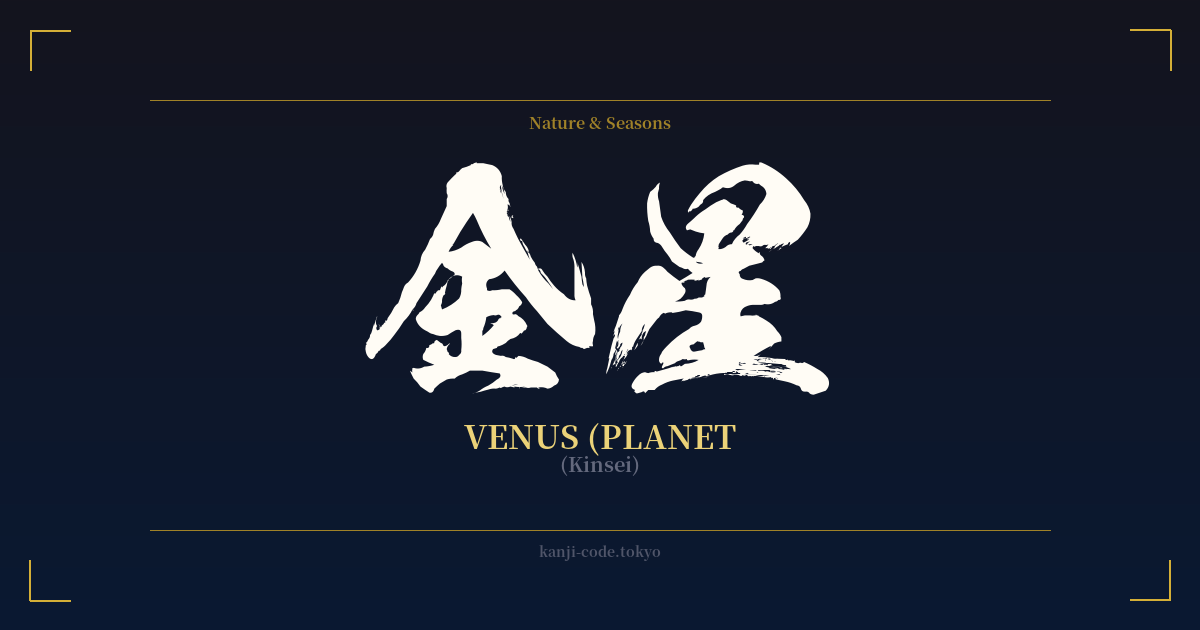
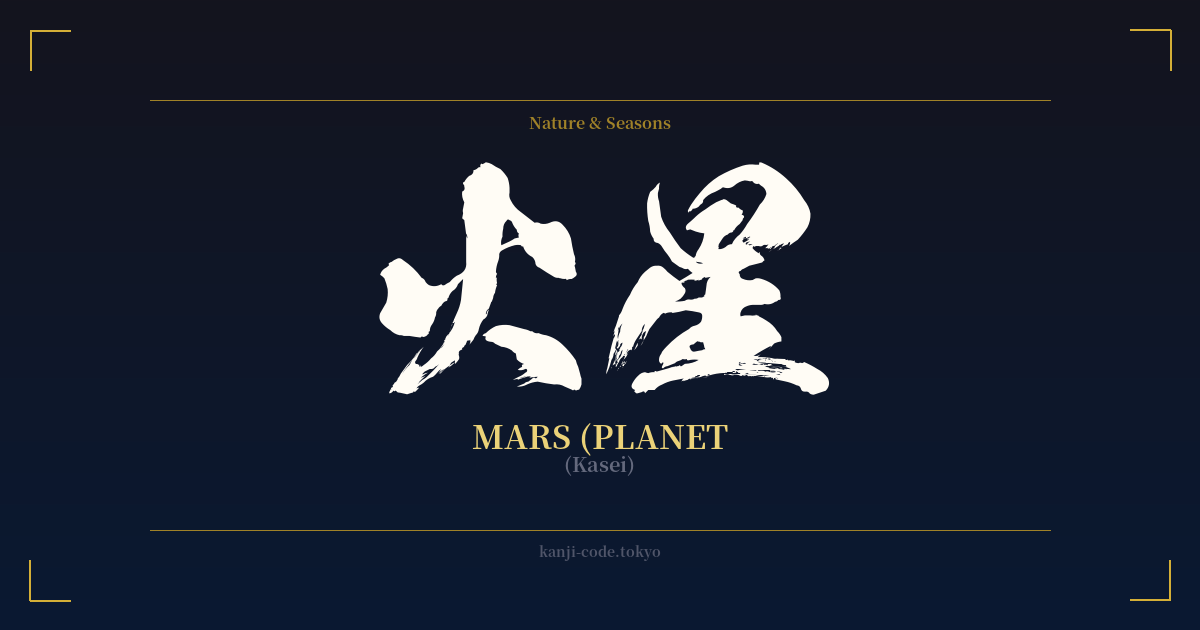
In pop culture, from anime like 'Sailor Moon' (where Sailor Mars's powers are tied to the planet) to countless science fiction stories, 地球 is often portrayed as a precious home to be protected. It symbolizes humanity's origin, a beacon of life in the vastness of the cosmos. Choosing this word is to choose a symbol of science, interconnectedness, and a modern understanding of our place in the universe.
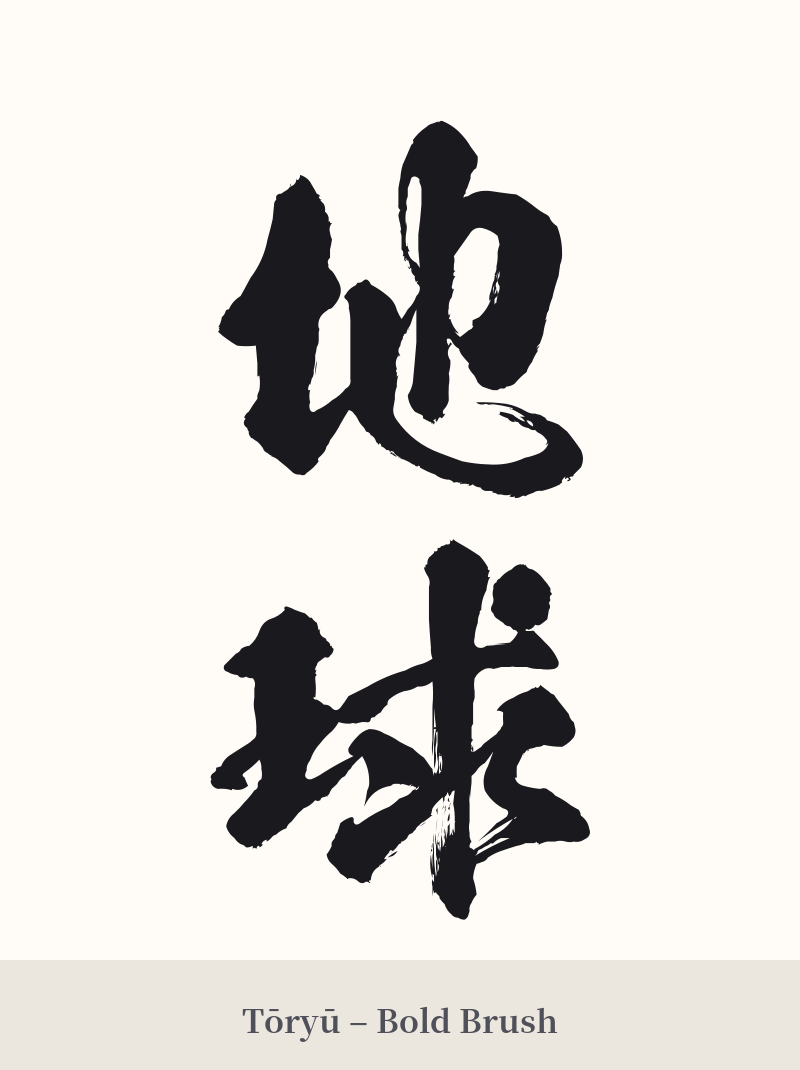
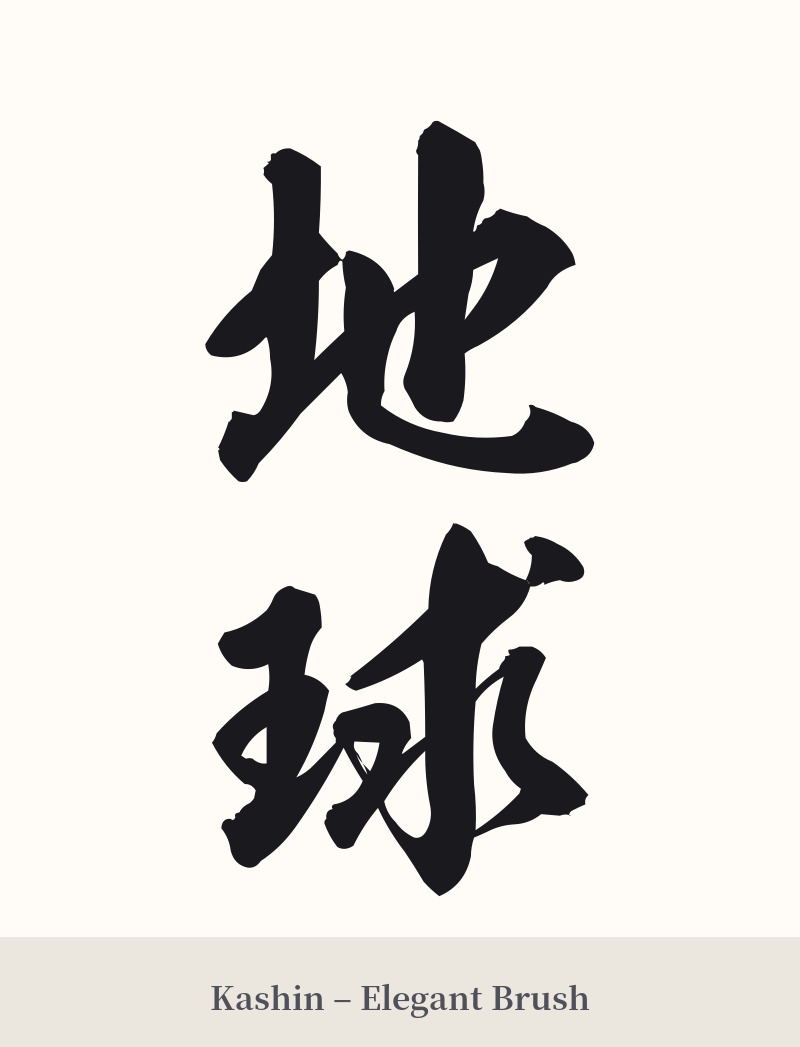
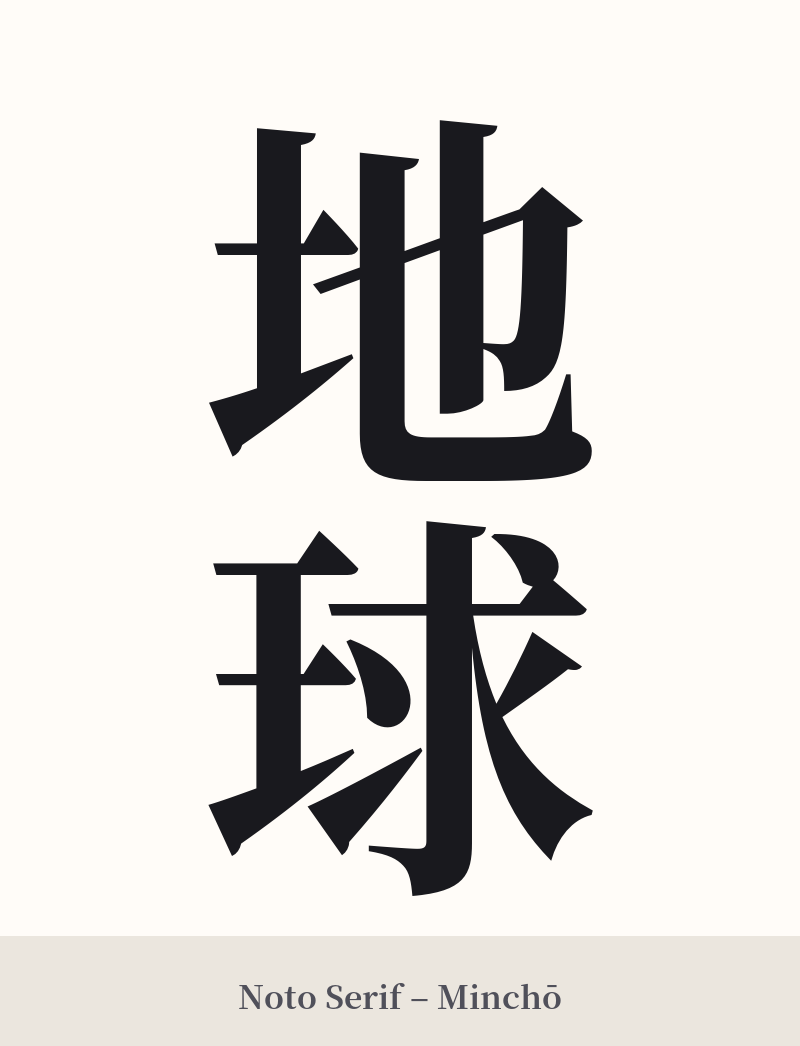
🖌️ Font Styles for 地球
The same kanji can look dramatically different depending on the calligraphy style. Choose a font that matches the mood you want for your tattoo or design.
🎨 Tattoo Suitability
📐 Tattoo Design Guide
The two characters in 地球 (Chikyū) offer a nice visual balance between stability and complexity, making them versatile for tattoo design.
– Placement: A vertical orientation is classic and looks excellent along the spine, forearm, or calf. Horizontally, it fits well across the chest, upper back, or below the collarbone.
– Font Style: For a modern, scientific feel, a clean, bold Mincho or Gothic typeface works perfectly. If you want to add a more organic, natural touch, a flowing semi-cursive (Gyosho) or standard script (Kaisho) can soften the characters and connect them to the 'natural' aspect of Earth.
– Visual Tips: Consider incorporating the kanji into a larger piece. It could be placed within an 'ensō' (Zen circle) to symbolize the planet's shape and the concept of totality. Another idea is to have the characters rendered with a watercolor effect using blues and greens, mimicking the Earth as seen from space. You could also embed the kanji within a silhouette of the world map or have it surrounded by natural elements like trees, mountains, or waves.
Comments