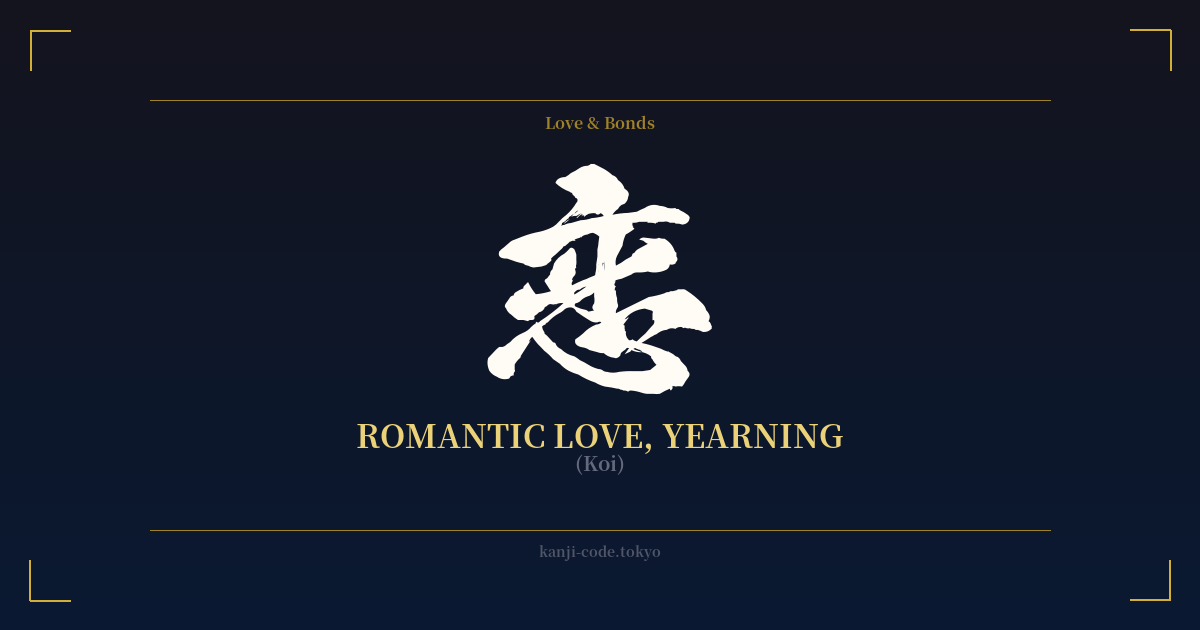
✍️ 恋 (Koi) — Cultural Context
The kanji 恋 (koi) is one of the most evocative and emotionally charged characters in the entire Japanese language. While often translated simply as 'love,' this translation misses the electrifying nuance that sets it apart. Koi specifically refers to romantic, passionate love—the feeling of longing, yearning, and intense desire for another person. It’s the butterflies in your stomach, the ache of separation, the thrill of a new romance.
To truly grasp the essence of 恋 (koi), one must contrast it with its counterpart, 愛 (ai). While koi is the passionate, often self-centered wanting, ai represents a broader, deeper, and more selfless love. Ai is the love for family, for humanity, or the stable, enduring affection in a long-term partnership. Koi is the spark, the fire; ai is the warm, steady hearth. The Japanese saying, 「恋はするもので、愛は育むもの」 (Koi wa suru mono de, ai wa hagukumu mono), captures this perfectly: "Koi is something you fall into, Ai is something you nurture."
The character's very structure tells a story. It is composed of the radical for 'heart' (心) at the bottom, indicating its connection to deep emotion. The top portion is a phonetic component that originally depicted longing or a change of heart, creating a powerful visual metaphor: a heart in a state of passionate flux and yearning.
This concept is a cornerstone of Japanese culture, permeating art, literature, and daily life. It is the driving force behind countless J-pop songs, anime plotlines, and dramatic films. The term 初恋 (hatsukoi), or 'first love,' holds a particularly special, almost sacred place in the cultural psyche, often remembered with a bittersweet nostalgia. From the courtly romances in the ancient Tale of Genji to modern-day stories, the turbulent and beautiful journey of 'koi' is a timeless theme.
Ultimately, 恋 represents a fundamental human experience. It’s not just an abstract idea but a feeling that is visceral, consuming, and transformative. It embodies the excitement and vulnerability of opening one's heart to another, capturing both the potential for ecstatic joy and the risk of profound heartache. This dual nature makes it an incredibly powerful and relatable symbol.
🖌️ Font Styles for 恋
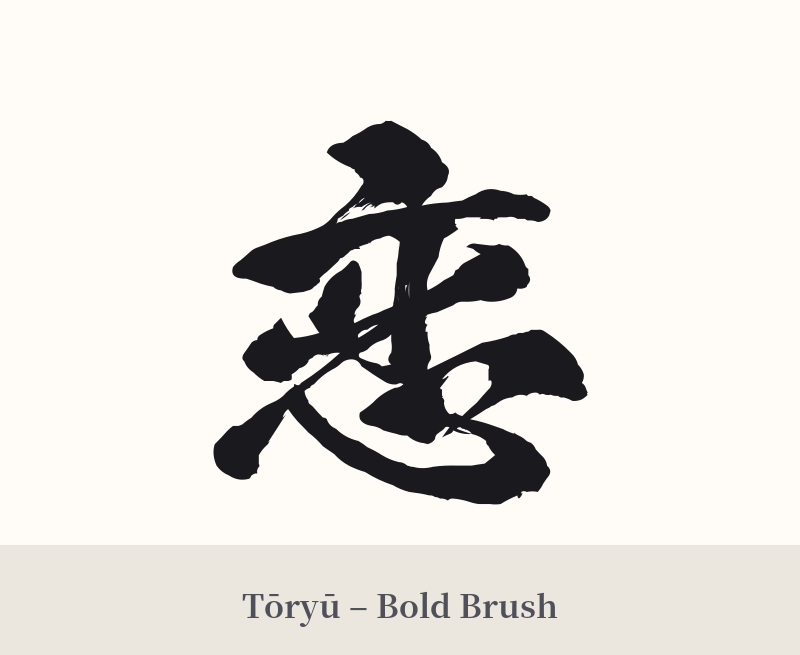
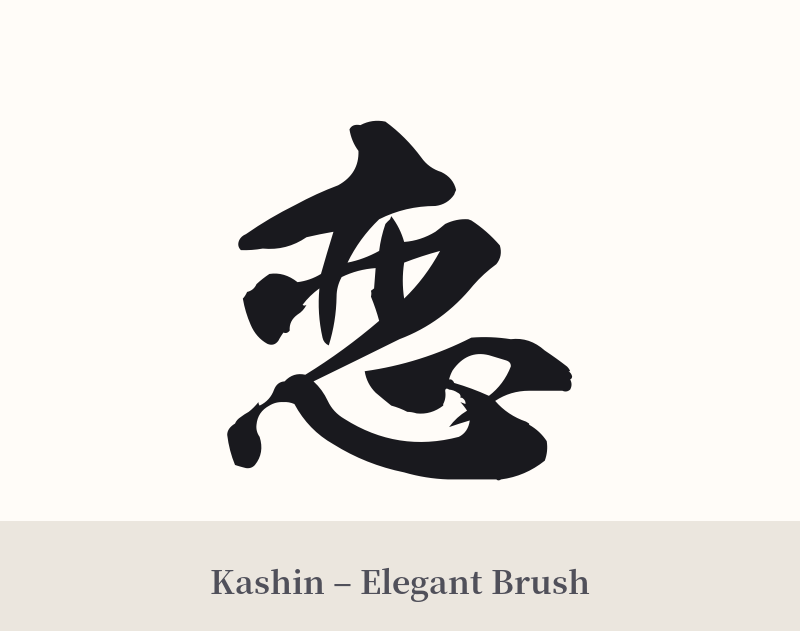
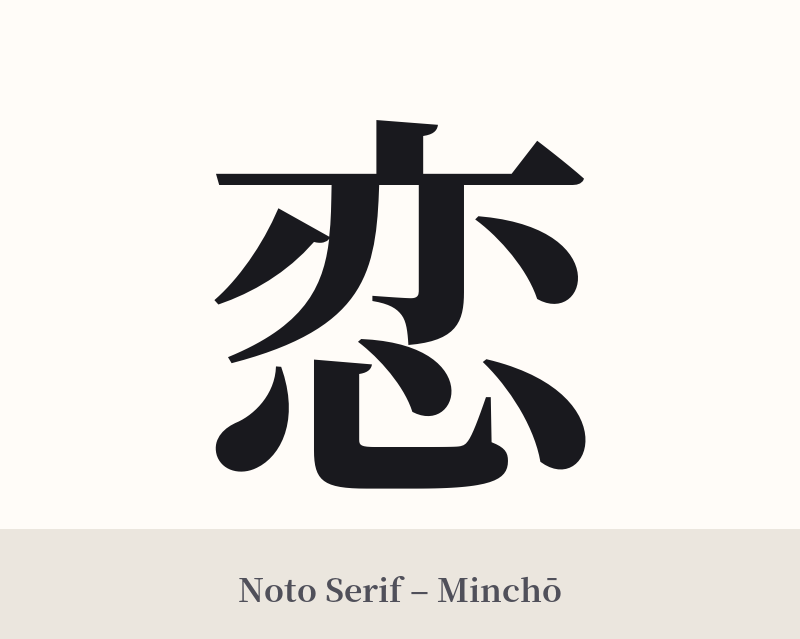
The same kanji can look dramatically different depending on the calligraphy style. Choose a font that matches the mood you want for your tattoo or design.
🎨 Tattoo Suitability
📐 Tattoo Design Guide
The kanji 恋 (koi) is visually balanced and offers great flexibility for tattoo design.
– Placement: For a subtle statement, consider the inner wrist, behind the ear, or on the ankle. For a more prominent piece, the forearm, shoulder blade, or calf provides a great canvas for a larger, more detailed rendering.
– Font Style: A dynamic shodō (calligraphy) brushstroke style is an excellent choice, as the flowing ink can mirror the fluid, passionate nature of the emotion itself. Alternatively, a clean, minimalist fine-line style can create an elegant and modern look.
– Visual Tips: Consider integrating the kanji with other symbolic imagery. Cherry blossoms (sakura) can represent the beautiful but fleeting nature of a passionate romance. A watercolor splash of red or pink behind the character can add a burst of emotion. For a creative twist, some people pair it with a koi fish, playing on the identical pronunciation, though the meanings are completely unrelated.
Comments