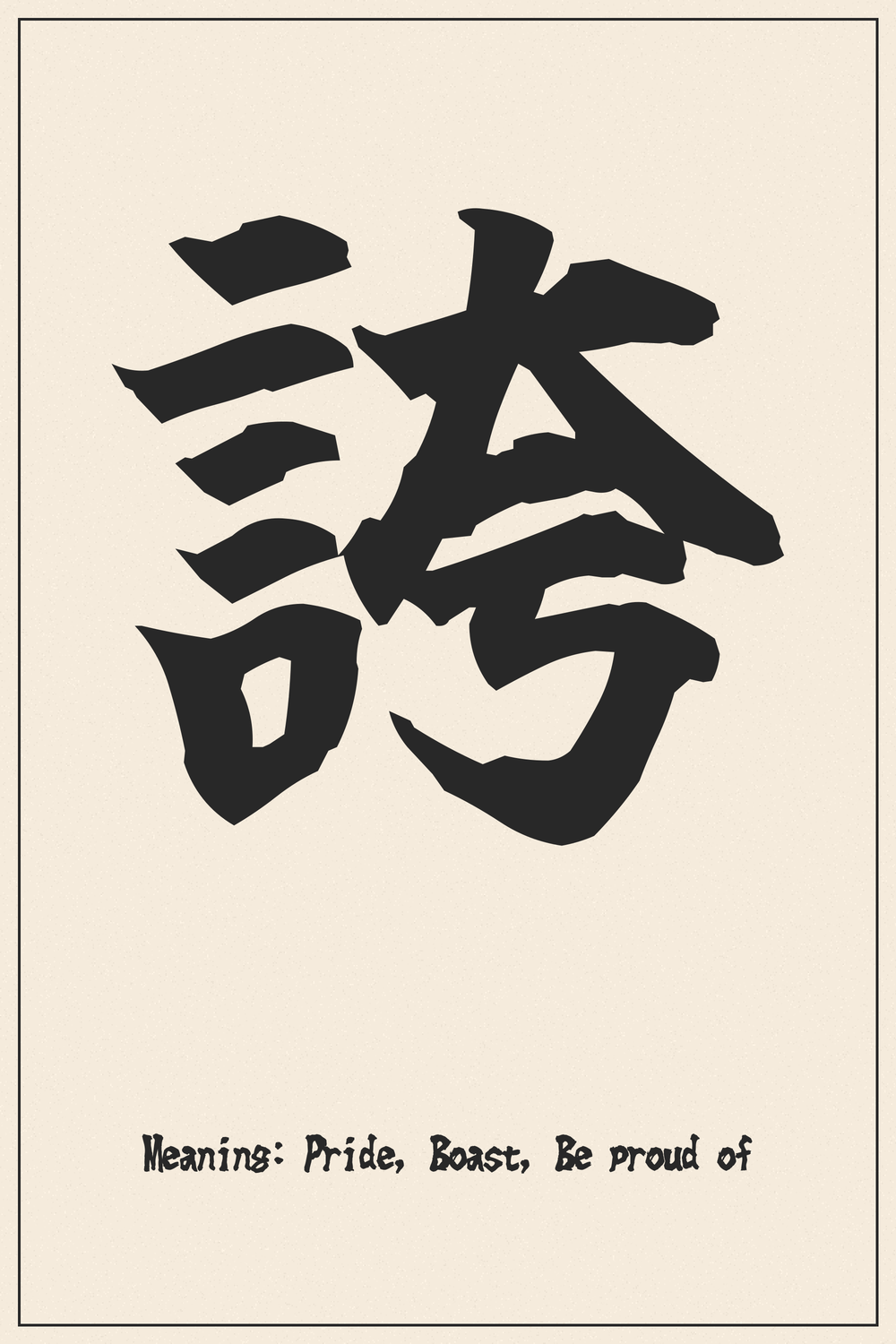
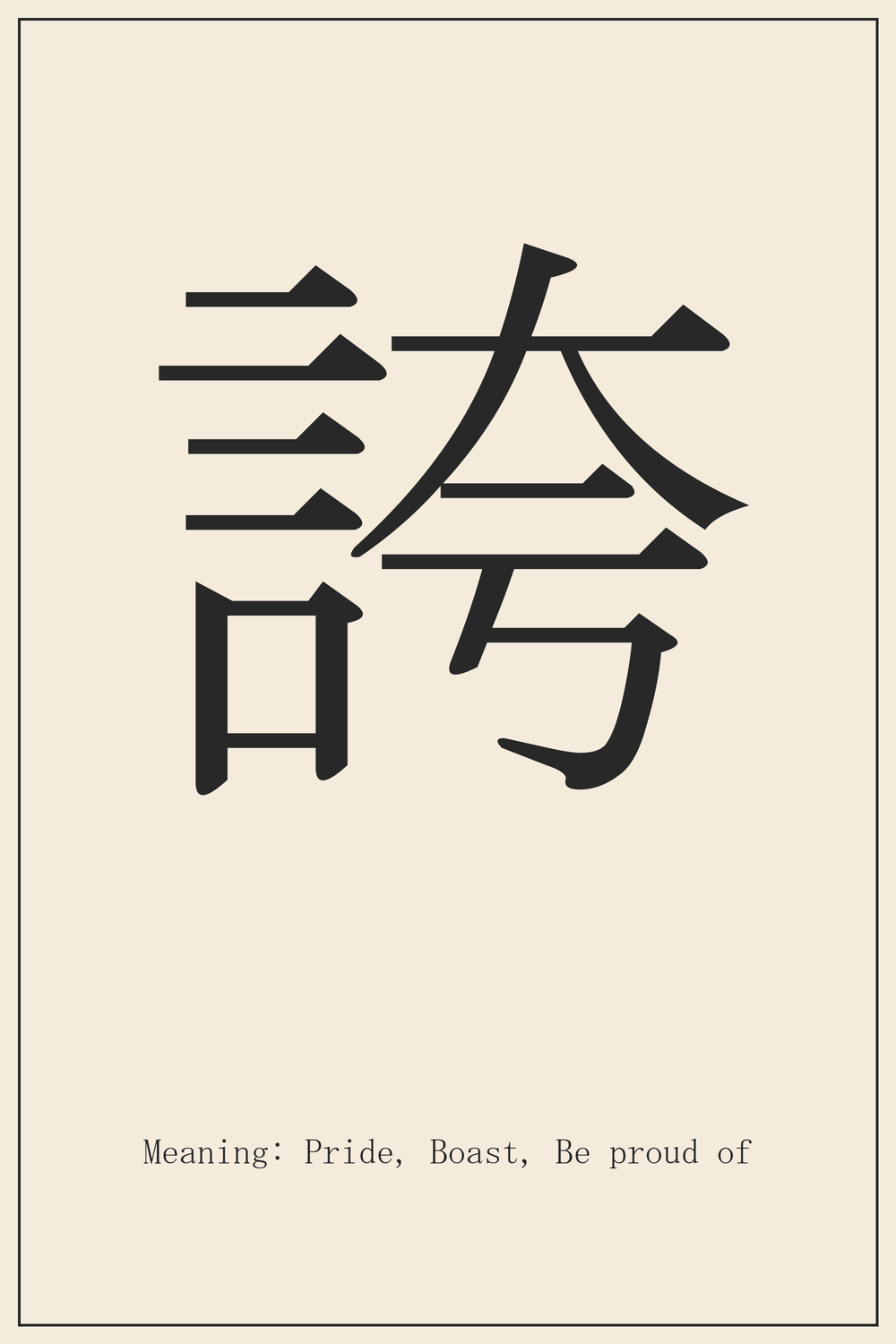
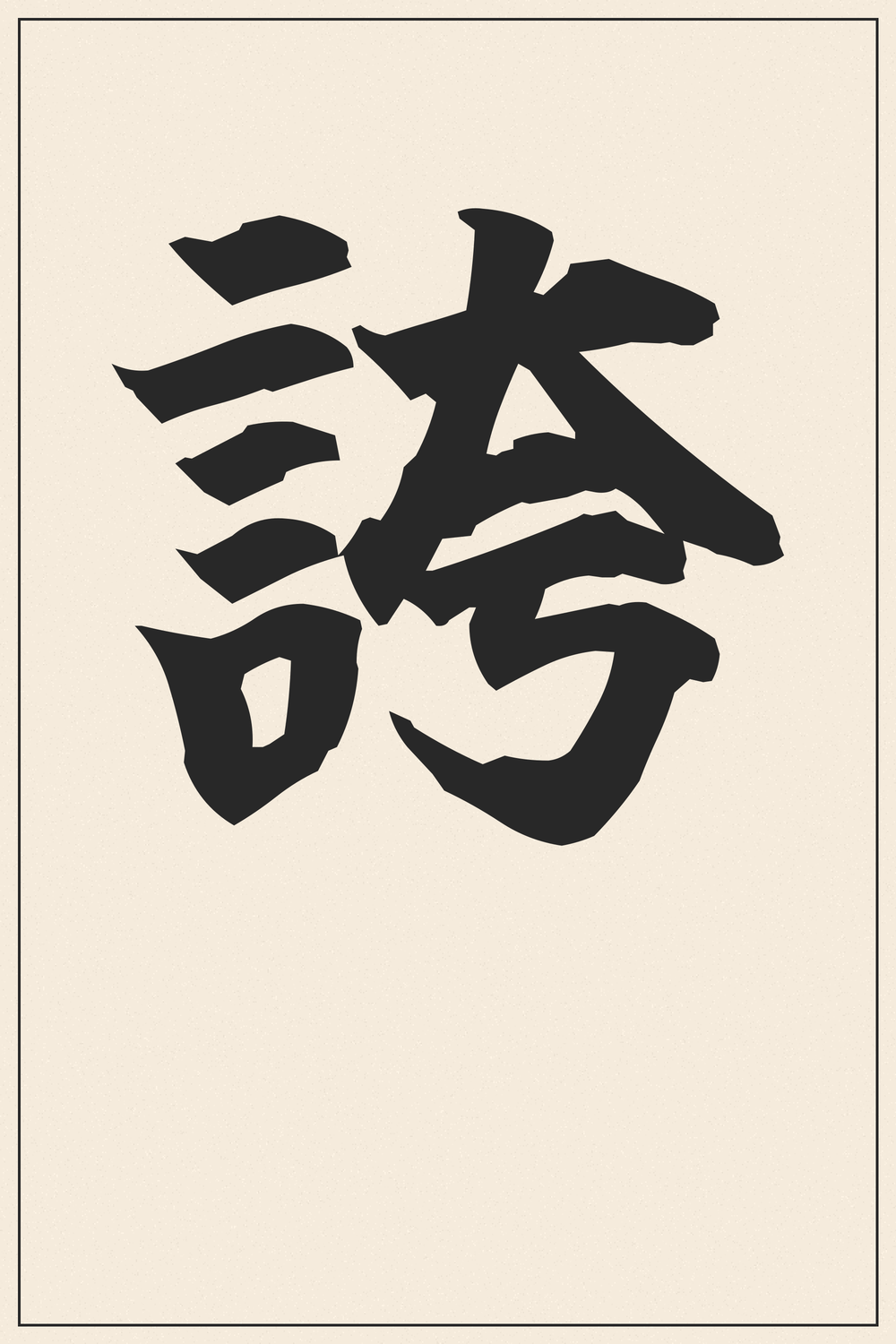
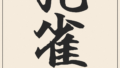
The Kanji 誇 embodies the complex human emotion of pride, ranging from noble self-worth to excessive boasting. It captures a powerful aspect of the human spirit, reflecting both dignity and potential hubris.
The atmosphere of a Kanji character changes dramatically depending on the font style. A character that looks elegant in a brush style might look bold and modern in a different font.
Recommendation:
Since a tattoo is permanent, we strongly recommend comparing various font styles beyond what is shown here. Use our designs as a trusted reference for the correct structure, but feel free to explore different artistic variations to find the perfect match for your vision.
The Deep Meaning Behind 誇
The Kanji 誇 is formed from 言 (gen/gon), meaning “speech” or “word,” and 夸 (ko), which depicts a person extending their chest, signifying “exaggeration,” “boasting,” or “extravagance.” Together, they convey the act of expressing oneself in an exaggerated or boastful manner.
In Japanese culture, “誇り” (hokori) can signify a sense of honorable pride or dignity, such as the pride a craftsman takes in their work or a warrior in their lineage. However, it can also carry the negative connotation of arrogance or self-importance, aligning with the concept of “pride” as a sin. The dual nature reflects a profound understanding of human character.
Kanji Breakdown
The Kanji 誇 is composed of two primary elements that contribute to its meaning.
Meaning: Represents “speech” or “word.” This radical often appears in characters related to communication and expression.
Meaning: Signifies “extravagant,” “boastful,” or “large.” It depicts a person puffing out their chest, symbolizing an inflated sense of self.
Conclusion
Choosing 誇 as a tattoo is a declaration of self-respect and acknowledging the fine line between honorable pride and excessive vanity. It represents the strength found in self-worth, yet serves as a reminder of humility.
Embrace the nuanced power of 誇. It is a profound statement, reflecting personal dignity while resonating with a rich cultural and pop-culture legacy.
Comments