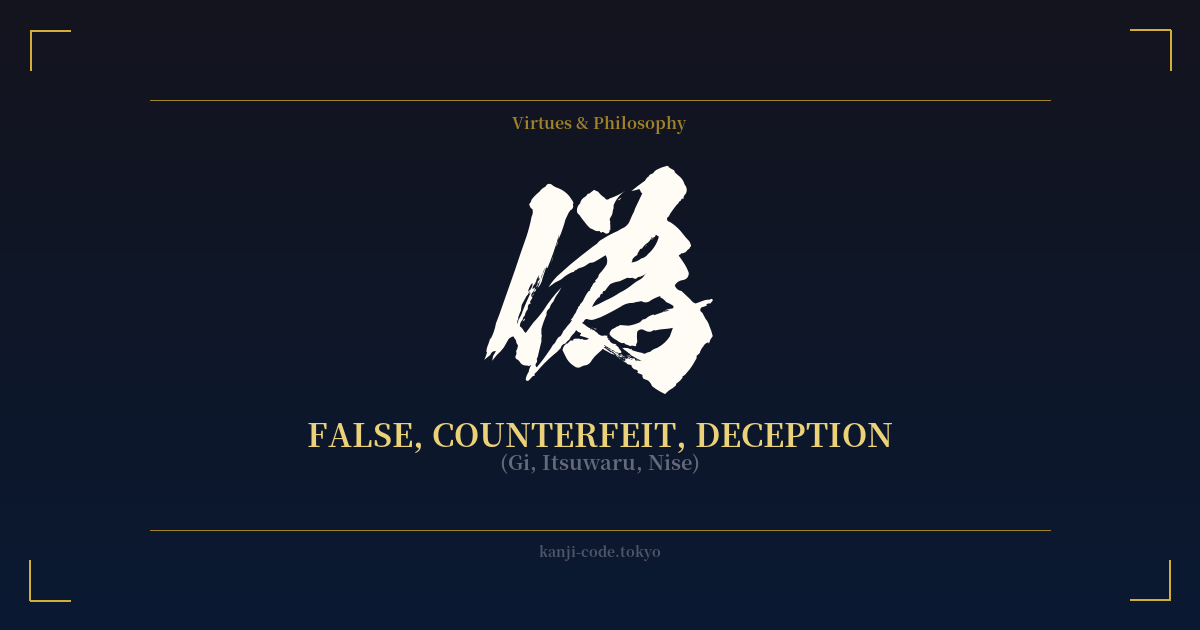
✍️ 偽 (Gi, Itsuwaru, Nise) — Cultural Context
The kanji 偽 (gi, or itsuwari) delves into a concept far more profound than a simple untruth. It doesn't just mean 'false'; it embodies the essence of the counterfeit, the artificial, and the intentionally deceptive. Where a simple lie (嘘, uso) might be a fleeting spoken falsehood, 偽 represents a constructed reality—an object, an identity, or an action built on a foundation of pretense.
The character's structure tells a story. It combines the radical for 'person' (亻) with the character 為, which means 'to do' or 'to act.' Together, they create a powerful image: a person acting, performing, or putting on a deliberate front. This isn't an accidental mistake; it's the conscious creation of something inauthentic. This visual etymology is key to understanding its deep-seated meaning in Japanese culture.
In Japanese society, which places high value on sincerity (誠, makoto) and authenticity (真, shin), 偽 stands as a direct and powerful antagonist. It's the core of words like 偽物 (nisemono), meaning a counterfeit product, and 偽善 (gizen), meaning hypocrisy—literally 'false goodness.' This highlights the cultural disdain for things that pretend to be what they are not, whether it's a fake designer bag or a person feigning virtue for social gain.
This tension is also reflected in the well-known cultural concepts of 'honne' and 'tatemae.' Honne refers to one's true, private feelings, while tatemae is the public facade or behavior one displays to maintain social harmony. While tatemae is a necessary social lubricant, 偽 represents its dark, corrupted form—when the facade is not for harmony but for malicious deception or selfish gain.
In modern pop culture, from anime to literature, the theme of 偽 is pervasive. It appears in stories about spies using a false name (偽名, gimei), androids questioning their humanity, or characters grappling with a fabricated past. It is a source of dramatic tension, exploring what it means to be 'real' in a world full of illusions and expectations.
To choose this kanji is to make a provocative statement. It can be interpreted as a critique of a 'fake' society, an embrace of a counter-cultural identity, or a personal reminder of a struggle with authenticity. It is a philosophically heavy and visually stark symbol that challenges the viewer, forcing them to confront the line between what is real and what is merely a performance.
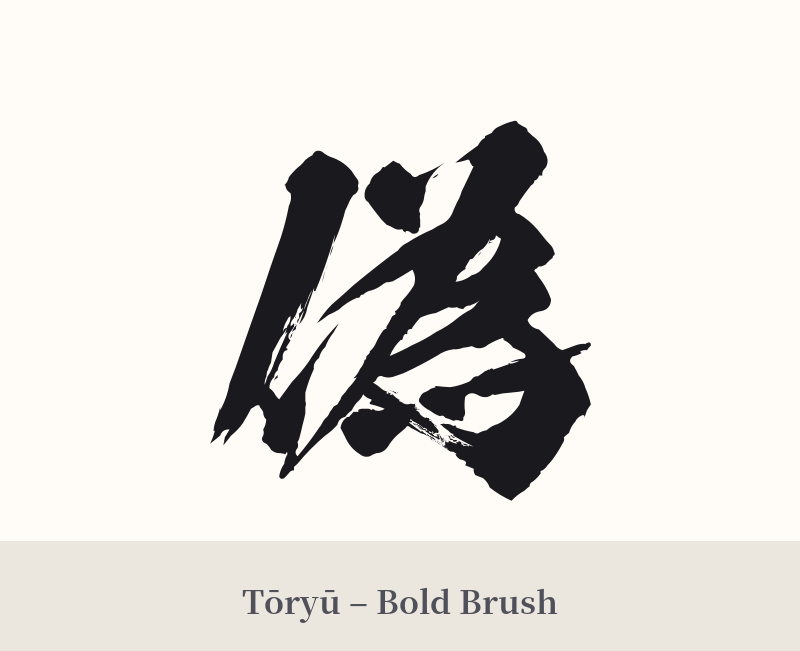
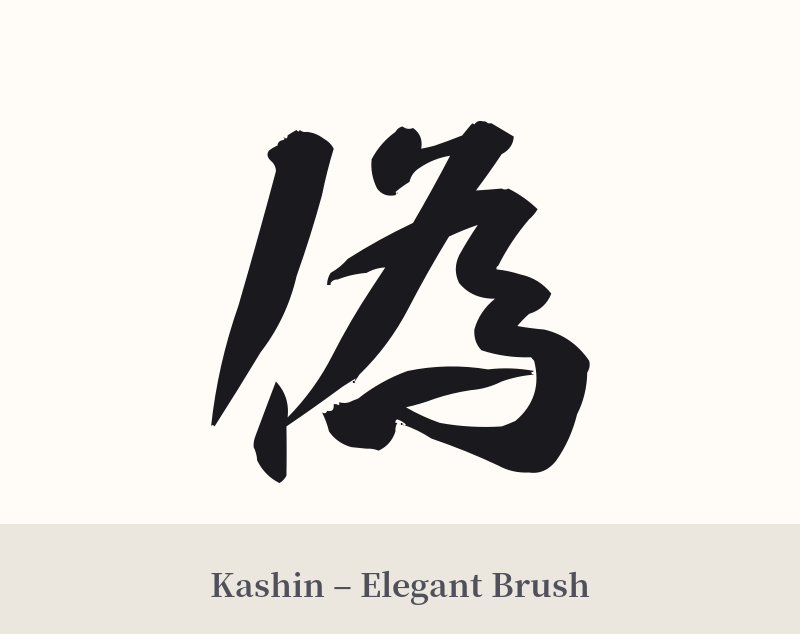
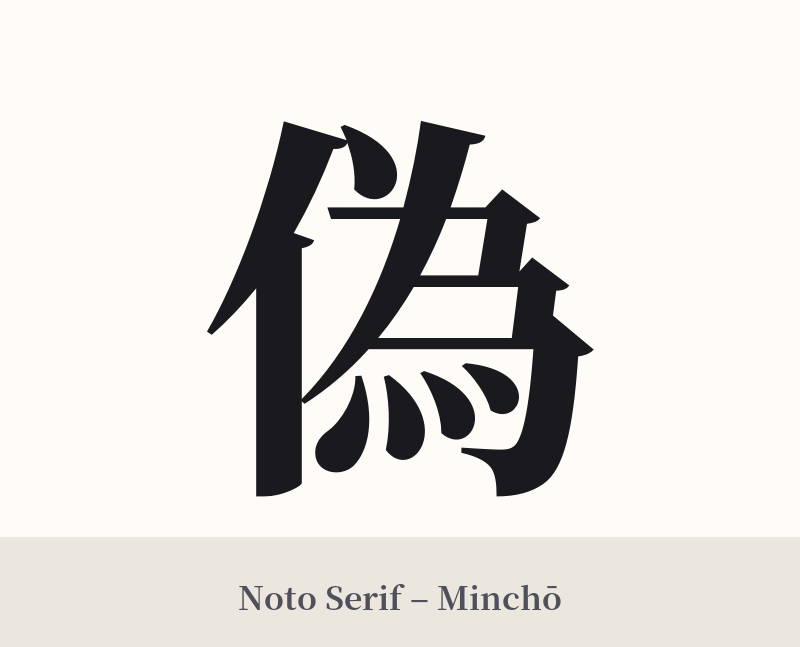
🖌️ Font Styles for 偽
The same kanji can look dramatically different depending on the calligraphy style. Choose a font that matches the mood you want for your tattoo or design.
🎨 Tattoo Suitability
📐 Tattoo Design Guide
A tattoo of 偽 is a deliberate and challenging statement, and its design should reflect that intention. It's not a character for casual decoration; it's a piece of conceptual art.
For placement, consider areas that align with the idea of hidden or revealed truths. The inner forearm, the back of the neck, or a spot on the ribs can feel more personal and intentional than a highly visible, public area.
Stylistically, you have several powerful options: – Aggressive Calligraphy: A rough, semi-cursive (sōsho) or explosive script can capture the chaotic, disruptive energy of deception. – Stark Block Font: A rigid, clean Mincho or Gothic font can represent the cold, calculated nature of a counterfeit object or a well-constructed lie. – Glitch Effect: For a modern interpretation, a design that looks like a digital 'glitch' can symbolize misinformation and the fragility of truth in the internet age.
To add more narrative, consider pairing it with other elements. Placing it opposite the kanji for 'truth' (真) creates a powerful duality. A design where 偽 is cracking, peeling, or shattering can symbolize the ultimate failure of falsehood and the triumph of reality.
Comments