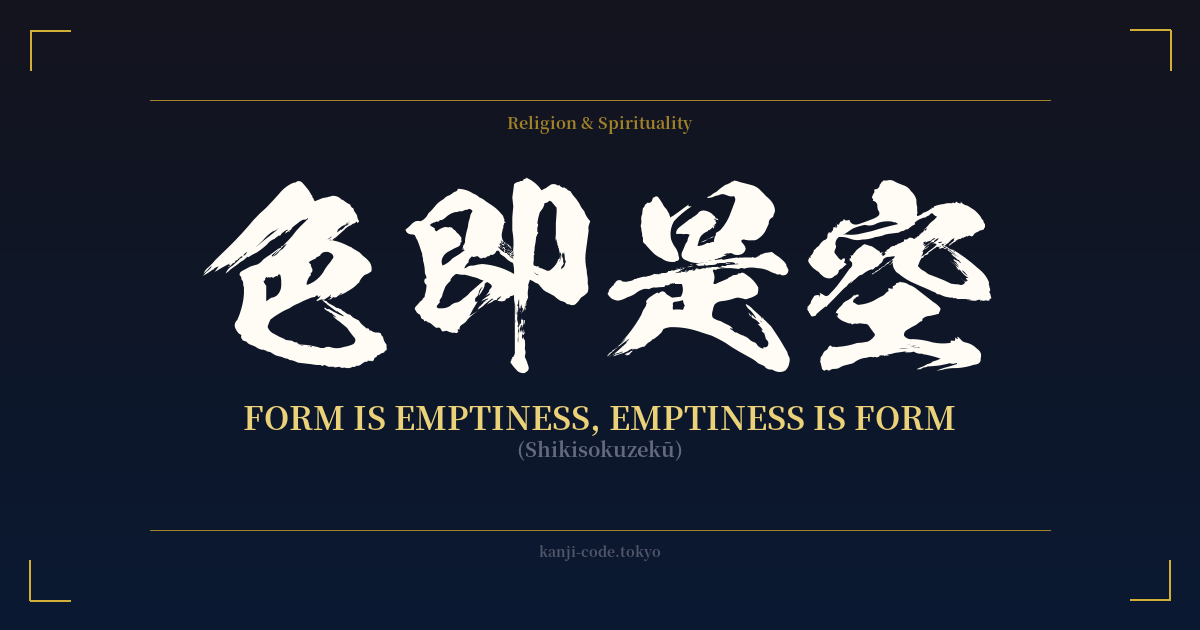
✍️ 色即是空 (Shikisokuzekū) — Cultural Context
色即是空 (Shikisokuzekū) is arguably one of the most famous and profound phrases in East Asian Buddhism. It translates to "Form is emptiness, emptiness is form," and encapsulates a core teaching from the Heart Sutra (般若心経, Hannya Shingyō), a scripture beloved in the Mahayana and Zen traditions.
To understand this phrase, we must first unpack its key terms. "Form" (色, shiki) doesn't just mean color or shape; it refers to all physical matter and phenomena—everything we can perceive with our five senses. It is the world of appearances, the tangible reality we interact with daily.
"Emptiness" (空, kū) is the more complex concept. It does not mean nothingness or a void in the nihilistic sense. Instead, it points to the Buddhist doctrine of Śūnyatā. This is the idea that no phenomenon possesses an independent, permanent, or unchanging self or essence. Everything is interconnected and exists only in relation to everything else. Things are "empty" of inherent, standalone existence.
The first half, 色即是空 (Shiki soku ze kū), states that all these forms we see are, in their ultimate nature, empty of intrinsic being. A tree is not just a "tree"; it is a temporary confluence of sunlight, water, soil, and air. It has no fixed "tree-ness" apart from its constituent, interdependent parts. This helps one detach from clinging to the material world as if it were permanent and absolute.
The full phrase from the sutra continues with 空即是色 (Kū soku ze shiki), or "emptiness is form." This is the crucial, non-dualistic counterpoint. It clarifies that emptiness is not a separate realm apart from our world. Rather, it is precisely because of this fundamental emptiness—this lack of fixed essence—that the infinite variety of forms can arise, change, and pass away. Emptiness is the very potential for all form and manifestation.
In Japan, this concept has deeply permeated the culture beyond monastic walls. It is a cornerstone of Zen philosophy, influencing everything from the minimalist aesthetics of a rock garden (karesansui) to the mindset of a martial artist striving for mushin (無心), the "mind of no-mind," which is free from attachments to form. It speaks to a deep appreciation for impermanence and the interconnectedness of all things, a worldview that finds beauty in the transient and the insubstantial.
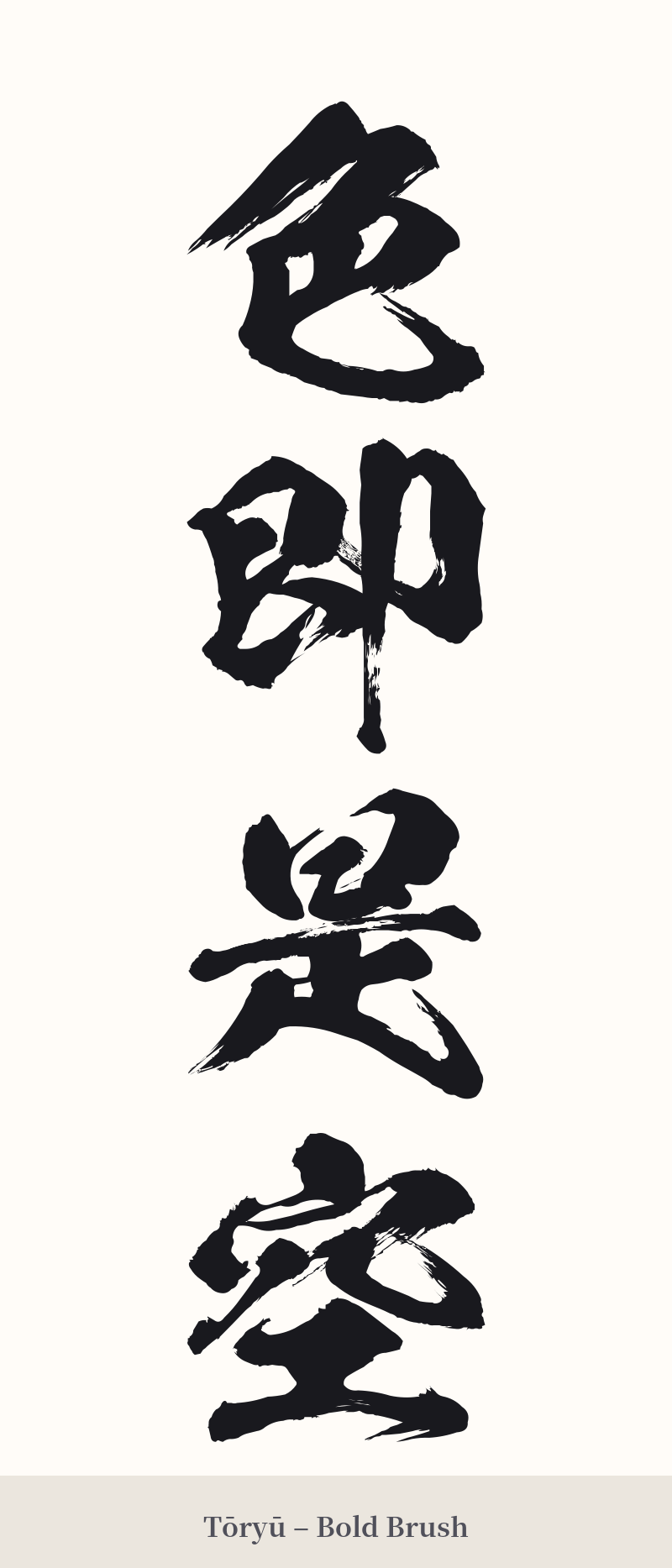
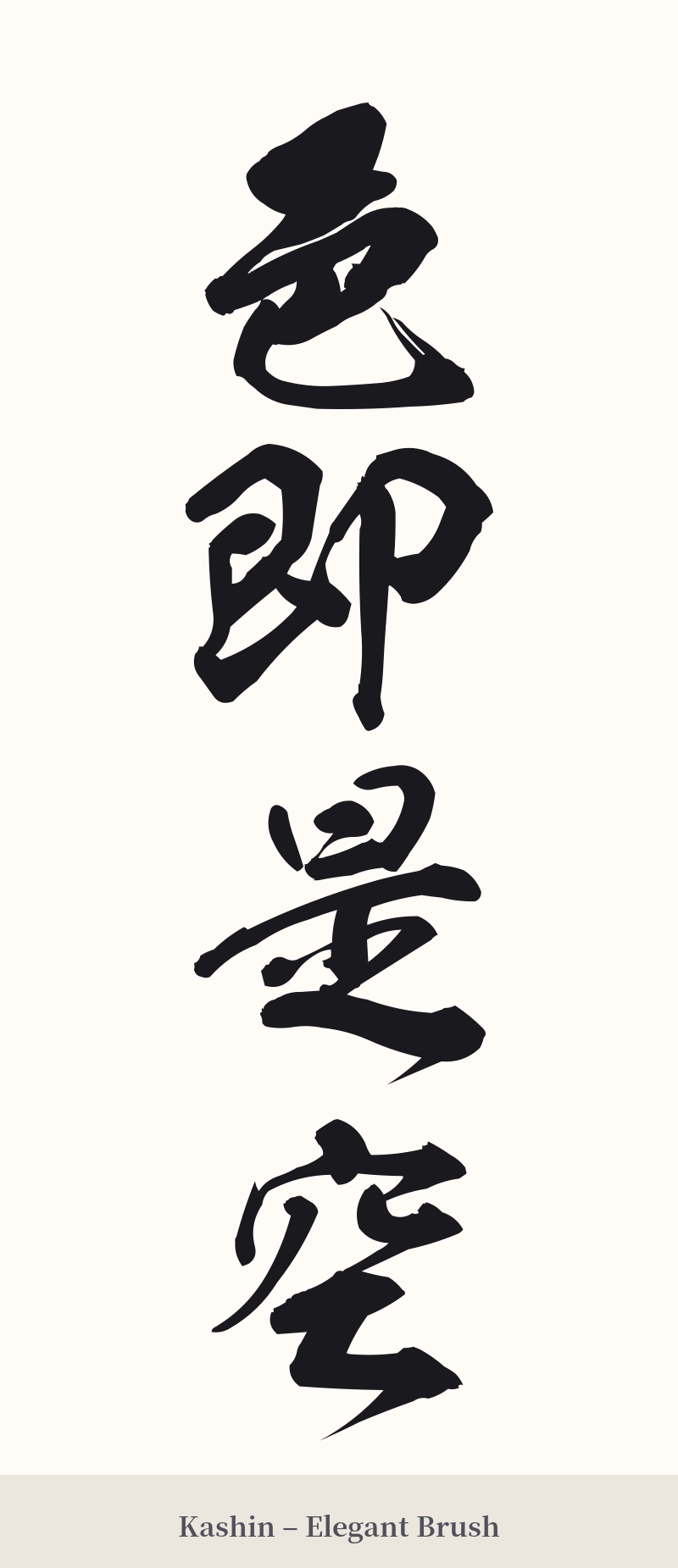
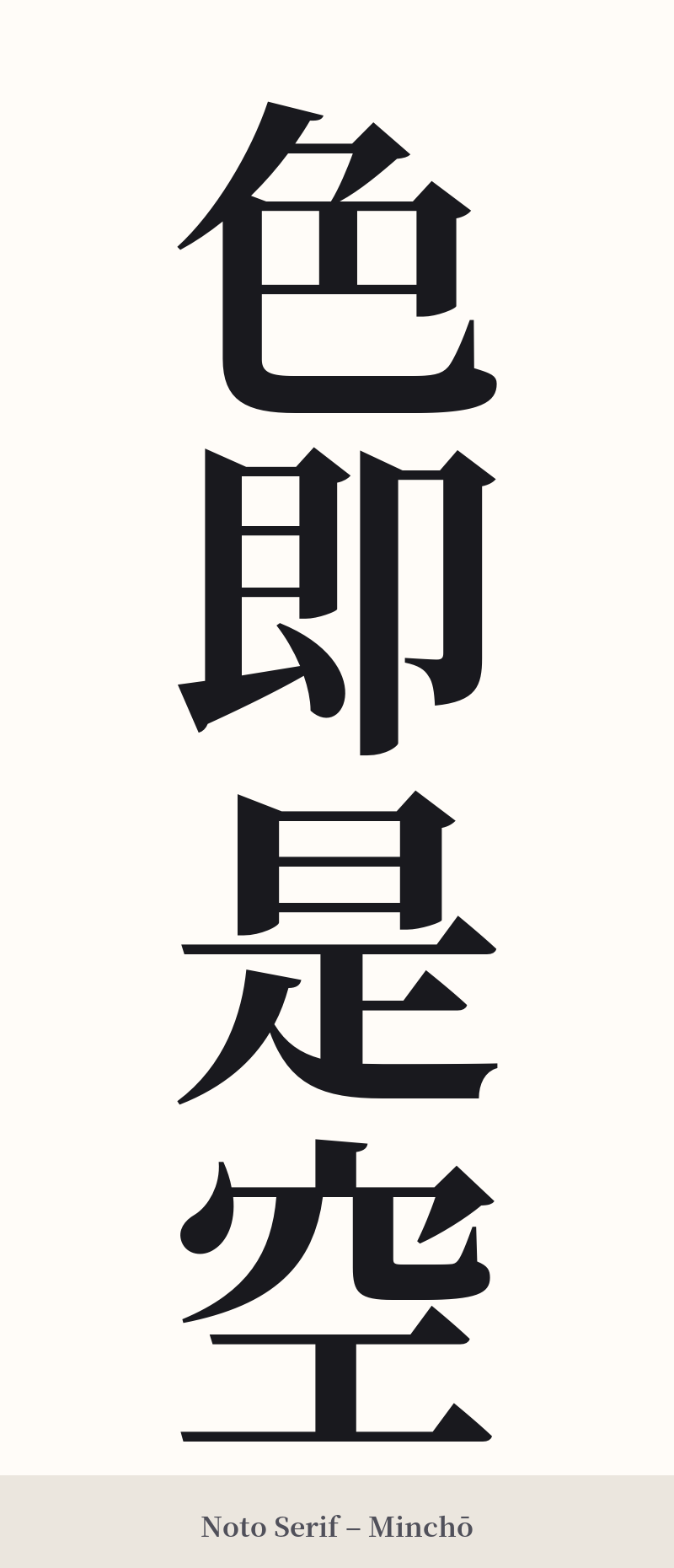
🖌️ Font Styles for 色即是空
The same kanji can look dramatically different depending on the calligraphy style. Choose a font that matches the mood you want for your tattoo or design.
🎨 Tattoo Suitability
📐 Tattoo Design Guide
This four-character phrase is a classic choice for a tattoo, lending itself well to traditional Japanese aesthetics.
– Placement: Vertical alignment is the most traditional and visually striking way to present a yojijukugo. The spine, inner forearm, or along the calf or ribs are excellent choices that complement the flow of the characters. A horizontal design can also work well across the upper back or chest.
– Font Style: A traditional calligraphy script is highly recommended to honor the phrase's origin. Kaisho (block script) provides a strong, clear, and dignified look. For a more fluid and artistic feel, consider Gyōsho (semi-cursive script), which adds a sense of movement and grace.
– Visual Tips: While the characters alone are powerful, you can enhance the design by incorporating related motifs. An ensō (Zen circle) behind or around the kanji can symbolize enlightenment and the cyclical nature of existence. A subtly rendered lotus flower, which grows from mud to bloom in beauty, is another fitting symbol of purity and spiritual awakening. Fading the characters into a wisp of smoke or a watercolor wash can visually represent the concept of form dissolving into emptiness.
Comments