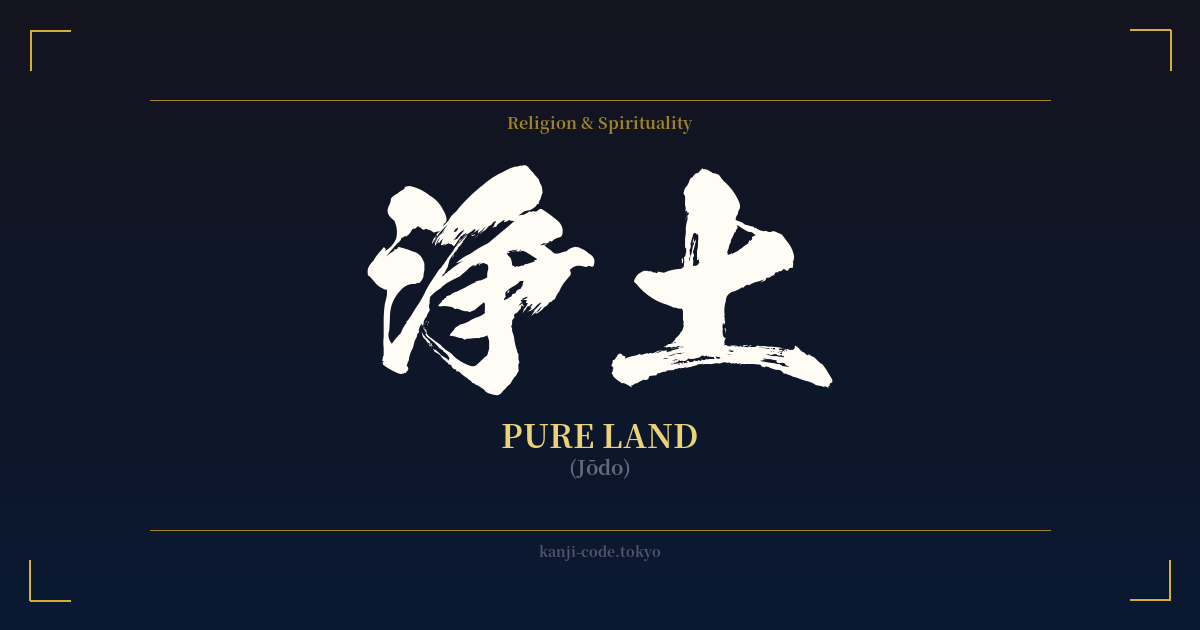
✍️ 浄土 (Jōdo) — Cultural Context
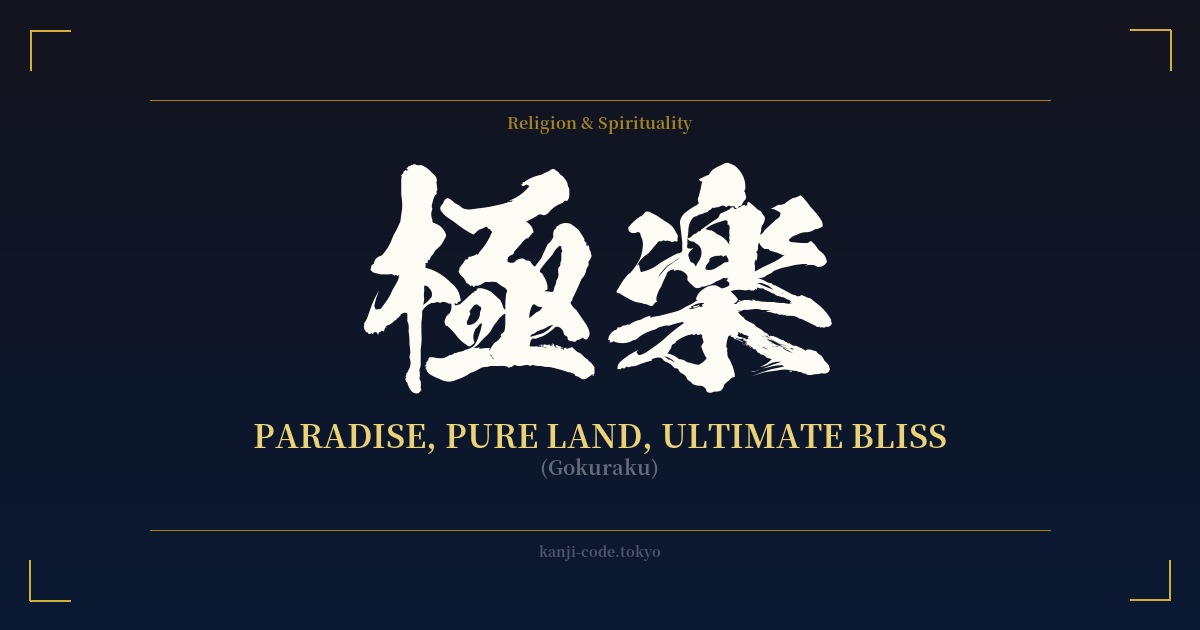
浄土 (Jōdo), translated as "Pure Land," is one of the most significant concepts in East Asian Mahayana Buddhism, holding a particularly central place in Japan. It refers to a celestial realm or buddha-field, most famously the Western Paradise of Amitābha (Amida) Buddha, known as Sukhāvatī.
Unlike the Western concept of heaven, the Pure Land is not a final destination for eternal reward. Instead, it is a serene and beautiful place free from the suffering and distractions of our world (samsara). Its purpose is to provide the ideal conditions for a being to practice the Dharma and ultimately attain enlightenment (nirvana), a goal that is incredibly difficult to achieve in our lifetime.
The belief is that by faithfully calling upon Amida Buddha, particularly through the recitation of the nenbutsu chant "Namu Amida Butsu" (南無阿弥陀仏), a devotee can be reborn in the Pure Land. This idea offered a path to salvation that was accessible to everyone, not just monks or the elite who could devote their lives to rigorous ascetic practices. This accessibility was a revolutionary concept that democratized spiritual liberation.
In Japan, this belief gave rise to powerful and influential schools of Buddhism, namely Jōdo-shū (The Pure Land School), founded by Hōnen in the 12th century, and Jōdo Shinshū (The True Pure Land School), founded by his disciple Shinran. These schools remain two of the largest denominations of Buddhism in Japan today, attesting to the enduring power of the Pure Land promise.
The idea of Jōdo has permeated Japanese culture far beyond temple walls. It has deeply influenced art, with countless paintings and sculptures depicting the magnificent Western Paradise. It has shaped literature, providing a thematic backdrop for stories about life, death, and the hope for a peaceful transition. For centuries, the concept of Jōdo has provided comfort and solace, shaping the Japanese view of the afterlife as a place not of judgment, but of tranquil continuation toward ultimate peace.
🖌️ Font Styles for 浄土
The same kanji can look dramatically different depending on the calligraphy style. Choose a font that matches the mood you want for your tattoo or design.
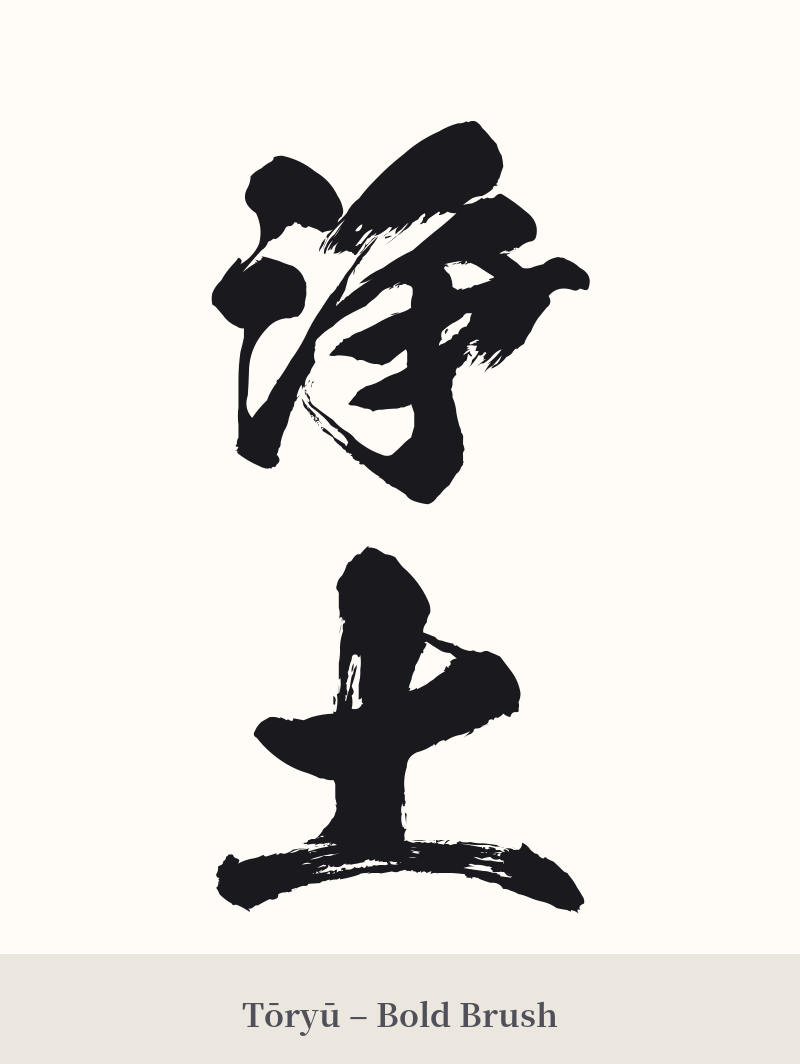
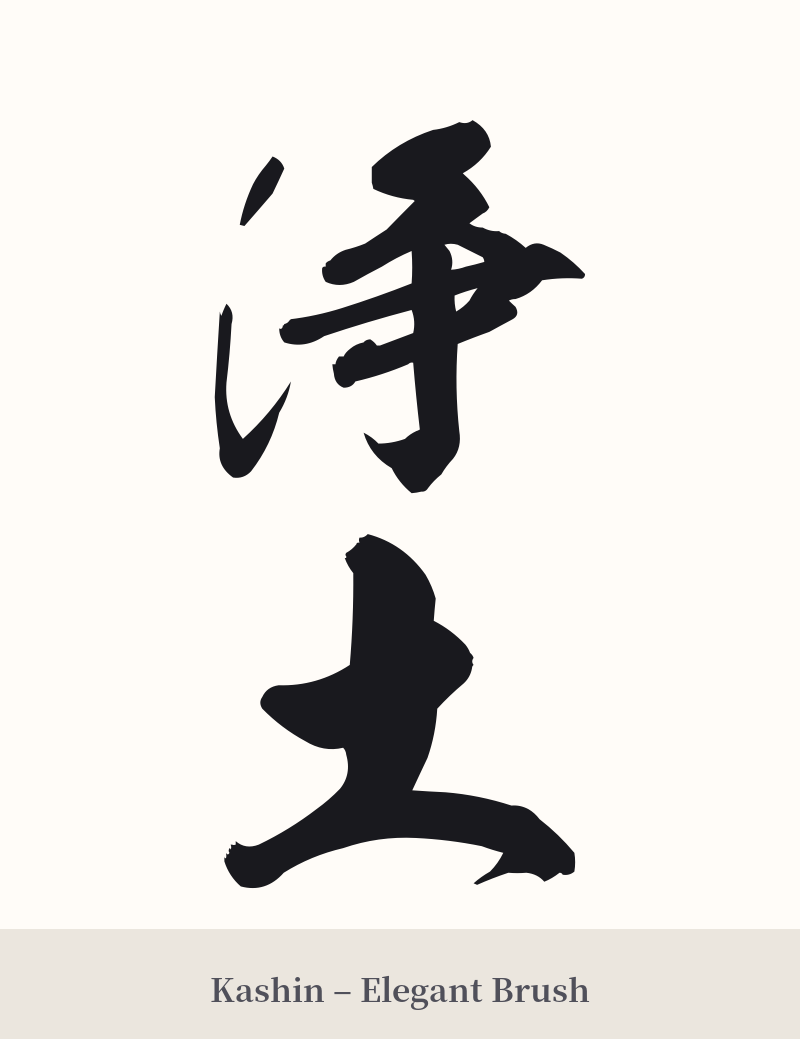
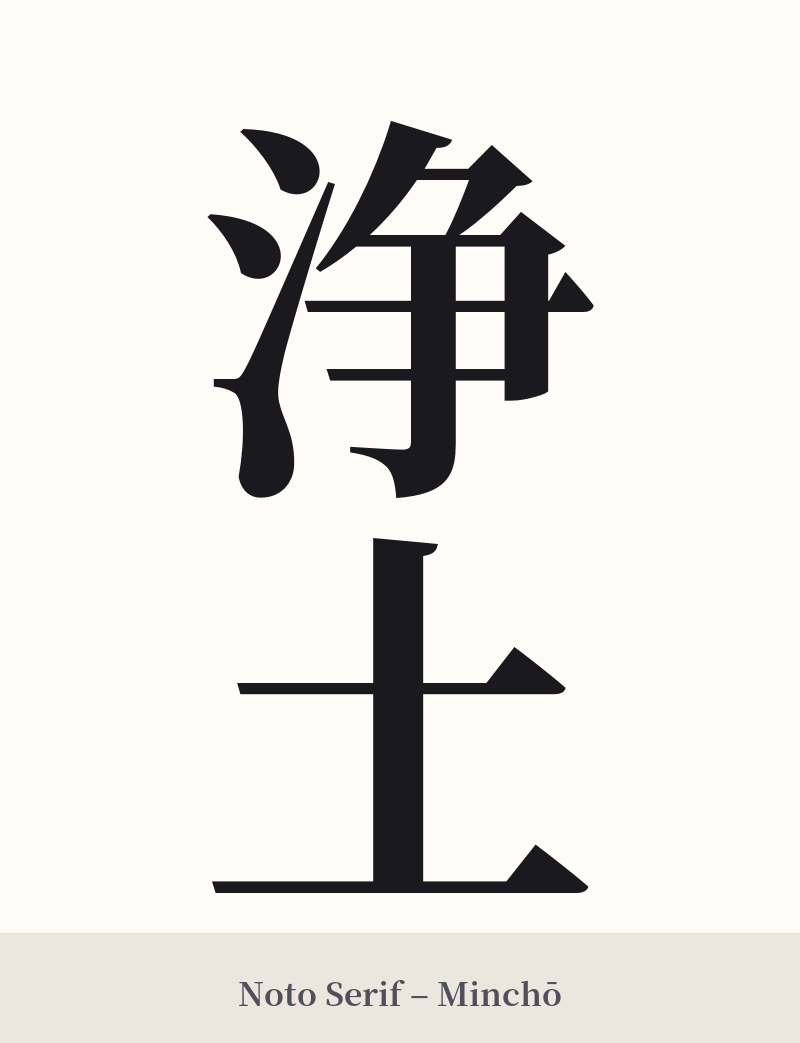
🎨 Tattoo Suitability
📐 Tattoo Design Guide
The spiritual weight of 浄土 (Jōdo) calls for a design that is both respectful and aesthetically pleasing.
– Placement: Vertical placement is classic for two-character kanji. The inner forearm, along the spine, or on the calf muscle are excellent choices. For a more private and personal tattoo, the chest or ribs are suitable.
– Font Style: A traditional calligraphy script like Kaisho (block) or Gyosho (semi-cursive) would honor the term's history and spiritual nature. Kaisho offers clarity and structure, while Gyosho provides a more fluid, artistic feel. A clean, serif Mincho font can also work for a modern, minimalist interpretation.
– Visual Elements: While 浄土 stands powerfully on its own, it can be paired with complementary imagery. A lotus flower, the symbol of purity and enlightenment rising from muddy waters, is a perfect companion. Subtle clouds, gentle water ripples, or a hint of a moon can also evoke the serene, otherworldly nature of the Pure Land without overwhelming the kanji itself.
Comments