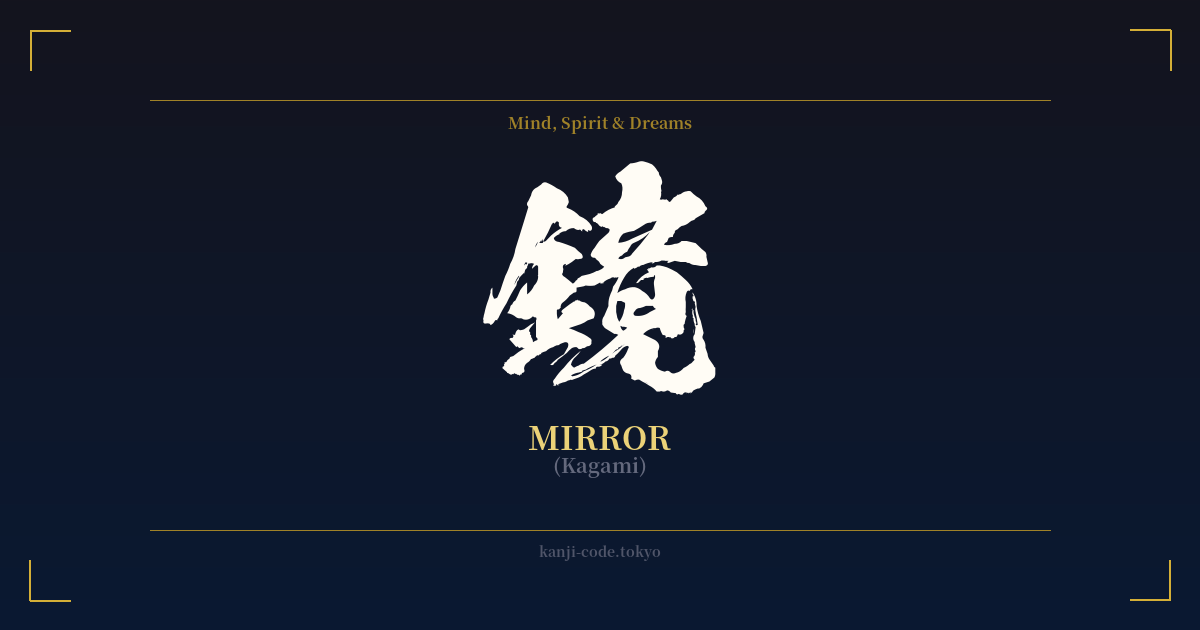
✍️ 鏡 (Kagami) — Cultural Context
In Japan, the mirror, or 鏡 (Kagami), is far more than a simple reflective object. It is a vessel of immense spiritual, cultural, and historical significance, holding concepts of truth, purity, and the soul itself.
The most profound role of the mirror is found in Shinto, Japan's indigenous religion. The Yata no Kagami (八咫鏡, the Eight-Span Mirror) is one of the Three Sacred Treasures of Japan, alongside the sword and the jewel. According to mythology, this sacred mirror was used to lure the sun goddess Amaterasu Ōmikami out of a cave where she was hiding, thereby returning light to the world. She then declared that the mirror should be treated as her very presence. Because of this, mirrors are considered a `shintai`, a physical object housing the spirit of a deity, and are central objects of worship in Shinto shrines, representing divine truth and wisdom.
This reverence for the mirror extends into the world of Zen Buddhism and the philosophy of the samurai. For the warrior, the mind was to be like a perfectly polished mirror. This concept, often linked to `mushin` (無心) or "no-mind," describes a state of pure awareness that reflects reality exactly as it is, without distortion from fear, ego, or hesitation. A clear mind, like a clean mirror, allows for instantaneous and appropriate action, a critical skill in both combat and life.
Japanese folklore also imbues mirrors with mystical properties. They are often depicted as portals to the spirit world or as magical items that can reveal the true nature of a person or a supernatural being. The Ungaikyō, a type of yōkai (spirit-monster), is a possessed mirror that can display anything in the world or trap those who look into it. This duality—as a tool for divine truth and a gateway to the unknown—makes the mirror a powerful and recurring motif in Japanese stories.
Even in modern language, the 'kagami' holds symbolic weight. The term `kagami biraki` ("mirror opening") is a ceremony performed at New Year's and other celebrations, involving the breaking open of a round `kagami mochi` rice cake, symbolizing harmony and a new beginning. To be called a 'kagami' for others is to be seen as a model of good behavior, a standard to reflect upon and emulate.
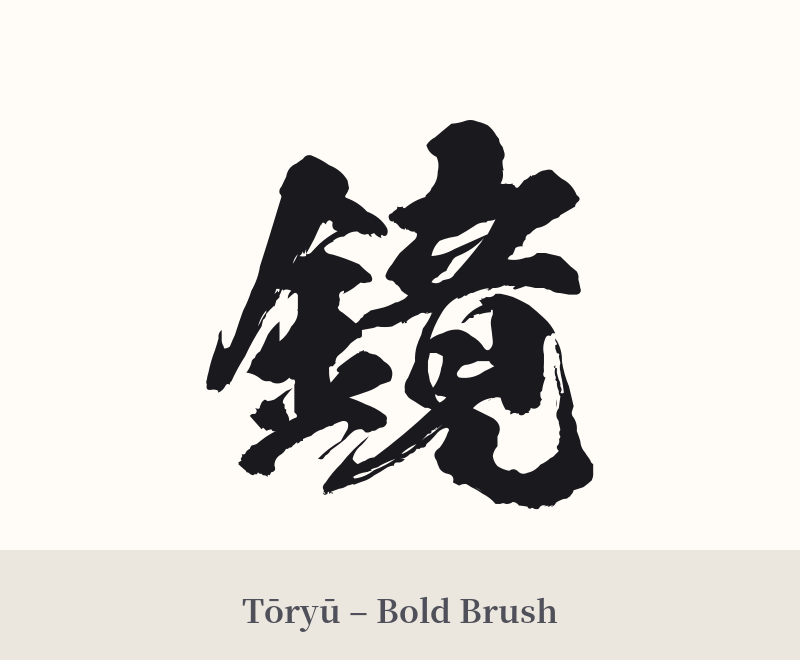
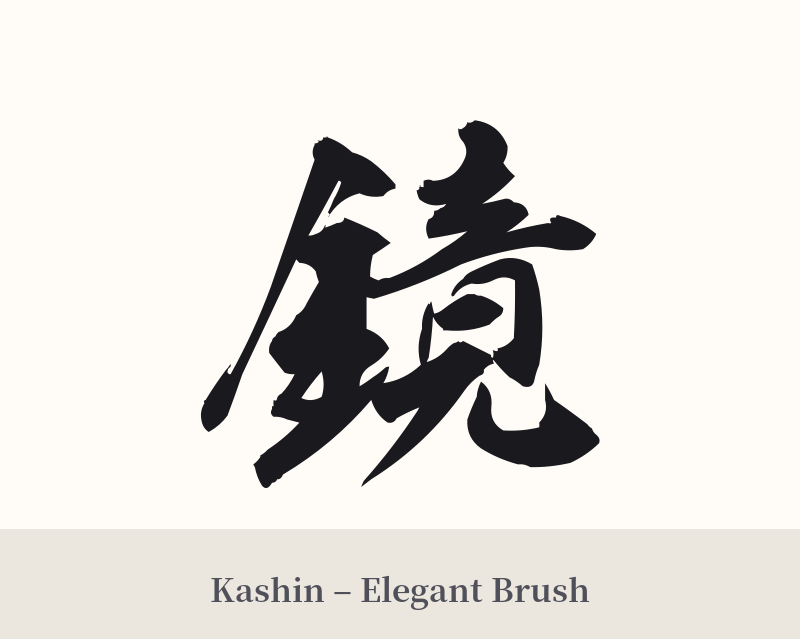
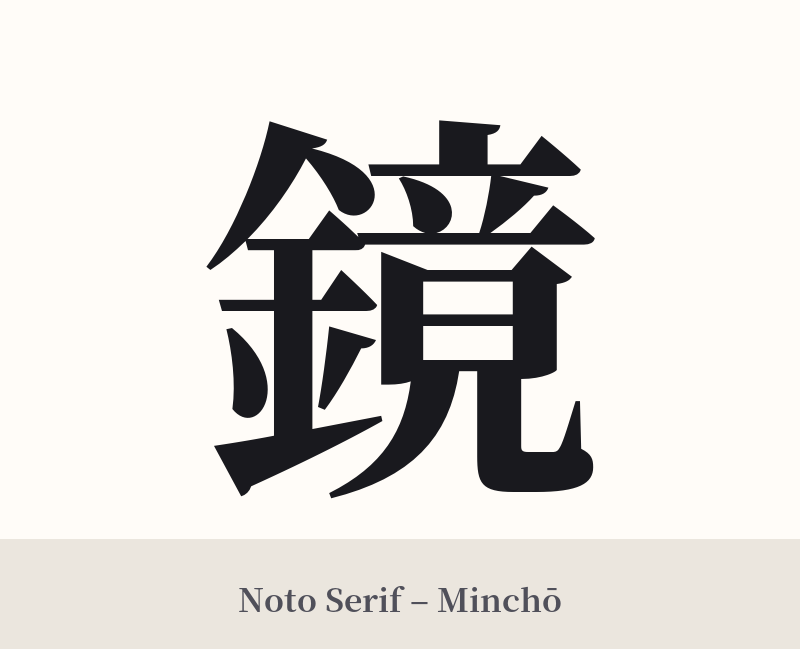
🖌️ Font Styles for 鏡
The same kanji can look dramatically different depending on the calligraphy style. Choose a font that matches the mood you want for your tattoo or design.
🎨 Tattoo Suitability
📐 Tattoo Design Guide
Due to the complexity of its 19 strokes, the design of a 鏡 tattoo requires careful consideration.
– Placement: This kanji thrives in flat, spacious areas where its detail can be appreciated. The back, chest, forearm, or calf are excellent choices. These locations allow for the necessary scale to prevent the character from becoming an illegible blur over time.
– Style: A bold, clear Kaisho (block) script is the safest and most recommended style to ensure every stroke is distinct. For a more artistic interpretation, a skilled artist might attempt a Gyosho (semi-cursive) style, but this increases the risk of losing legibility if not executed perfectly.
– Visuals: Enhance the meaning of 鏡 by pairing it with complementary imagery. A lotus flower can represent the purity of what is reflected. Calm, rippling water can symbolize clarity of mind. A dragon or tiger looking into its own reflection can be a powerful statement about confronting one's own nature and strength.
Comments