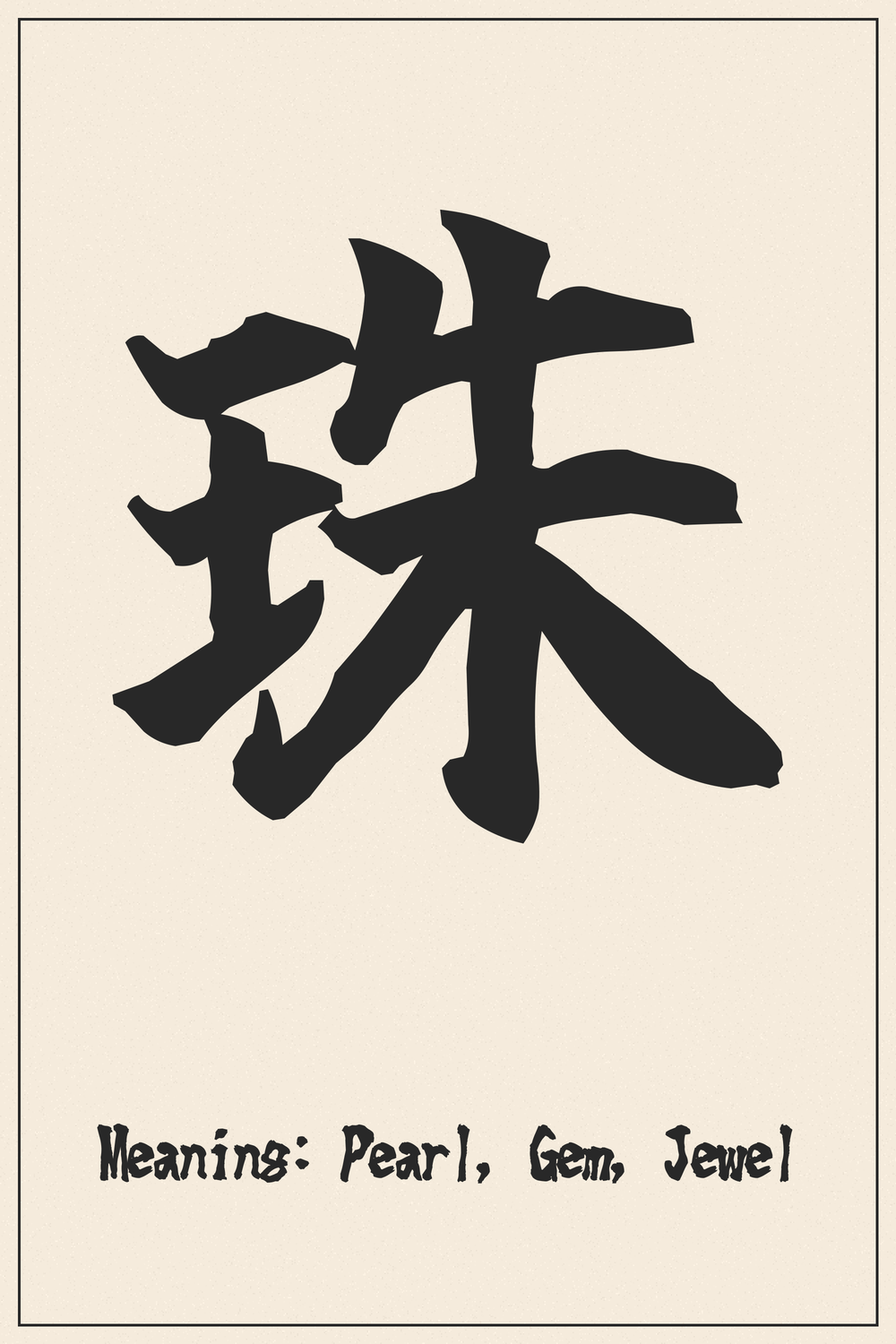
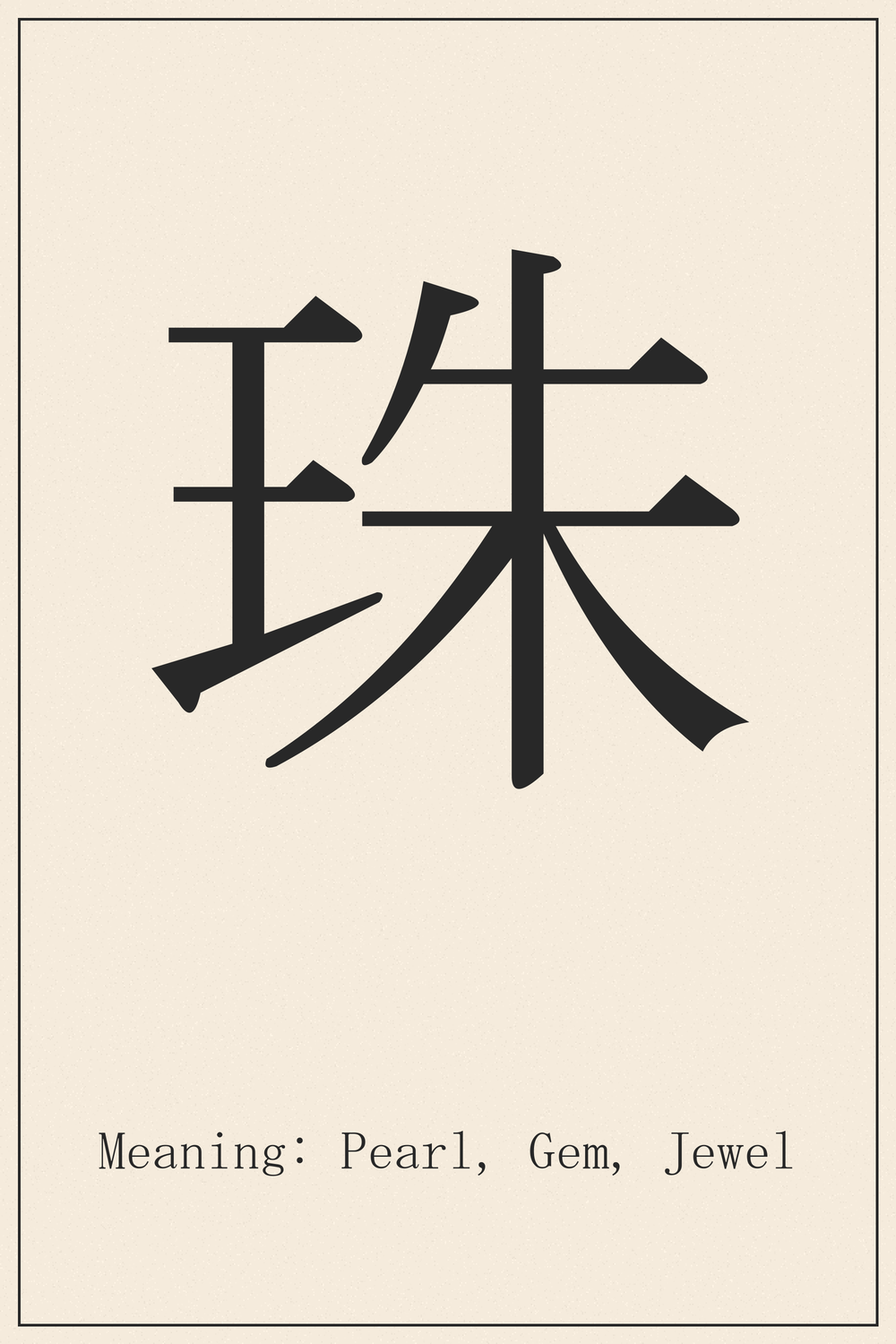
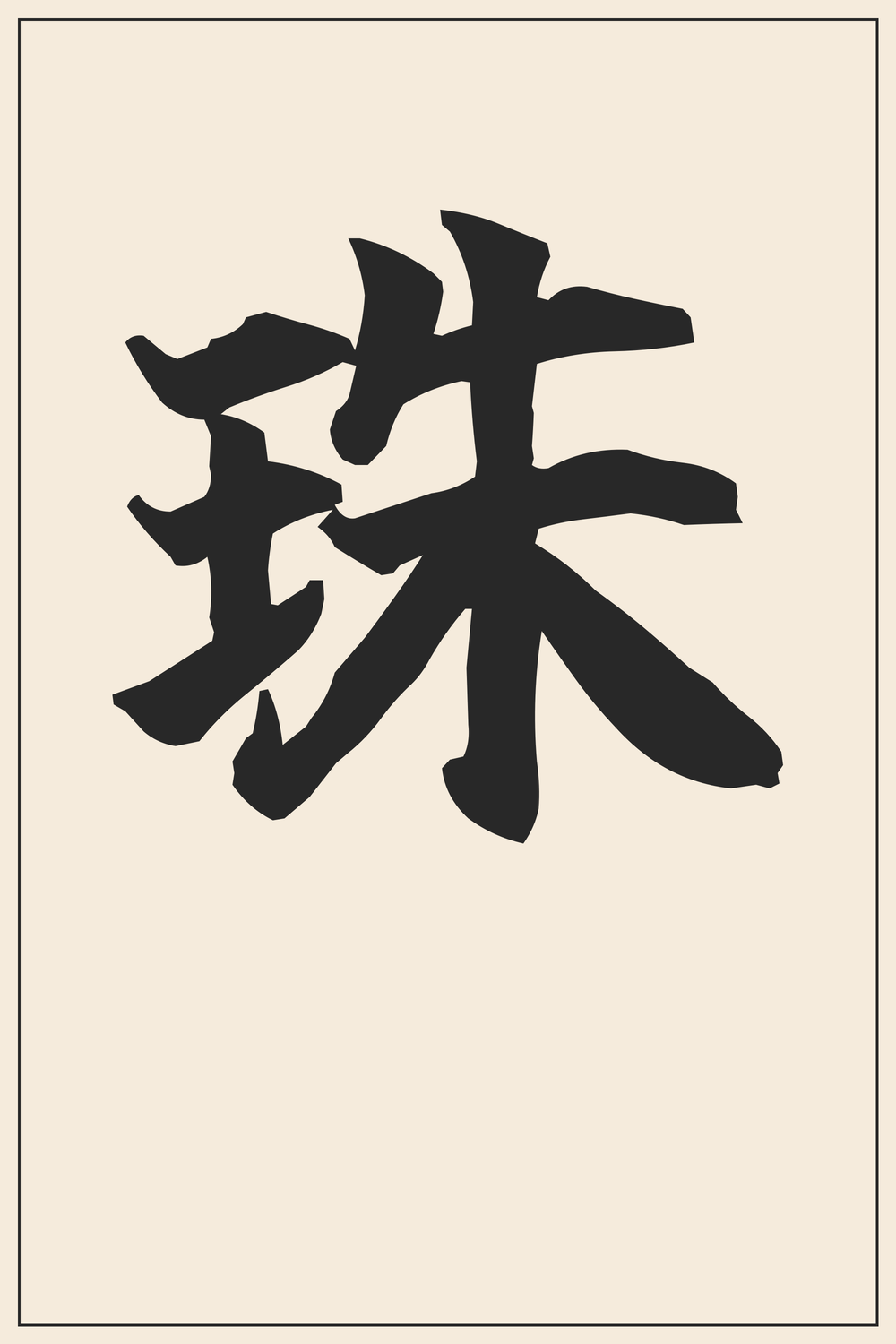
The Kanji 珠 (Tama) evokes images of luminous beauty and profound value. It represents not just a physical gem, but also purity, wisdom, and the rare treasures found in life.
The atmosphere of a Kanji character changes dramatically depending on the font style. A character that looks elegant in a brush style might look bold and modern in a different font.
Recommendation:
Since a tattoo is permanent, we strongly recommend comparing various font styles beyond what is shown here. Use our designs as a trusted reference for the correct structure, but feel free to explore different artistic variations to find the perfect match for your vision.
The Deep Meaning Behind 珠
The Kanji 珠 is a fascinating character whose origins deeply root it in the concept of value and natural beauty. It is composed of two primary elements: 玉 (tama), meaning ‘jewel’ or ‘jade’, and 朱 (shu), which denotes ‘vermilion’ or ‘red’. Together, these components form a character that specifically refers to a pearl or a precious gem, combining the inherent value of jade with a phonetic element that also carries connotations of a vibrant, rich color.
In Japanese culture, 珠 (tama) extends beyond mere physical adornment. It often symbolizes purity, perfection, and the essence of something truly valuable, whether it be a concept, a person, or a treasured item. It can also represent wisdom and enlightenment, much like a precious gem hidden within the earth or sea. The imagery of a radiant pearl holds deep cultural significance, appearing in literature, art, and philosophical teachings.
Kanji Breakdown
The character 珠 elegantly combines a radical signifying precious stones with a phonetic component.
Meaning: Jewel, Sphere: This radical is foundational, directly signifying precious stones, jade, or anything round and precious. It visually represents a string of three jade beads.
Meaning: Vermilion, Red (Phonetic): While it means ‘vermilion’ or ‘red’, in 珠, 朱 primarily acts as a phonetic component that hints at the ‘shu’ reading. Its original form depicted a tree, but its role here evolved to provide sound rather than direct meaning, though its color association can subtly enhance the idea of a beautiful, prized gem.
Conclusion
Choosing 珠 for a tattoo is to embrace a symbol of profound beauty, rarity, and intrinsic value. It speaks to the preciousness of life’s moments, the wisdom gained through experience, and the luminous quality of true purity.
This Kanji serves as a timeless emblem for those who cherish elegance and seek to embody the radiant, enduring qualities of a pearl or a treasured jewel, making it a truly meaningful and aesthetically pleasing tattoo.
Comments