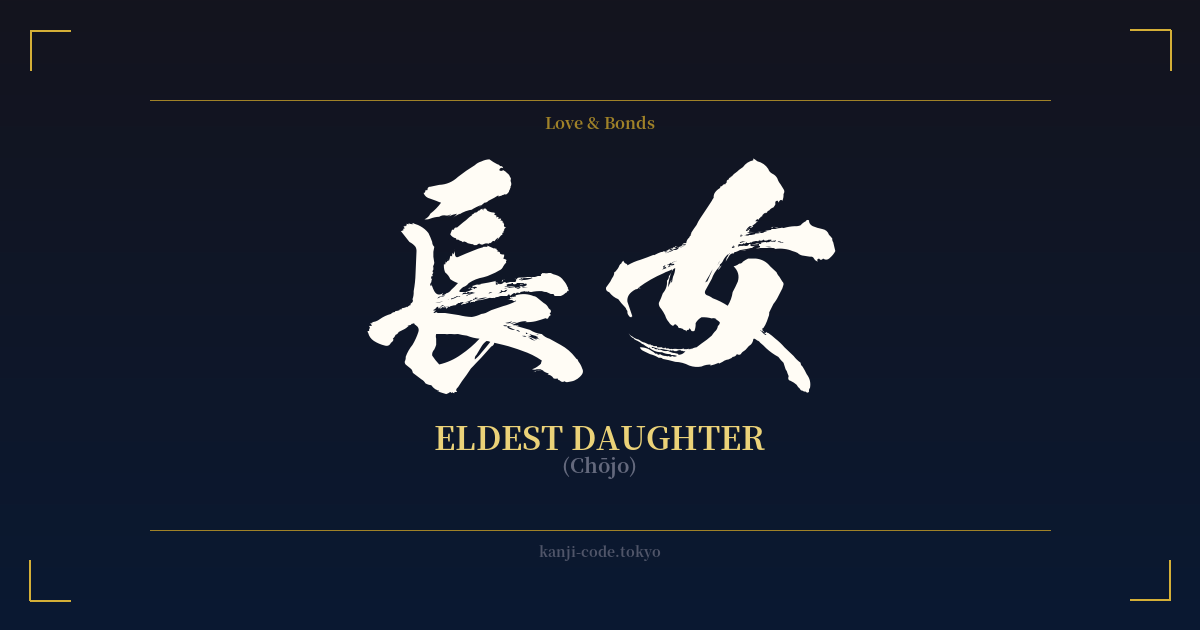
✍️ 長女 (Chōjo) — Cultural Context
The word 長女 (Chōjo) translates simply as 'eldest daughter,' but within Japanese culture, this term carries a significant weight of history, responsibility, and familial expectation. It is not just a descriptor of birth order; it is a title that has traditionally defined a woman's role within the family structure.
Historically, Japanese society was organized around the ie (家) system, a patriarchal family model where lineage and succession were paramount. While the eldest son, or chōnan (長男), was the designated heir responsible for carrying on the family name and fortune, the chōjo held her own unique and vital position. She was often seen as a pillar of support for the entire household.
The eldest daughter was expected to be a model of maturity and reliability. She was frequently a 'second mother' to her younger siblings, helping to raise and discipline them. She was also her mother's primary assistant, learning the intricacies of managing a household, from cooking and cleaning to budgeting and social etiquette. This upbringing was designed to prepare her not only to serve her own family but also to be a capable wife who could successfully manage her future husband's home.
While the chōnan inherited the property, the chōjo inherited a legacy of duty. Her marriage was often a strategic arrangement to form alliances between families. Even after marrying and leaving her home, the sense of responsibility for her parents in their old age often remained, especially if she had no brothers.
In modern Japan, the legal and social framework of the ie system has been dismantled. Women have far more freedom to choose their own paths. However, the cultural archetype of the dependable, responsible chōjo endures. In television dramas, manga, and anime, the eldest daughter is often portrayed as the one who is level-headed, self-sacrificing, and constantly looking out for others. This cultural echo means that even today, many eldest daughters in Japan feel a subtle, innate pressure to be the 'strong one' in the family.
Therefore, to understand 長女 is to understand a blend of love, duty, and identity. It represents the unique bond of family, the weight of being the first, and the quiet strength of the woman who holds that place.
🖌️ Font Styles for 長女
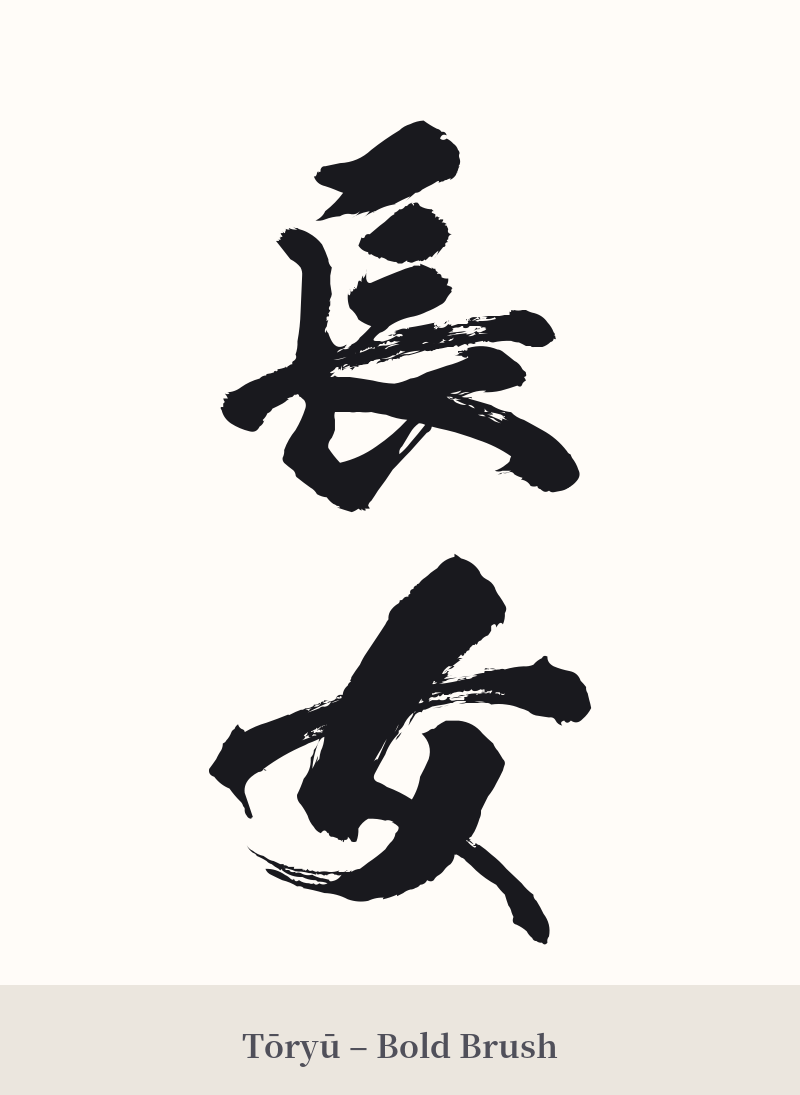
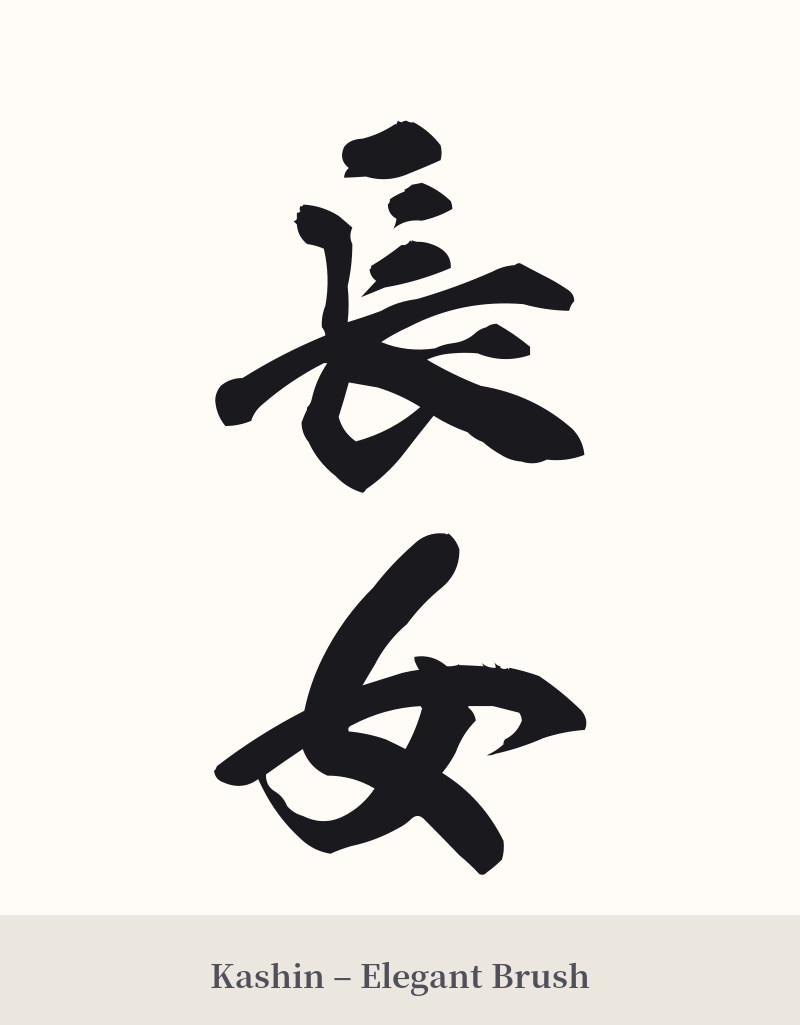
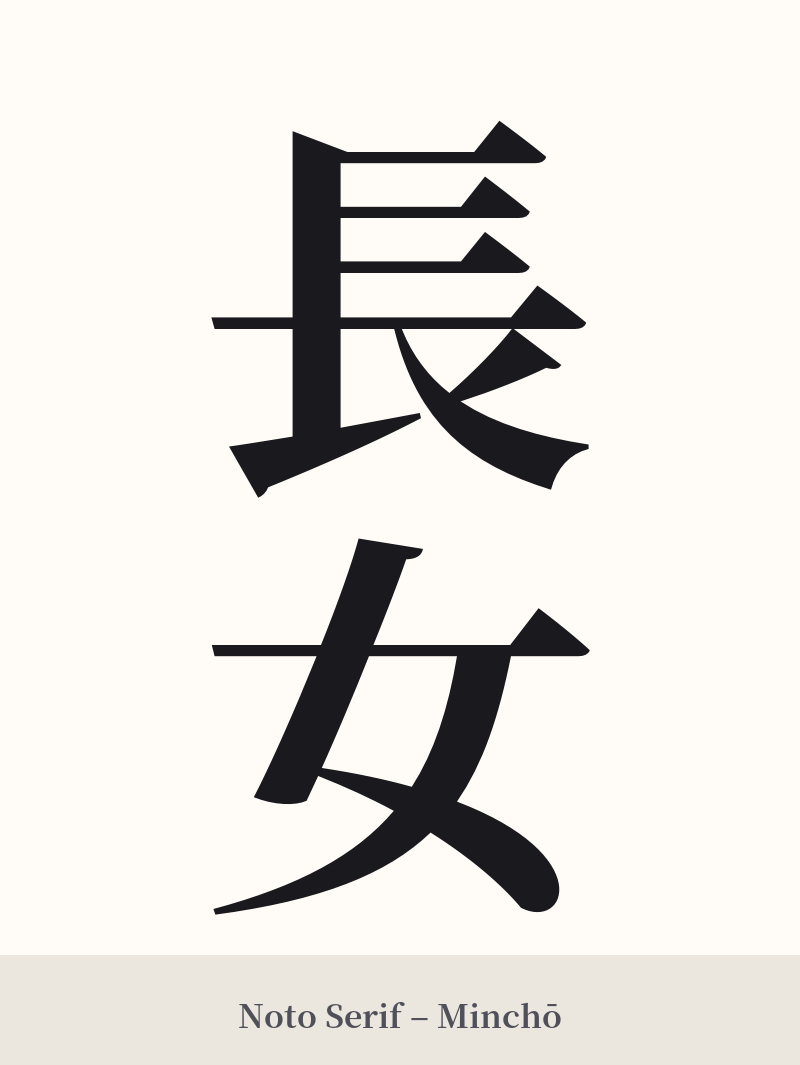
The same kanji can look dramatically different depending on the calligraphy style. Choose a font that matches the mood you want for your tattoo or design.
🎨 Tattoo Suitability
📐 Tattoo Design Guide
For a term as personal as 長女, the design should reflect its significance to you.
– Placement: This kanji is well-suited for personal, intimate areas. Consider the inner forearm, wrist, the area over the heart, or the back of the neck. A vertical alignment along the spine or ribs can also be a very elegant choice.
– Font Style: The font can dramatically alter the feeling. A crisp, clean Mincho or Gothic font emphasizes the formal, structural nature of the word. For a more personal and gentle feel, a semi-cursive (Gyōsho) or a flowing calligraphy style can capture the sense of love and connection.
– Visual Elements: While 長女 stands strong on its own, it can be paired with a small, meaningful symbol. Consider a single flower representing your birth month or a family member, or a subtle element from your family crest (kamon) if you have one. However, avoid cluttering the design; the kanji itself is the main statement.
Comments