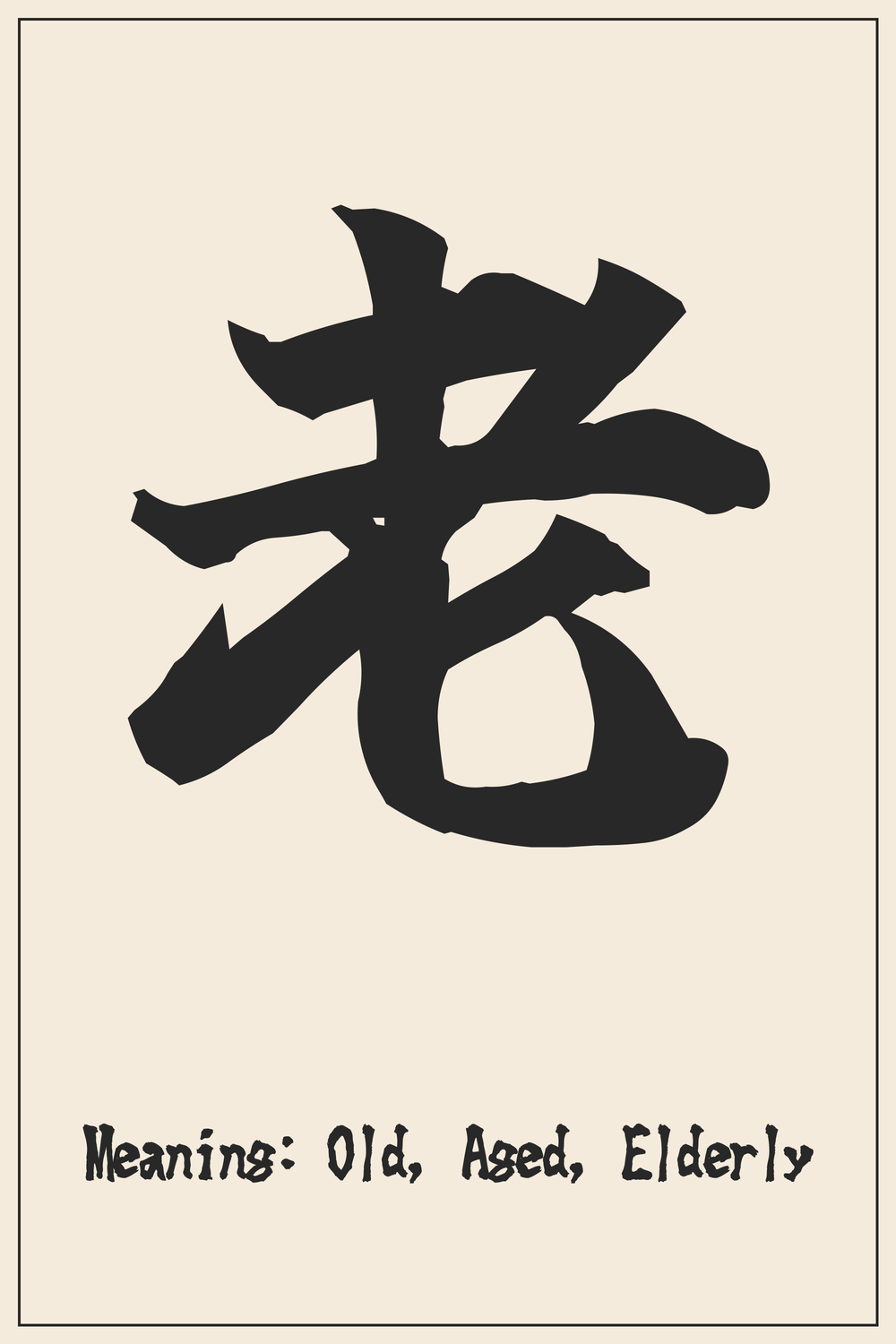
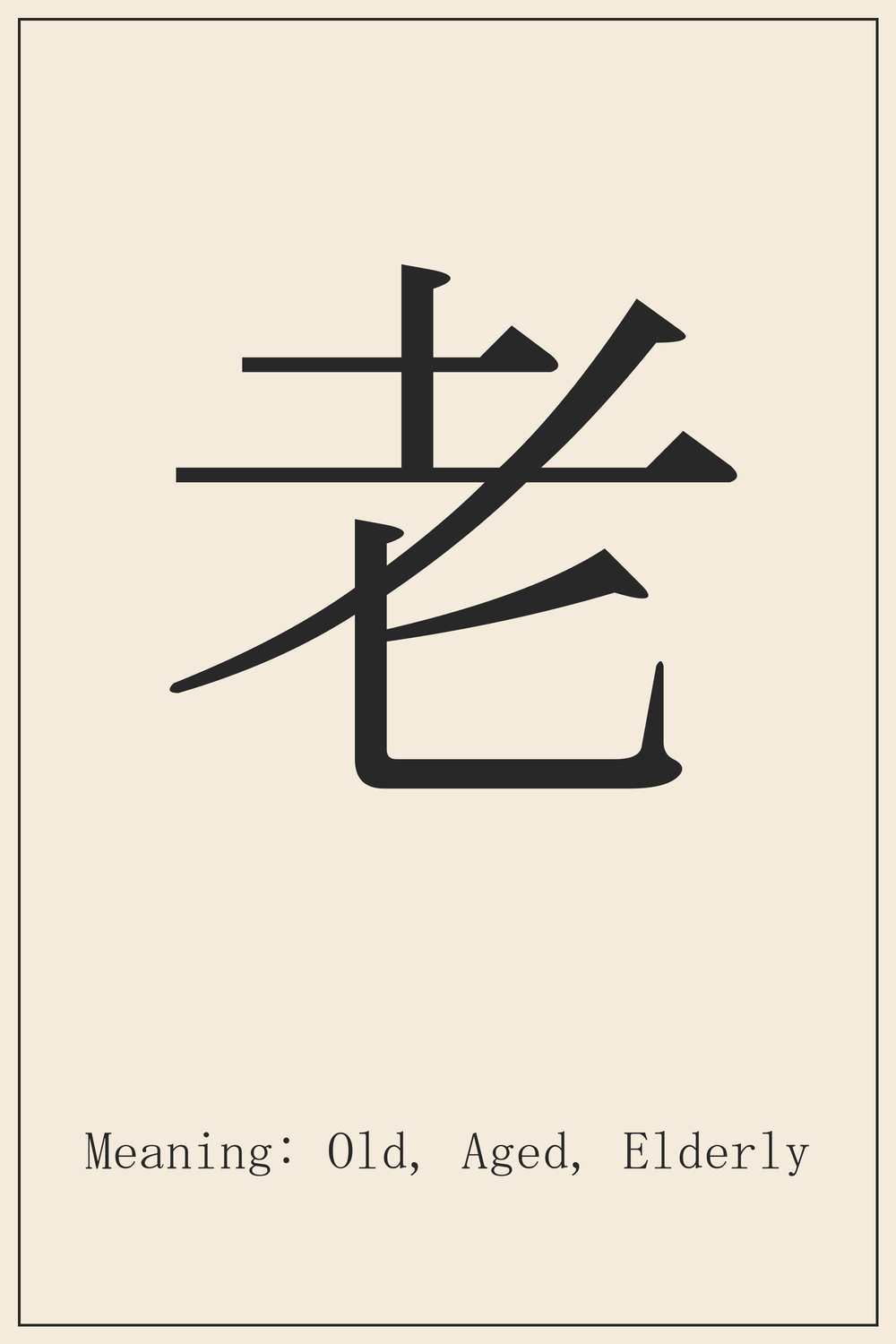
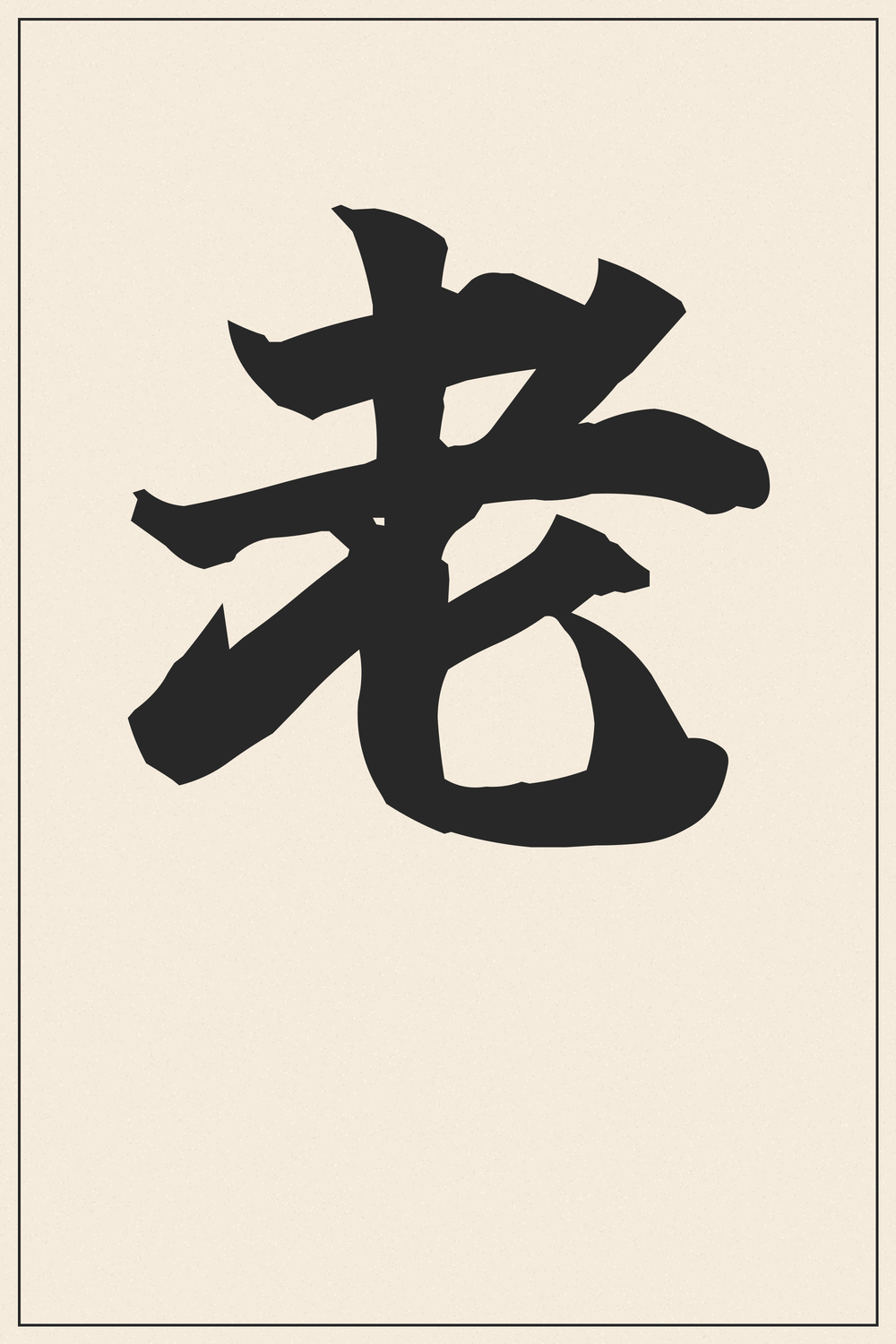
The Kanji ‘老’ embodies the profound journey of life, symbolizing not just age, but the wisdom and experience gained over time. It represents a deep respect for elders and the venerable passage of existence.
The atmosphere of a Kanji character changes dramatically depending on the font style. A character that looks elegant in a brush style might look bold and modern in a different font.
Recommendation:
Since a tattoo is permanent, we strongly recommend comparing various font styles beyond what is shown here. Use our designs as a trusted reference for the correct structure, but feel free to explore different artistic variations to find the perfect match for your vision.
The Deep Meaning Behind 老
The Kanji ‘老’ (rō) is a venerable character with roots in ancient Chinese pictographs. It vividly depicts an old person, often shown with long hair and leaning on a staff, signifying the physical changes and reliance that come with advanced age.
In Japanese culture, ‘老’ transcends its literal meaning of old age to embody concepts of wisdom, accumulated experience, and deep respect. The reverence for elders, known as ‘keirō’ (敬老), highlights society’s appreciation for those who have lived long and contributed much, viewing their age as a source of invaluable knowledge and guidance.
Kanji Breakdown
The character ‘老’ (rō) is primarily understood as an ideogram directly depicting an old individual, rather than a simple combination of common radicals. Its components, however, contribute to this visual representation.
Meaning: Old person / Old man. This component, often called ‘okina-gashira’ (old man’s head), represents the head and hair of an aged individual, suggesting wisdom and a long life.
Meaning: Person. This element signifies the human body, indicating the subject of aging. While stylized, its essence relates to the human form.
Meaning: Spoon / Dagger (here, symbolic). In the context of ‘老’, this element is often interpreted as representing a cane or staff, used for support by an elderly person.
Conclusion
The Kanji ‘老’ is a powerful symbol that encompasses not just the physical state of being old, but the profound wisdom, dignity, and life experience accumulated over many years. It represents a journey of endurance and the valuable lessons learned along the way, making it deeply resonant for those who cherish the cycles of life.
Choosing ‘老’ as a tattoo is a testament to embracing the passage of time, respecting one’s heritage, or honoring the sagacity of elders. Its simple yet evocative form ensures a timeless and meaningful piece of body art that speaks volumes about life’s enduring journey.
Comments