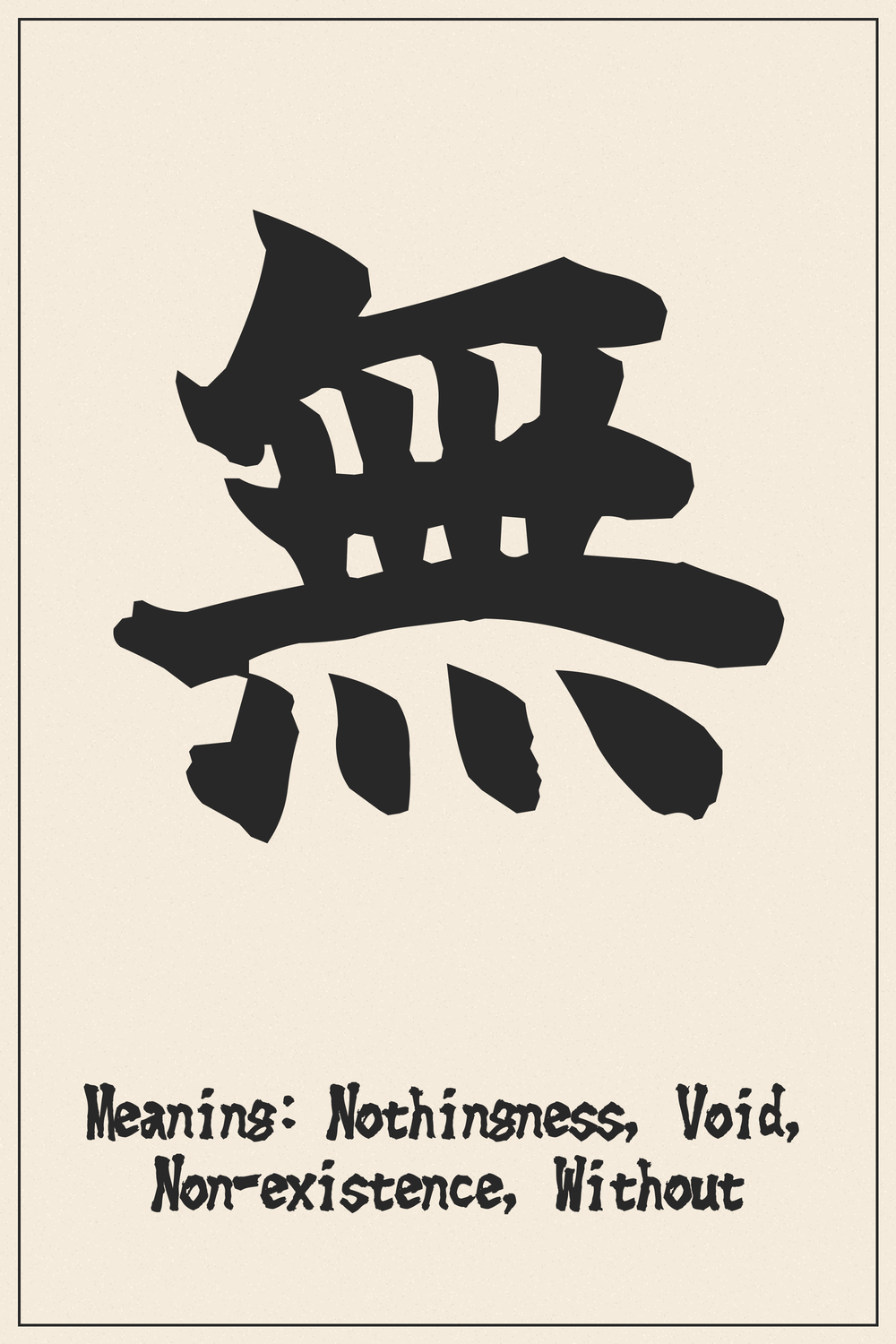
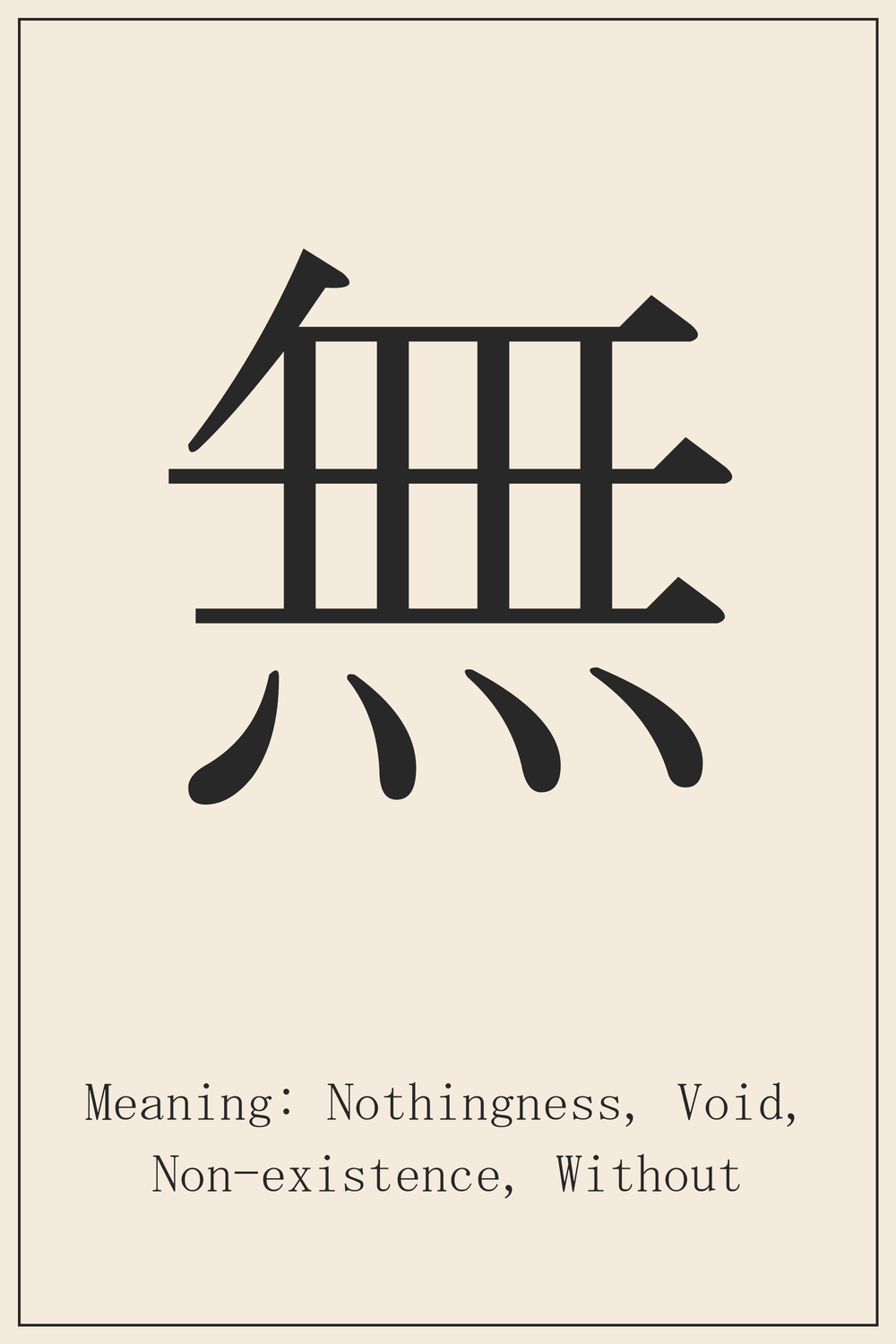
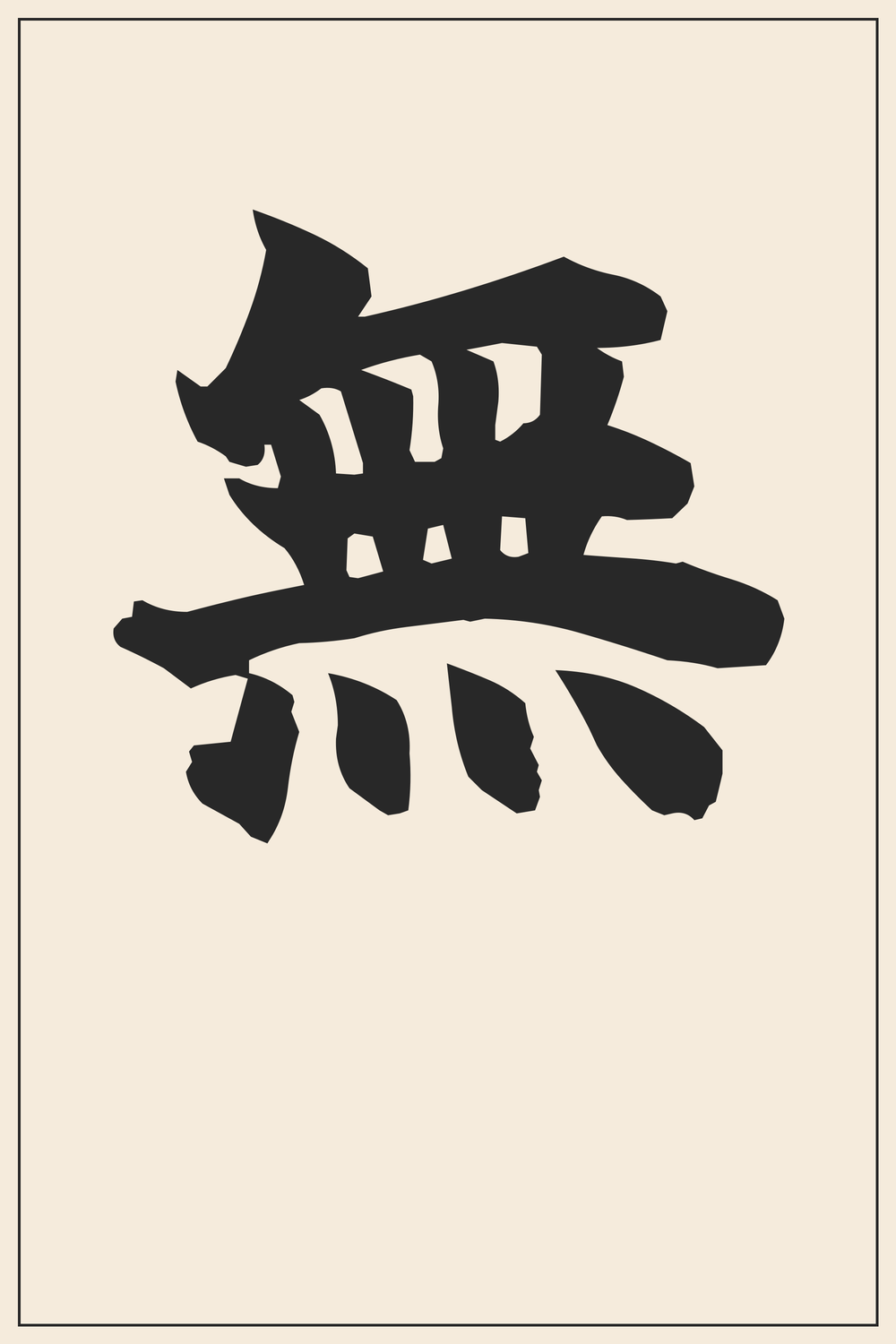
The Kanji 無 (Mu) encapsulates a universe of meaning in its elegant strokes, representing not just absence but the profound concept of the void. It’s a symbol of liberation and potential, challenging conventional understanding of existence itself.
The atmosphere of a Kanji character changes dramatically depending on the font style. A character that looks elegant in a brush style might look bold and modern in a different font.
Recommendation:
Since a tattoo is permanent, we strongly recommend comparing various font styles beyond what is shown here. Use our designs as a trusted reference for the correct structure, but feel free to explore different artistic variations to find the perfect match for your vision.
The Deep Meaning Behind 無 (Mu)
The character 無 (Mu) has ancient origins, depicting a dancer or shaman performing a ritual, perhaps with ceremonial implements or over fire, symbolizing an act that brought about disappearance or negation. This visual representation evolved to capture the abstract idea of absence and non-existence, embodying a deep philosophical insight rather than mere emptiness.
In philosophical traditions like Zen Buddhism, 無 (Mu) transcends simple negation, representing the “void” that is not empty but full of potential, a state free from attachment and illusion. It is central to concepts of impermanence (mujō) and the path to enlightenment, where the self dissolves into a boundless state of being, highlighting the interconnectedness of all phenomena.
Kanji Breakdown
The Kanji 無 (Mu) is rich in history, and while its modern form is a unified whole, its etymology can be understood by considering key conceptual components.
Meaning: Perish, disappear, escape.
Historically, elements similar to 亡, meaning “to perish” or “disappear,” contributed to 無’s semantic development. It evokes the transient nature of existence and the concept of something ceasing to be, reflecting the impermanence of all things.
Meaning: Fire.
This component, a variant of 火 (fire), is visible at the bottom of 無. It is believed to represent fire used in ancient rituals, which symbolized purification and the dissolution of objects or concepts into a state of nothingness or absence, a transformation into the void.
Conclusion
The Kanji 無 (Mu) is far more than a negation; it is a profound symbol of the infinite potential within nothingness, the freedom from attachment, and the essence of impermanence. It encapsulates a worldview where absence is not a lack, but a foundational state for all existence, inviting contemplation on the true nature of reality.
For those who resonate with the depths of Eastern philosophy, seeking a tattoo that represents profound spiritual insight and the boundless nature of existence, 無 (Mu) offers a powerful and aesthetically striking choice. It serves as a constant reminder of the transient beauty of life and the liberation found in embracing the void, making it a truly exceptional and meaningful tattoo.
Comments