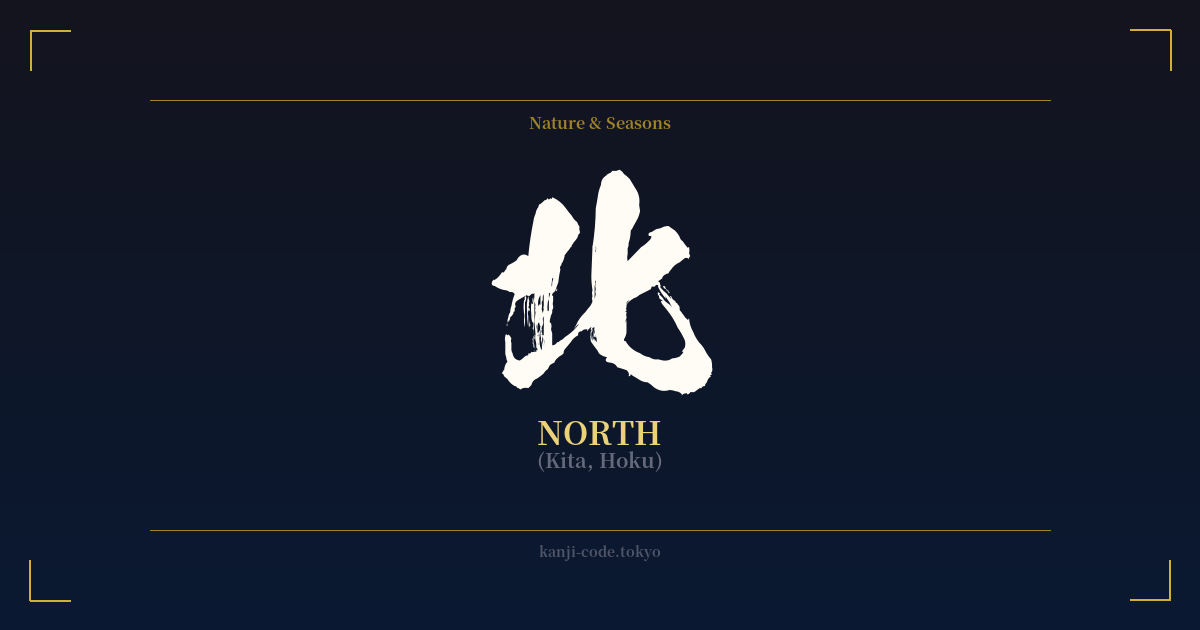
✍️ 北 (Kita, Hoku) — Cultural Context
The kanji 北 (kita) is one of the most fundamental characters in Japanese, representing the cardinal direction 'North.' Its origin is a fascinating glimpse into ancient pictography. The character is believed to depict two people standing back-to-back, turning away from each other. This posture symbolizes turning one's back on the sun, which is predominantly in the southern sky in the Northern Hemisphere, thus orienting oneself northward.
In Japan, 'North' is deeply woven into geography and identity. The northernmost main island, Hokkaidō (北海道), literally means 'North Sea Circuit,' a name that evokes its rugged, untamed wilderness and cold climate. Similarly, the Tōhoku (東北) region, meaning 'Northeast,' is known for its harsh winters, rich folklore, and resilient spirit.
Beyond simple geography, 北 carries significant symbolic weight. It is intrinsically linked to winter, cold, and the quiet introspection that the season brings. This isn't necessarily a negative connotation; it can represent stillness, endurance, and the resting phase of a natural cycle before the renewal of spring.
A powerful and positive association comes from the North Star, or Hokkyokusei (北極星). As the one celestial point that remains fixed in the night sky, the North Star is a universal symbol of constancy, guidance, and unwavering direction. In this sense, the kanji 北 can represent a personal anchor, a guiding principle, or a source of stability in a chaotic world.
In the traditional cosmology inherited from China, known as Onmyōdō or the Five Elements theory, the North is a direction of great mystical importance. It is associated with the element of Water, the color black, and is guarded by the divine beast known as the Black Tortoise, or Genbu (玄武). Genbu represents longevity, wisdom, and protection. Therefore, 北 is not just a direction but part of a complex system of spiritual and elemental correspondences.
In everyday life, its usage is ubiquitous. You'll find it on maps, weather reports, and signage. The 'North Exit' of a train station is the 'kitaguchi' (北口). Surnames like 'Kita' are also common. This simple character, born from a picture of two people, has expanded to encompass geography, season, mythology, and steadfast guidance.
🖌️ Font Styles for 北
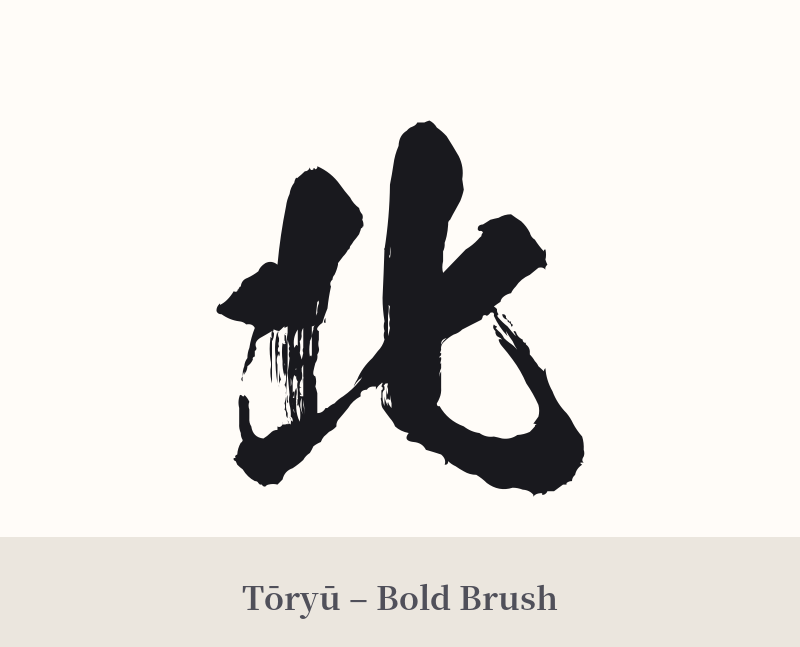
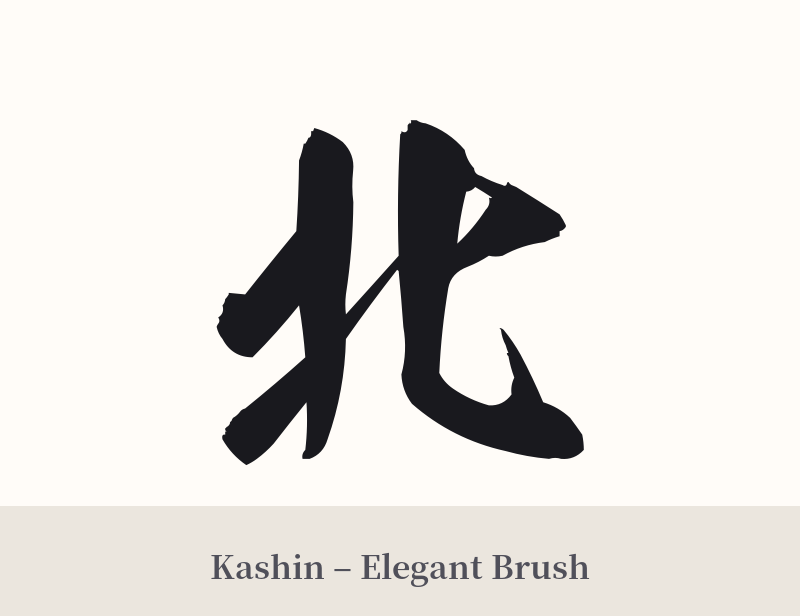
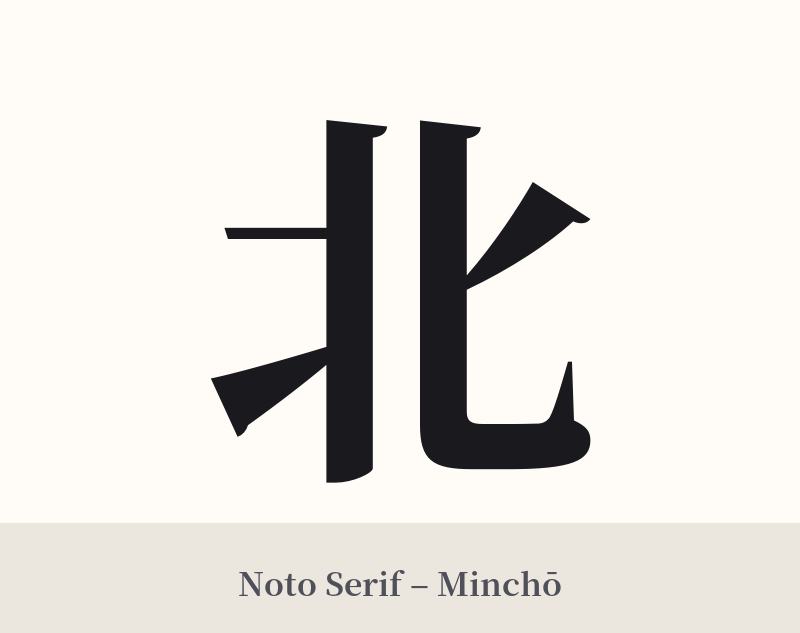
The same kanji can look dramatically different depending on the calligraphy style. Choose a font that matches the mood you want for your tattoo or design.
🎨 Tattoo Suitability
📐 Tattoo Design Guide
The kanji 北 is defined by its simplicity, making it versatile for tattoo design. Its clean, geometric lines lend themselves well to a variety of styles and placements.
– Placement: Due to its low stroke count, 北 works exceptionally well in small, discreet locations. Consider the wrist, behind the ear, the ankle, or the nape of the neck. For a larger piece, it could serve as a central element on the forearm or shoulder blade.
– Font Style: A bold, blocky Gothic or Mincho font can emphasize its sense of stability and direction. For a more organic or personal feel, a fluid semi-cursive (gyōsho) or cursive (sōsho) calligraphy style can add a touch of elegance and movement.
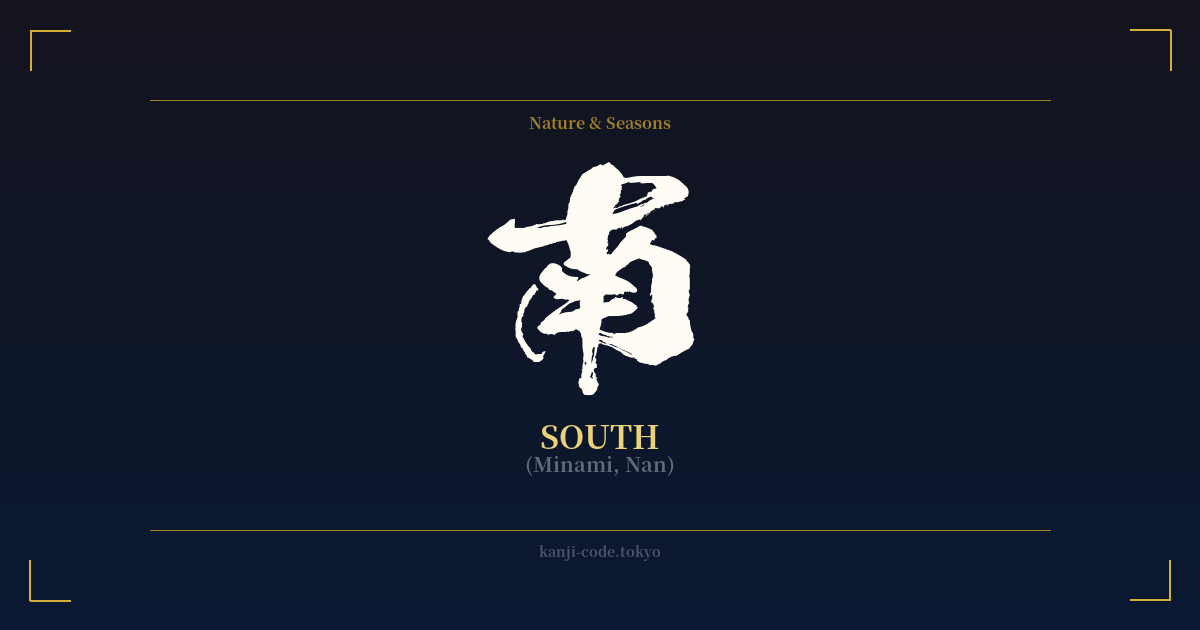
– Visual Tips: To add context and meaning, consider pairing 北 with other elements. It can be integrated into a compass rose design, placed near a small, simple star to represent the North Star (Hokkyokusei), or surrounded by wave patterns to evoke its connection to the water element and the Genbu myth. Combining it with the other three cardinal directions (東, 南, 西) can create a powerful design about balance and a complete worldview.
Comments