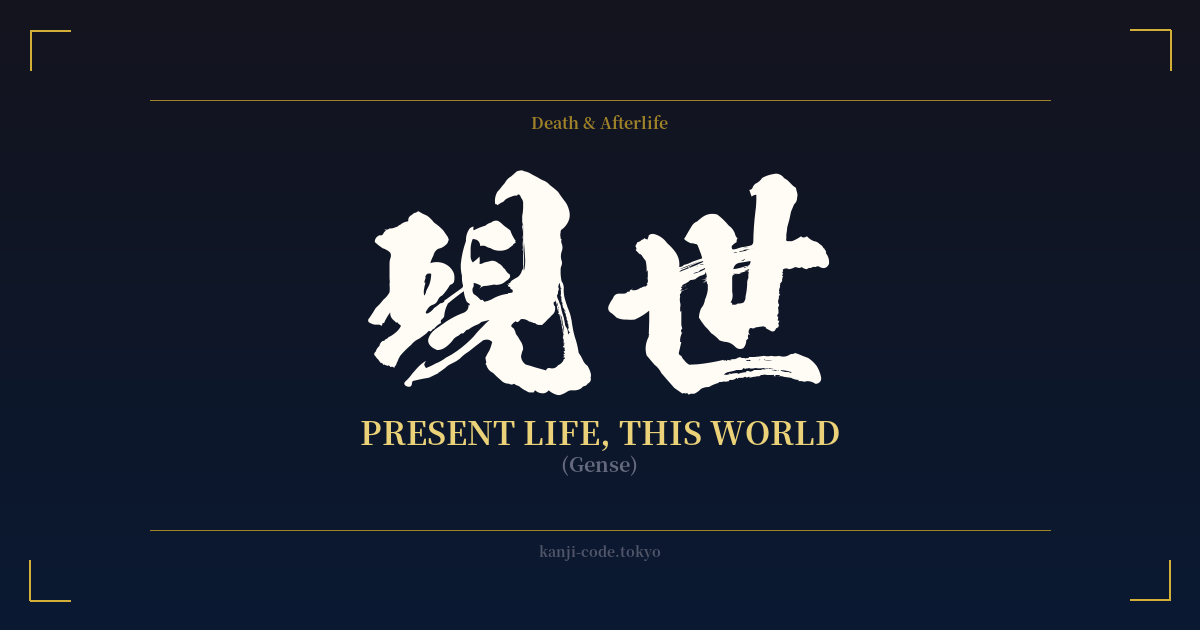
✍️ 現世 (Gense) — Cultural Context
現世 (Gense) is a Japanese word that translates to 'the present life' or 'this world.' While it might seem straightforward, its true depth is rooted in Buddhist philosophy, which has profoundly influenced Japanese culture and thought for centuries. The term doesn't just refer to the physical world we see, but specifically to the mortal realm of existence—the here and now, filled with both suffering and joy.
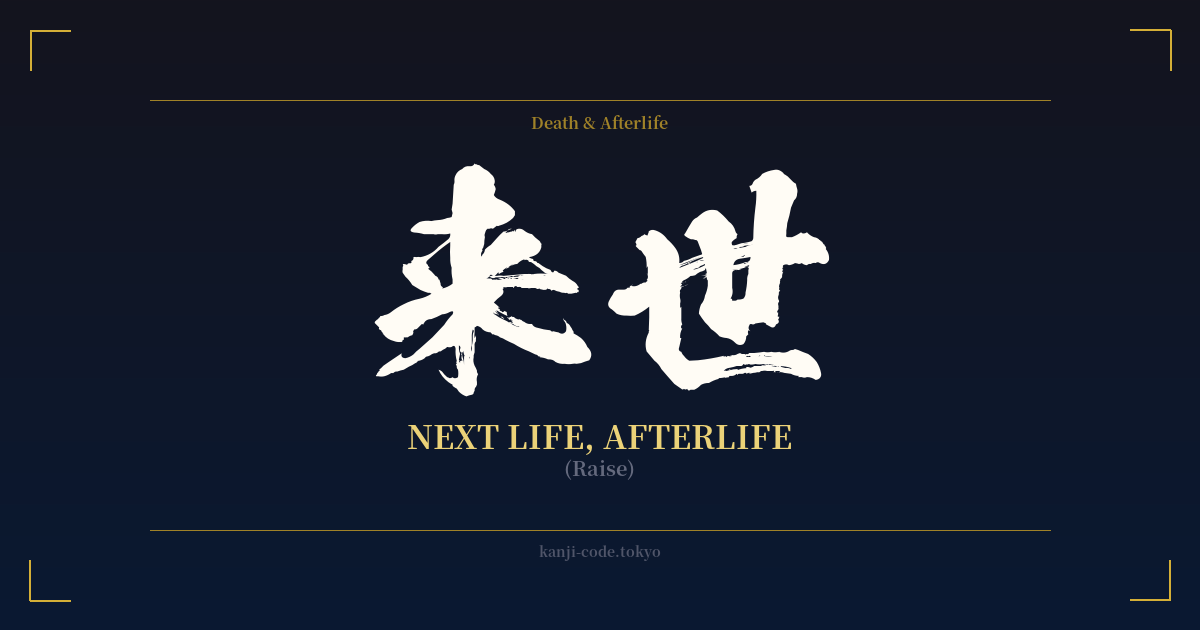
To fully grasp the meaning of Gense, it's essential to understand the concept of the Three Worlds (三世, Sanze). This Buddhist framework divides existence into three phases: the past life (前世, Zense), the present life (現世, Gense), and the future life or afterlife (来世, Raise). According to this belief, our current existence is just one chapter in a long cycle of rebirth (輪廻, Rinne), shaped by the karma of our past actions and influencing the life that is yet to come.
Gense, therefore, is this specific, tangible moment in the cosmic cycle. It is the world we experience with our senses, the life we are living right now. This concept is closely tied to the Japanese aesthetic and philosophical idea of impermanence (無常, Mujō), the awareness that all things are fleeting and in a constant state of change. Embracing Gense means acknowledging the transient nature of our existence and finding value and beauty within it.
In Japan, this idea manifests in various cultural practices. For instance, the term 現世利益 (gense riyaku) refers to 'worldly benefits' or 'blessings in this life.' People often visit shrines and temples to pray for tangible outcomes like success in exams, good health, or financial prosperity—all benefits to be enjoyed in Gense, rather than waiting for a reward in the afterlife. This shows a practical, grounded approach to spirituality, focusing on improving the life one currently has.
Choosing Gense is to embrace a philosophy of presence. It is a declaration of focus on the current reality, a commitment to living fully within this mortal coil. It stands in contrast to a focus on what was or what will be, serving as a powerful reminder to engage with the world as it is, with all its imperfections and fleeting beauty. It’s a term that carries the weight of existence itself.
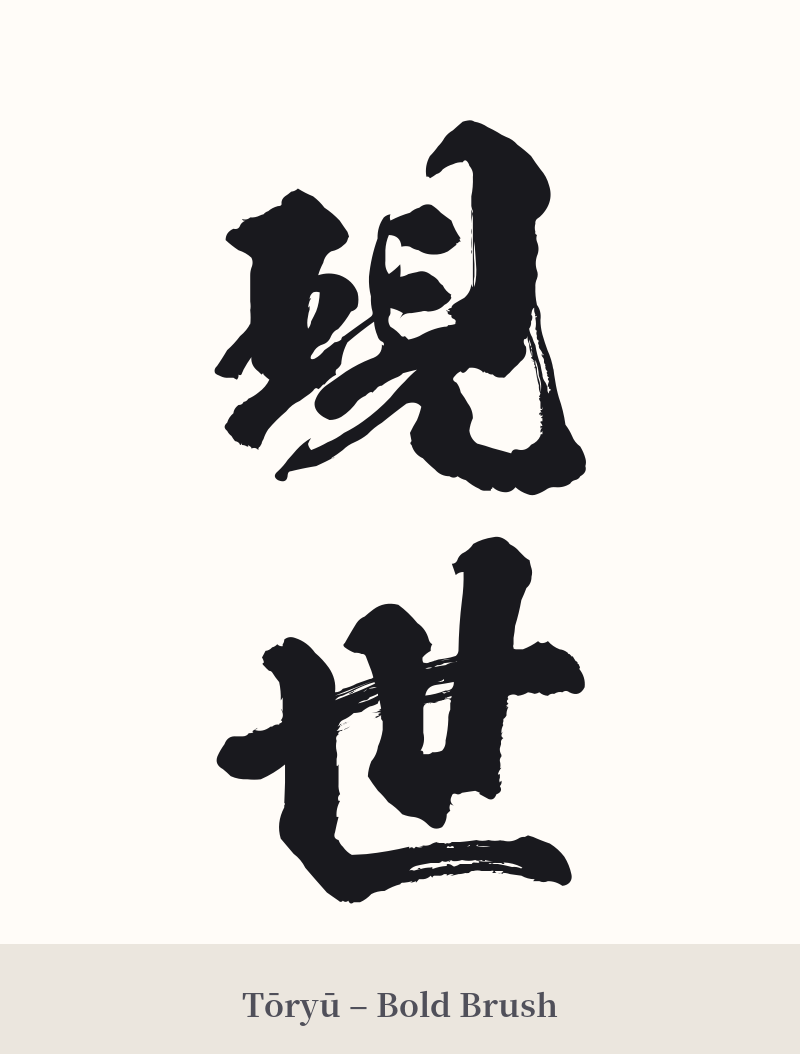
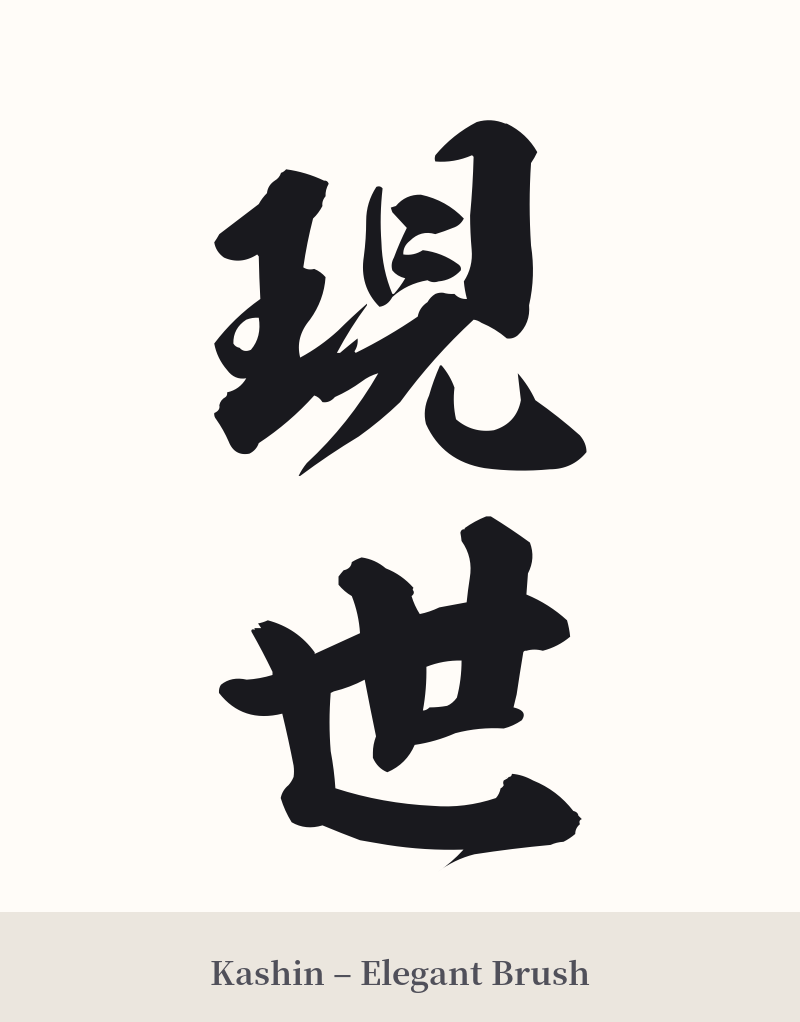
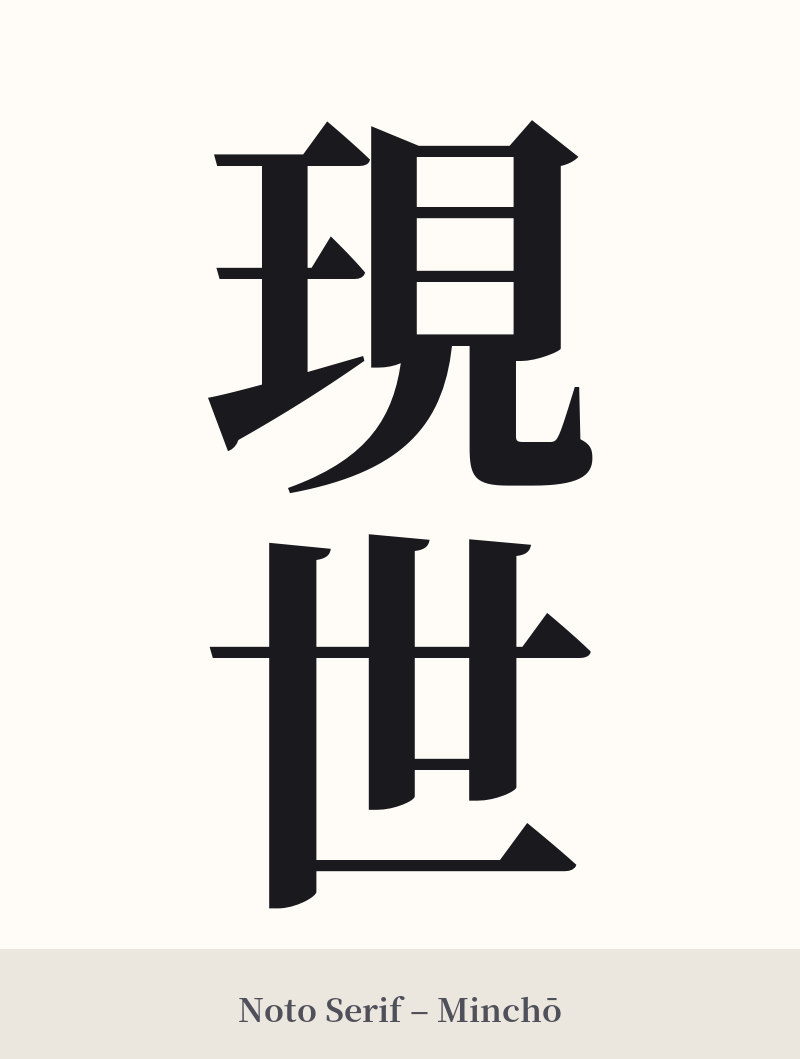
🖌️ Font Styles for 現世
The same kanji can look dramatically different depending on the calligraphy style. Choose a font that matches the mood you want for your tattoo or design.
🎨 Tattoo Suitability
📐 Tattoo Design Guide
A tattoo of 現世 (Gense) is a statement on existence and presence, and the design should reflect this philosophical weight. Its two characters have a good balance, with the more complex 現 followed by the simpler 世, creating a natural visual flow.
For placement, consider: – A vertical orientation along the forearm, spine, or ribs. This traditional arrangement complements the structure of the kanji and the flow of the body. – A horizontal placement on the chest, upper back, or across the collarbone can create a strong, grounded statement.
When it comes to font style: – Traditional Calligraphy: A semi-cursive (Gyosho) or standard script (Kaisho) style emphasizes its deep historical and Buddhist roots. This approach lends an air of authenticity and timelessness. – Modern Minimalist: A clean, crisp Mincho or Gothic font can offer a stark, modern interpretation, focusing on the concept itself without heavy stylistic flourishes.
To enhance the design, you could incorporate related imagery. Pairing 現世 with an enso (Zen circle) can symbolize the universe and the void in which this present life exists. Alternatively, adding a single falling cherry blossom petal can visually represent the connected idea of impermanence (Mujō).
Comments