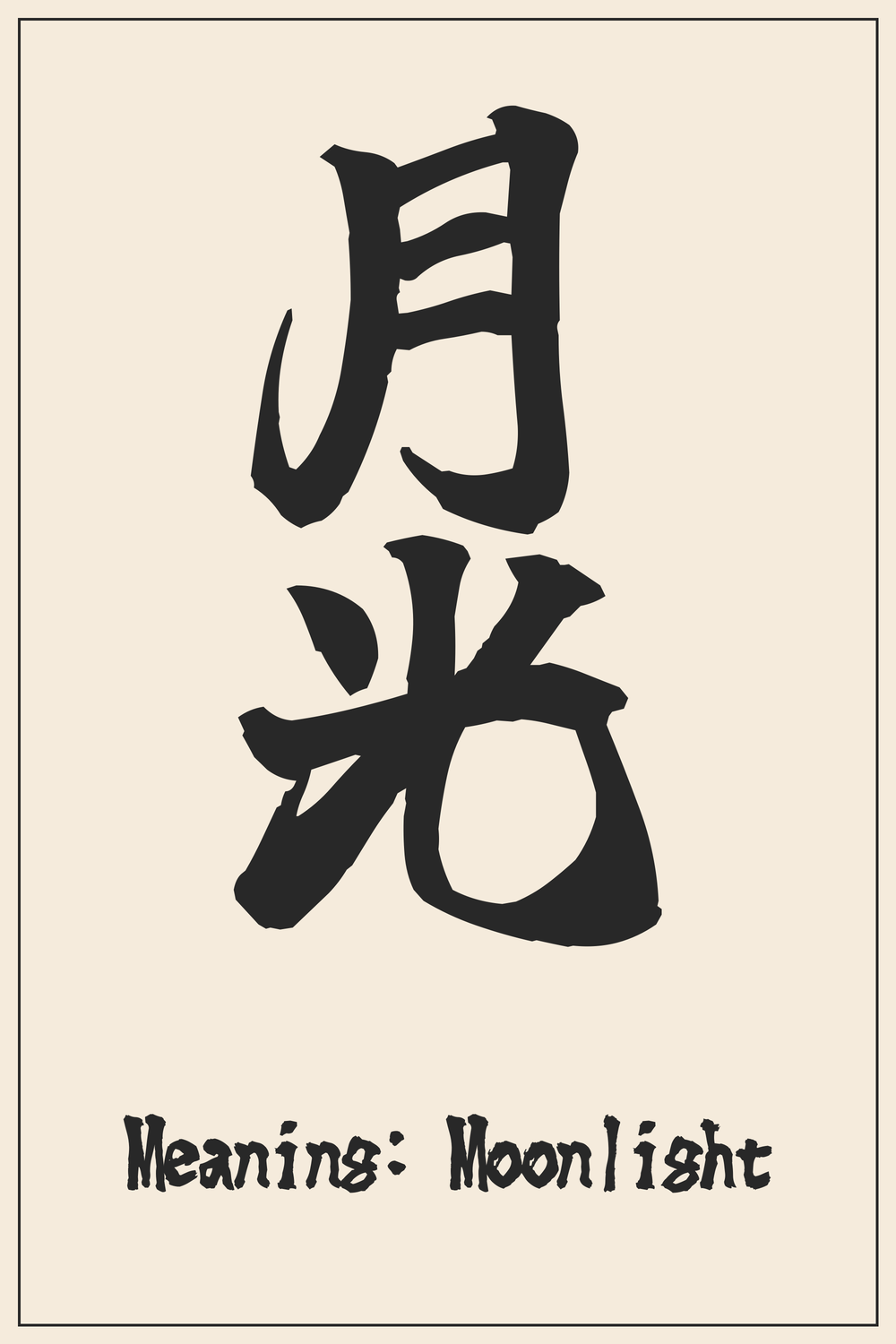
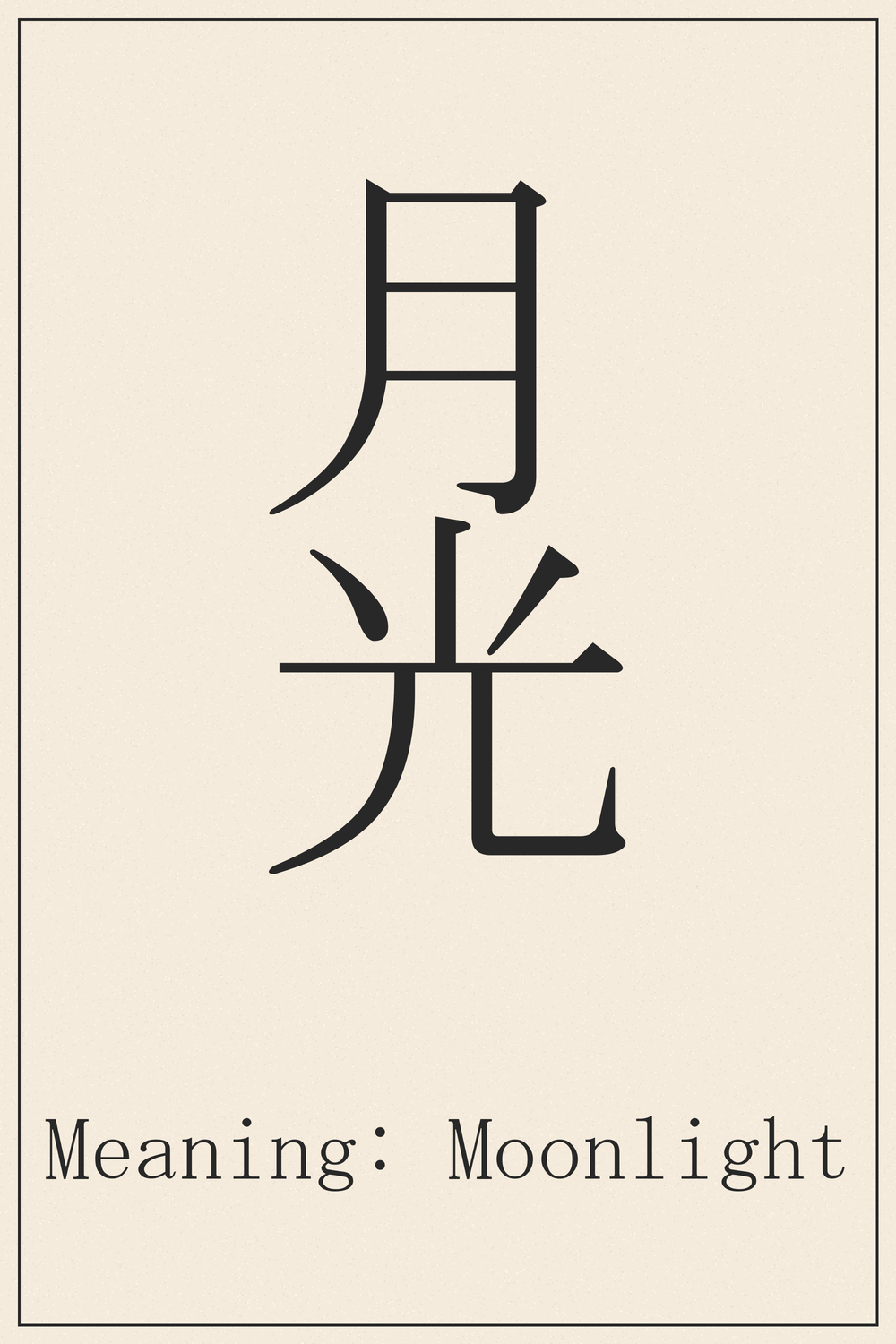
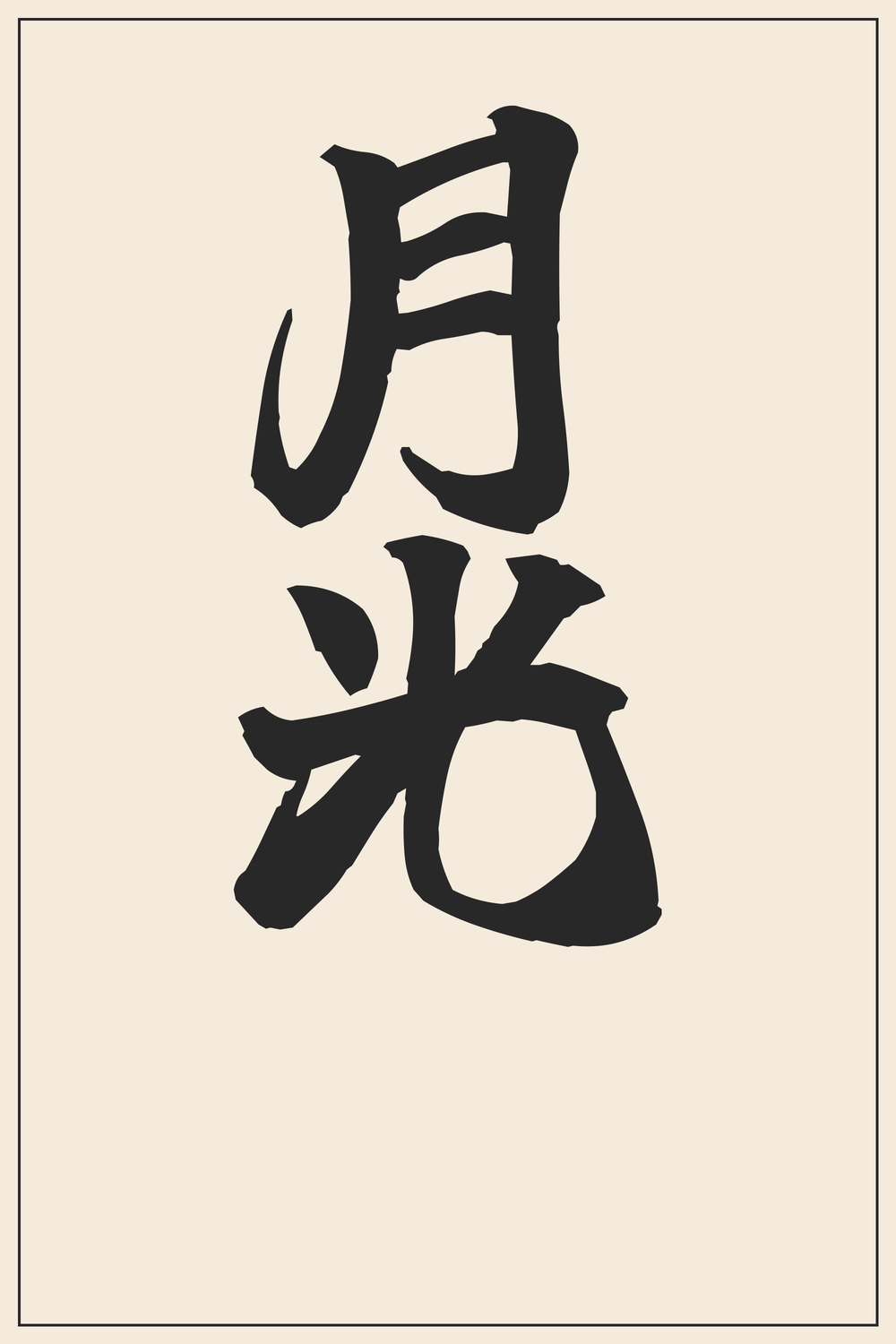
月光 (Gekkou) captures the serene and mystical essence of moonlight, a powerful symbol across cultures. This elegant Kanji evokes beauty, tranquility, and introspection, making it a profound choice for personal expression.
The atmosphere of a Kanji character changes dramatically depending on the font style. A character that looks elegant in a brush style might look bold and modern in a different font.
Recommendation:
Since a tattoo is permanent, we strongly recommend comparing various font styles beyond what is shown here. Use our designs as a trusted reference for the correct structure, but feel free to explore different artistic variations to find the perfect match for your vision.
The Deep Meaning Behind 月光
The Kanji compound 月光 (Gekkou) beautifully articulates the concept of moonlight. 月 (Getsu/Tsuki) originates as a pictograph of a crescent moon, symbolizing celestial cycles and the passage of time. 光 (Kou/Hikari) depicts light radiating, often from a source like the sun or a flame, representing brightness and illumination.
In Japanese culture, moonlight is a potent symbol frequently appearing in classical poetry, art, and literature. It is associated with tranquility, contemplation, and the ethereal beauty of the night, often evoking a sense of gentle melancholy or spiritual awareness. It highlights the subtle, often hidden, aspects of nature and human emotion.
Kanji Breakdown
The compound 月光 consists of two distinct yet harmonious characters, each contributing to its profound meaning.
Meaning: Moon. An ancient pictograph depicting the crescent moon, symbolizing celestial bodies, time, and often associated with feminine energy and cycles.
Meaning: Light. Originates from a pictograph representing light radiating, often from a person holding a torch, symbolizing brightness, illumination, and hope.
Conclusion
The Kanji 月光 (Gekkou) beautifully encapsulates the quiet majesty of moonlight, a phenomenon revered for its calming influence and profound symbolism. It speaks to the hidden beauty of the night and the gentle guidance it offers, reflecting a connection to nature’s serene power.
Opting for 月光 as a tattoo signifies an appreciation for subtlety, inner peace, and the timeless cycles of nature. Its elegant form and deep cultural resonance make it a truly inspiring and visually appealing choice for personal reflection and artistic expression.
Comments