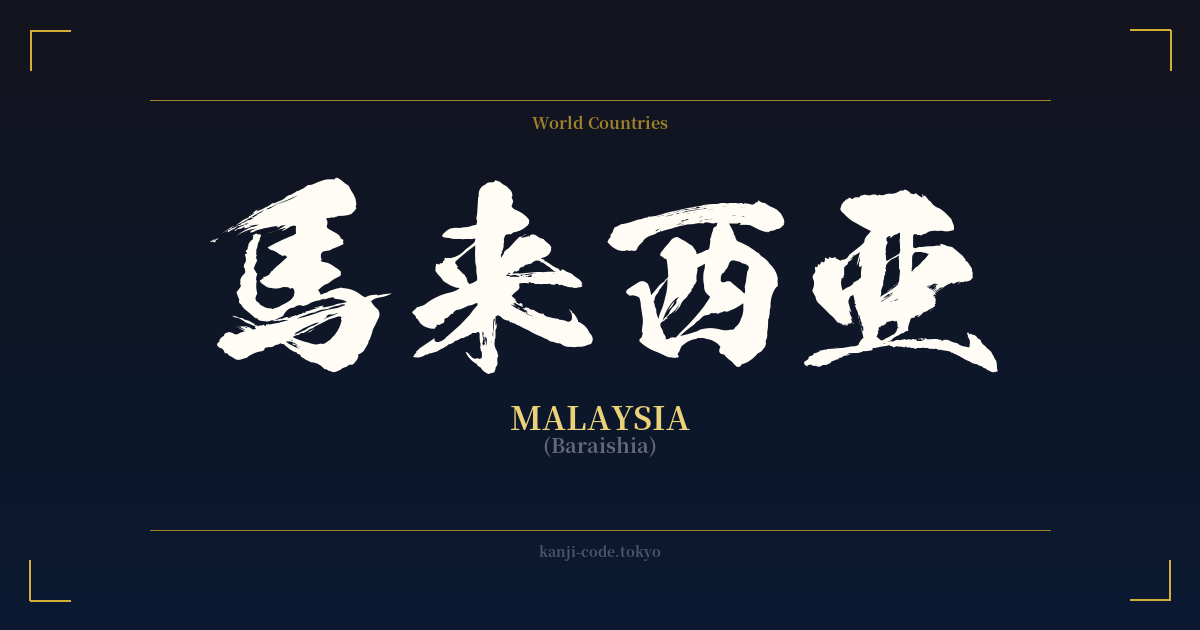
✍️ 馬来西亜 (Baraishia) — Cultural Context
The word 馬来西亜 (Baraishia) is a fascinating window into a specific period of Japanese linguistic history. It represents 'Malaysia' not through meaning, but through sound. This practice, known as 'ateji' (当て字), involves using kanji characters for their phonetic values to transcribe foreign words. In this case, the characters were selected to approximate the sound of 'Malaysia': 馬 (ba) + 来 (rai) + 西 (shi) + 亜 (a).
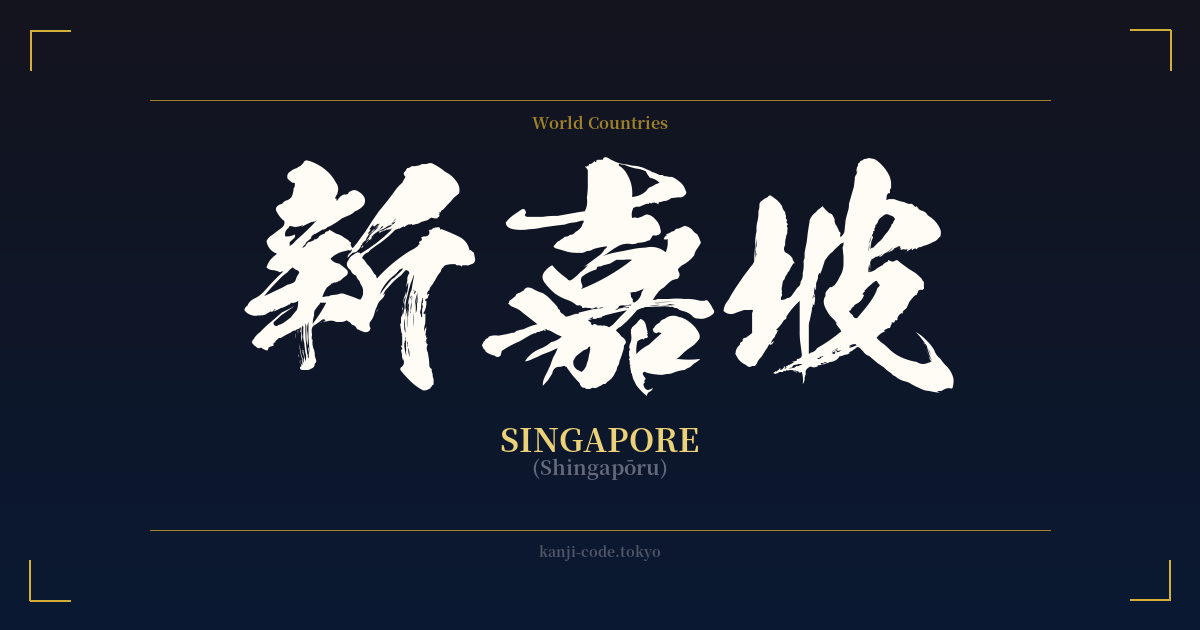
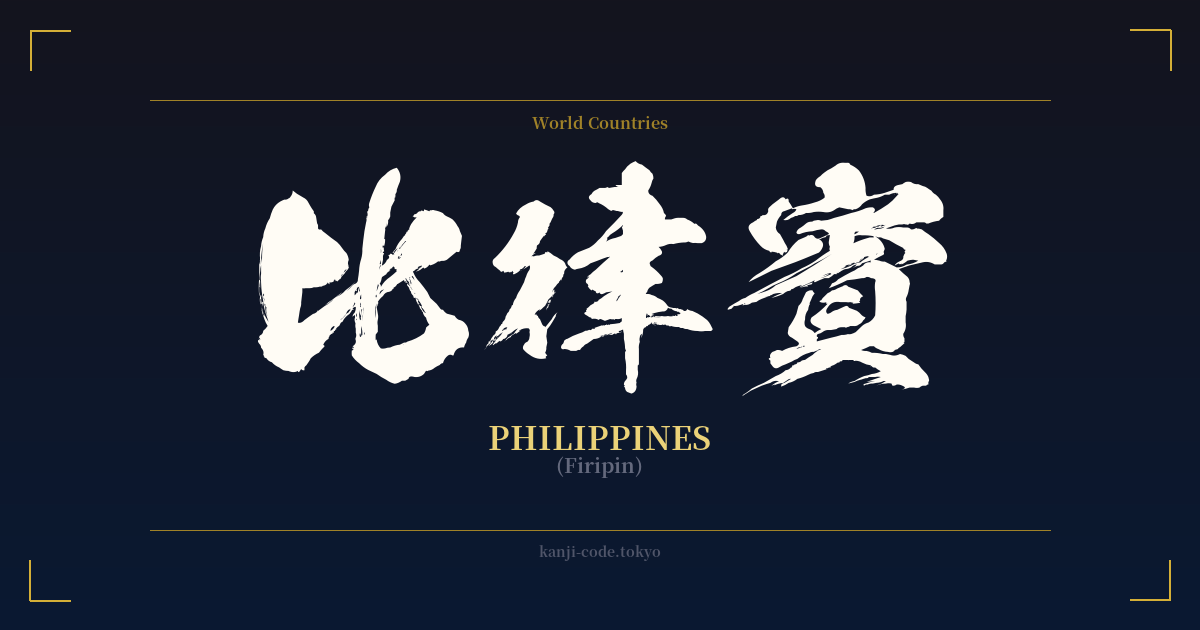
This method was prevalent during the Meiji Restoration (1868-1912) and before, a time when Japan was rapidly opening to the world and needed ways to incorporate a flood of new foreign names and concepts into its writing system. Before the katakana script was standardized for this purpose, ateji was the go-to solution. You can see this pattern in the old names for many countries, such as 亜米利加 (Amerika, for the USA) and 仏蘭西 (Furansu, for France).
The choice of characters was often arbitrary, guided by sound alone. This leads to the primary issue with ateji for modern interpretation: the meanings of the individual kanji are completely divorced from the word's actual meaning. For 馬来西亜, the characters mean 'horse,' 'come,' 'west,' and 'Asia.' Reading a deeper meaning into this, like 'a horse coming from West Asia,' is a common mistake and entirely incorrect. The characters are merely phonetic placeholders.
Over time, this system proved cumbersome and potentially misleading. The Japanese writing system evolved, and katakana became the standard, universally understood script for foreign loanwords. Today, 'Malaysia' is written exclusively as マレーシア (Marēshia) in all forms of modern communication, from newspapers to websites to daily conversation.
The kanji form 馬来西亜 is now considered archaic and obsolete. You might encounter it in historical texts, highly specialized academic papers on linguistics, or perhaps in very formal, traditional contexts where an air of classicism is desired. However, for all practical purposes, it has been completely superseded. While it stands as a testament to the flexibility and creativity of the Japanese language, it is a linguistic fossil, not a living word.
🖌️ Font Styles for 馬来西亜
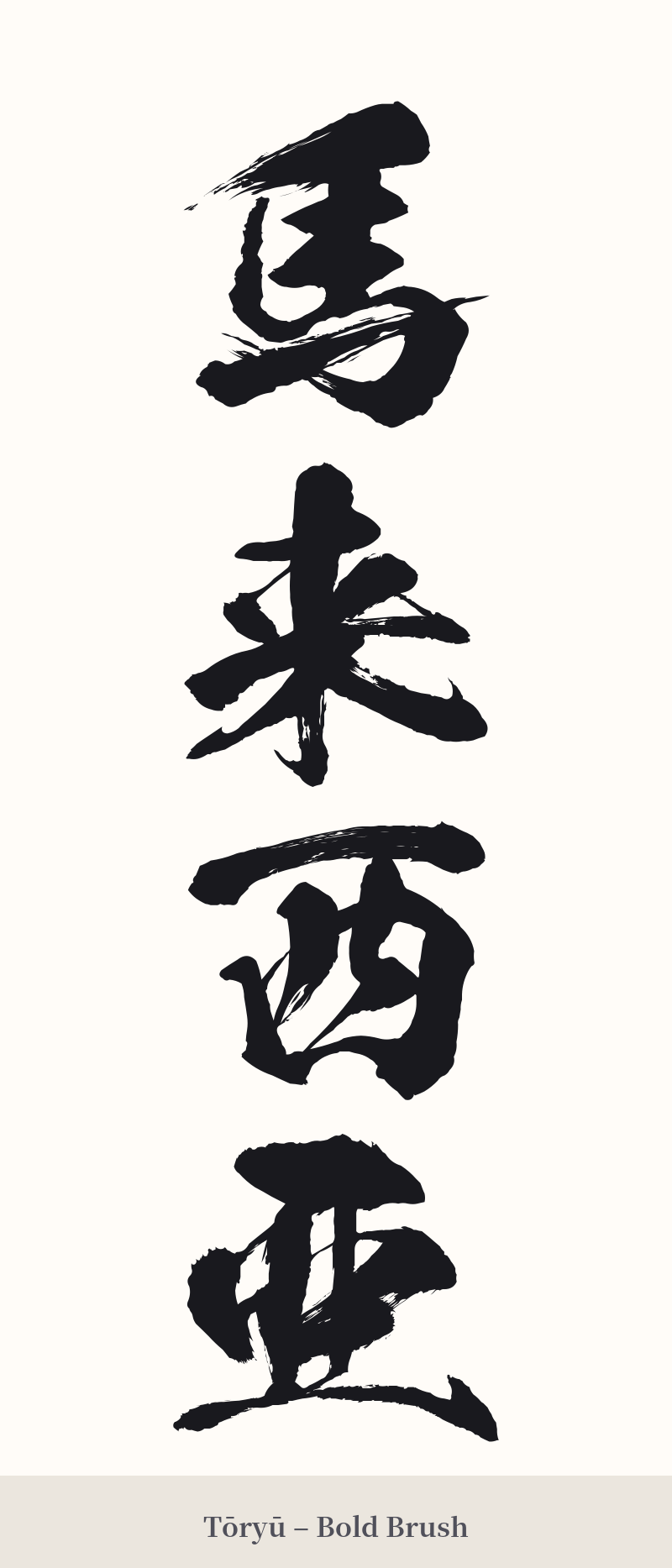
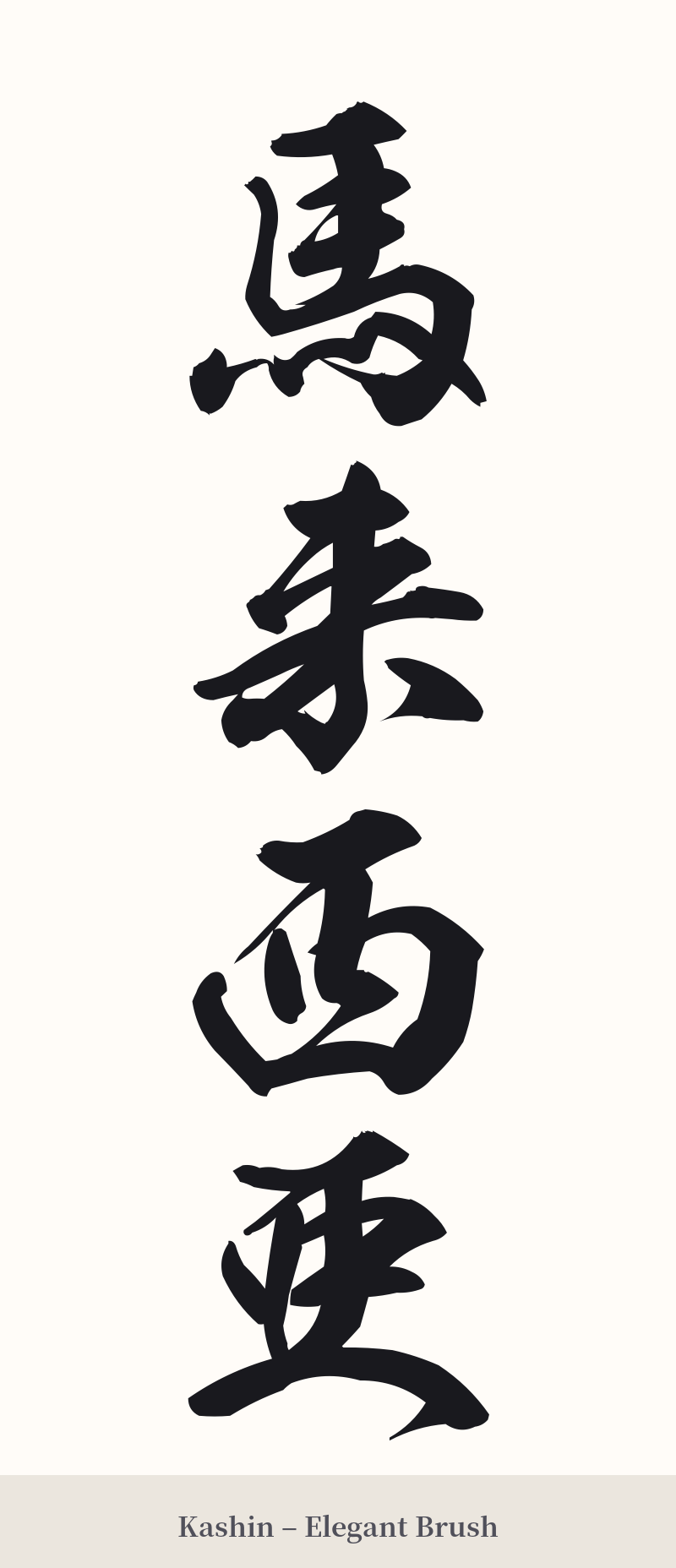
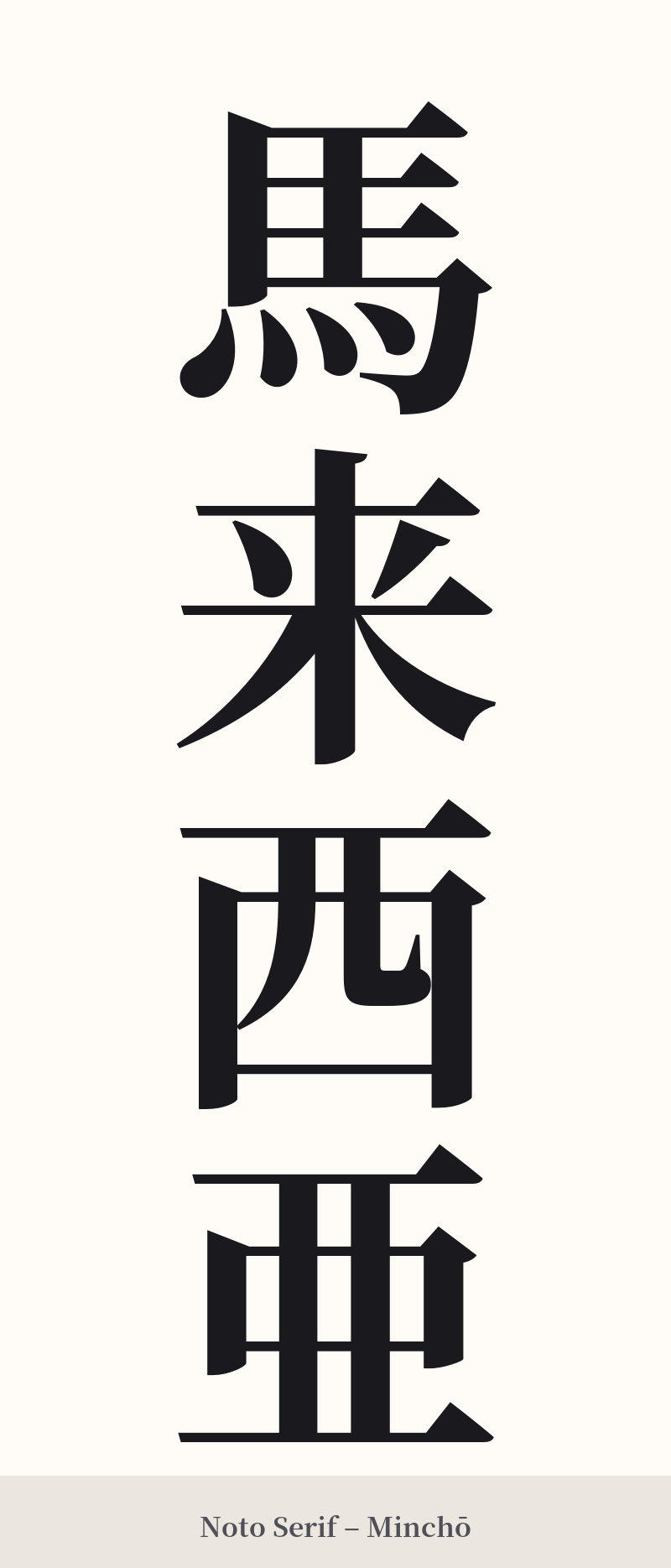
The same kanji can look dramatically different depending on the calligraphy style. Choose a font that matches the mood you want for your tattoo or design.
🎨 Tattoo Suitability
📐 Tattoo Design Guide
For a tattoo of 馬来西亜, the design should honor its historical and formal nature. A vertical orientation is strongly recommended, as is traditional for multi-character Japanese phrases. This would look excellent running down the forearm, the side of the calf, or along the spine.
– Font Style: Stick to classic calligraphy scripts. A clean, block-like Kaisho (楷書) style would emphasize the distinct shapes of each character. Alternatively, a semi-cursive Gyosho (行書) style could add a sense of historical flow and elegance.
– Placement: Forearm, bicep, calf, or back are ideal. The four-character length provides a substantial visual element that works well in these linear spaces.
– Visual Tips: Ensure the tattoo artist gives adequate space between each character to prevent them from blurring into one another. The relative complexity of 馬 (horse) should be balanced against the simpler forms of the other three kanji. Think of the entire phrase as a single, cohesive column of art.
Comments