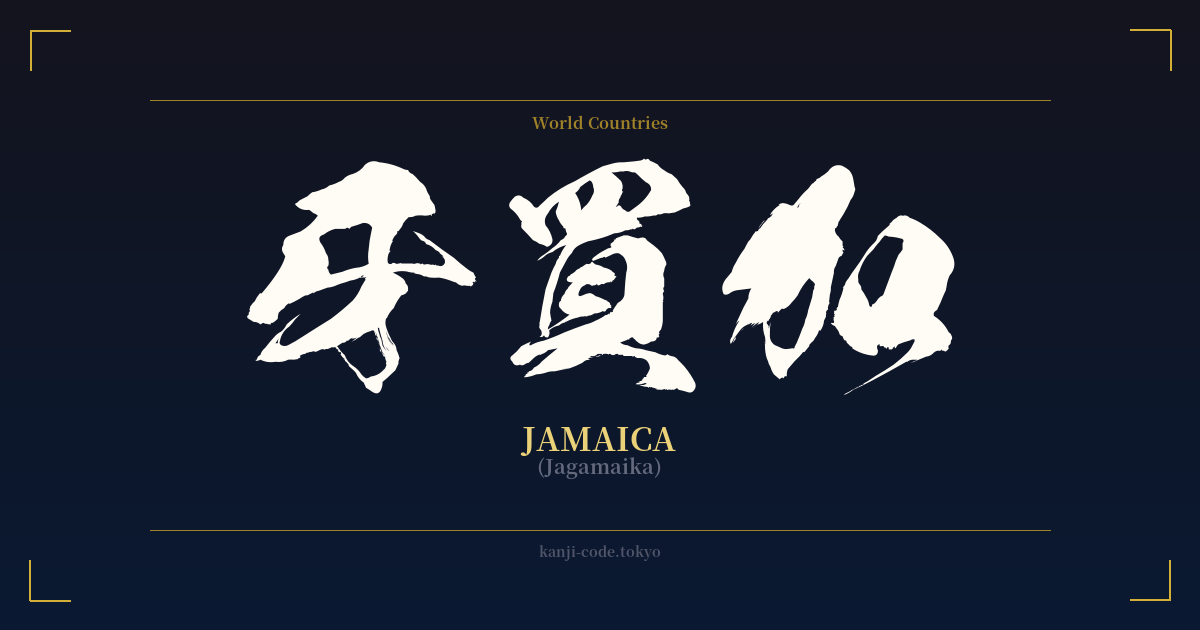
✍️ 牙買加 (Jagamaika) — Cultural Context
The word 牙買加 (Jagamaika) is a fascinating window into how Japan has historically absorbed and represented foreign words. This is a prime example of 'ateji' (当て字), a practice where kanji are used for their phonetic sounds rather than their literal meanings. In this case, the characters 牙 (ja/ga), 買 (mai), and 加 (ka) were chosen to approximate the sound of 'Jamaica'.
This method was common during the Meiji era (1868-1912) and before, when Japan was rapidly modernizing and encountering a flood of new concepts and names from the West. Scribes and scholars would select kanji that sounded like the foreign word, often with little to no regard for the original meanings of the characters. This resulted in combinations like 牙買加, which literally translates to 'tusk-buy-add'—a nonsensical phrase that only makes sense when you understand its phonetic purpose.
Today, the use of ateji for country names is largely archaic. The modern Japanese writing system overwhelmingly favors katakana (a phonetic syllabary) for foreign words. The standard, everyday way to write 'Jamaica' is ジャマイカ. Seeing 牙買加 in a modern context is extremely rare. It might appear on a novelty item, in a historical text, or as a deliberately retro or artistic choice. It carries a certain old-world, scholarly charm, but it is not practical for daily communication.
Despite the obscurity of its kanji form, Japanese culture has a deep and genuine appreciation for Jamaica, particularly its music. Reggae, and Bob Marley in particular, found a passionate following in Japan starting in the 1970s. This cultural connection is vibrant and continues today through music festivals, sound systems, and dedicated fan communities. However, all communication and branding around this cultural exchange use the modern katakana ジャマイカ, reinforcing just how unusual the kanji form is.
🖌️ Font Styles for 牙買加
The same kanji can look dramatically different depending on the calligraphy style. Choose a font that matches the mood you want for your tattoo or design.
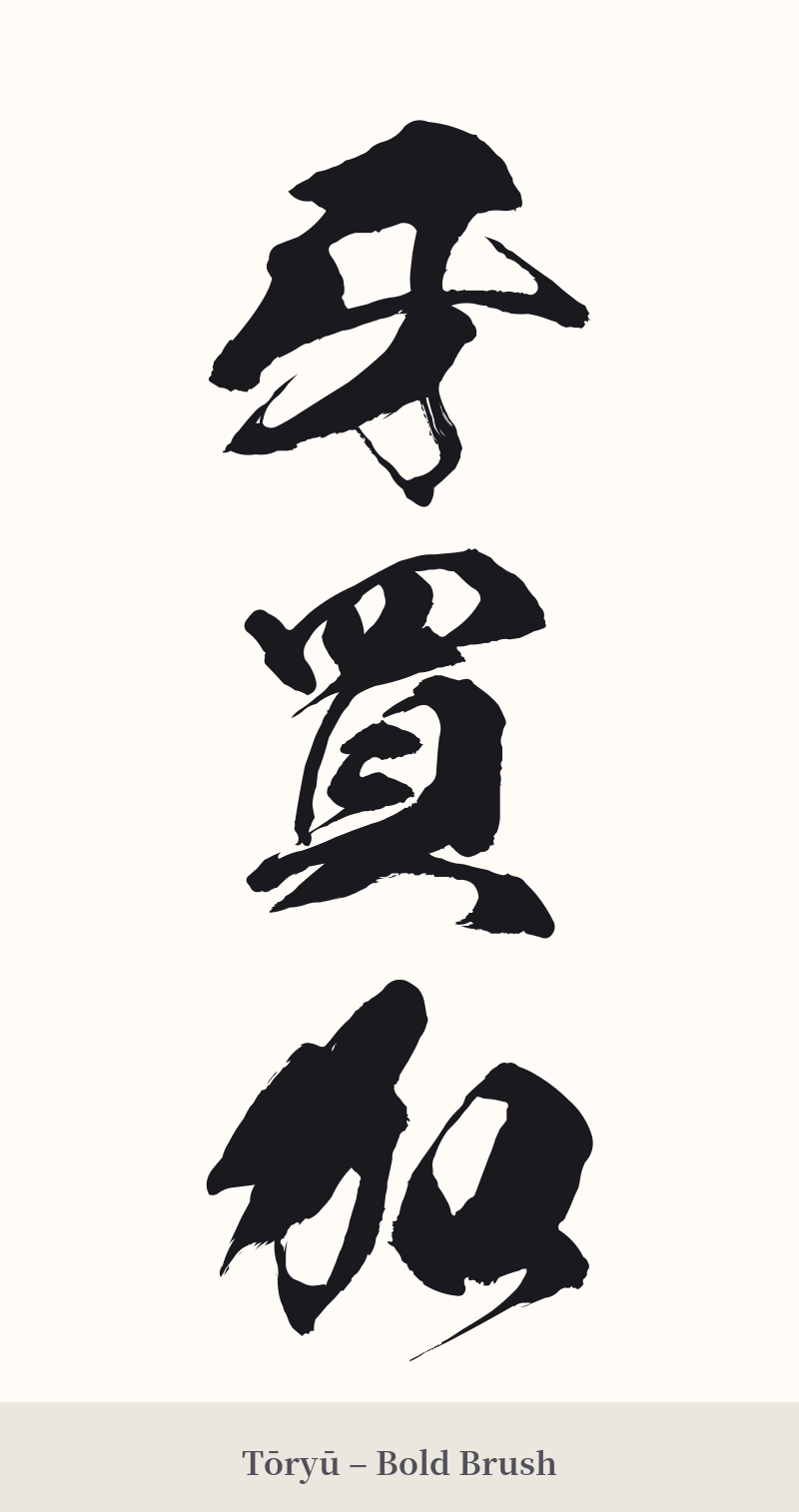
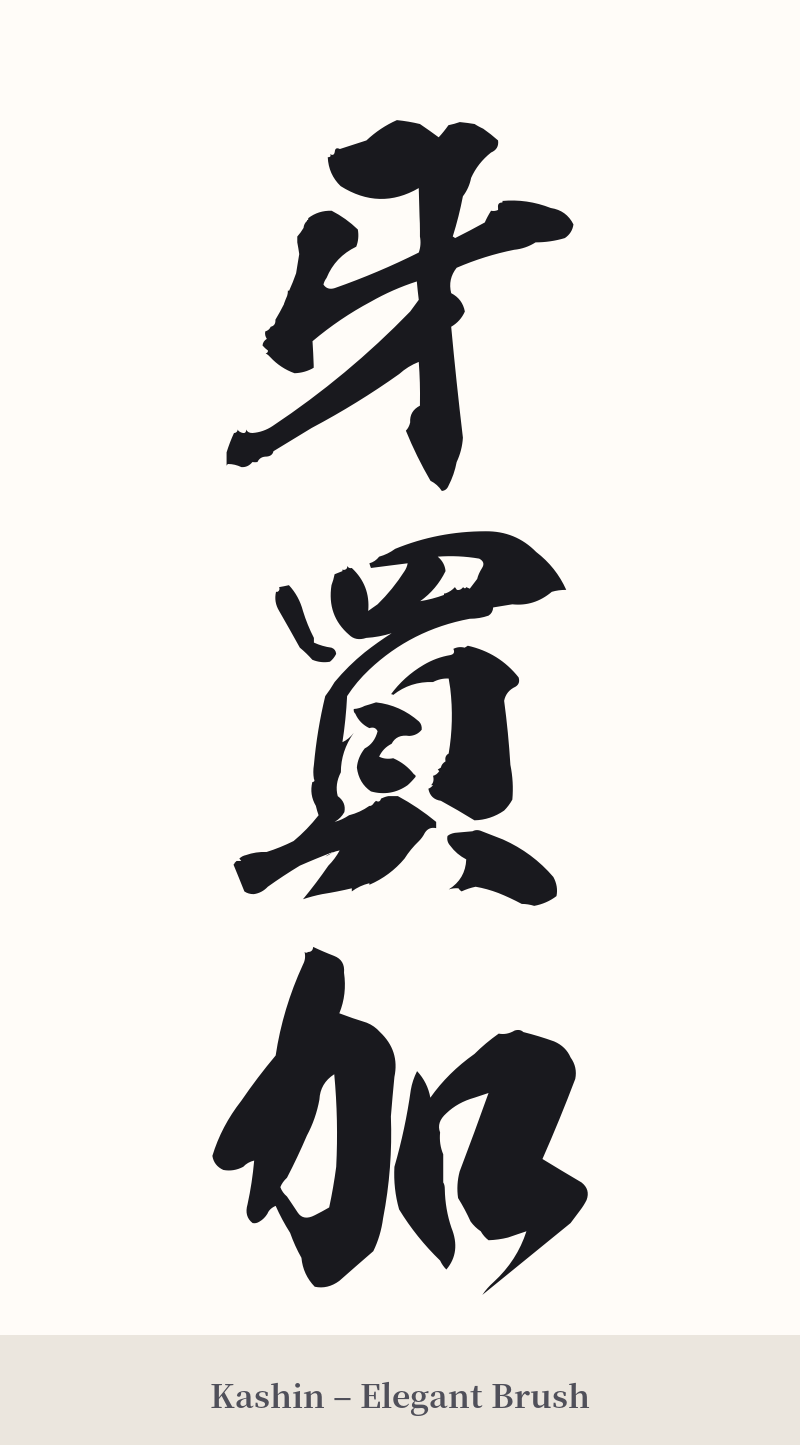
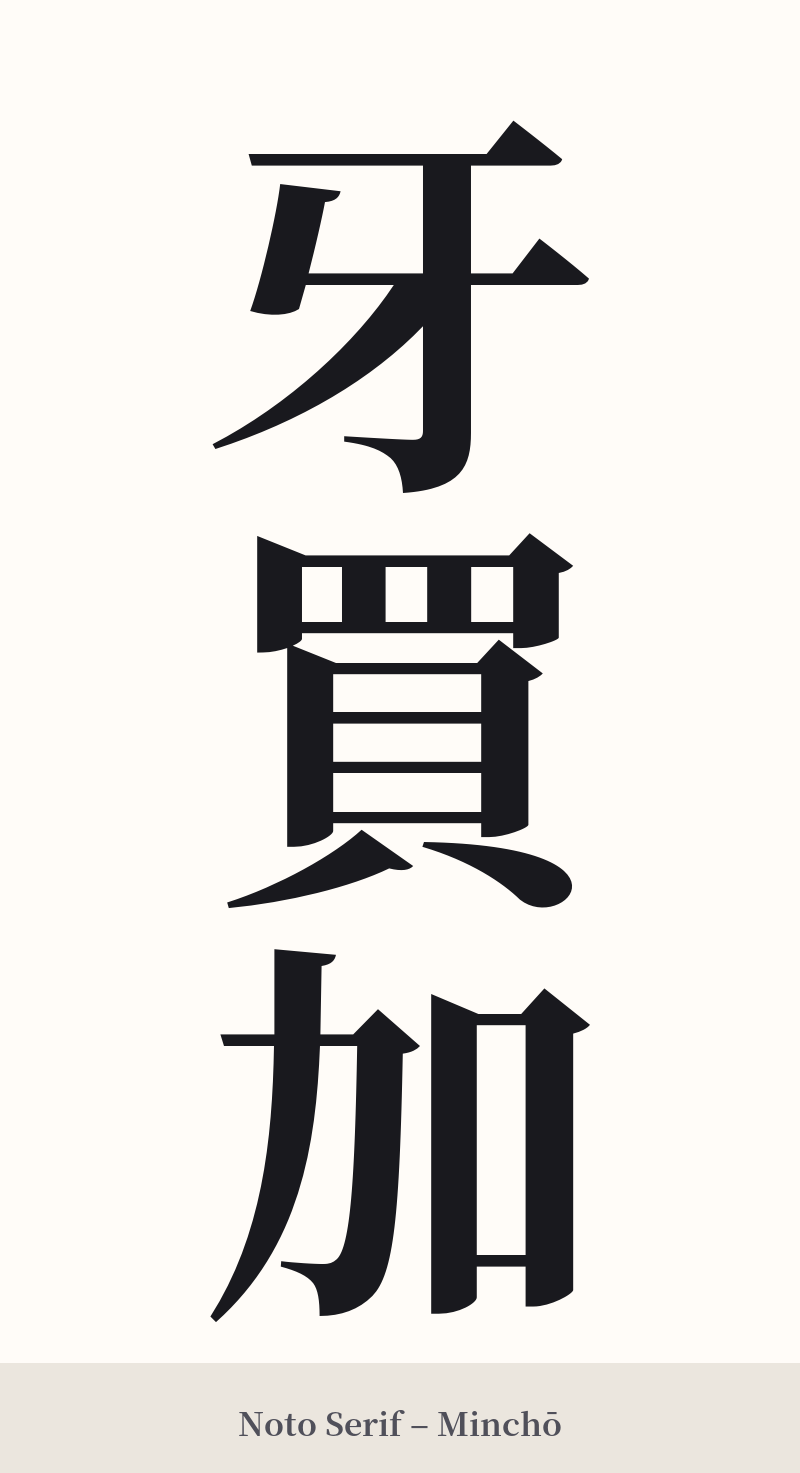
🎨 Tattoo Suitability
📐 Tattoo Design Guide
Given that 牙買加 is an archaic, phonetic spelling, the design should embrace its traditional and slightly quirky nature.
– Placement: A vertical orientation is strongly recommended. This aligns with traditional Japanese script and enhances the classic feel of the kanji. Placements like the forearm, calf, or along the spine work very well for a three-character vertical design.
– Font Style: Opt for a traditional, brush-stroke style. Gyosho (semi-cursive) or even a legible Sosho (cursive) font can capture the artistic and historical feel of ateji. Avoid modern, blocky, or geometric fonts, as they would clash with the word's archaic essence.
– Visual Context: Because the kanji themselves are meaningless in this context, consider adding a small, complementary visual element to provide clarity. A subtle hint of the Rastafari colors (red, gold, green), a stylized lion, or another symbol associated with Jamaica can help bridge the gap between the confusing literal text and its intended meaning.
Comments