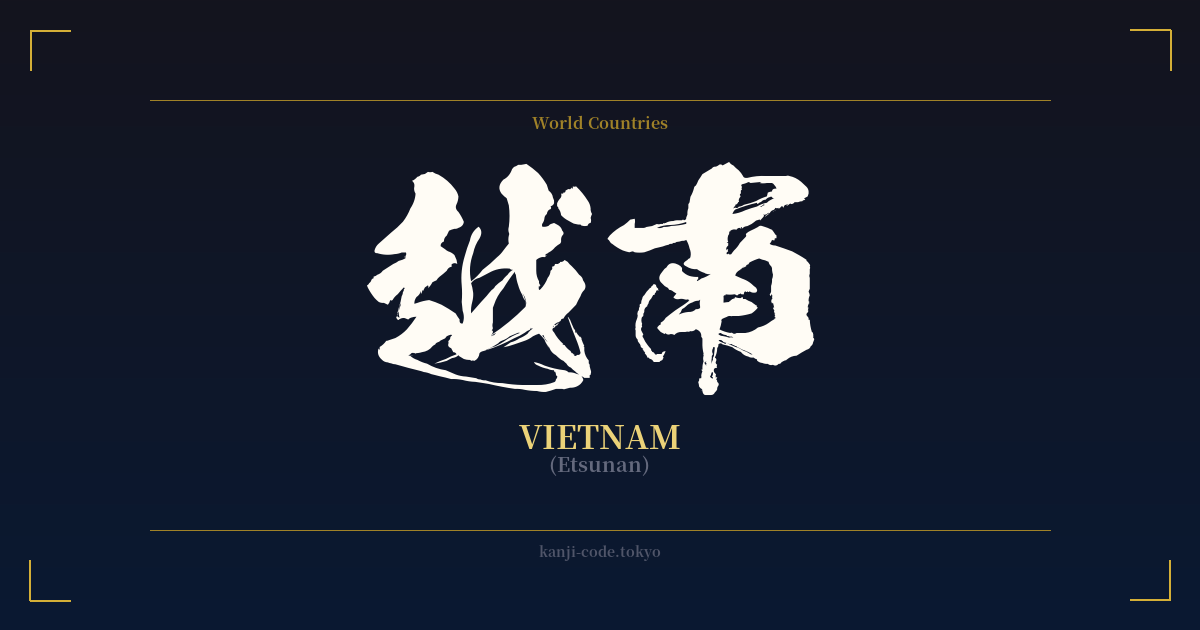
✍️ 越南 (Etsunan) — Cultural Context
The word 越南 (Etsunan) is the Japanese kanji representation for the country of Vietnam. While modern Japanese typically uses the Katakana script—ベトナム (Betonamu)—for foreign country names in everyday contexts, 越南 persists in more formal, historical, and legal documents. Its existence tells a fascinating story of shared linguistic history across East Asia.
The characters themselves are a direct borrowing from the Sino-Vietnamese name for the country, Việt Nam. This isn't just a random phonetic assignment; the characters carry deep historical weight. The first kanji, 越 (Etsu), means 'to cross over' or 'surpass,' but it historically referred to the Baiyue peoples, an ancient group inhabiting what is now southern China and northern Vietnam. The second kanji, 南 (Nan), simply means 'south.'
Therefore, 越南 literally translates to 'the Việt to the south.' This name was a powerful statement of identity. For centuries, the region was known to China as An Nam (安南), meaning 'the Pacified South,' a name carrying colonial undertones. In the early 19th century, the Nguyễn dynasty's Emperor Gia Long successfully negotiated with the Chinese Jiaqing Emperor to officially adopt the name Việt Nam, reversing the old term and asserting a distinct national identity.
In Japan, the adoption of 越南 reflects this history. It's a formal name, often seen in phrases like 日越関係 (Nichi-Etsu kankei), meaning 'Japan-Vietnam relations.' This usage highlights a level of respect and formality that the more common Katakana version might not convey. It acknowledges Vietnam not just as a foreign place but as a nation with a rich, intertwined history in the sphere of Chinese cultural influence, which of course includes Japan itself.
Today, seeing 越南 is a reminder of a time when a shared writing system connected distant cultures. While Vietnam officially adopted the Latin-based Quốc ngữ alphabet in the 20th century, the legacy of Chữ Hán (Chinese characters) and the related Chữ Nôm script lives on in its historical texts, temple inscriptions, and in names like this. For anyone interested in the region's history, 越南 is more than a name; it's a gateway to understanding centuries of cultural exchange, identity, and independence.
🖌️ Font Styles for 越南
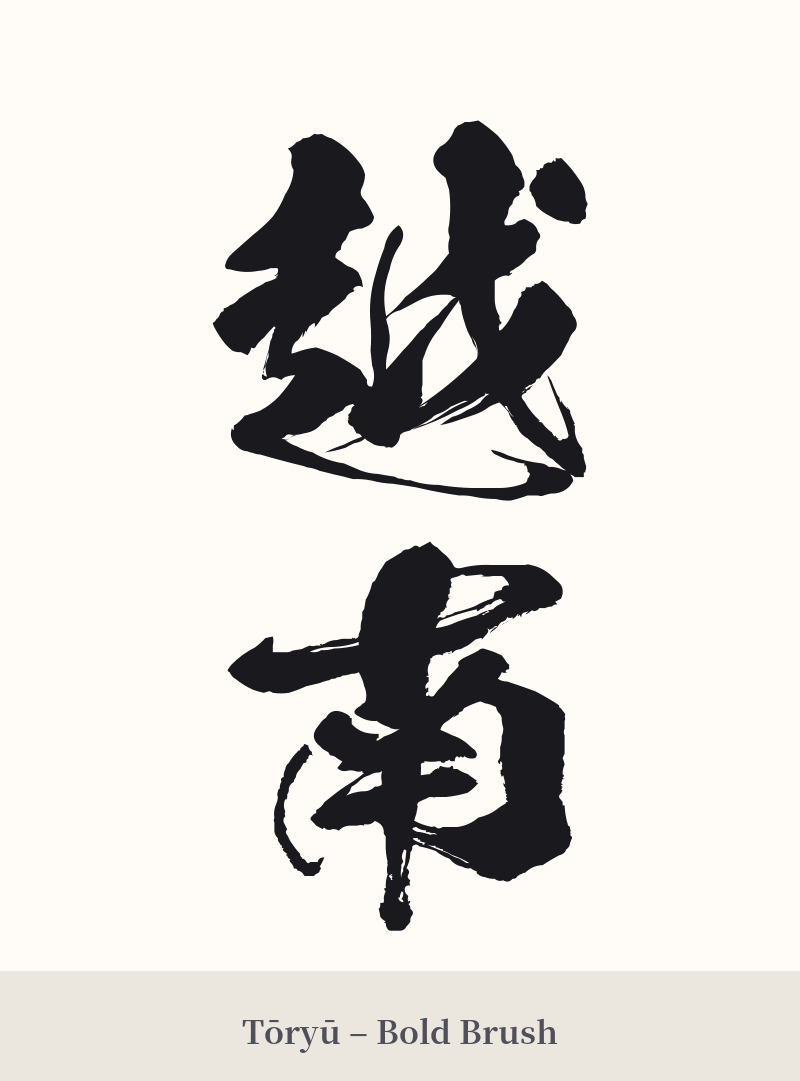
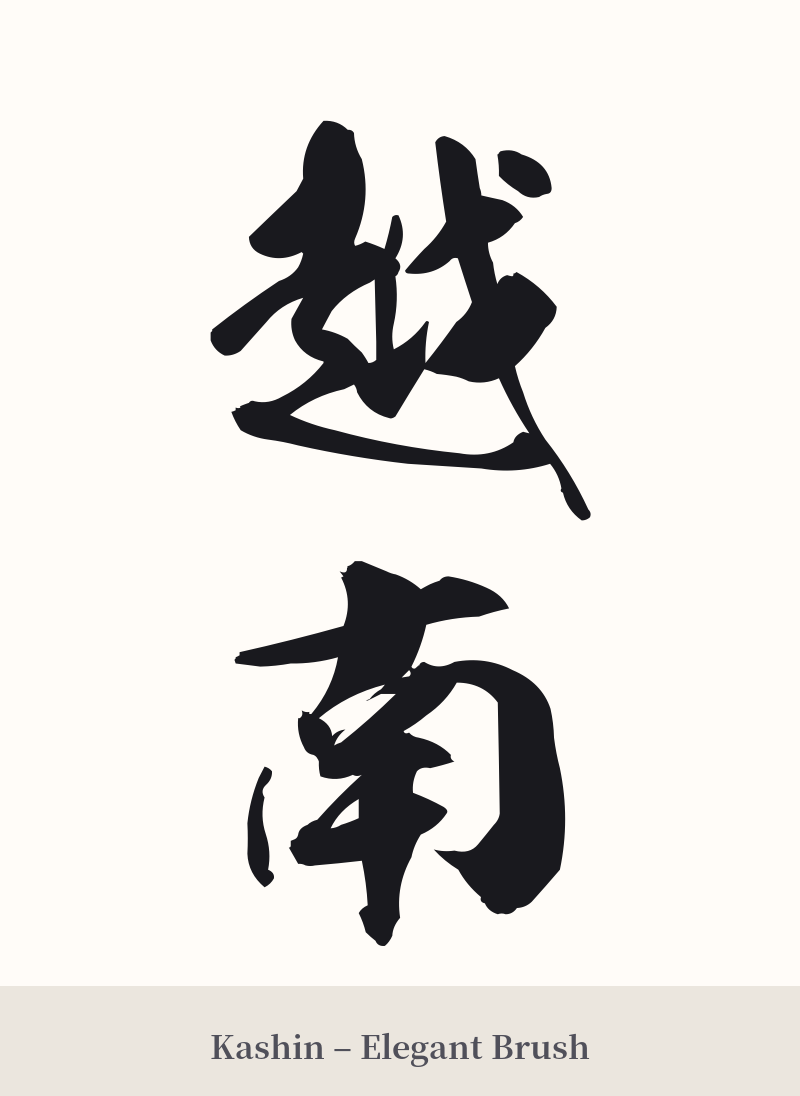
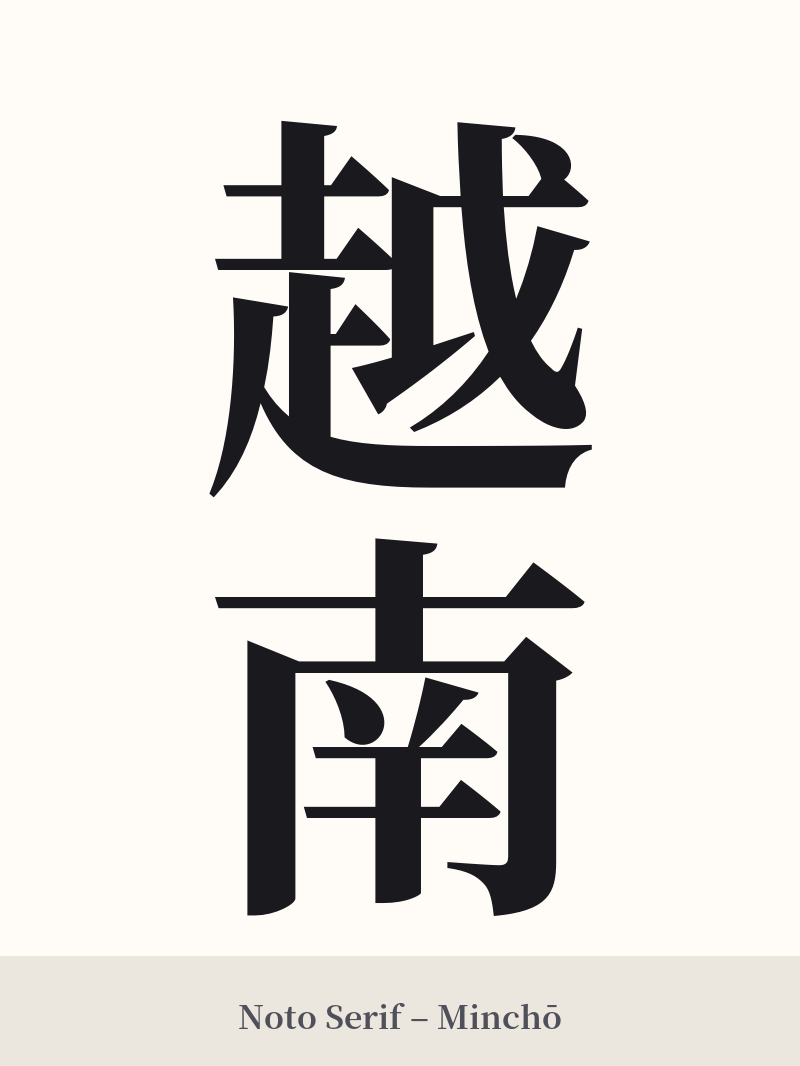
The same kanji can look dramatically different depending on the calligraphy style. Choose a font that matches the mood you want for your tattoo or design.
🎨 Tattoo Suitability
📐 Tattoo Design Guide
For a tattoo of 越南, the visual flow and balance of the two characters are key. A vertical arrangement is highly recommended, as it aligns with traditional East Asian calligraphy and creates an elegant column on the body.
– Placement: The forearm, calf, or along the spine are excellent choices for a vertical design. This allows the characters to be large enough for their details to be clear and appreciated.
– Font Style: The choice of script can dramatically alter the feel. A dynamic, semi-cursive Gyosho style can emphasize the sense of movement in the 越 character ('to cross over'). For a more formal and stately look, a crisp, block-like Kaisho script is perfect. A Mincho font offers a clean, classic, and readable style reminiscent of printed text.
– Visual Tips: Due to the combined 21 strokes, avoid making the tattoo too small, as the finer details within the characters could blur over time. Consider leaving ample empty space around the kanji to let the design breathe and stand on its own as a powerful statement.
Comments