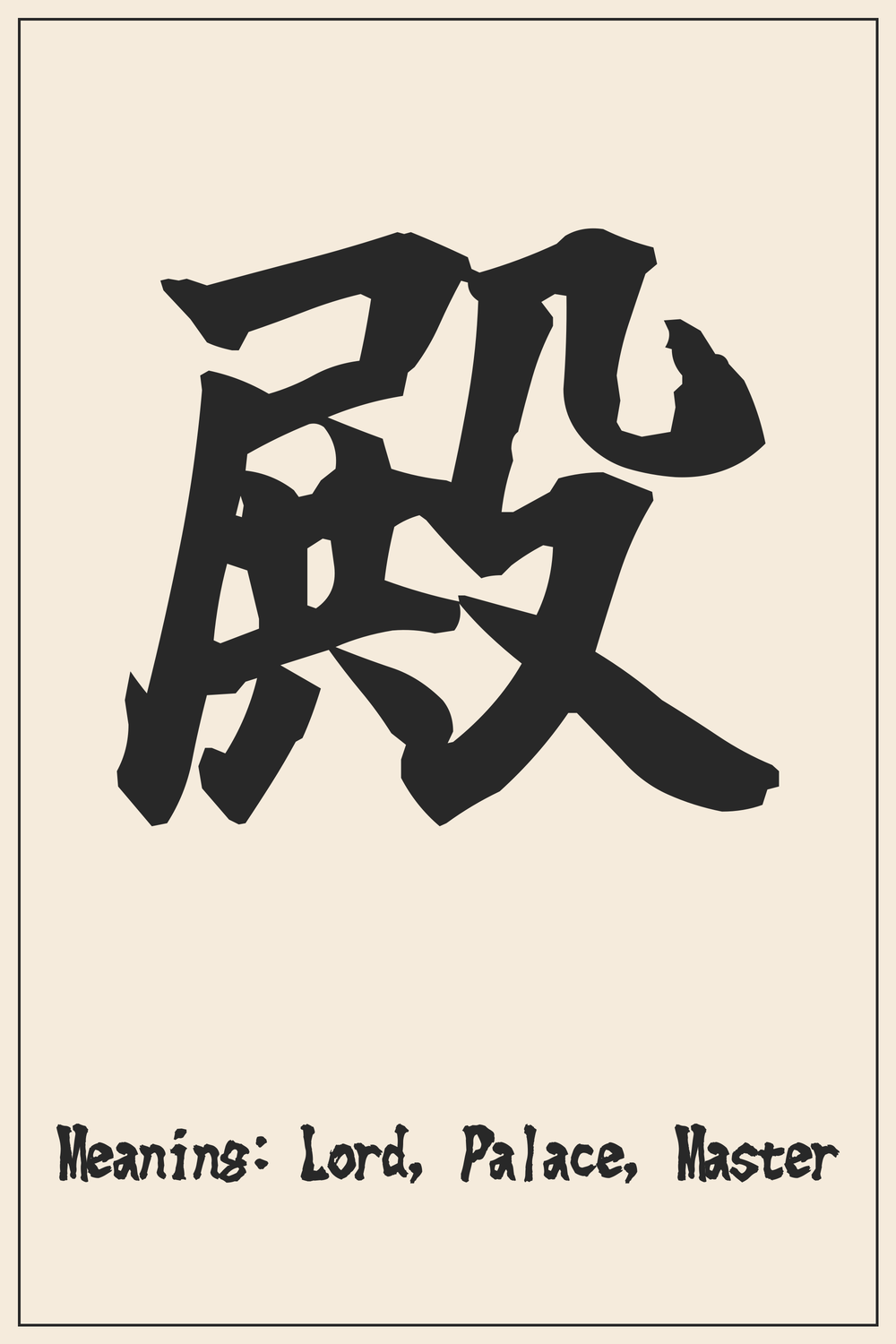
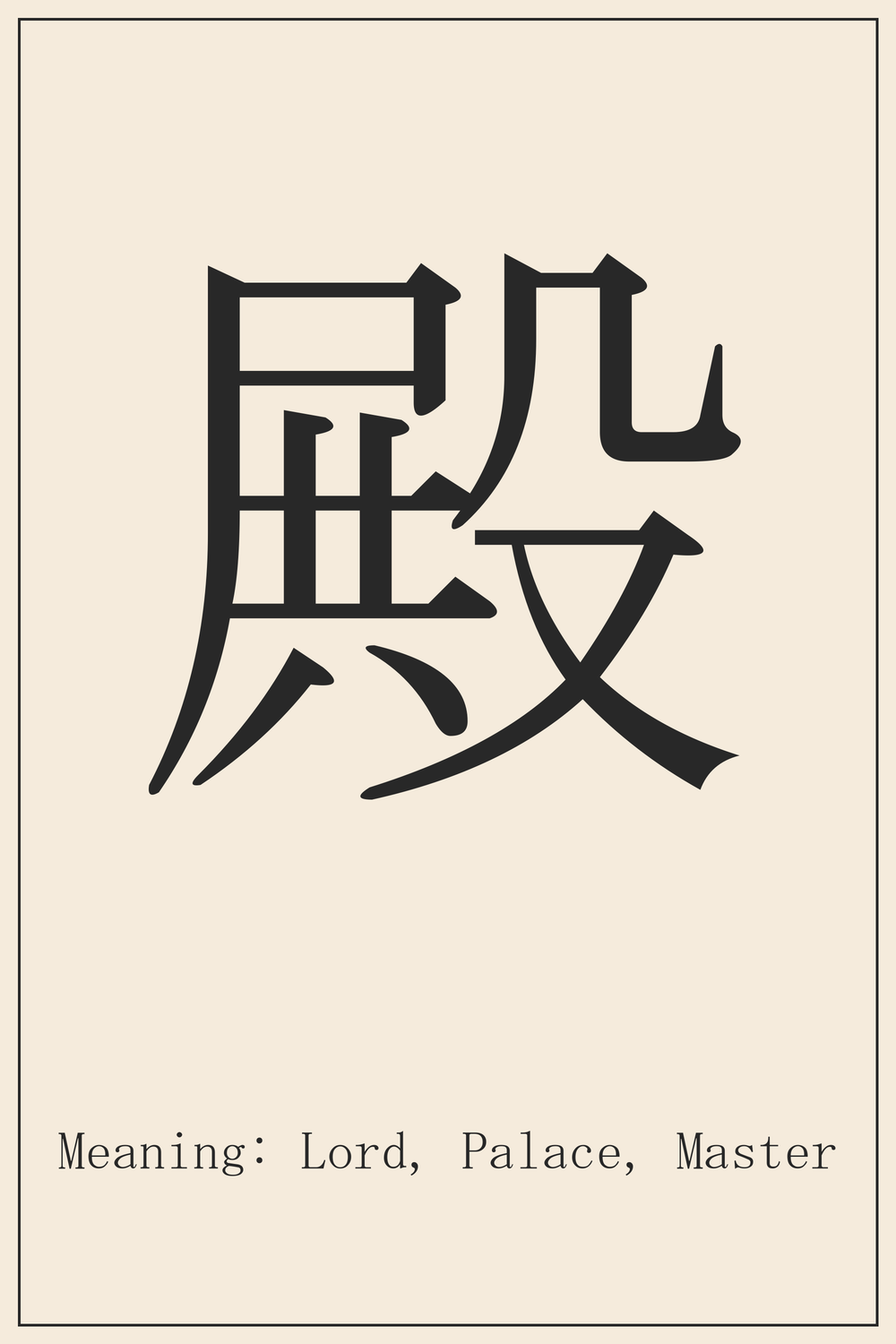
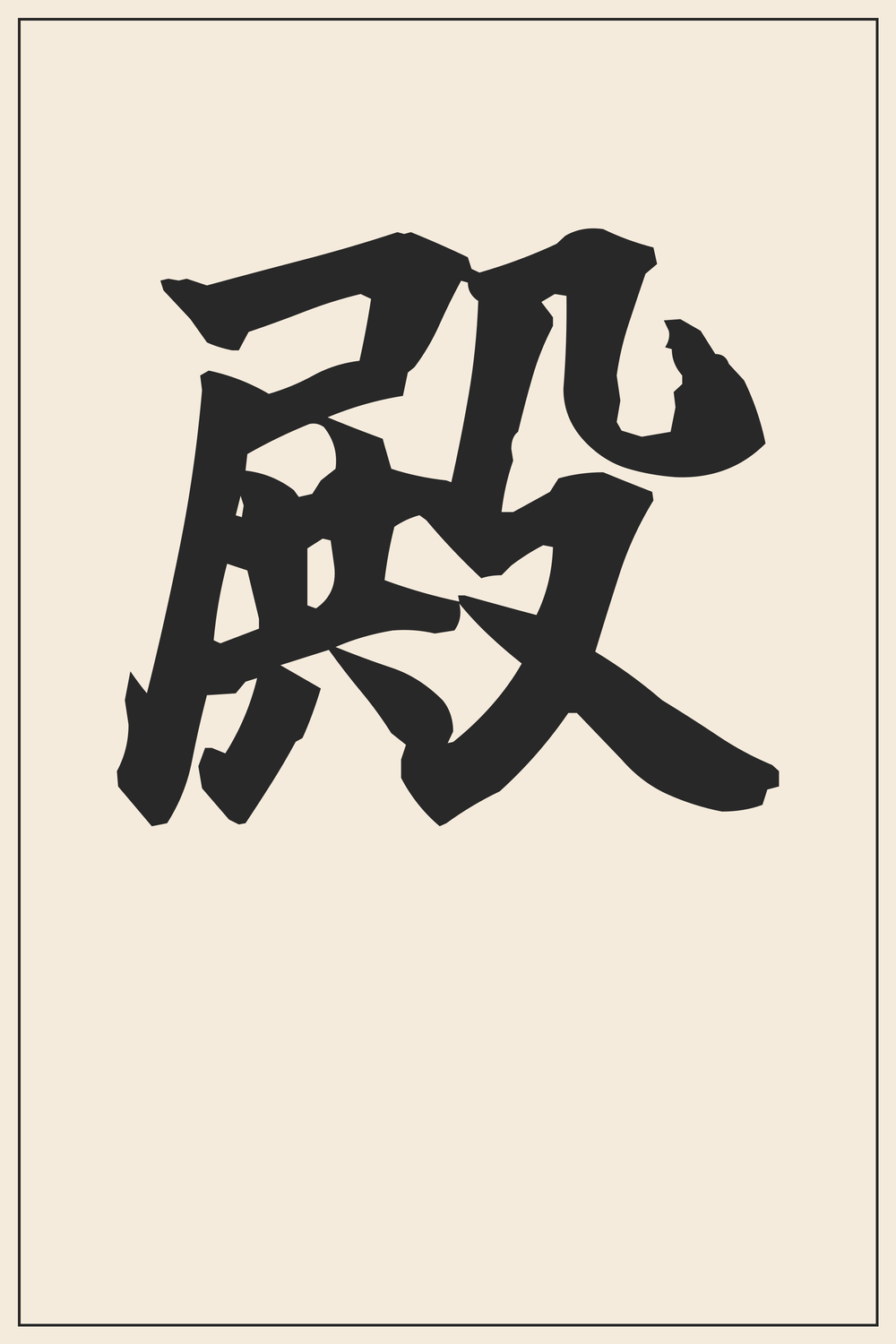
The Kanji 殿 embodies the grandeur of ancient Japanese nobility, representing both a feudal lord and their magnificent residence. It signifies authority, legacy, and a venerable presence.
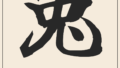
The atmosphere of a Kanji character changes dramatically depending on the font style. A character that looks elegant in a brush style might look bold and modern in a different font.
Recommendation:
Since a tattoo is permanent, we strongly recommend comparing various font styles beyond what is shown here. Use our designs as a trusted reference for the correct structure, but feel free to explore different artistic variations to find the perfect match for your vision.
The Deep Meaning Behind 殿
The character 殿 has ancient roots, possibly depicting a large, impressive building with a prominent roof. Its evolution reflects the concept of a grand structure used for important affairs or as a residence of high status.
Over time, 殿 came to denote not only the ‘palace’ or ‘hall’ itself but also the ‘lord’ or ‘master’ residing within, especially in feudal Japan. It became a respectful suffix, ‘dono’ or ‘tono’, addressing someone of superior rank.
Kanji Breakdown
The character 殿 visually suggests a significant structure and the authority associated with it through its key components.
Meaning: Shelter, Wide. This radical often depicts a building or a roof, contributing the sense of a grand enclosure or dwelling.
Meaning: Weapon, Strike, Action. While seemingly unrelated to a building, 殳 historically signifies action or an implement, subtly hinting at the authority or power wielded by the occupant of such a grand ‘hall.’
Conclusion
In essence, 殿 encapsulates notions of revered leadership, noble status, and impressive architecture. It represents a focal point of power and tradition in Japanese culture.
Choosing 殿 for a tattoo is a powerful statement, linking the wearer to the gravitas of historical Japanese nobility and the enduring presence of significant, stately establishments.
Comments