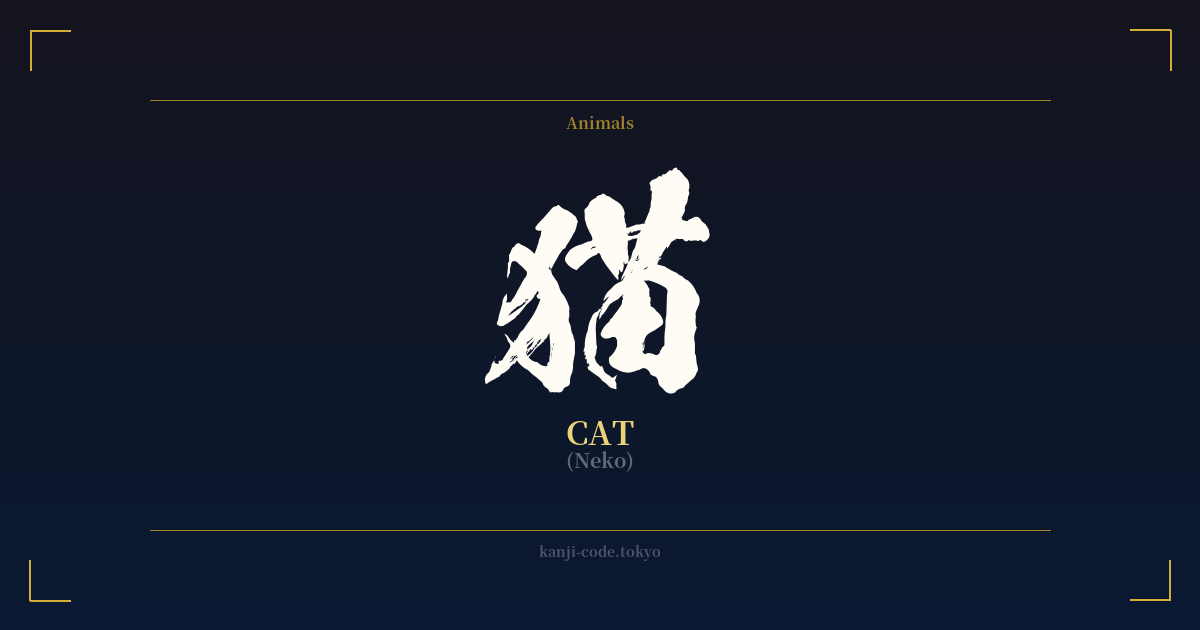
✍️ 猫 (Neko) — Cultural Context
The kanji 猫 (neko) is more than just a word for 'cat'; it's a window into a relationship that has shaped Japanese culture for centuries. Cats were first introduced to Japan from China around the 6th century, primarily to protect precious Buddhist scriptures from mice. Their role was initially practical, but their quiet grace and independent nature soon captivated the Japanese aristocracy.
During the Heian period (794-1185), cats evolved from rodent patrols to pampered pets of the imperial court. Emperor Ichijo was famously so fond of his cat that he bestowed upon it a special court rank. This affection is immortalized in classic literature like 'The Tale of Genji' and 'The Pillow Book,' where cats are depicted as cherished companions, reflecting the aesthetic and sensibilities of the era.
But the Japanese view of cats is dual-sided. Alongside the beloved pet, folklore is filled with supernatural felines. The 'bakeneko' (化け猫), a shapeshifting monster cat, and the 'nekomata' (猫又), a two-tailed spirit, represent a wilder, more mysterious side. These tales often speak of cats exacting revenge for mistreatment or displaying profound loyalty beyond the grave, adding a layer of respect and awe to their image.
Perhaps the most iconic feline symbol is the 'Maneki-neko' (招き猫), the beckoning cat figurine seen in shops and homes across the world. This charm is a powerful symbol of good fortune. A raised right paw is said to bring money, while a raised left paw invites customers or people. The Maneki-neko embodies the cat's transformation into a powerful symbol of prosperity and luck.
In modern Japan, the cat's influence is everywhere. From the globally beloved characters of Hello Kitty and Doraemon to the rise of cat cafes ('neko-kissa'), the animal is a cornerstone of 'kawaii' (cute) culture. Natsume Sōseki's satirical novel, 'I Am a Cat,' uses a feline narrator to critique Meiji-era society, proving the cat remains a potent vehicle for cultural commentary. To choose the kanji 猫 is to embrace this rich tapestry of meaning—luck, independence, mystery, and companionship.
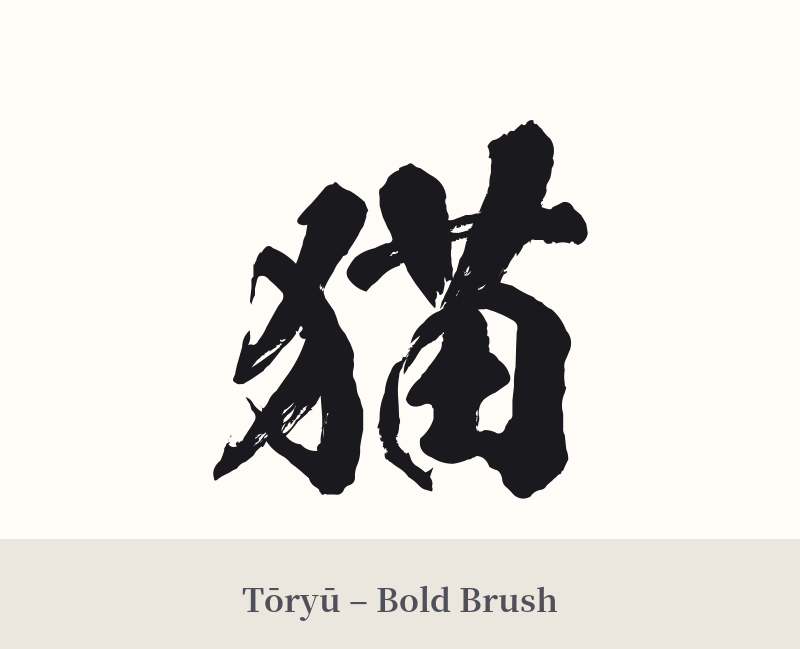
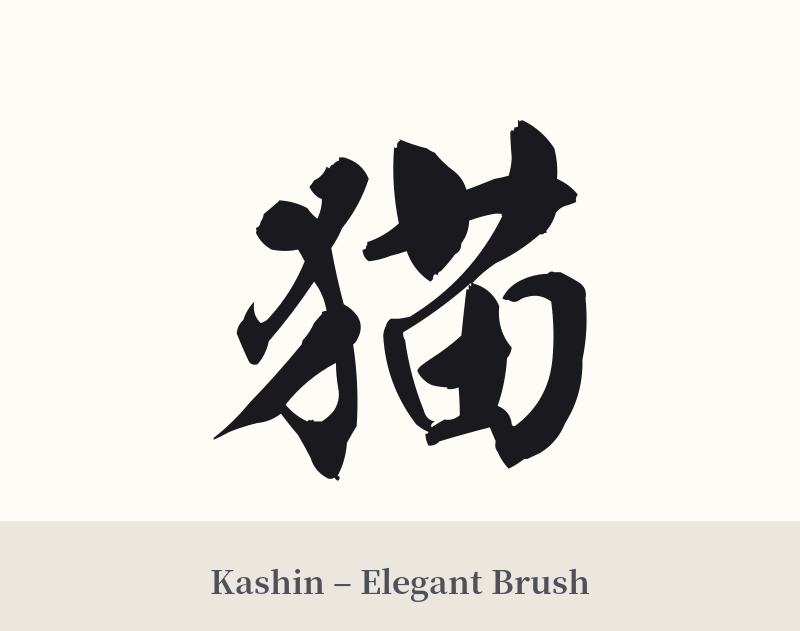
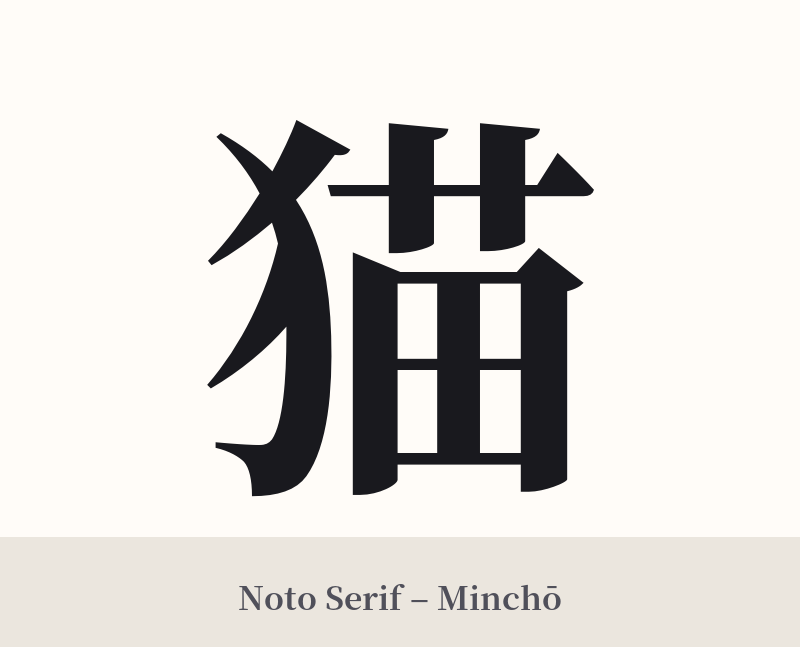
🖌️ Font Styles for 猫
The same kanji can look dramatically different depending on the calligraphy style. Choose a font that matches the mood you want for your tattoo or design.
🎨 Tattoo Suitability
📐 Tattoo Design Guide
The kanji 猫 (neko) offers wonderful versatility for a tattoo design. Its balanced structure works well in a variety of styles and placements.
– Placement: For a small, discreet tattoo, consider the wrist, ankle, or behind the ear. For a more prominent piece, the forearm, calf, or shoulder blade provides a great canvas that complements the character's vertical flow.
– Style: A traditional 'kaisho' (block) font gives it a clean, classic look. For a more dynamic and fluid feel, a 'gyosho' (semi-cursive) or 'sosho' (cursive) calligraphy style can evoke the cat's agility and grace. This can make the character feel more like a personal signature.
– Visual Elements: Consider pairing the kanji with other imagery. You could place it alongside a crescent moon to emphasize its mysterious, nocturnal nature. Combining it with cherry blossoms can create a beautiful design about the fleeting, graceful moments of life. A small red bell or collar can be a subtle nod to the famous 'Maneki-neko' for good luck.
Comments