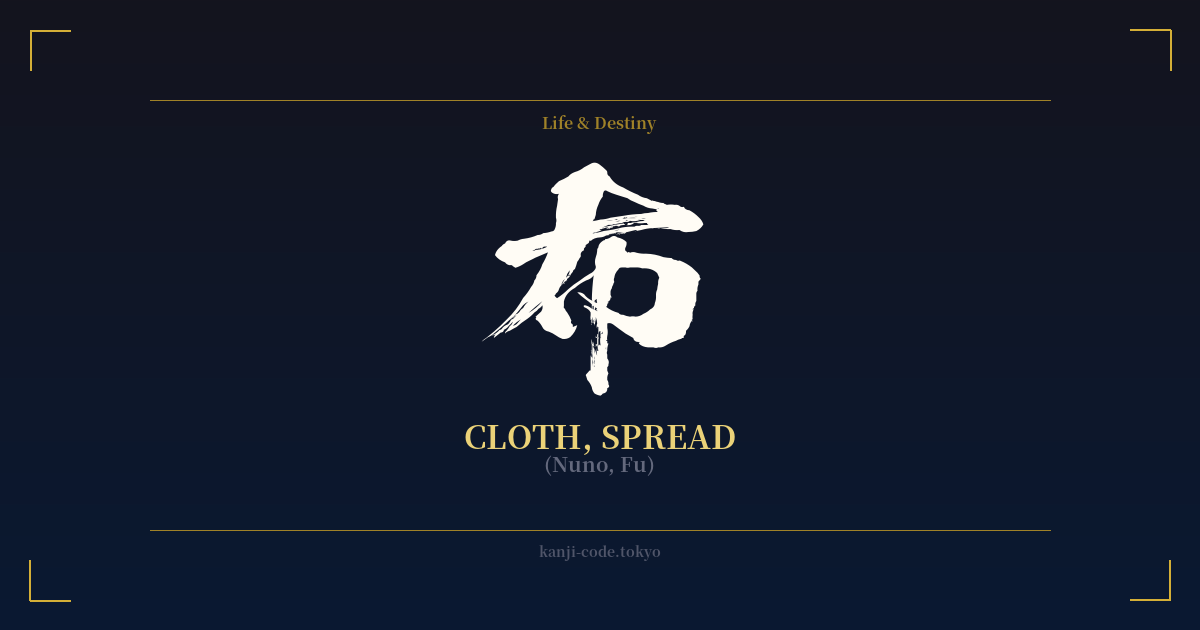
✍️ 布 (Nuno, Fu) — Cultural Context
The kanji 布 (nuno) seems simple at first glance, meaning 'cloth' or 'fabric.' Yet, like a single thread in a grand tapestry, its significance is woven deeply into the fabric of Japanese culture, history, and language.
Its origins are pictographic, a stylized representation of a piece of cloth (巾) and a tool or hand, evoking the fundamental human act of creating and using textiles. This character is a testament to how central the craft of weaving and fabric-making has been to civilization.
In Japan, cloth has never been just a material. It carries immense cultural weight. From the rustic strength of `asa` (hemp) used for commoners' clothing and sacred Shinto ropes, to the luxurious sheen of `kinu` (silk) reserved for the aristocracy and exquisite kimonos, the type of fabric one wore was a direct indicator of social status and occasion.
The character 布 also plays a vital role in the world of the samurai. The iconic banners (`hata-sashimono`) that warriors wore on their backs to identify themselves on the chaotic battlefield were made of cloth, emblazoned with their clan's crest. Here, cloth was not just material; it was identity, allegiance, and a symbol of presence amidst the fray.
Beyond its literal meaning, 布 carries the powerful abstract concept of 'to spread' or 'to deploy,' read as `fu`. This is where the character transcends the mundane. A public proclamation is a `fukoku` (布告), spreading news as if unfurling a great scroll. The Buddhist concept of charity, `fuse` (布施), is the act of spreading compassion and resources to others. The dissemination of knowledge or technology is `fukyū` (普及).
In each case, the image is of laying something out for all to see, covering a wide area, and making something accessible. This dual meaning is reflected in countless everyday words. Your wallet is a `saifu` (財布), literally 'money cloth.' A blanket is a `mōfu` (毛布), or 'fur cloth.' The ubiquitous Japanese bedding is the `futon` (布団), a 'cloth bundle.' This humble kanji is a foundational element, a thread that connects concepts of the material and the abstract, the everyday and the profound.
🖌️ Font Styles for 布
The same kanji can look dramatically different depending on the calligraphy style. Choose a font that matches the mood you want for your tattoo or design.
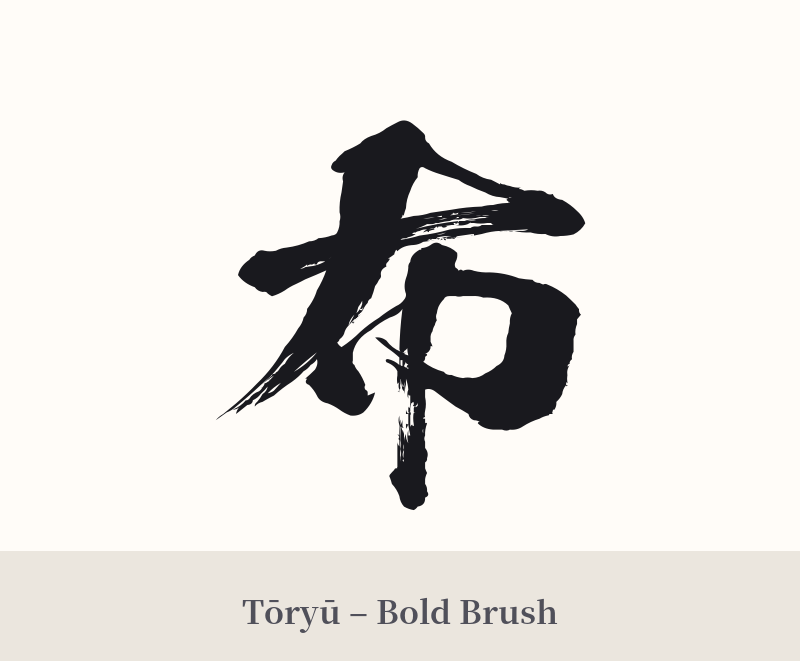
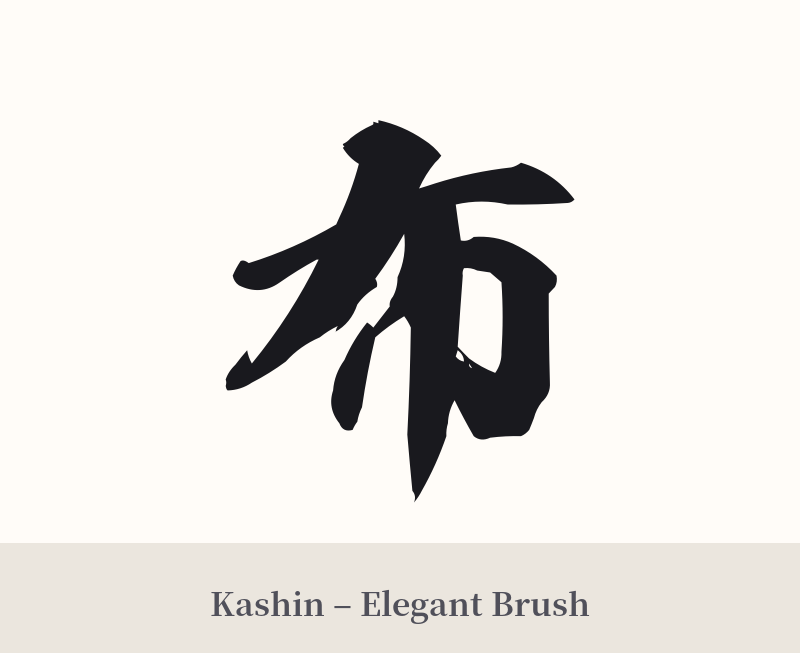
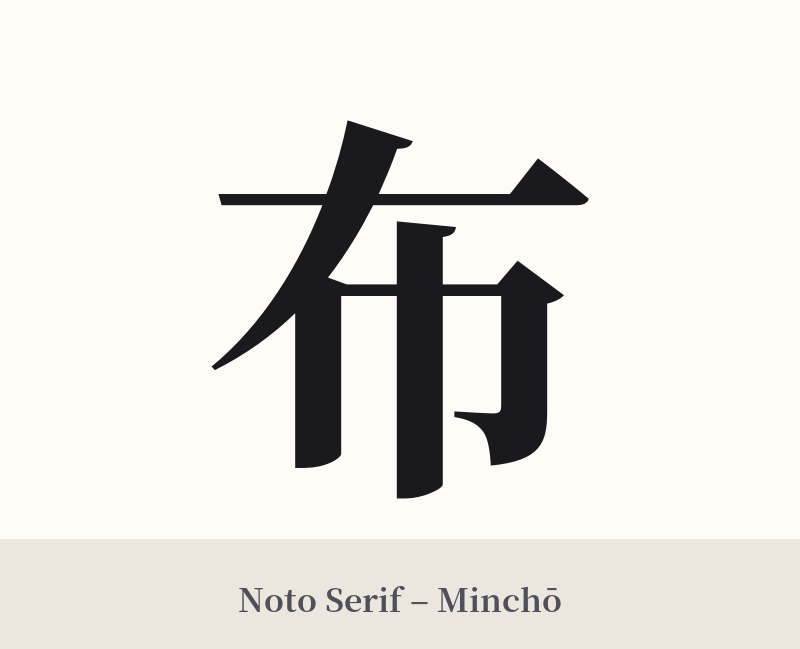
🎨 Tattoo Suitability
📐 Tattoo Design Guide
The simple elegance of 布 offers versatile design options.
– Placement: Its clean form suits small, discreet placements like the inner wrist, behind the ear, or on the ankle. For a larger piece, a bold calligraphic stroke on the forearm or calf can make a powerful statement.
– Style: A semi-cursive `Gyōsho` or fully cursive `Sōsho` style can give the character a flowing, fabric-like quality. For a more solid and traditional look, a standard `Kaisho` block script is an excellent choice.
– Visual Tips: Consider integrating the kanji with a background pattern that resembles a textile weave or a traditional Japanese `asanoha` (hemp leaf) pattern. A watercolor or ink wash effect can mimic dye spreading on cloth, adding a layer of artistry to the design.
Comments