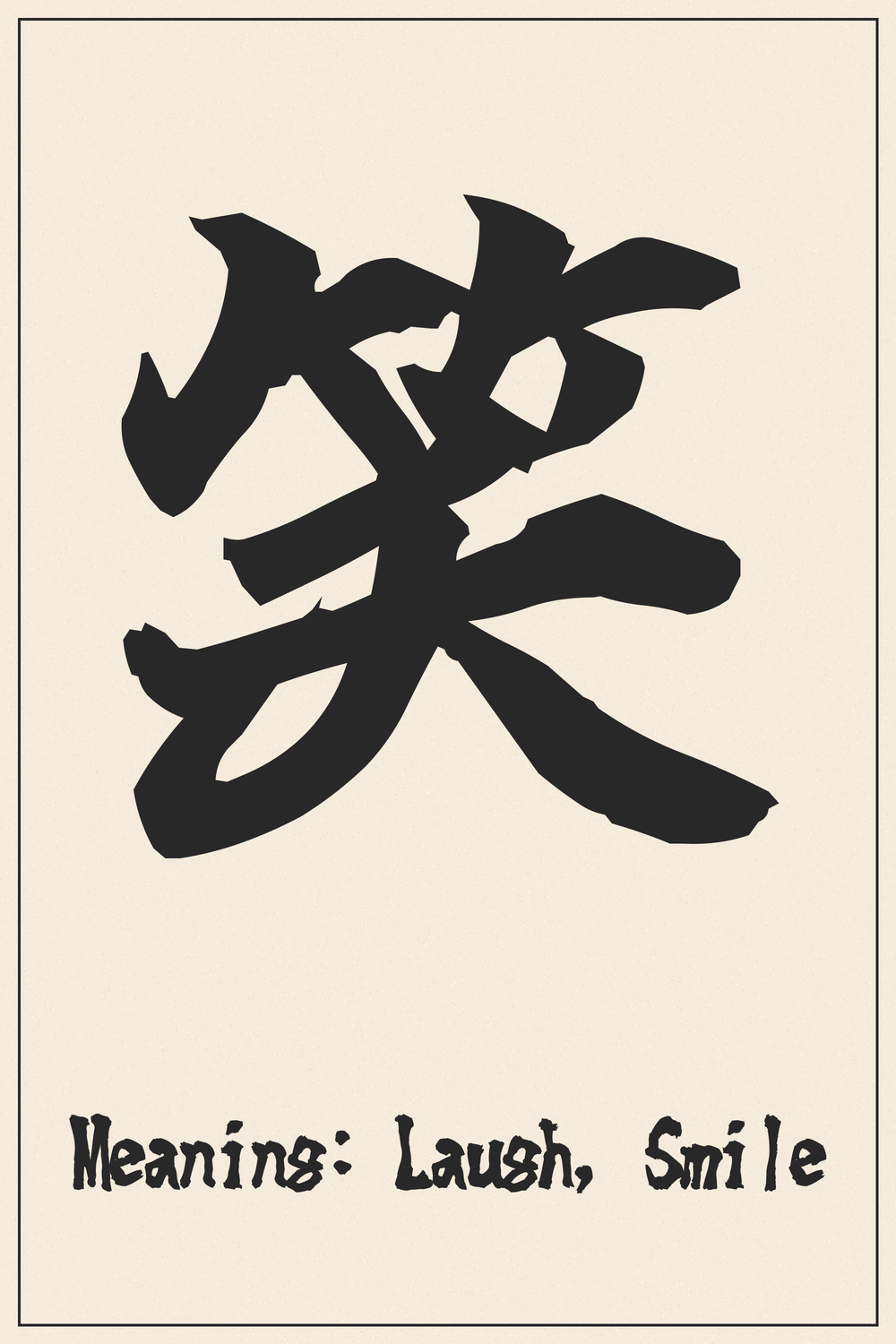
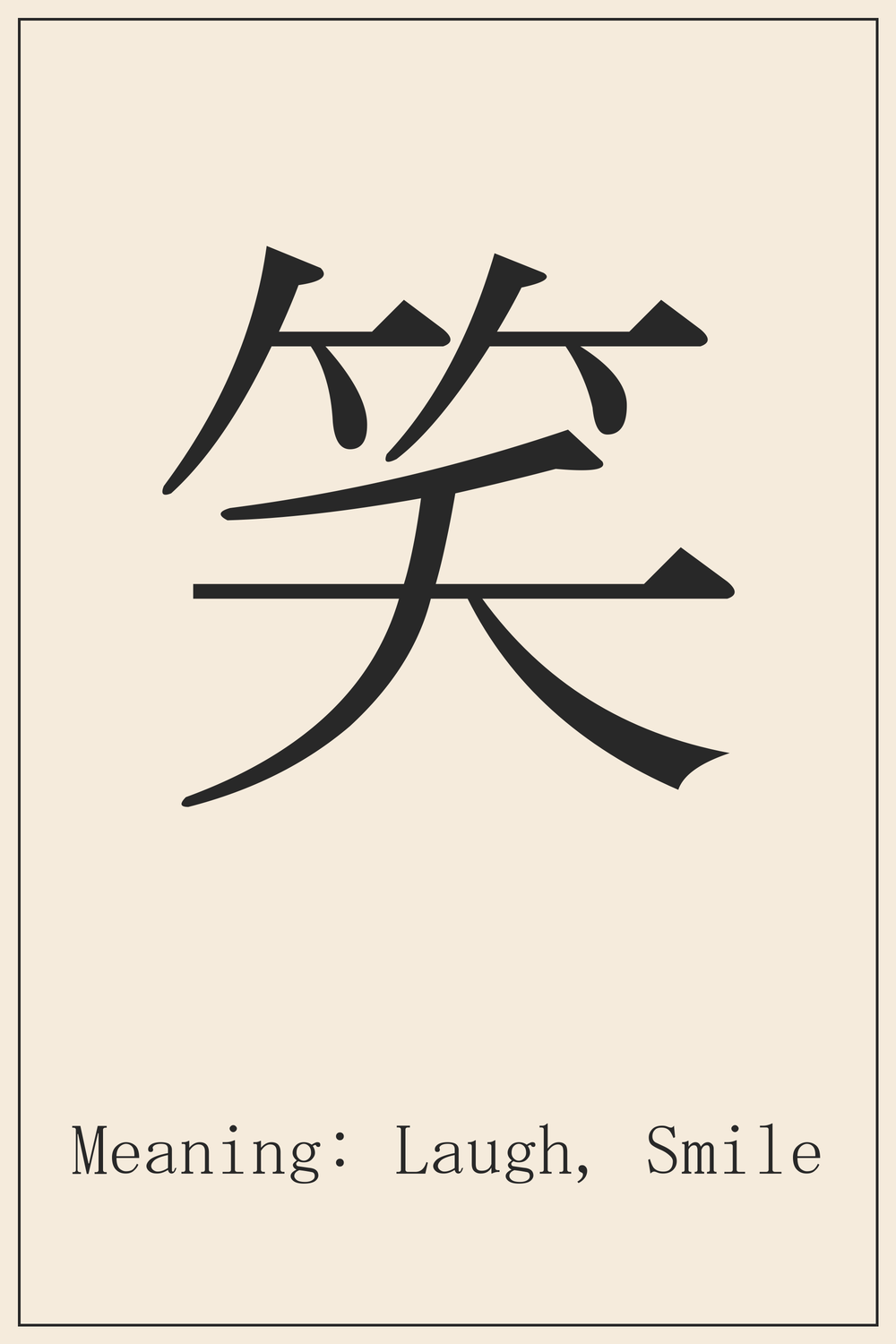
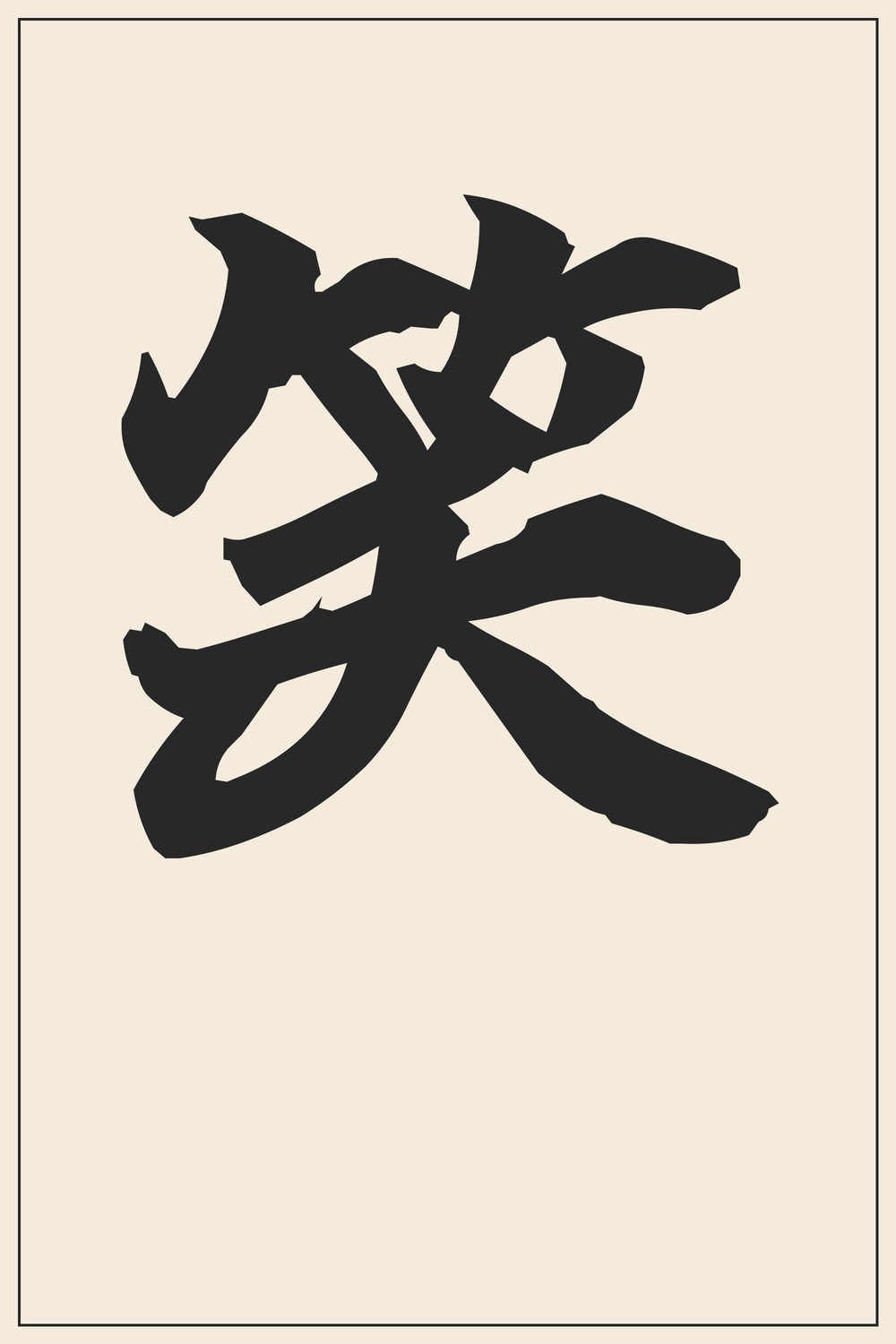
The Kanji 笑 (Emi, Warai) encapsulates the profound human expressions of laughter and smiling. It represents the innate joy and warmth that connect us, a powerful symbol of positivity and emotional resilience.
The atmosphere of a Kanji character changes dramatically depending on the font style. A character that looks elegant in a brush style might look bold and modern in a different font.
Recommendation:
Since a tattoo is permanent, we strongly recommend comparing various font styles beyond what is shown here. Use our designs as a trusted reference for the correct structure, but feel free to explore different artistic variations to find the perfect match for your vision.
The Deep Meaning Behind 笑
The character 笑 has ancient roots, depicting the physical act of expressing joy. Its early forms combine elements that suggest a person with an open mouth, making a sound. Over time, this evolved to clearly represent the concepts of both laughter and smiling, embodying a fundamental human emotion.
In Japanese culture, 笑 is deeply cherished, often symbolizing warmth, positivity, and a lighthearted spirit. It represents not just fleeting happiness but also a sense of enduring optimism and the ability to find joy even amidst difficulties, a concept sometimes referred to as ‘laughing off troubles.’
Kanji Breakdown
The Kanji 笑 is composed of two main elements that contribute to its form and historical meaning:
Meaning: This top component, often resembling a variant of the ‘bamboo’ radical (竹) or a ‘hat’/’covering’ element, historically conveyed an aspect of sound or perhaps the upward movement associated with laughter.
Meaning: Primarily acting as a phonetic component (Yāo in Chinese), this element also carries meanings like ‘young’ or ‘bent’. In the context of 笑, it combines with the upper part to form the complete character representing laughter and smiling.
Conclusion
The Kanji 笑 is a beautiful and universally resonant symbol, embodying the pure essence of human joy, happiness, and connection. Its simple yet profound meaning makes it a powerful emblem for anyone wishing to carry a reminder of positivity and lightheartedness.
Choosing 笑 for a tattoo is a declaration of embracing life’s brighter side and an affirmation of the strength found in a simple smile or hearty laugh. It’s a timeless design that radiates warmth and optimism, making it a truly inspiring choice.
Comments