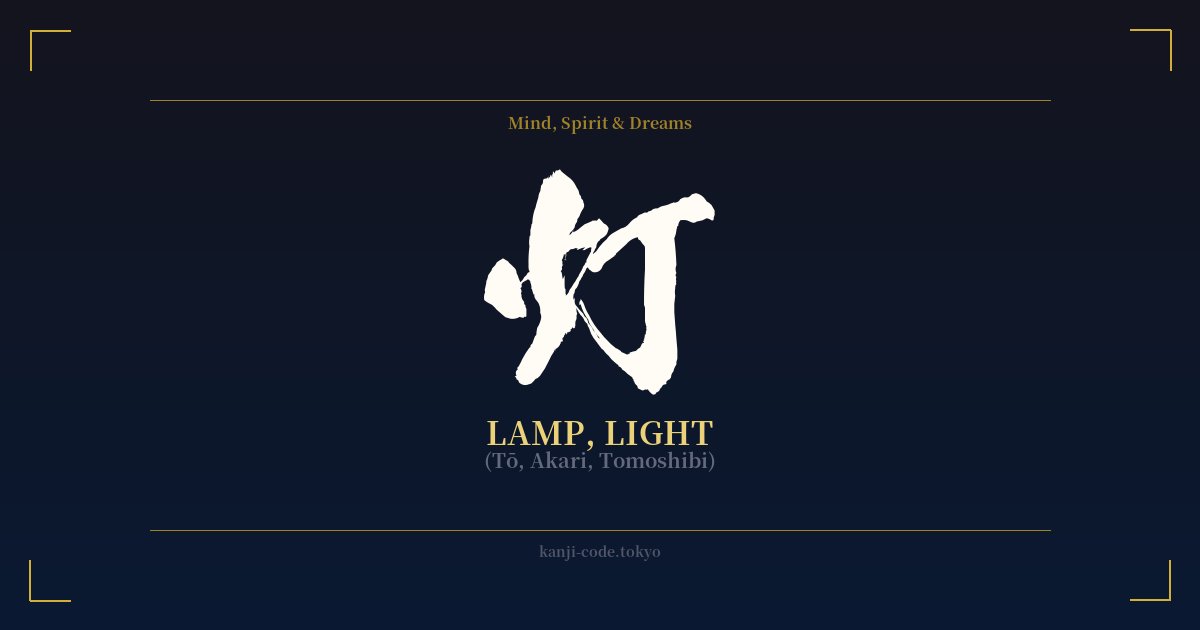
✍️ 灯 (Tō, Akari, Tomoshibi) — Cultural Context
The kanji 灯 (tō, akari) is a beautiful and evocative character that captures much more than its literal translation of 'lamp' or 'light'. Its origin story is visually intuitive: the character is a combination of 火 (hi), meaning 'fire', and a phonetic component 丁 (chō) that originally depicted a nail or post. Together, they create the image of a fire on a stand—a primitive lamp, a beacon against the dark.
In its most direct sense, 灯 refers to any man-made source of light. This includes everything from the traditional paper-enclosed andon (行灯) and festive chōchin (提灯) lanterns to the modern electric light (電灯, dentō) and the life-saving beam of a lighthouse (灯台, tōdai). These traditional forms of lighting are central to Japanese aesthetics, casting soft, shifting shadows that create an atmosphere of intimacy and mystery, a concept famously explored by Jun'ichirō Tanizaki in his essay "In Praise of Shadows."
Beyond the physical, 灯 carries deep metaphorical weight. It is a powerful symbol of hope, a single point of light that promises safety and pushes back despair. It represents guidance, like a lighthouse showing a ship the way home through a storm. This extends to intellectual and spiritual realms, where 'shedding light' on a subject means achieving understanding or enlightenment. A single 'tomoshibi' (灯) is a small flame, but it represents the enduring human spirit, knowledge passed down, or a cherished memory that warms the heart.
This symbolism is woven into Japanese culture and language. The proverb 「灯台下暗し」(tōdai moto kurashi), literally "it is dark at the base of the lighthouse," is a well-known idiom equivalent to not seeing what is right under your nose. During the Obon festival, families may participate in tōrō nagashi (灯籠流し), where they float paper lanterns down a river to guide the spirits of their ancestors back to the other world. This poignant ritual imbues the simple light of a lantern with profound spiritual significance.
Therefore, 灯 is not just an object. It is a concept representing the delicate yet persistent flame of hope, the warmth of human connection, the clarity of knowledge, and the quiet guidance that helps us navigate the darkness, both literal and figurative.
🖌️ Font Styles for 灯
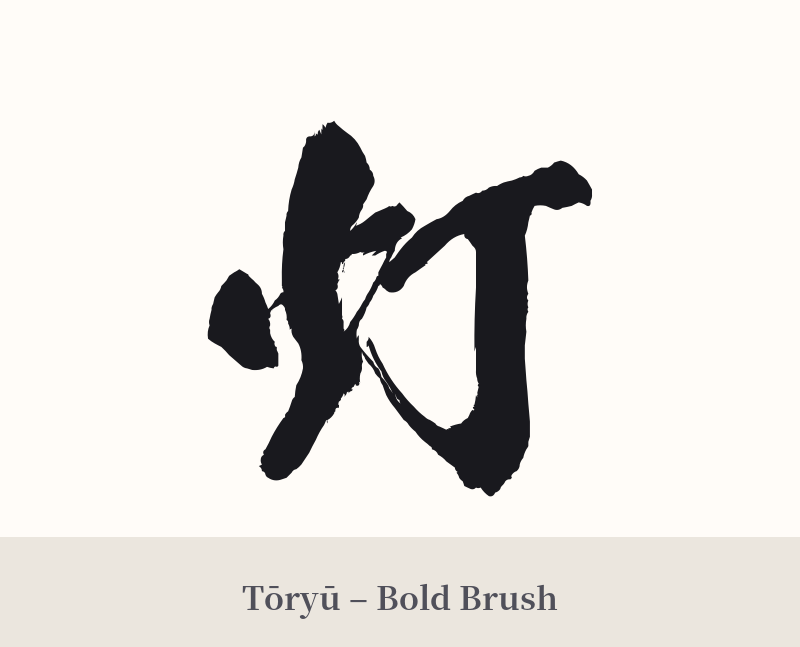
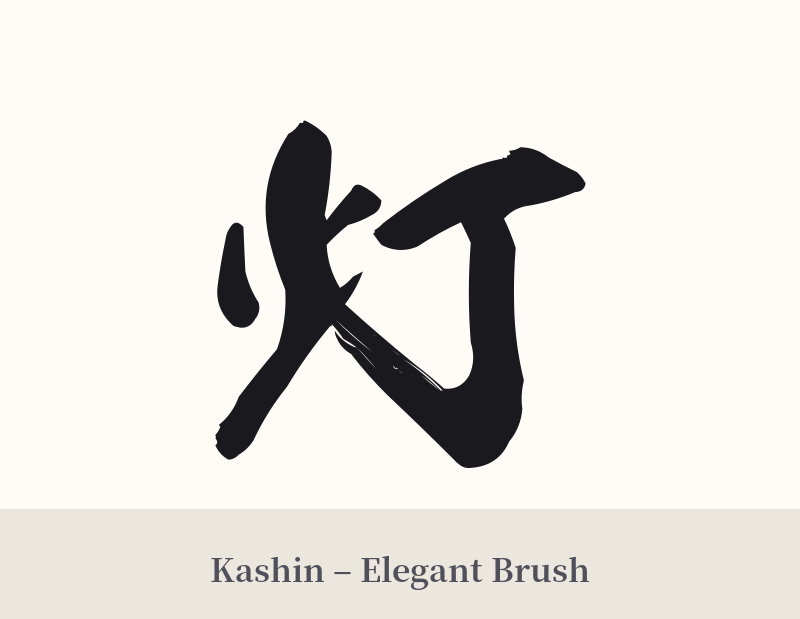
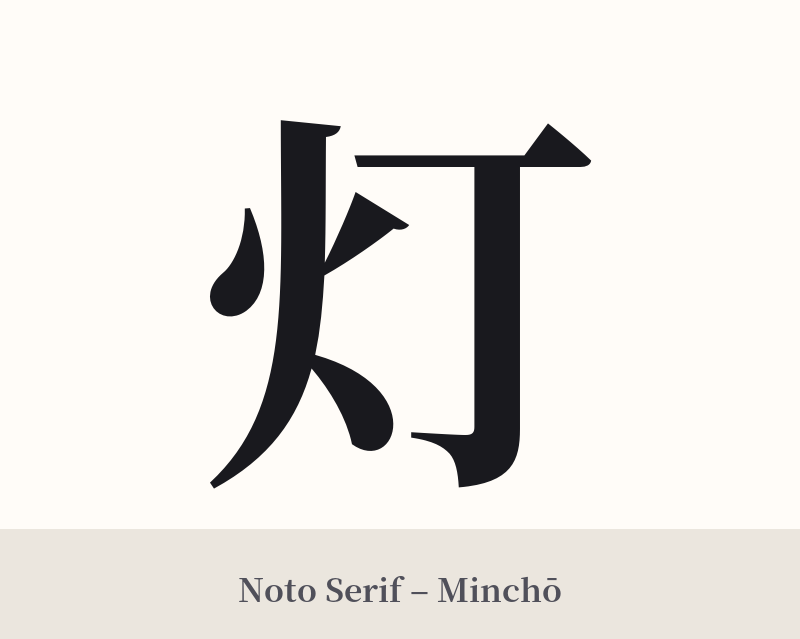
The same kanji can look dramatically different depending on the calligraphy style. Choose a font that matches the mood you want for your tattoo or design.
🎨 Tattoo Suitability
📐 Tattoo Design Guide
The gentle and profound nature of 灯 (tō) lends itself to thoughtful and elegant tattoo designs.
– Placement: Due to its simplicity, it works beautifully in small, personal locations. Consider the inner wrist, behind the ear, on the ankle, or near the collarbone. These placements complement its meaning as a personal guiding light. For a larger piece, it can be a serene centerpiece on the forearm or calf.
– Font Style: A flowing, cursive script (sōsho) can mimic the gentle flicker of a flame, adding a sense of life and movement. A semi-cursive style (gyōsho) offers a balance of elegance and legibility. For a more traditional and stable feel, a classic Mincho font with its fine details is an excellent choice.
– Visual Tips: To enhance its meaning, consider incorporating subtle elements. A small wisp of smoke rising from the top stroke, placing the kanji inside an Ensō (Zen circle) to symbolize enlightenment, or pairing it with a delicate moth drawn to its light are all powerful options. However, its minimalist beauty often shines brightest when left unadorned.
Comments