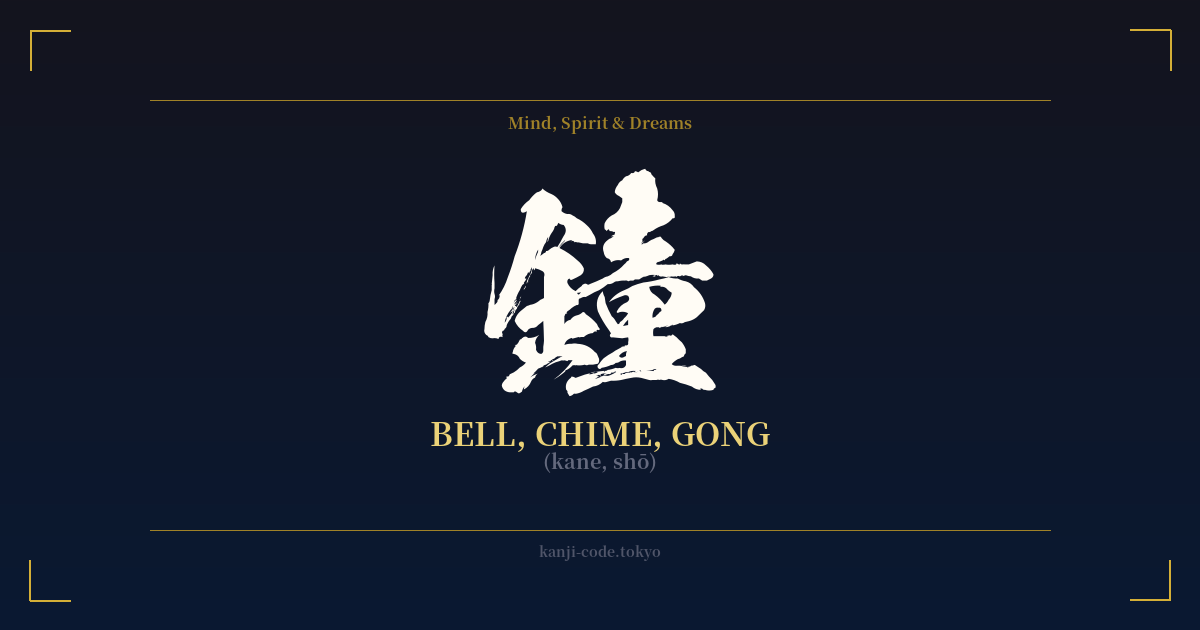
✍️ 鐘 (kane, shō) — Cultural Context
The kanji 鐘 (kane) is more than just a character for 'bell'; it's a resonant symbol deeply embedded in the soundscape and spiritual life of Japan. Its very structure hints at its meaning, combining the radical 金 (kin), meaning 'metal' or 'gold', with the phonetic component 童 (dō/shō). This immediately grounds the character in the physical world of cast metal instruments.
In Japan, the most iconic image associated with 鐘 is the 梵鐘 (bonshō), the large, suspended bells found at Buddhist temples. These are not rung with an internal clapper but struck from the outside with a large wooden beam. The sound is not a sharp clang but a deep, reverberating hum that slowly fades into silence. This sound is considered a physical manifestation of Buddhist teachings, particularly 無常 (mujō), the concept of impermanence. The famous opening lines of 'The Tale of the Heike' state that 'the sound of the Gion Shōja bells echoes the impermanence of all things,' cementing this connection in the Japanese literary and cultural consciousness.
The most famous ritual involving the 鐘 is 除夜の鐘 (Joya no Kane), which takes place on New Year's Eve. Temple bells across Japan are struck 108 times, a practice believed to cleanse humanity of the 108 worldly desires (煩悩, bonnō) outlined in Buddhism. Each strike is slow and deliberate, allowing the sound to fully dissipate before the next, creating a meditative atmosphere as the old year gives way to the new. This ritual is a national event, often broadcast on television, and for many, hearing the sound of the temple bell is an essential part of the New Year experience.
Beyond the grand temple bells, the character also appears in words for smaller, everyday chimes. The 風鈴 (fūrin), or wind chime, is a beloved symbol of Japanese summer. Its delicate tinkling is believed to create a feeling of coolness in the heat and was traditionally thought to ward off evil spirits. Whether a massive temple gong or a small glass chime, the sound of the 鐘 marks a moment, invites contemplation, and connects the listener to a deep current of Japanese tradition and spirituality.
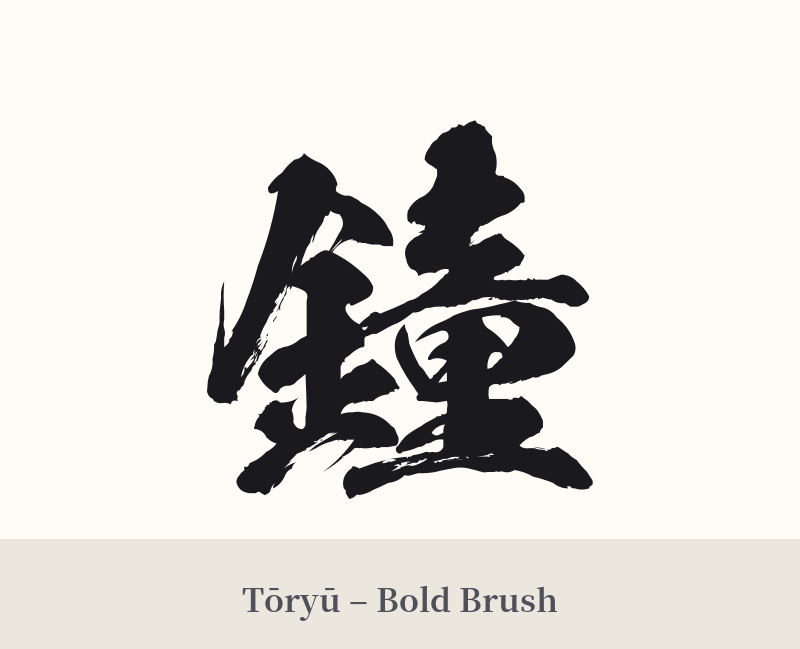
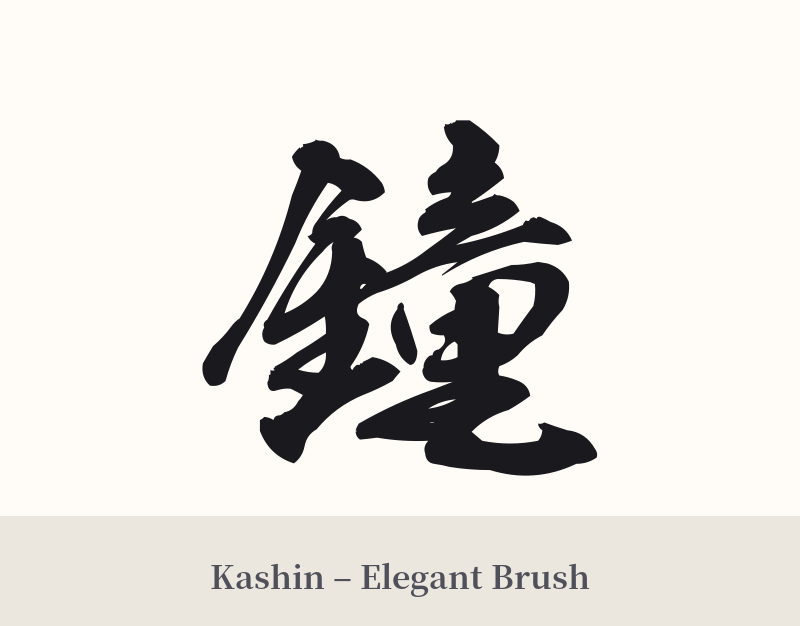
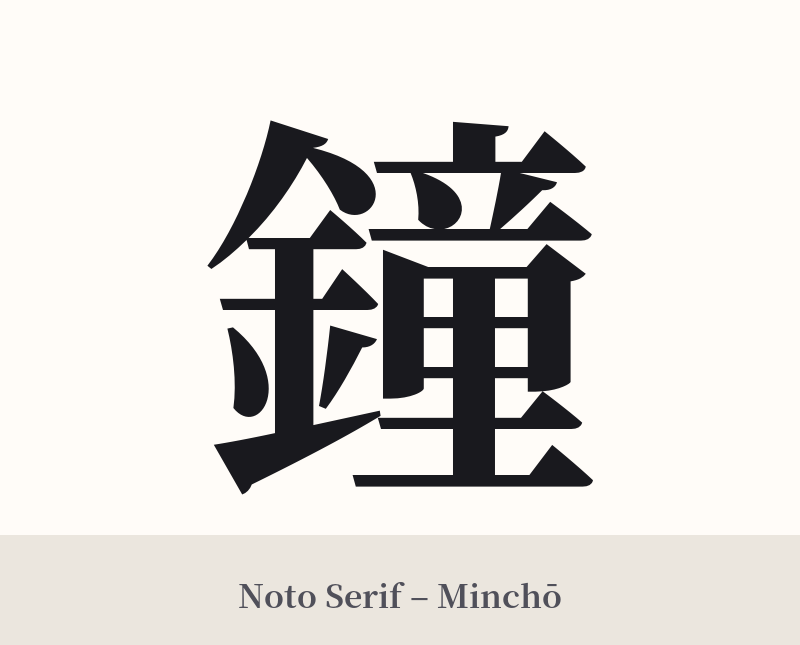
🖌️ Font Styles for 鐘
The same kanji can look dramatically different depending on the calligraphy style. Choose a font that matches the mood you want for your tattoo or design.
🎨 Tattoo Suitability
📐 Tattoo Design Guide
A tattoo of 鐘 works well as a statement piece due to its cultural depth and visual complexity. It carries a sense of serenity and tradition.
– Placement: Consider vertical placements like the forearm, the calf, or along the spine to complement the character's balanced, rectangular shape. The back of the shoulder or the chest also provide a good canvas to ensure enough space for detail.
– Size: Avoid making this tattoo too small. Its 20 strokes require space to be rendered clearly. A small, cramped design will lose its elegance and may become an indistinct shape over time.
– Style: A traditional calligraphy style like Gyosho (semi-cursive) can give the character a fluid, artistic energy. For a more formal and powerful look, a bold Kaisho (block script) is an excellent choice. You could also incorporate the kanji into a larger design, such as having it near an image of a Japanese temple bell (bonshō) or a dragon, which are often depicted on the bells themselves.
Comments