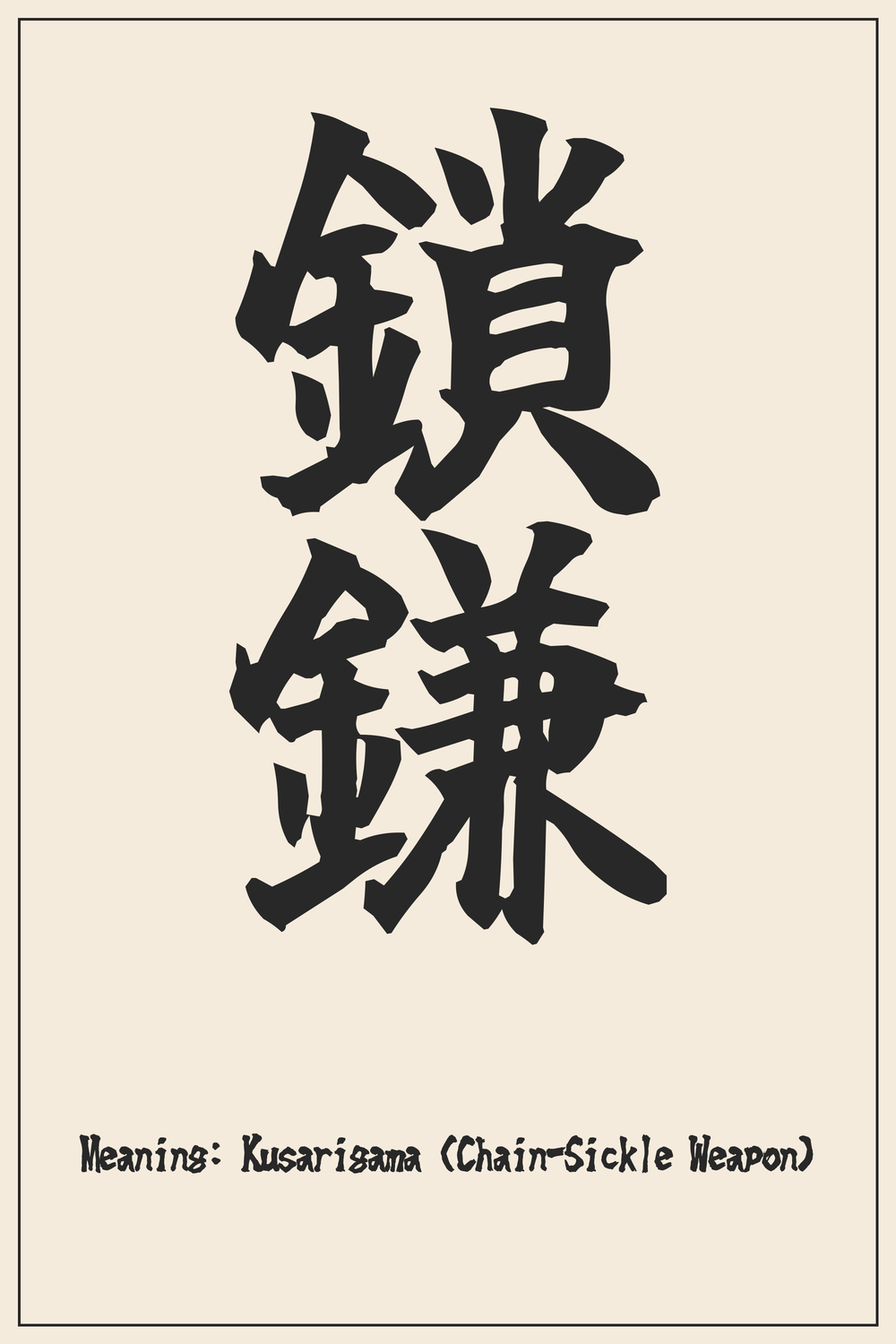
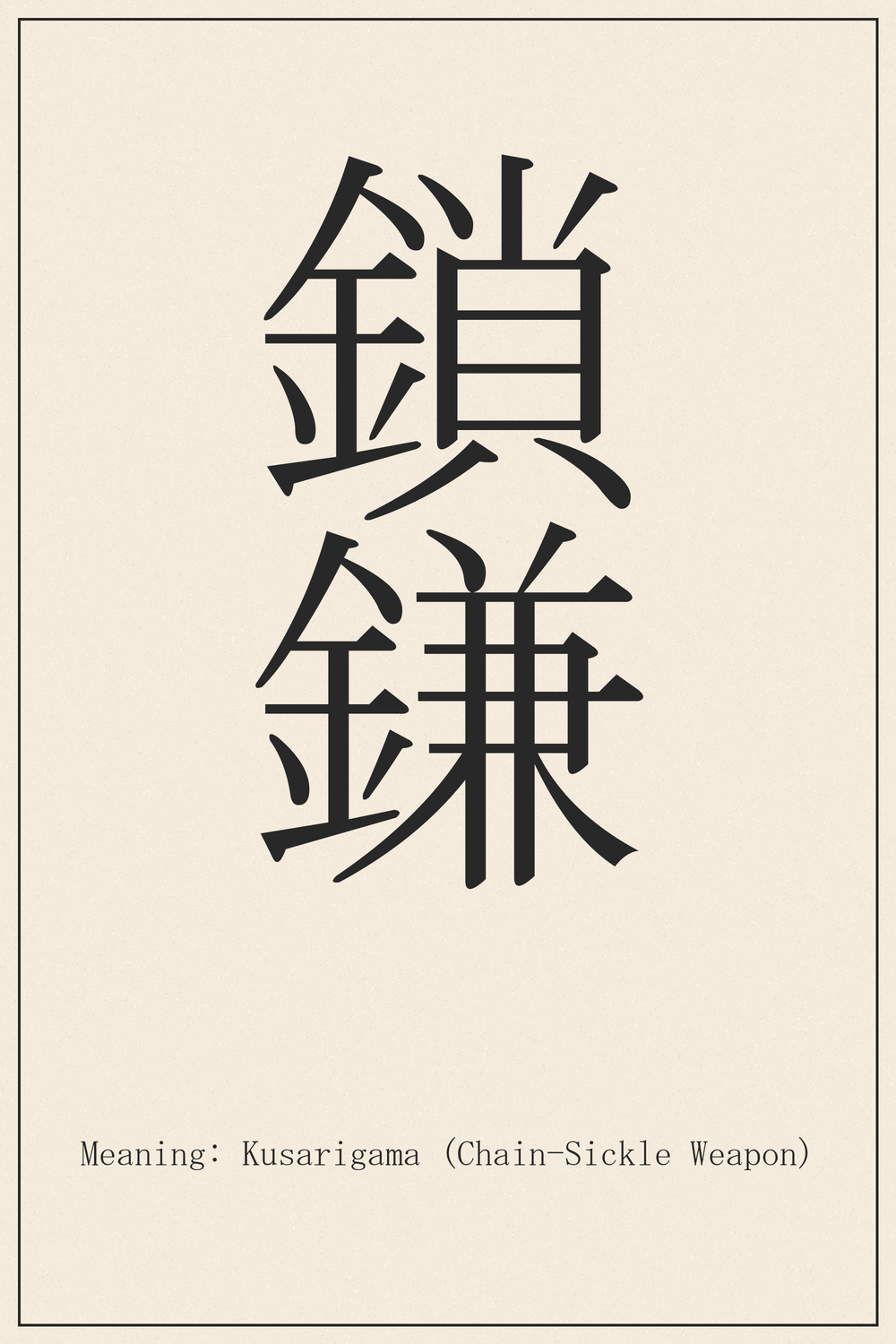
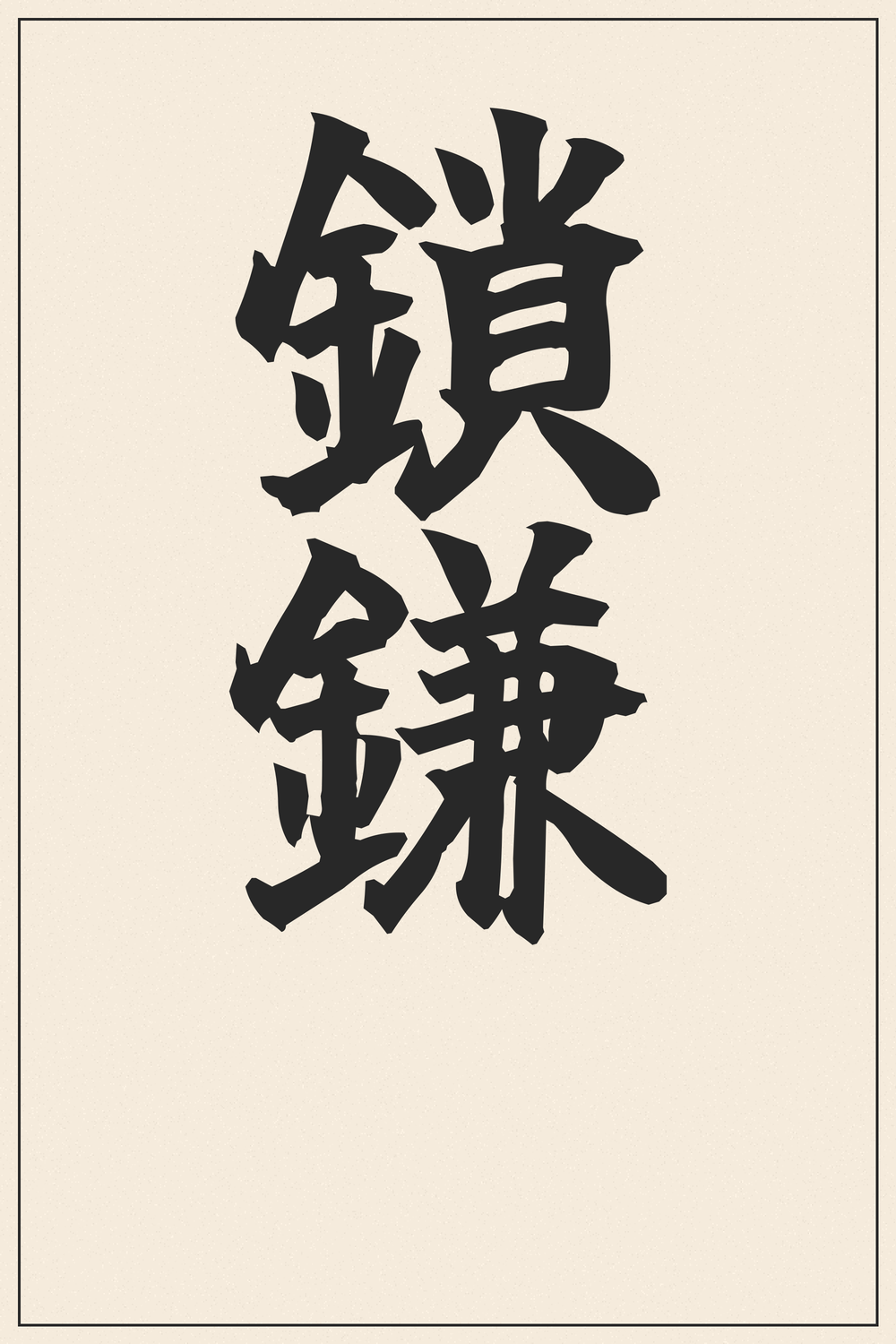
The Kanji 鎖鎌 represents the kusarigama, an iconic Japanese chain-and-sickle weapon renowned for its versatility and deadly precision. It embodies the art of unconventional combat and the strategic mind of its wielder.
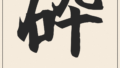
The atmosphere of a Kanji character changes dramatically depending on the font style. A character that looks elegant in a brush style might look bold and modern in a different font.
Recommendation:
Since a tattoo is permanent, we strongly recommend comparing various font styles beyond what is shown here. Use our designs as a trusted reference for the correct structure, but feel free to explore different artistic variations to find the perfect match for your vision.
The Deep Meaning Behind Kusarigama
The term 鎖鎌 (Kusarigama) refers to a traditional Japanese weapon, famously depicted in various martial arts and historical narratives. It combines a kama (a farming sickle) with a kusari (chain) that often features a heavy metal weight at its end, making it a highly versatile and formidable tool.
Originating from agricultural tools, the kusarigama evolved into a sophisticated weapon used by samurai, ninja, and other martial artists. Its unique design allowed for both close-quarters combat with the sickle and ranged attacks or entanglement with the chain, reflecting adaptable and strategic fighting styles.
Kanji Breakdown
The term 鎖鎌 is a compound word formed by two individual Kanji characters, each contributing to the weapon’s identity.
Meaning: Chain, to chain. This character combines 金 (kin), meaning ‘metal’, indicating the material of a chain, with 𠷡 (sa), which suggests a winding or binding action, forming the concept of a ‘chain’.
Meaning: Sickle. This Kanji also features the radical 金 (kin), ‘metal’, indicating that the sickle is a metal tool. The right component, 兼 (ken), means ‘to combine’ or ‘to hold two things’, potentially alluding to the dual function or design of the sickle for cutting and hooking.
Conclusion
The Kanji 鎖鎌 encapsulates the essence of an ancient, multi-faceted weapon, symbolizing adaptability, strategic thought, and the mastery of diverse combat techniques. It is a powerful emblem for those who appreciate historical martial arts and the ingenuity of traditional Japanese weaponry.
Choosing 鎖鎌 as a tattoo signifies not just an appreciation for its historical context but also a connection to the principles of unexpected strength and resourceful combat. Its intricate strokes make it a visually engaging piece, best rendered by a skilled artist to fully capture its detailed complexity.
Comments