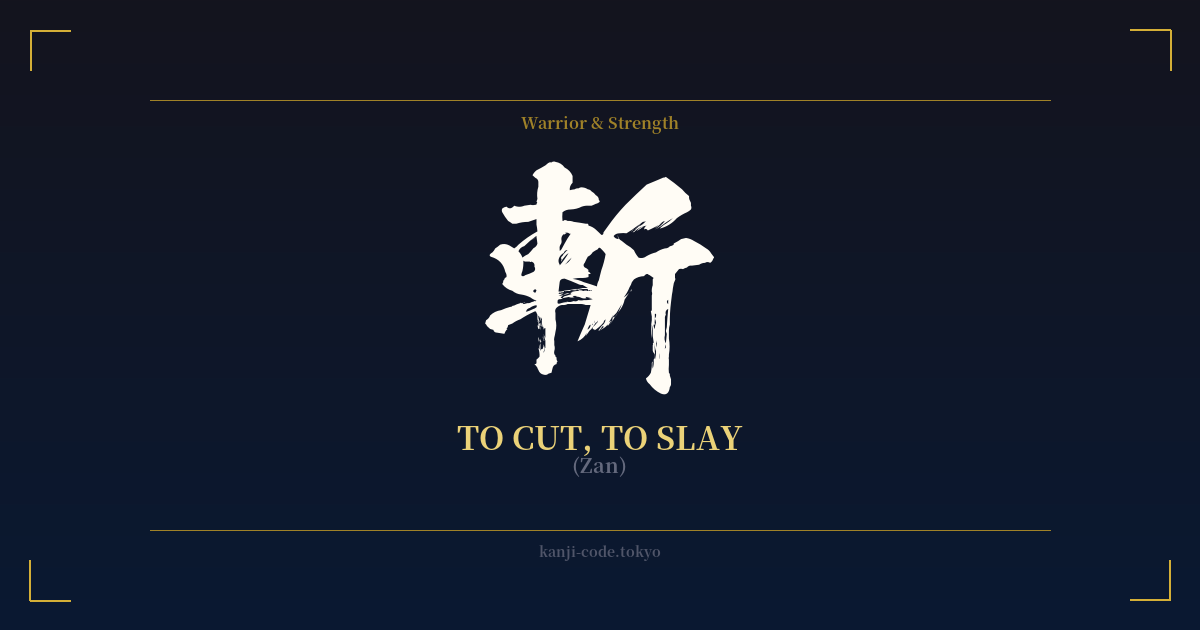
✍️ 斬 (Zan) — Cultural Context
The kanji 斬 (Zan) carries a weight and finality that few characters can match. It goes far beyond the simple act of cutting, as suggested by the more common character 切 (kiru). 斬 specifically denotes the act of slaying, killing, or beheading with a blade, most often a sword. Its very essence is tied to the heart of Japanese warrior culture and the samurai.
The character's origin tells a grim story. It is a compound of 車 (kuruma), meaning 'cart' or 'wheel,' and 斤 (kin), a radical representing an 'axe.' Historically, this combination is believed to depict an ancient form of execution where a person was dismembered by a wheeled contraption and an axe. This brutal etymology cements its meaning as an act of ultimate, decisive, and often violent conclusion.
In the world of the samurai, 斬 was the verb that defined their purpose on the battlefield. The skill of a swordsman was measured by his ability to execute a perfect cut. This is reflected in concepts like 'zanshin' (残心), the state of continued alertness and spiritual follow-through after a strike. The physical act of 斬 was intrinsically linked to a mental and spiritual state of total commitment and awareness.
While its core meaning is violent, 斬 also possesses a powerful metaphorical dimension, particularly influenced by Zen philosophy. It can represent the act of 'cutting away' illusions, worldly desires, negative thoughts, or indecision. To achieve enlightenment or clarity, one must 'slay' the ego and the attachments that cloud the mind. In this sense, 斬 embodies a fierce and uncompromising pursuit of purity and truth.
This duality makes it a popular motif in modern Japanese culture, especially in manga, anime, and video games. Countless characters wield swords with names incorporating 斬, and special attacks are often named with it to emphasize their lethal power. The famous anime title 'Demon Slayer' (鬼滅の刃, Kimetsu no Yaiba) is built around this concept, though it uses a different kanji for 'slay'. A more direct example would be a term like 'Onigiri' (鬼斬り), which literally means 'demon slaying'. Interestingly, 斬 is also a component of the word 斬新 (zanshin), which means 'novel,' 'original,' or 'innovative'—as if to 'cut' a new path forward, breaking from tradition.
🖌️ Font Styles for 斬
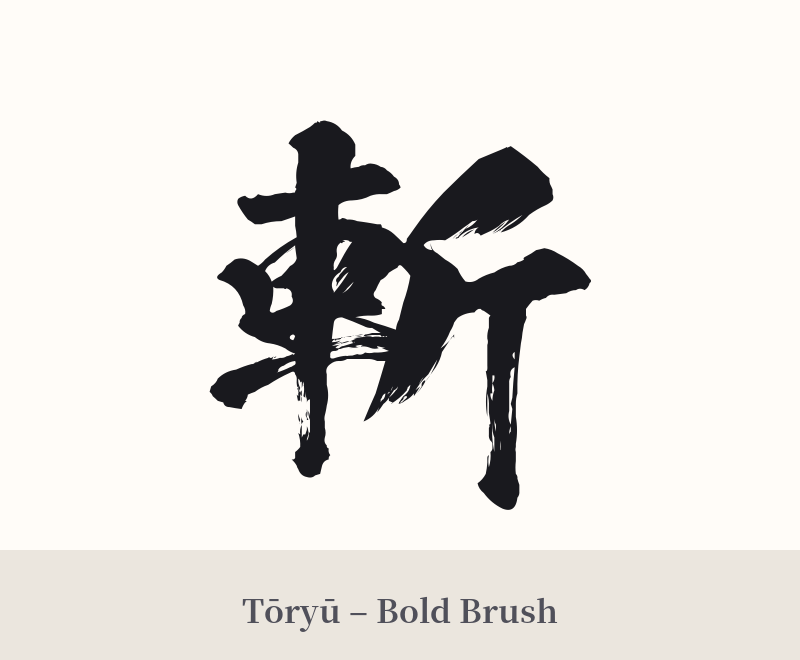
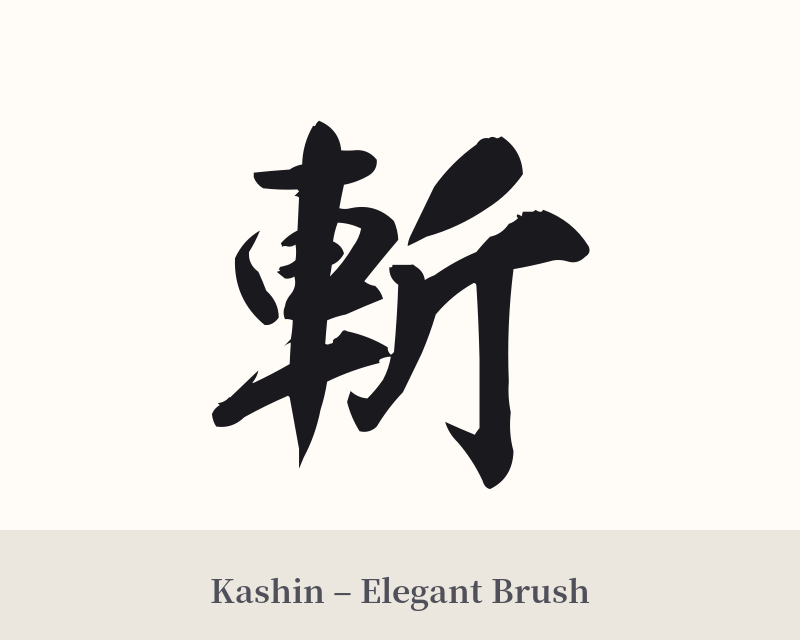
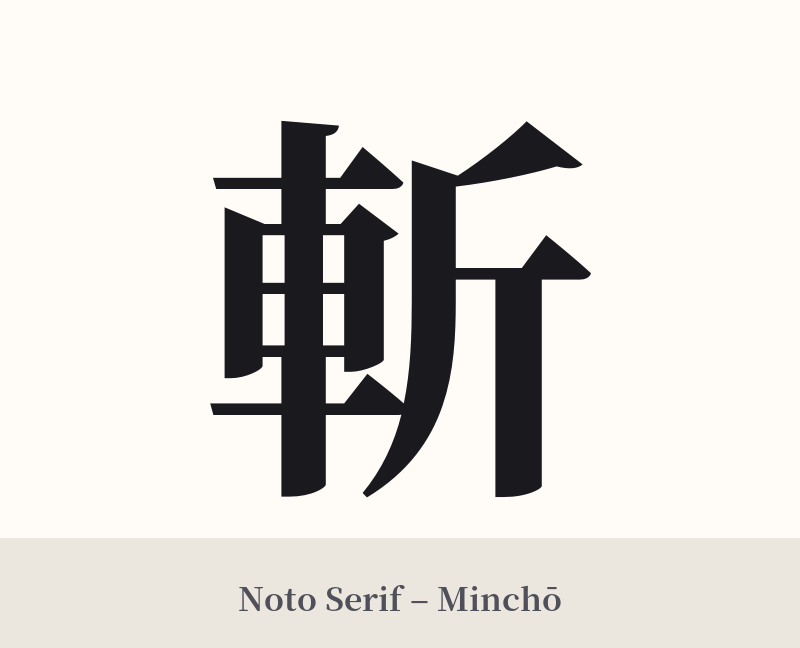
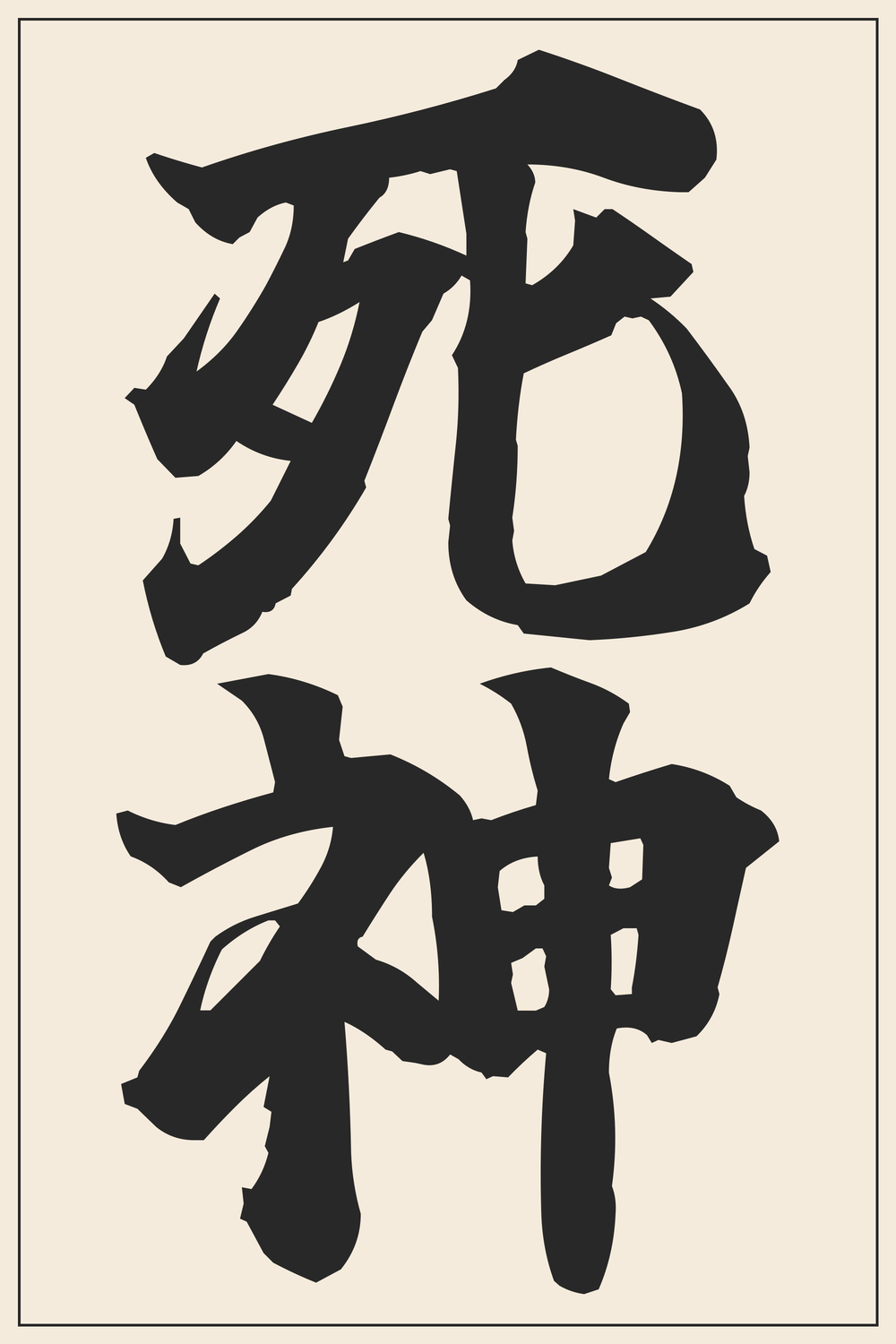
The same kanji can look dramatically different depending on the calligraphy style. Choose a font that matches the mood you want for your tattoo or design.
🎨 Tattoo Suitability
📐 Tattoo Design Guide
The kanji 斬 offers a lot of potential for a powerful tattoo design. Its strong lines and inherent meaning of decisiveness make it visually compelling.
– Placement: This character works well in vertical orientations. Consider the forearm, calf, or along the spine. For a horizontal placement, the back of the neck or across the shoulder blade can be very effective.
– Style: A dynamic, semi-cursive calligraphy style (gyōsho) can capture the fluid motion of a sword stroke. For a more stoic and impactful look, a bold, angular block script (kaisho) emphasizes its raw power and finality.
– Visual Elements: Enhance 斬 by integrating it with related imagery. It could be the focal point of a design featuring a katana, a dragon, or a Hannya mask. A subtle red ink splash or a dissolving effect at the end of the strokes can add a dramatic flair, symbolizing the act of cutting.
Comments