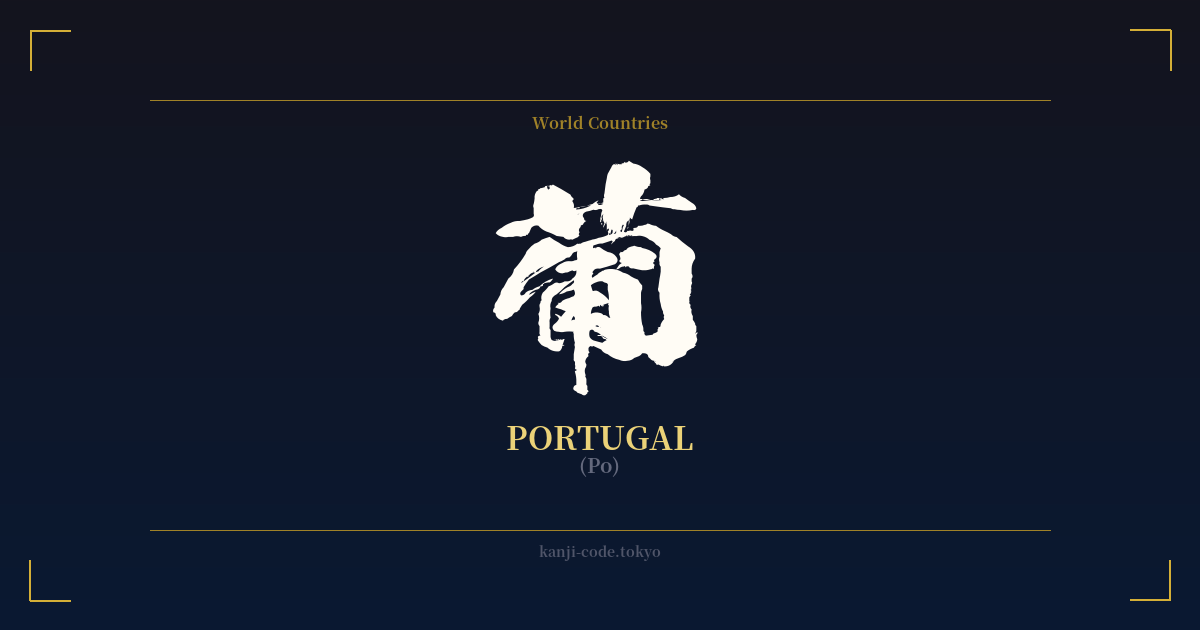
✍️ 葡 (Po) — Cultural Context
The kanji 葡 is a fascinating character that acts as a bridge between Japan and the West, carrying centuries of history within its twelve strokes. Its primary function in modern Japanese is as a single-character abbreviation for Portugal (ポルトガル, Porutogaru). However, its story is deeply intertwined with another word: 葡萄 (budō), meaning 'grape.'
This connection is no accident. When Portuguese traders and missionaries first arrived in Japan in the mid-16th century, they were the first Europeans to establish direct contact. The Japanese of the time, needing a way to write the foreign word 'Portugal,' used a system called ateji, where kanji are used for their phonetic sounds rather than their meaning. They chose the characters 葡萄牙, which could be read as 'Po-ru-to-ga-ru.'
By a stroke of historical poetry, the characters chosen, 葡 (bu) and 萄 (dō), already formed the word for 'grape.' This created an unbreakable link between the country and the fruit. While grapes existed in Japan prior to this, the Portuguese are often credited with introducing viticulture and wine, making the choice of these characters feel particularly fitting in hindsight. They were known as the nanban (南蛮), or 'southern barbarians,' and their arrival marked the beginning of a transformative period of trade and cultural exchange.
Today, the full ateji 葡萄牙 for Portugal is rarely used, having been replaced by the simpler Katakana script. However, the first character, 葡, has survived as a formal abbreviation. You might see it in newspaper headlines or academic texts to refer to the country in compound words, such as 日葡関係 (Nichi-Po kankei), meaning 'Japan-Portugal relations.'
Therefore, the character 葡 does not exist in a vacuum. It is a symbol of a specific historical encounter, a phonetic puzzle, and a botanical reference all in one. It represents the moment Japan first looked west and decided to name what it saw using the characters for grapes, forever linking the nation of Portugal with the vine in the Japanese linguistic imagination.
🖌️ Font Styles for 葡
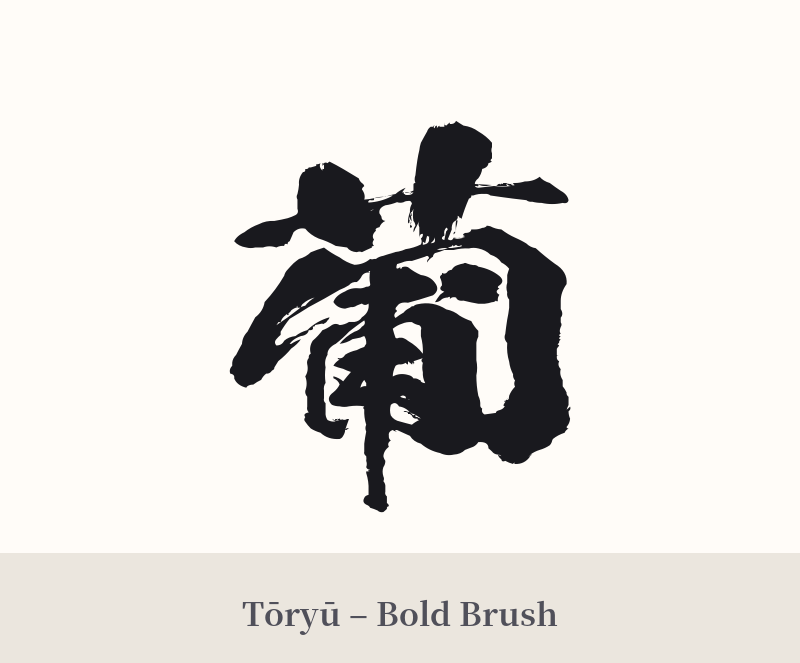
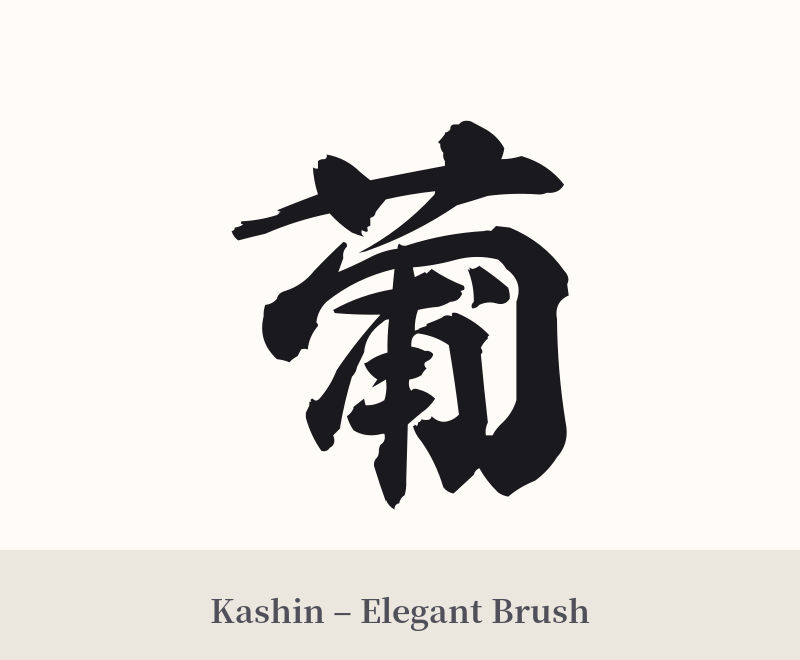
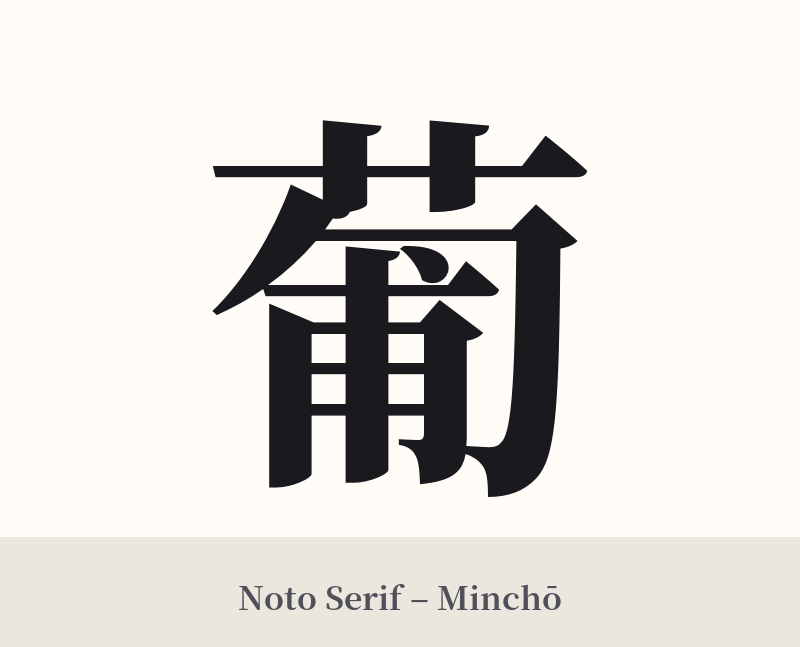
The same kanji can look dramatically different depending on the calligraphy style. Choose a font that matches the mood you want for your tattoo or design.
🎨 Tattoo Suitability
📐 Tattoo Design Guide
While a tattoo of the single character 葡 is not highly recommended due to its incomplete nature, if you are committed to the design for personal reasons, there are ways to approach it.
– Placement: Because it is a single character that can feel 'lost,' consider smaller, more contained placements like the inner wrist, behind the ear, or on the ankle. Avoid large spaces like the back or chest, where its solitude would be more pronounced.
– Provide Context: The best way to use this kanji is to give it the context it lacks. Consider pairing it with a visual element. A design that incorporates a grapevine wrapping around the character, a 16th-century Portuguese caravel, or a small map of Portugal would instantly clarify its intended meaning.
– Use the Full Word: For a more culturally and linguistically sound tattoo, consider using the full two-character word 葡萄 (budō) if your connection is to grapes or wine. This is a complete, beautiful, and instantly understandable word.
– Font Style: A classic, blocky Kaisho (楷書) style will emphasize the character's structure. Conversely, a more fluid Gyōsho (行書) or Sōsho (草書) script could give it a sense of history and movement, perhaps hinting at the long journey of the Portuguese explorers.
Comments