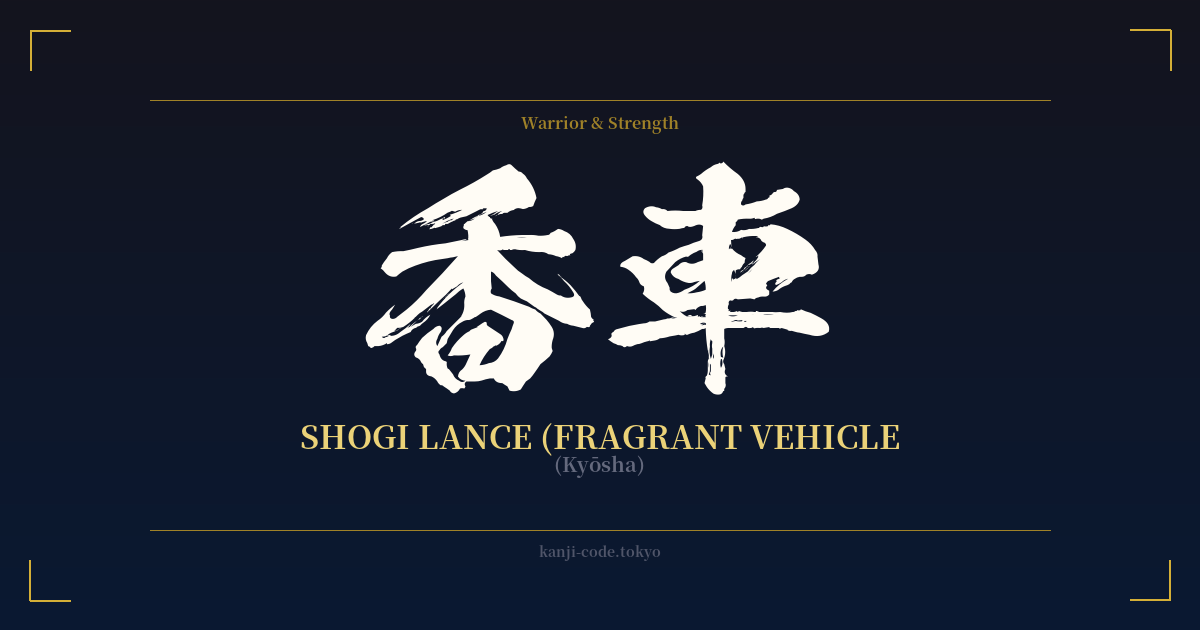
✍️ 香車 (Kyōsha) — Cultural Context
香車 (Kyōsha) is a term deeply rooted in the world of Shogi, or Japanese chess. While its direct translation is the poetic 'Fragrant Vehicle,' its role in the game is that of the Lance—a piece known for its single-minded and unstoppable forward momentum.
Shogi is more than just a game in Japan; it's a respected intellectual and cultural pursuit, with a history spanning centuries. Its pieces, or 'koma', are not mere tokens but hold names that evoke value, power, and strategic purpose. The Kyōsha is a perfect example of this depth. In Shogi, the Lance can only move straight forward, any number of squares, until it hits the edge of the board or captures an opponent's piece. Crucially, it cannot move backward or sideways. This makes it a symbol of pure, unadulterated offense—a committed, one-way attack.
The name 'Fragrant Vehicle' might seem odd for a weapon-like piece. To understand it, we must look at the individual kanji. '香' (kyō) means 'incense' or 'fragrance,' which in ancient Japan was a highly prized luxury item associated with nobility and religious ceremonies. '車' (sha) means 'chariot' or 'vehicle,' a clear reference to a military unit. Combining them creates 'Fragrant Chariot,' suggesting a valuable and esteemed part of the army, not just a disposable pawn.
This naming convention reflects the origins of Shogi pieces, which were often named after precious materials and treasures like gold, silver, and jewels. The Lance, therefore, is not just a spear; it's a 'precious spear,' a valuable asset to be deployed with care and strategic intent. Its inability to retreat imbues it with a certain 'do-or-die' spirit. Once committed to a path, there is no turning back, making its use a pivotal moment in any game.
Outside the game board, the idea of Kyōsha can be applied metaphorically to a person or strategy that is highly specialized, direct, and relentlessly forward-moving. It embodies the principle of sacrificing flexibility for overwhelming power in a single direction. It's a specialist, not a generalist—a powerful concept for those who value focus and unwavering commitment to a goal, even if it means burning bridges behind them.
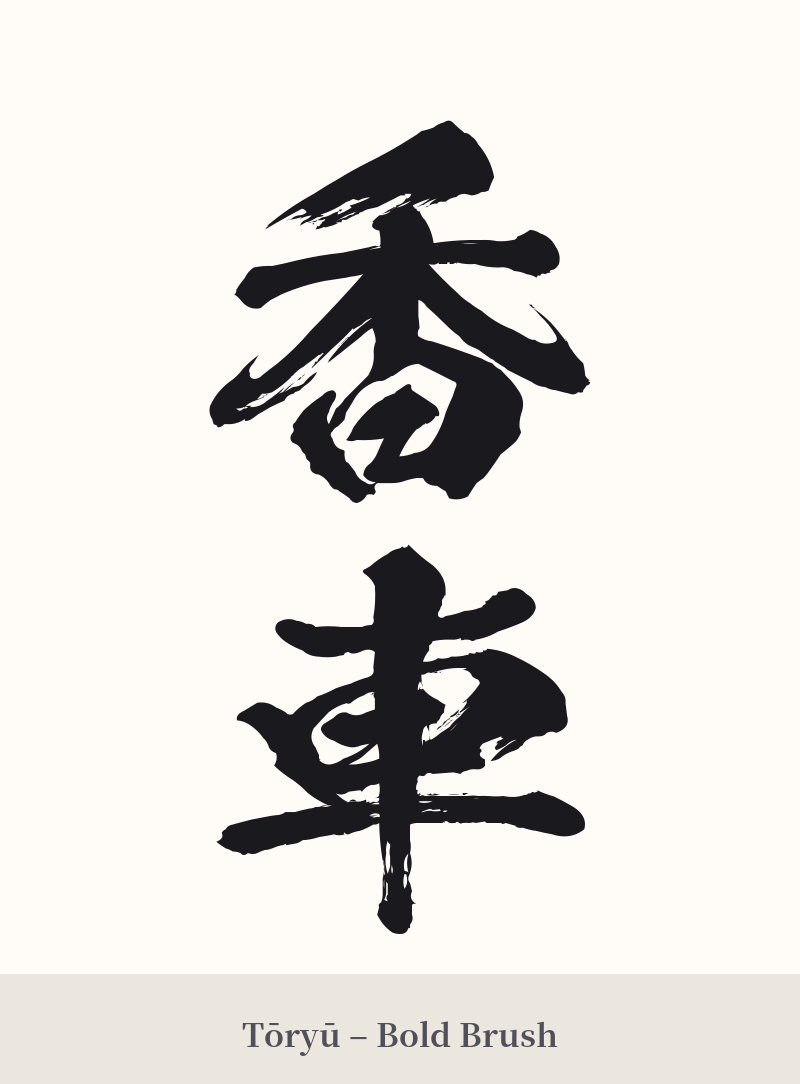
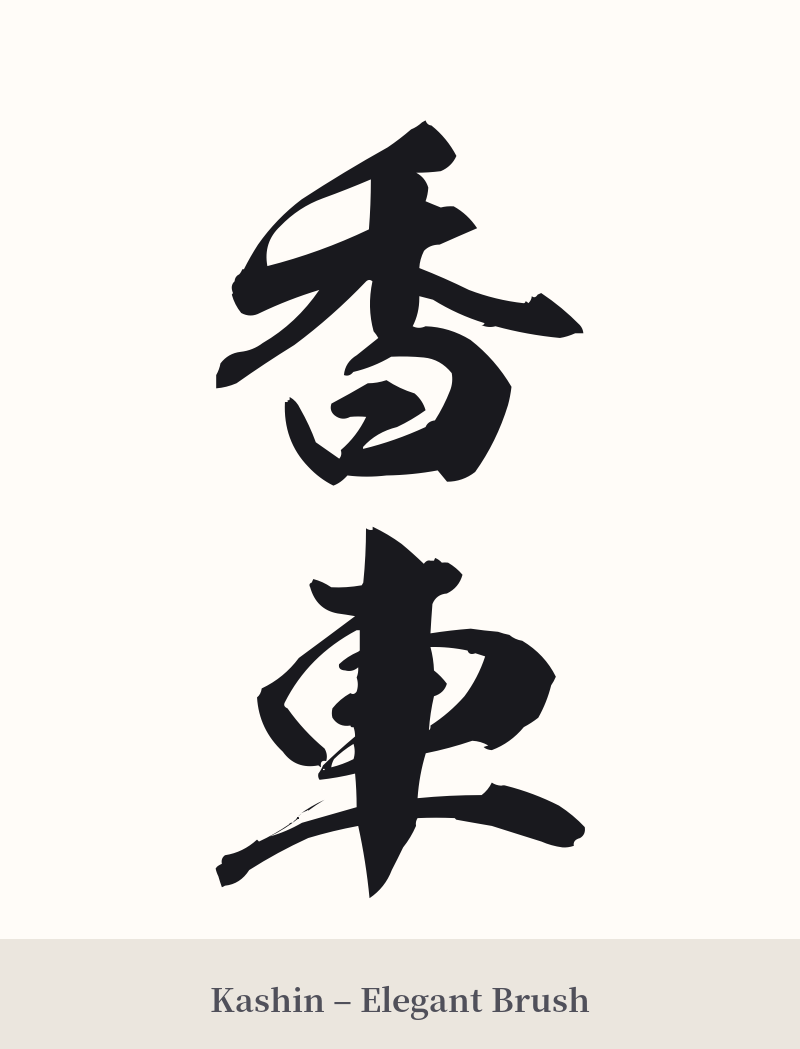
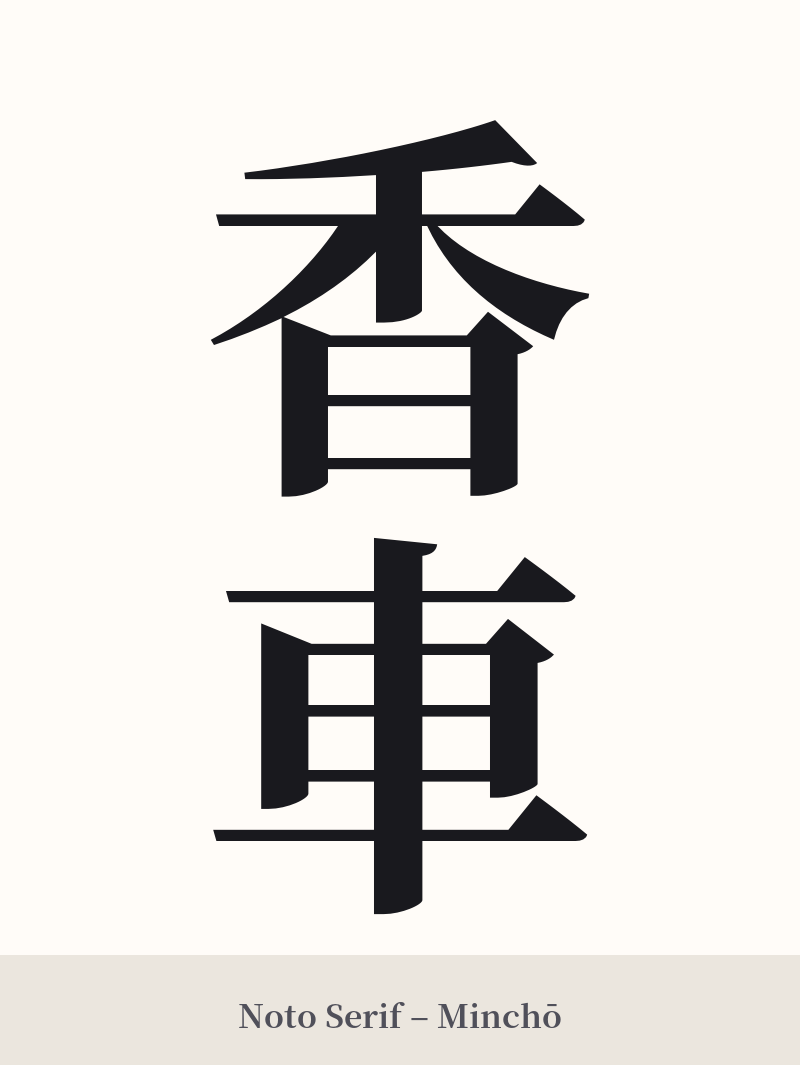
🖌️ Font Styles for 香車
The same kanji can look dramatically different depending on the calligraphy style. Choose a font that matches the mood you want for your tattoo or design.
🎨 Tattoo Suitability
📐 Tattoo Design Guide
A tattoo of 香車 (Kyōsha) is best suited for someone who deeply appreciates Shogi or the philosophy of a direct, committed attack.
– Placement: Consider long, narrow areas of the body that emphasize its linear movement. The forearm, the side of the calf, or even vertically along the spine are excellent choices. This visually reinforces the Lance's straight-ahead path.
– Font Style: For an authentic feel, consider having the kanji designed in the style of a 'koma' or Shogi game piece. This involves the characters being written in a specific script on a pentagonal shape, providing immediate context. Alternatively, a strong, clear 'Kaisho' (block) script emphasizes its stability and power, while a more fluid 'Gyōsho' (semi-cursive) script can evoke the feeling of swift movement.
– Visual Tips: To avoid the 'fragrant car' confusion, you could incorporate the design into a larger piece. A design showing the kanji on a pentagonal Shogi piece, perhaps with a spear or lance motif behind it, would clarify its meaning. A vertical orientation is almost always preferable to a horizontal one for this particular word.
Comments