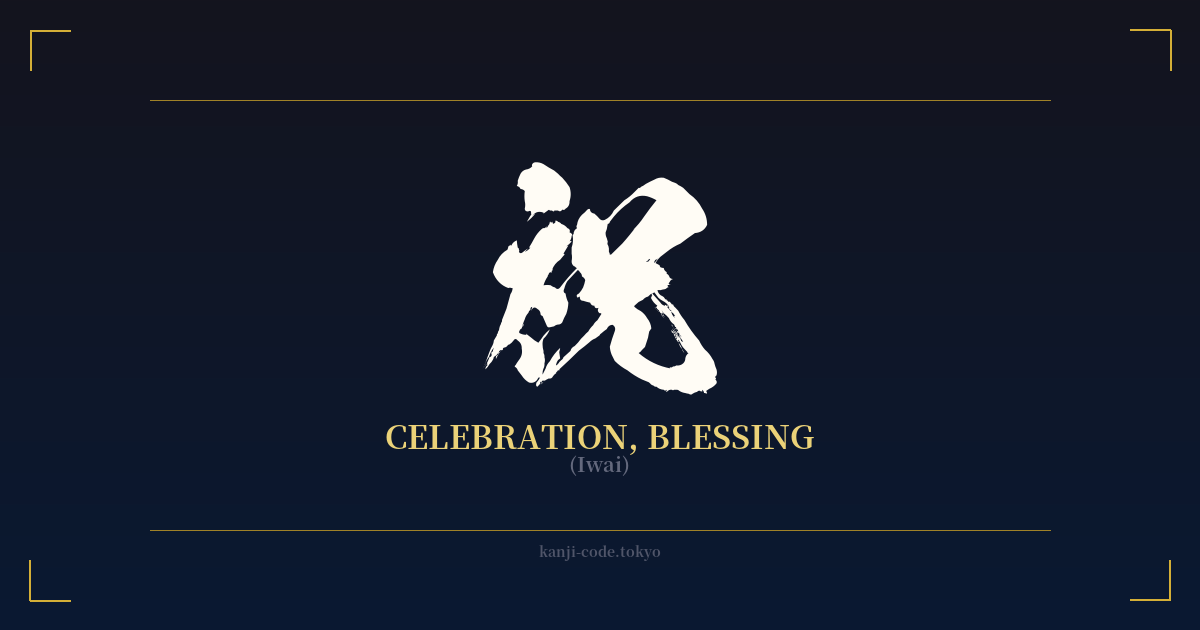
✍️ 祝 (Iwai) — Cultural Context
The kanji 祝 (iwai) is a beautiful and deeply embedded character in Japanese culture, encapsulating the very essence of celebration, congratulation, and divine blessing. To understand its depth, one must look at its components. The character is a combination of the radical 示 (shimesuhen) on the left and the character 兄 (ani) on the right.
The 示 radical is derived from the image of an altar, and it is consistently used in kanji related to gods, spirits, and religious rituals. It immediately grounds 祝 in a spiritual or sacred context. The right side, 兄, means 'elder brother.' The ancient etymology suggests the image of an elder brother kneeling before an altar, praying to the gods for blessings and good fortune for his family or clan. This origin story imbues the character with a sense of communal joy and well-wishing that extends beyond the self.
In modern Japan, 祝 is omnipresent during life's happiest moments. The verb form, 祝う (iwau), means 'to celebrate' or 'to congratulate.' You see the character everywhere during significant events. It is prominently displayed on special gift envelopes called ご祝儀袋 (goshūgi-bukuro), which are used to give money at weddings and other celebratory occasions. The term 祝日 (shukujitsu) literally means 'celebration day' and is the word for 'public holiday.'
While similar to other positive kanji, 祝 carries a unique nuance. For example, 福 (fuku) means 'good fortune' and 幸 (shiawase) means 'happiness,' but these often describe a state of being. 祝 is more active and event-oriented. It signifies the act of celebrating, the moment of a blessing, or the specific occasion of joy. It's less about the quiet, internal feeling of happiness and more about the outward expression of it.
This connection to Shintoism is key. The act of celebrating is seen as a way of giving thanks to the kami (deities) and acknowledging a fortunate event as a blessing. Whether it's a birth, a graduation, a new year, or a wedding, the use of 祝 serves as a marker that this is a special, auspicious time, worthy of recognition and gratitude. It's a symbol not just of human joy, but of joy that is recognized and sanctioned by the divine.
🖌️ Font Styles for 祝
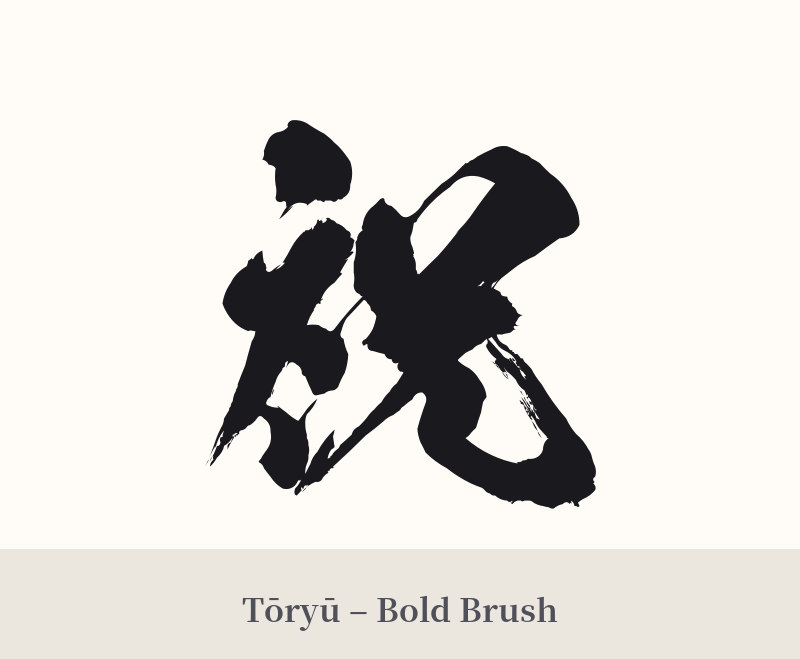
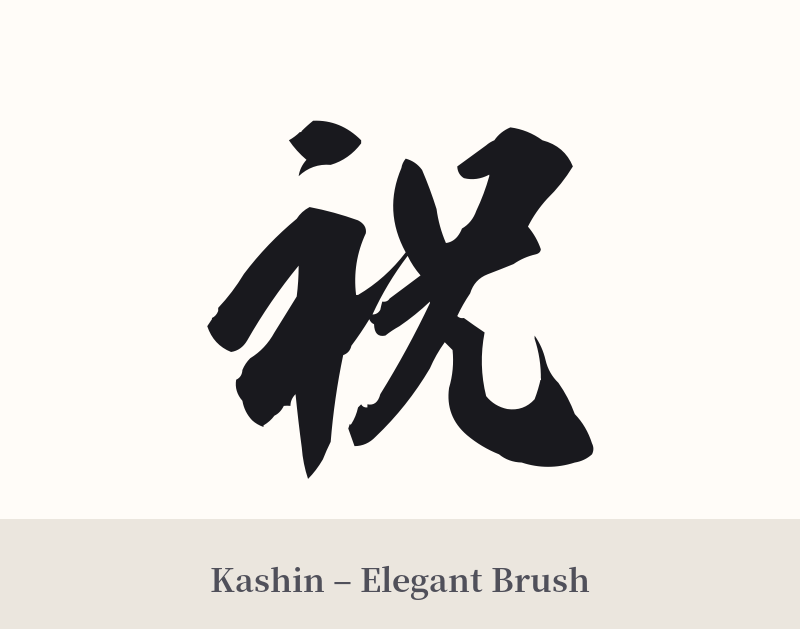
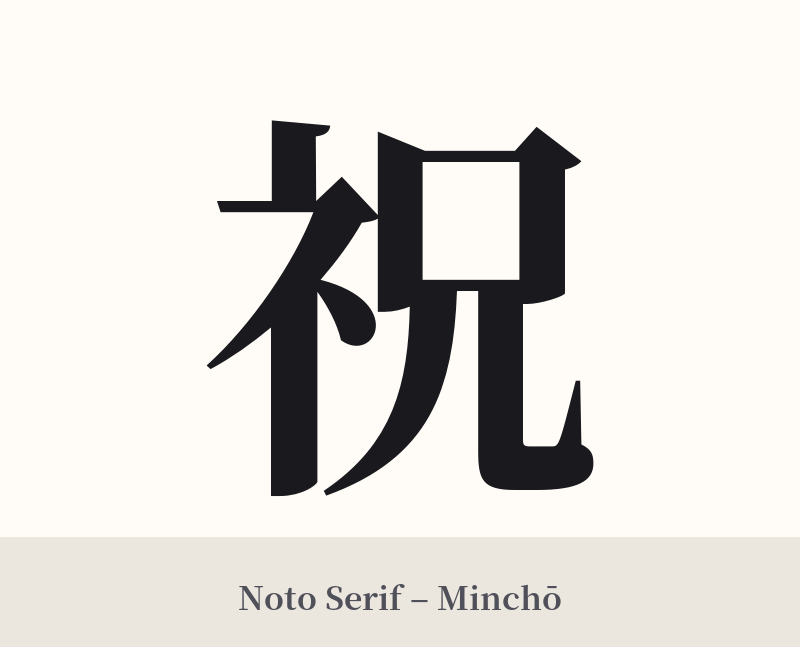
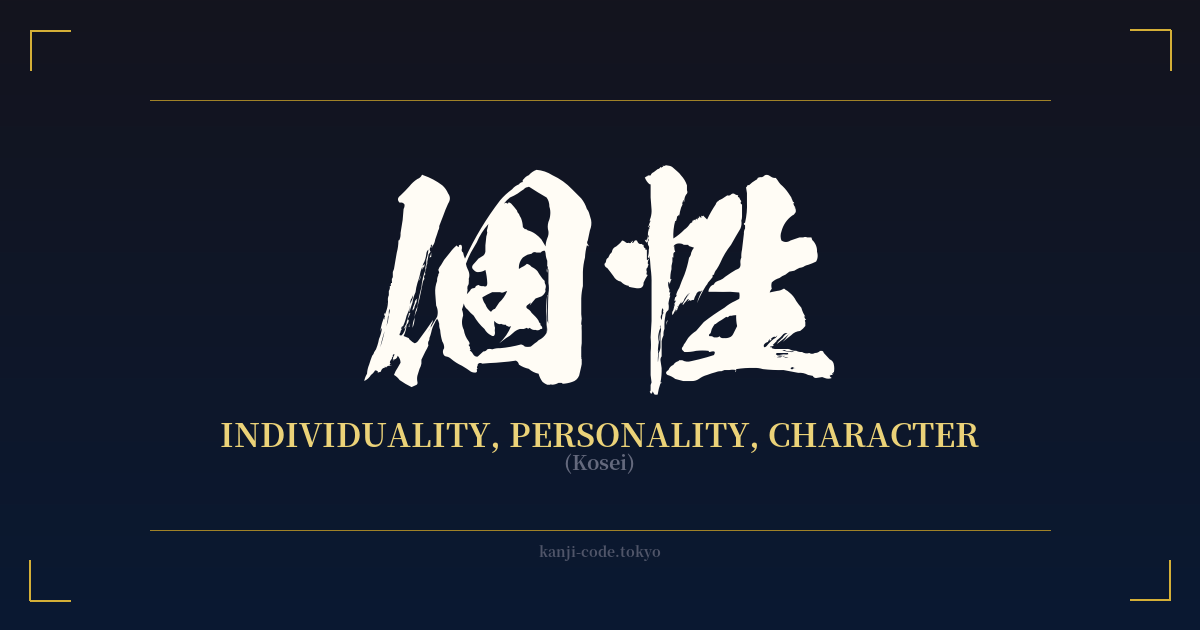
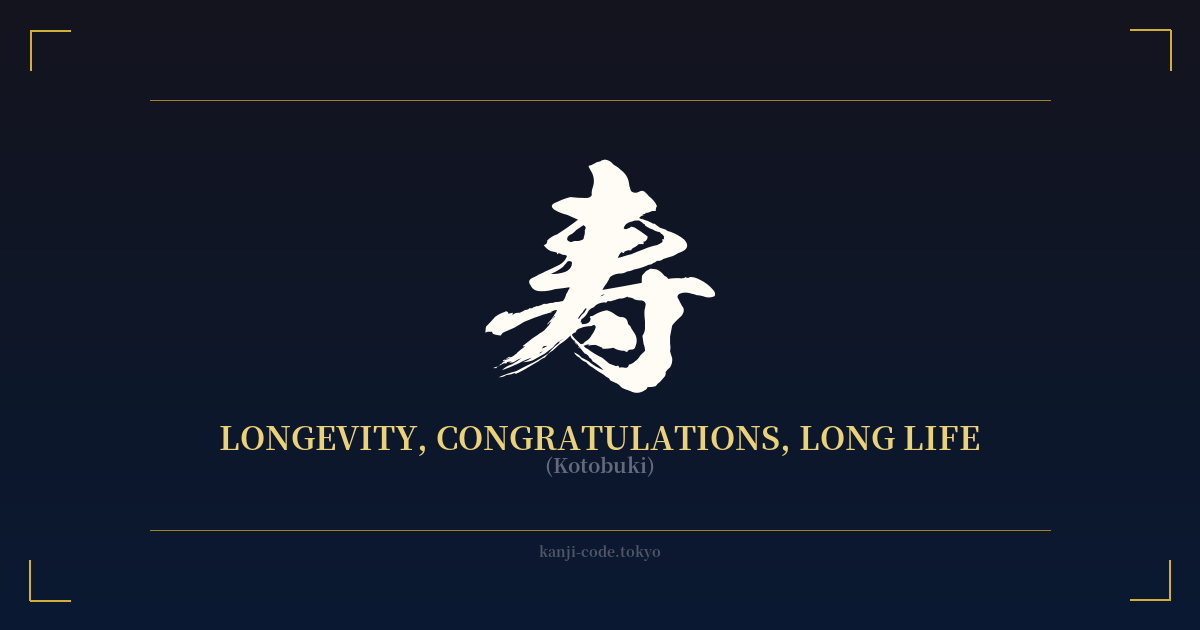
The same kanji can look dramatically different depending on the calligraphy style. Choose a font that matches the mood you want for your tattoo or design.
🎨 Tattoo Suitability
📐 Tattoo Design Guide
The kanji 祝 offers a wonderful balance of meaning and aesthetic, making it a versatile choice for a tattoo design.
– Placement: Due to its positive and personal nature, it works well in visible yet intimate spots. Consider the inner wrist, forearm, the back of the neck just below the hairline, or along the collarbone. For a more private tattoo, the ribs or ankle are excellent choices.
– Font Style: A traditional calligraphy style (shodō) with dynamic brushstrokes can emphasize its historic and spiritual roots. For a more modern and subtle take, a clean and crisp Mincho (serif) or Gothic (sans-serif) font can look elegant and sharp. Avoid overly aggressive or complex fonts that might obscure the character's form and clash with its gentle meaning.
– Visual Complements: While 祝 stands strong on its own, it can be beautifully complemented by other Japanese motifs. Pairing it with a few falling cherry blossom petals (sakura) can symbolize the beautiful but fleeting nature of celebratory moments. Incorporating it with a stylized mizuhiki knot (a decorative cord used on gifts) can enhance the theme of connection and formal celebration. A simple red circle, evoking the Japanese flag (Hinomaru), can also be used as a background to make the black ink pop.
Comments